Category Archives: Risk Management

Loading
loading...

Insurance

This content is accessible to paid subscribers. To view it please enter your password below or send mike@standardsmichigan.com a request for subscription details.

Birth Certification

“Celebrating the Birth” 1664 / Jan Steen


“Birth is the sudden opening of a window,

through which you look out upon a stupendous prospect.

For what has happened? A miracle.

You have exchanged nothing for the possibility of everything.” 

— William MacNeile Dixon


A title from the standards catalog published by the North American Security Products Organization (NASPO) may interest education communities:

ANSI/NASPO 2019 BC Minimum Security Requirements for United States Birth Certification Documents

From the product prospectus:

The scope of this standard is to define minimum security requirements for the design, production, supply chain, and recommendations for issuance of government birth certificates used for official purposes. The standard will not establish requirements for the handling and security of Personally Identifiable Information (PII).

The goal for this standard is to protect against fraud and reduce the risk associated with using compromised documents that support critical transactions. This standard establishes the minimum security technologies that should be incorporated into birth certificates for authentication, and the minimum requirements for manufacture and distribution to vital records offices. This standard also recommends best practices for the secure storage and issuance of birth certificates.

Many education communities are bound to statues that require confirmation of a student or employee’s country of origin.  Our reading of best practice literature reveals that every state has its own rules for establishing residency status; at least among US nationals, so this product appears to offer more dimension to birth certification particulars.

NASPO sells the product.  A certification and training regimen is offered.   NASPO members receive discounts.  This is a feature of the business models of many ANSI-accredited standards setting organizations.

There are enough issues in the $300 billion facility operation of US education communities that we do not need to stray outside our wheelhouse getting involved in birth certification issues but, since we work in a related domain, we simply pass this on to others on the front line of student residency issues.  An industry very close to combustion temperature should at least know about NASPO consensus products.

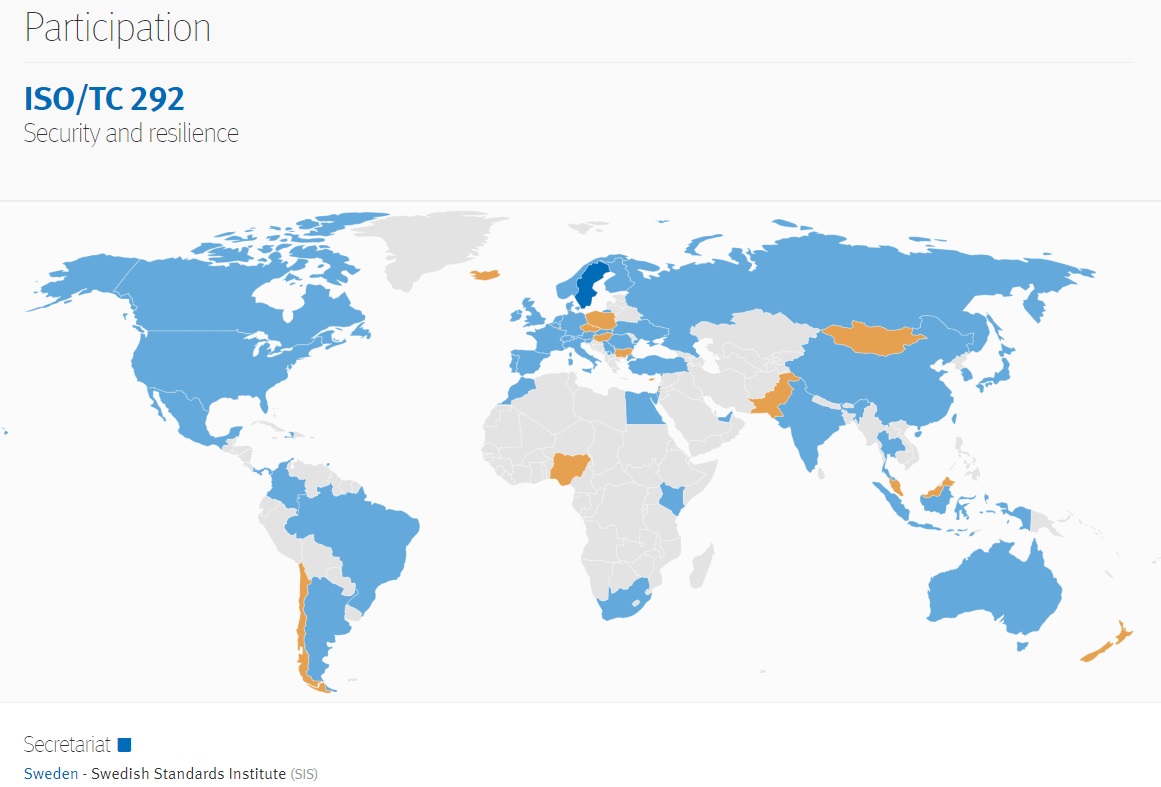
NASPO is ANSI’s US Technical Advisory Group Administrator of the US position on ISO Committee 292 — Security and resilience — a global committee focused on standardization in the field of security to enhance the safety and resilience of society.  ISO products provide policy templates for governments in all nations.  We urge our colleagues in education communities to participate in NASPO and/or ISO consensus product development as a user-interest.   As of this posting, there are no education community representatives on the US TAG to ISO 292  CLICK HERE to communicate directly with NASPO.

We maintain NASPO products on the standing agenda of our periodic Risk and Global teleconferences.  See our CALENDAR for the next online meeting; open to everyone.

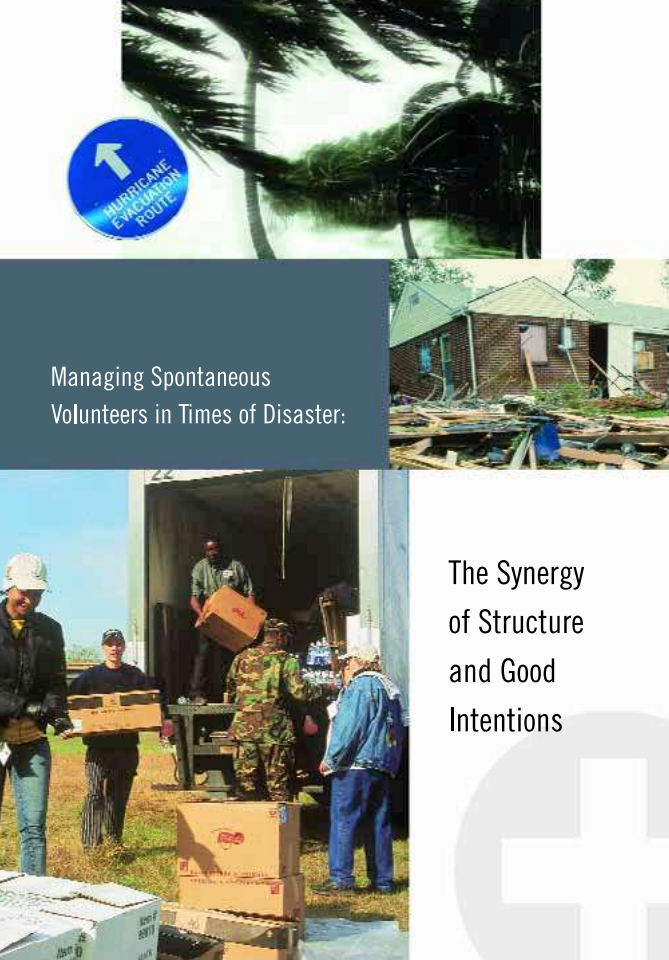
Managing Spontaneous Volunteers in Times of Disaster

GRAND VALLEY UNIVERSITY FACULTY AND STUDENTS ASSIST WITH DISASTER RELIEF

Higher Education Risk Assessment Tool

This content is accessible to paid subscribers. To view it please enter your password below or send mike@standardsmichigan.com a request for subscription details.

False Alarm Reduction

“Students from the Pestalozzian Academy” | Francisco José de Goya y Lucientes (1806} | Meadows Museum Southern Methodist University

Security standards for the education industry develop on a near-weekly basis.  Every incident spawns new workgroups that compete with incumbents, consortia and open source licensing organizations to set the standard of care through documents, accreditation, training and other revenue-capture instruments.  We count the better part of 100 of them including the standards spawned from ad hoc alliances and partnerships.

The Security Industry Association in an ANSI-accredited standards setting organization that develops consensus products that promote interoperability and information sharing in the industry.  The landing page for its standards setting enterprise is linked below:

SIA Industry Standards

Interoperability problems in the digital transformation of the education communities has been a challenge for decades.  Competition among providers inevitably results in vendor lock-in.  Given high degree of rehabilitation activity in facilities, getting legacy and new fire alarm systems to talk to one another is a worthy goal.   The original University of Michigan standards advocacy enterprise had a few modest “code wins” in this domain from 2000 to 2016.

Interoperability challenges remain and are the signature characteristic of the transformation.

Last year the SIA initiated a revision cycle for its standard — SIA CP-01 Features for False Alarm Reduction — which asserts leading practice for reduction of false alarms.  To paraphrase the benefits of this ANSI-accredited consensus document:

  • Saves facility management enterprises time and money with decreased alarm dispatches and programmable swinger shutdown.
  • Provides technical specifications for cross zoning and carbon monoxide zoning.
  • Provides commissioning, inspection, testing and maintenance guidance.
  • Provides guidance for installing security measures like the duress alarm that can be entered by a user to trigger a silent call for help while under threat from an intruder.
  • Features, including specifications for carbon monoxide zones and qualifications for swinger shutdown.

From the ANSI Project Initiation Notification Announcement:

Project Need: False Alarms and False Dispatches continue to be a thorn in the side of municipalities and law enforcement.

Stakeholders: Security integrators, security manufacturers, law enforcement, central stations, monitoring companies, and
some end-users (consumers) of security.

Scope: This standard details recommended design features for security systems, control panels, and their associated devices to reduce the incidence of false alarms. These features are applicable to both residential and commercial properties protected by an electronic security system. This standard is intended for use by manufacturers in the design of security systems and alarm signal receivers. It is also intended for reference by all affected parties, including security system installers, specifiers, and users; central station owners and operators; manufacturers of central station products, such as receivers and automation software; and local authorities

We will be watching for release of public review drafts.  You are encouraged to communicate directly with SIA: CONTACT 

The SIA suite is on the standing agenda of our periodic Security, Risk and Prometheus teleconferences.   See our CALENDAR for the next online meeting; open to everyone.


Issue: [13-143]

Category: Security, Risk, Prometheus

Colleagues: Mike Anthony, Josh Evolve, Jim Harvey, Richard Robben


LEARN MORE:

Fire Alarm and Security Industry Terminology


CPSC Data

This content is accessible to paid subscribers. To view it please enter your password below or send mike@standardsmichigan.com a request for subscription details.

Emergency Shower & Eyewash Testing

This content is accessible to paid subscribers. To view it please enter your password below or send mike@standardsmichigan.com a request for subscription details.

Biosafety Cabinetry

STANDARDS ACTION WEEKLY EDITION

“Der Alchemist” / Max Fuhrmann

NSF International develops a standard for one of the centerpiece safety technologies for a large revenue driver in research universities.   The landing page for its biosafety cabinetry product, installation, operation and maintenance standard is linked below:

NSF 49 Biosafety Cabinetry.

From the project prospectus:

This Standard applies to Class II (laminar flow) biosafety cabinetry designed to minimize hazards inherent in work with agents assigned to biosafety levels 1, 2, 3, or 4.  It also defines the tests that shall be passed by such cabinetry to meet this standard. NSF 49 includes basic requirements for the design, construction, and performance of biosafety cabinets that are intended to provide personnel, product, and environmental protection; reliable operation; durability and structural stability; cleanability; limitations on noise level; illumination; vibration; and motor/blower performance.   

This equipment class is the centerpiece of many research laboratories and is a multidimensional risk aggregation so NSF 49 needs to move swiftly and is listed as an ANSI Continuous Maintenance product.   You can track the action at the link below:

Joint Committee on Biosafety Cabinetry

NSF typically uploads its live public consultation notices on ANSI Standards Action; one of the most recent on Page 11 of link below:

Issue i141r4

Consultation closes January 4th 

"Every child is an artist. The problem is how to remain an artist once we grow up." - Friedrich Nietzsche

We maintain all NSF International titles on the agenda of our Laboratory and Risk teleconferences and, because NSF runs its standards suite continuously, most of its titles are on our Nota Bene teleconferences.    See our CALENDAR for the next online meeting; open to everyone

Issue: [13-118]

Category: Risk Management, Occupational Health and Safety

Colleagues: Mike Anthony, Richard Robben, Alan Rose, Mark Schaufele

Workspace / NSF International


Emergency Communication Strategies for Buildings and Campuses.

This content is accessible to paid subscribers. To view it please enter your password below or send mike@standardsmichigan.com a request for subscription details.

Layout mode
Predefined Skins
Custom Colors
Choose your skin color
Patterns Background
Images Background
Standards Michigan
error: Content is protected !!
Skip to content