
Category Archives: Risk Management

Loading
loading...

Enhancing Reliability of Power Systems through IIoT

Internet Of Things Project

At the IEEE Industrial Applications Society meetings earlier this month in Calgary, Alberta Canada, four electrical engineers presented a paper that should guide decisions by campus energy and internet security leadership.  They will likely not see the guidance in this document in any current version of a code or standard to which they must conform but, sooner rather than later, those codes and standards will likely be informed by the findings and recommendations of this and similar papers.

Owing to copyright restrictions upon pre-publication intellectual property we are only able to provide some of the results of the research, summarized below.   We are happy to drill down into greater detail during our monthly laboratory safety standards teleconferences.  See our CALENDAR for the next online meeting; open to everyone.

We collaborate closely with the IEEE Education & Healthcare Facilities Committee which meets 4 times monthly in European and American time zones.  Risk managers, electrical safety inspectors, facility managers and others are welcomed to click into those teleconferences also.  We expect that concepts and recommendations this paper will find their way into future revisions of US and international electrical safety codes and standards.  There is nothing stopping education facility managers from applying the findings immediately.
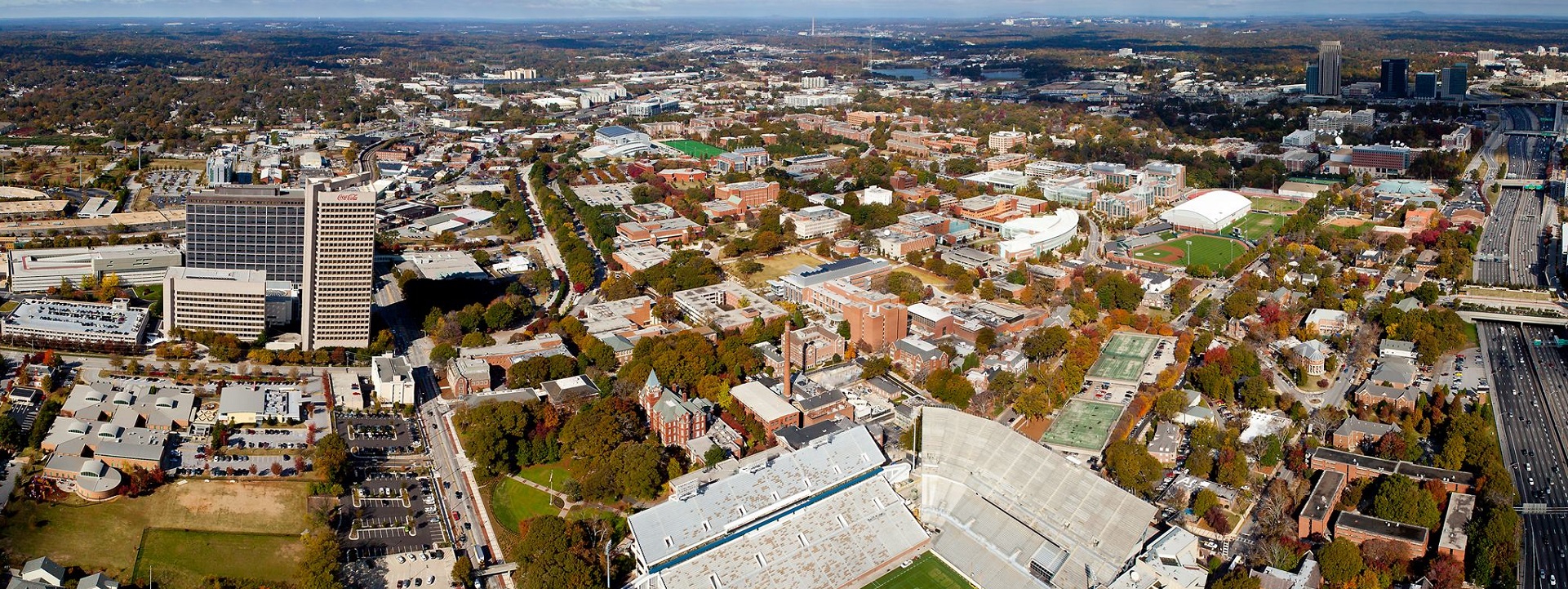
The effective enterprise cost of forced power and/or ICT outages at large research universities run on the order of $100,000 to $1,000,000 per minute.


2019-PSPC-0245

Enhancing Reliability of Power Systems through IIoT

Ashok Prajapati ashokkp@ieee.org

Robert Arno rarno@northpointdefense.com

Neal Dowling dowling@mtechnology.net

William Moylan w.j.moylan@ieee.org


Abstract.  This article presents an idea of achieving reliability through Industrial Internet of Things (IIoT) for industrial power systems. It proposes hybrid approach for predictive and corrective maintenance. It discusses the self-corrective maintenance (SCM) paradigm as hybrid approach for industrial power systems along with condition-based maintenance approach utilizing IIoT to achieve it. As it is well known that industries pay huge penalty for the down time, and suffer to meet reliability demands for years. Study witnesses its cost in millions of dollars yearly for production disruptions. It can be prevented by proactively following the aggressive maintenance schedule. However, it often becomes expensive as part or service may not be utilized for its full life and failure may occur even in middle of maintenance cycle.  On the other hand, condition-based maintenance (CBM) helps utilize the full life and prevents the downtime by
predicting the failures ahead. This article reviews current maintenance practices followed by industry leaders and a proposal on self-corrective maintenance based on condition of restorable resources. It is about learning the condition of subsystems by itself and taking corrective action when subsystem is not active. This concept helps reduce manual intervention to correct the problem as well as the maintenance cost. This research also covers the self uncorrectable issues to be handled by proactively following CBM process through IIoT. This hybrid proposal could be a significant gear shift in maintenance direction for general industry as well as power systems. It can be termed as industry’s 5th revolution or Industry 5.0.

Ω

I. INTRODUCTION

II. MAINTENANCE STRATEGIES

III. CASE STUDY(IES) | Lincoln Electric, Schneider Electric, ABB, MOTOMAN, FANUC, SAP, IBM, Duke Energy, National Instrument

IV. FUTURE DIRECTION

Conclusion.  In this article, we presented various case studies how manufacturers follow maintenance practices and widely used solutions by industry leaders in various domains. It also discusses industry-wide third-party solutions available in the market. However, many available solutions involve manual assistance to perform the maintenance operations after error condition detection. Manual maintenance incurs significant maintenance cost. Future direction is presented for reducing manual maintenance to reduce cost even further. With given infrastructure, maintenance can be automated to a certain degree to reduce maintenance cost and it is the future. This paradigm is termed as “Self-Corrective Maintenance”. SCM is a 4th dimension Of intelligent maintenance. Hence, reliability of power systems can be enhanced manifold utilizing hybrid self corrective maintenance process (Hybrid-SCM). Hybrid-SCM can be part of 5th industrial revolution i.e. Industry 5.0.

Issue: [19-130]

Category: Electrical, Facility Asset Management, Fire Safety, International

Colleagues: Mike Anthony, Robert G. Arno, Neal Dowling, Jim Harvey, William Moylan, Ashok Prajapati


LEARN MORE:

To order this paper:

IEEE Catalog Number: CFP19CPS-ART (Xplore)
ISBN: 978-1-5386-7551-9 2158-4907 (Xplore)
IEEE Catalog Number: CFP19CPS-USB (USB)
ISBN: 978-1-5386-7550-2 (USB)
Online ISSN: 2158-4907

Copies of this publication may be ordered from:

customer-service@ieee.org

+1 800 678 IEEE (+1 800 678 4333)

Active Shooter & Hostile Event Response Program


We have been following the fast-tracked development of NFPA 3000 Standard for an Active Shooter/Hostile Event Response (ASHER) Program since its launch.  We have contributed to it and we have catalyzed education industry trade associations to rally their membership to participate.   Keep in mind that there are several other non-profit trade associations moving into this space; each of them assembling experts and preparing curricula to drive conformity, compliance and training revenue.   Nothing necessarily wrong with this except that the active shooter risk aggregation is highly “siloed” and setting the standard of care is, well, highly-siloed.

Click on the link below to sample the ideas running through proposed revisions to the next edition:

NFPA 3000 Second Draft Report

NFPA 3000 First Ballot Final

NFPA 3000 Second Draft Ballot Final

Notice the wordsmithing, the internal coordination and administration, and the referencing to existing and new consensus products emerging in this space.

Similar to the condition in the energy sector in which the federal government has to effectively “clear the market” of redundancy and destructive competition among market participants (i.e. trade associations),  we may find that some form of federal legislation may be required.  As we explain in our post on the National Technology Transfer and Advancement Act that there lies a risk of damping normal, healthy “animal spirit” competition among trade associations.

All that said, NFPA consensus products are very familiar to the public safety culture in local and state governments so it is wise to keep pace; if not lead when necessary.   Note that NFPA 3000 is a trademarked consensus product; tantamount to becoming a “code” that can be incorporated by reference into public safety laws at all levels of government.

Principal and Alternate Votes on the NFPA Technical Committee from educational institutions: Harvard School of Public Health,  Auburn University,  Missouri State University, University of Connecticut and Vanderbilt University.  None of them are casting User-interest votes according to the NFPA Classification of Committee Members.  In other words,  no representative of an entity that is subject to the provisions of the standard or that voluntarily uses the standard — such as a student or a teacher — has a vote on this committee.   They will depend upon the standard of care set by other interest categories.  See our ABOUT to understand why this is.  

The next several milestones in the NFPA 3000 development are listed below:

Normally, NITMAMs are heard at the NFPA Annual Conference and Expo.  It is likely that the NFPA Standards Council will release NFPA 3000 for use by regulating agencies in lieu of the meeting that would have taken place in June.  (CLICK HERE for information about cancellation of the NFPA Annual Conference)

We keep NFPA 3000, along with other emergent school security standards, on the agenda with our Security, Risk and Pathway teleconference  See our CALENDAR for the next online meeting; open to everyone.

Issue [18-15]

Category: Public Safety, Risk Management

Colleagues: Mike Anthony, Richard Robben


LEARN MORE:

IN FORCE911 WhitePaper

U.S. Department of Homeland Security / Active Shooter: How to Respond


ARCHIVE / NFPA 3000 ASHER

School Security Standards

Seismic Risk Assessment of Real Estate Portfolios

神奈川沖浪裏, ‘Under the Wave off Kanagawa’

ASTM International publishes best practice titles that appear frequently in physical asset management enterprises.   You find them referenced deep in risk management agreements, construction contracts and in the documents that set the standard of care in design, maintenance and operations.  Now comes notification from the ASTM Committee E06 Performance of Buildings of a new standardization project to manage risk in the financial support for buildings with seismic risk —  ASTM WK55885 New Practice for Seismic Risk Assessment of Real Estate Portfolios.   Many large research universities have multiple properties in seismic zones.  From the project prospectus:

Scope and Purpose: Real estate portfolios for mortgage lenders and property owners often include many properties distributed across many regions or multiple states. Seismic risk assessment for a group of real estate properties (a portfolio) differs from PML investigations for a single building (as treated in ASTM E2026 and E2557). The geographical diversification of the portfolio is a fundamental characteristic that differentiates it from the investigation of a single site.  

Project Need: Proper treatment of the complex variables associated with seismic risk assessments at multi-property portfolios requires a new, separate standard, with an appropriate stakeholder focus, and a more complex computational approach more consistent with (probabilistic) earthquake insurance models, but accommodating structural engineering input. As such, this proposed scope for seismic risk assessments of multiproperty Portfolios will generally resemble the scope used for the single building standard (ASTM E2026), however with materially different multiproperty components within the same framework.

Stakeholders: Whole Buildings and Facilities industries

This is a new project identified in ANSI’s Project Initiation Notification System and does not yet have a draft open for public review; only a notification to assure and hasten harmonization among accredited standards developers (Link to ANSI Standards Action | PDF Page 15).

Pepperdine University California

The ASTM Subcommittee E06.25 on Whole Buildings and Facilities cancelled its October meeting in Orlando next week.  No further information provided on its landing page.

We maintain the ASTM bibliography on several agendas — Sport, Risk, Prometheus, to name a few.   This title is part of an expanding constellation of standards for facility management.  When public consultations become available for education community asset managers we will identify them.  ASTM makes it fairly easy for students and faculty to access its consensus products.  CLICK HERE for more information.


Issue: [18-189]

Category: Risk Management

Colleagues: Mike Anthony, Jack Janveja, Richard Robben


LEARN MORE:

University of Washington Seismic Building Inspections


Control of Hazardous Energy: (Lockout/Tagout)

Title: Unknown / Artist: Laura Knight / Imperial War Museum, London UK

The control of hazardous energy is regulated under the United States Department of Labor Occupational Safety and Health Administration’ (OSHA) control of hazardous energy standard linked below:

Control of Hazardous Energy Lockout/Tagout OSHA 3120 / 2002 (Revised)

The purpose of OSHA 3120 is to protect workers from the dangers of hazardous energy.  OSHA has released a request for information regarding two areas where modernizing the Lockout/Tagout standard might better promote worker safety without additional burdens to employers: control circuit type devices and robotics.  The Federal Register announcement is linked below:

DEPARTMENT OF LABOR 29 CFR Part 1910 [Docket No. OSHA–2016–0013]  RIN 1218–AD00

Comments are due August 19, 2019.  The Federal Register announcement specifies several ways to submit responses. All submissions must bear a postmark or provide other evidence of the submission date.

We find that there are enough safety/conformity/compliance functionaries in the education facilities industry to discover leading practice in this space so we do not lean too heavily into this type of regulation; though the expansion into robotics is noteworthy.

We are happy to walk through specifics of the proposal with respect to our goal of lowering #TotalCostofOwnership in education and university-affiliated healthcare facilities any day at 11 AM Eastern time.   We also host of periodic Risk teleconferences in which many OSHA safety requirements on the standing agenda.  See our CALENDAR for the next online meeting; open to everyone.

Issue: [19-145]

Category: Facility Asset Management, Risk Management

Colleagues: Mike Anthony, Richard Robben, Markus Schaufele


Workplace Violence Prevention & Intervention

“Fine Art, War and Peace” 2014 / U.S. Air Force art by Staff Sgt. Jamal D. Sutter

Last year ASIS International announced a new revision cycle for its standard — Workplace Violence Prevention and Intervention.   It is a revision and re-designation of an 2011 standard developed jointly with the Society of Human Resource Management.

From the project prospectus:

Scope: Standard provides an overview of policies, processes, and protocols that organizations can adopt to help prevent threatening behavior and violence affecting the workplace and better respond to and resolve security incidents. Standard describes the implementation of a Workplace Violence Prevention and Intervention Program, and protocols for effective incident management and resolution. Standard also includes an annex on Active Assailants which provides actionable information and guidance relative to prevention, intervention, and response to incidents involving an active assailant/active shooter. It describes security design considerations, security protocols and response strategies as well as the procedures for detecting, assessing, managing, and neutralizing immediately life-threatening behavior intended or perpetrated by an active assailant/active shooter, either acting alone or in a group.

Project Need: Workplace violence, in its many forms, presents one of the most challenging security and personnel safety problems that an organization can face. This standard provides information and practical methods that will enable an organization to develop an effective and informed approach to prevention, intervention and response, including incidents involving active assailants.

Stakeholders: Organizations of all sizes and types: Human resources, legal counsel, business owners, and executive level managers;  occupational safety and health personnel; union leaders; employee assistance programs; law enforcement; clinicians and service providers in the mental health field; insurers and practitioners who specialize in threat management and violence prevention; public relations/corporate communications and risk management and crisis management professionals; professional security practitioners and consultants; risk and resilience management practitioners; the global business community; not-for-profit organizations and foundations; educational institutions; government agencies and organizations.

Revisions were completed and the 2020 edition is listed on the ASIS standards bibliography:

Standards and Guidelines

For the 2020 revision, the work is done.  We have added this document to our tracking algorithm and maintain it on the standing agenda of our periodic Security and Risk teleconferences.  See our CALENDAR for the next online meeting; open to everyone.

We encourage our colleagues responsible for workspace safety in education communities to participate in the ASIS standards development process by communicating directly with Alexandria Virginia, Aivelis Opicka, standards@asisonline.org, (703) 518-1517.

Issue: [18-151]

Category: Security, Risk, Human Resources

Colleagues: Mike Anthony, Richard Robben


S. 2530 / School Safety Clearinghouse Act

Photo by Architect of the Capitol | Left: The teacher and children in a “little red schoolhouse” represent an important part of American education in the 1800s.
Right: Students attend a land grant college, symbolic of the national commitment to higher learning.

S. 2530: School Safety Clearinghouse Act

To require the Secretary of Homeland Security to establish a School Safety Clearinghouse, and for other purposes.


5.4.20

Environmental Due Diligence

This content is accessible to paid subscribers. To view it please enter your password below or send mike@standardsmichigan.com a request for subscription details.

Worspace / Risk

This content is accessible to paid subscribers. To view it please enter your password below or send mike@standardsmichigan.com a request for subscription details.

Conformity assessment – Requirements for bodies providing audit and certification of management systems

This content is accessible to paid subscribers. To view it please enter your password below or send mike@standardsmichigan.com a request for subscription details.

Open for Comment / Risk

This content is accessible to paid subscribers. To view it please enter your password below or send mike@standardsmichigan.com a request for subscription details.

Layout mode
Predefined Skins
Custom Colors
Choose your skin color
Patterns Background
Images Background
Standards Michigan
error: Content is protected !!
Skip to content