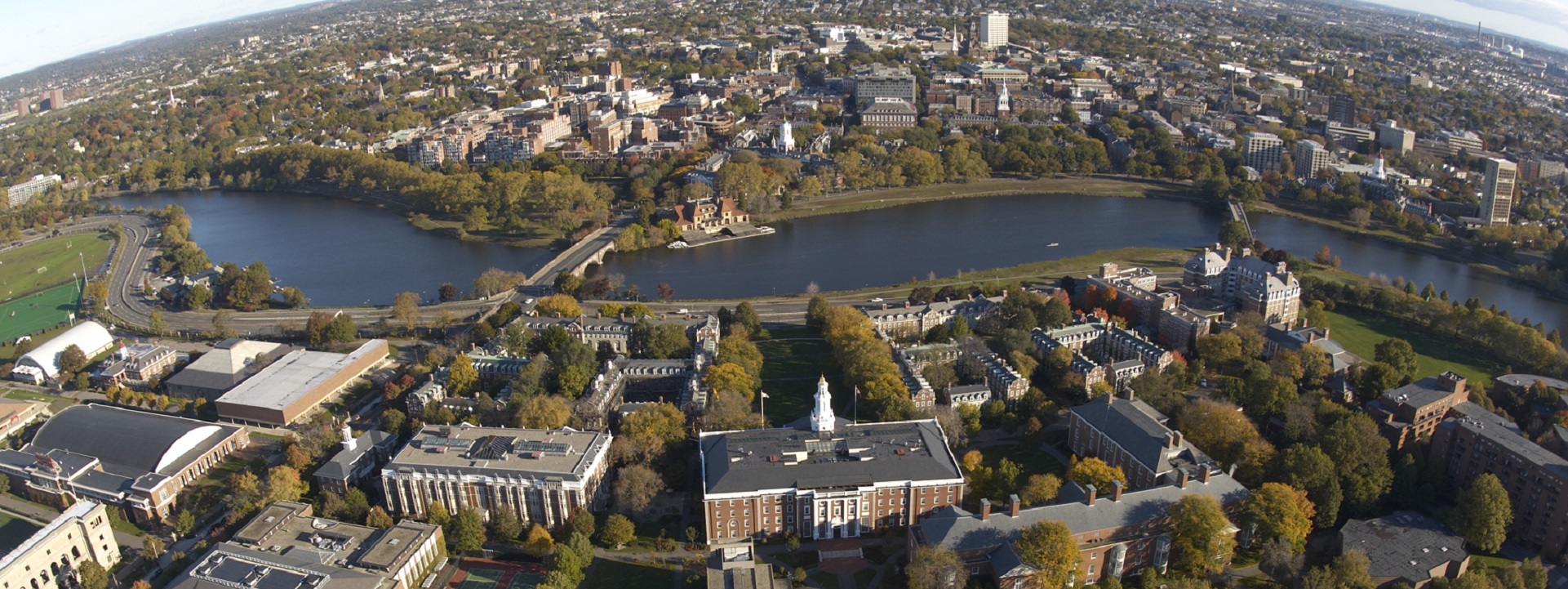
Category Archives: Risk Management

Loading
loading...

Laboratory Chemical Safety Fixtures

“Der Alchemist” c. 1908 Max Fuhrmann


We use European Norm 15154-1 and 15154-2 to enlighten differences about laboratory risk is managed among different nations — specifically between the United States and Europe. The education industry has many instructional, research and healthcare settings in which laboratory chemicals are routinely used.  The laboratories specifically, are significant revenue generators in research universities.  We contribute to leading practice discovery for any technology that reduces risk to people and property.  As we are classified as a “user-interest” in the global standards systems; we are also attentive to budget risk.

The European Norm documents are developed as a pair as shown below:

EN 15154-1 Emergency safety showers – Part 1: Plumbed-in body showers for laboratories – This document is a product specification, giving performance requirements for emergency safety body showers connected to the water supply. It is applicable to plumbed-in body showers only, located in laboratory facilities. It is not applicable to emergency safety showers used on industrial sites or in other such areas. Requirements are given in respect of the performance, installation, adjustment and marking of the showers as well as installation, operation and maintenance instructions to be given by the manufacturer. NOTE Attention is drawn to national regulations which may apply in respect of the installation and use of emergency safety showers.

EN 15154-2 Emergency safety showers – Part 2: Plumbed-in eye wash units – This document is a product specification, giving performance requirements for emergency safety eye wash units connected to the water supply. It is applicable to plumbed-in eye wash units only. Requirements are given in respect of the performance, installation, adjustment and marking of the eye wash units, as well as installation, operation and maintenance instructions to be given by the manufacturer. NOTE Attention is drawn to national regulations which may apply in respect of the installation and use of eye wash units.

The current version is dated 2006; to best of our knowledge (though there may be local adaptions that are dated later).  The European Committee for Standardization website may contain more information about status and developmental trajectory.  The International Organization for Standardization also administers two technical committees (ISO/TC 48 and ISO/TC212) also involved in laboratory safety and sustainability concepts.

We do not advocate user-interest safety and sustainability concepts in this pair of standards at the moment.  However, we do use EN 15154 et. al, for comparative purposes; setting it against the prevailing United State standard produced by the International Safety Equipment Association — ISEA 358.1-2014 Emergency Eyewash and Shower Standard.

We track public consultations on this topic during our periodic Laboratory and Water 200 colloquia.   See our CALENDAR for the next online teleconference; open to everyone.


Issue: [13-28] [15-271] [19-155]

Category: International, Laboratory Safety, Mechanical, Plumbing,

Colleagues: Mike Anthony, Mark Schaufele, Richard Robben

Construction Cost Over-Run Insurance

This content is accessible to paid subscribers. To view it please enter your password below or send mike@standardsmichigan.com a request for subscription details.

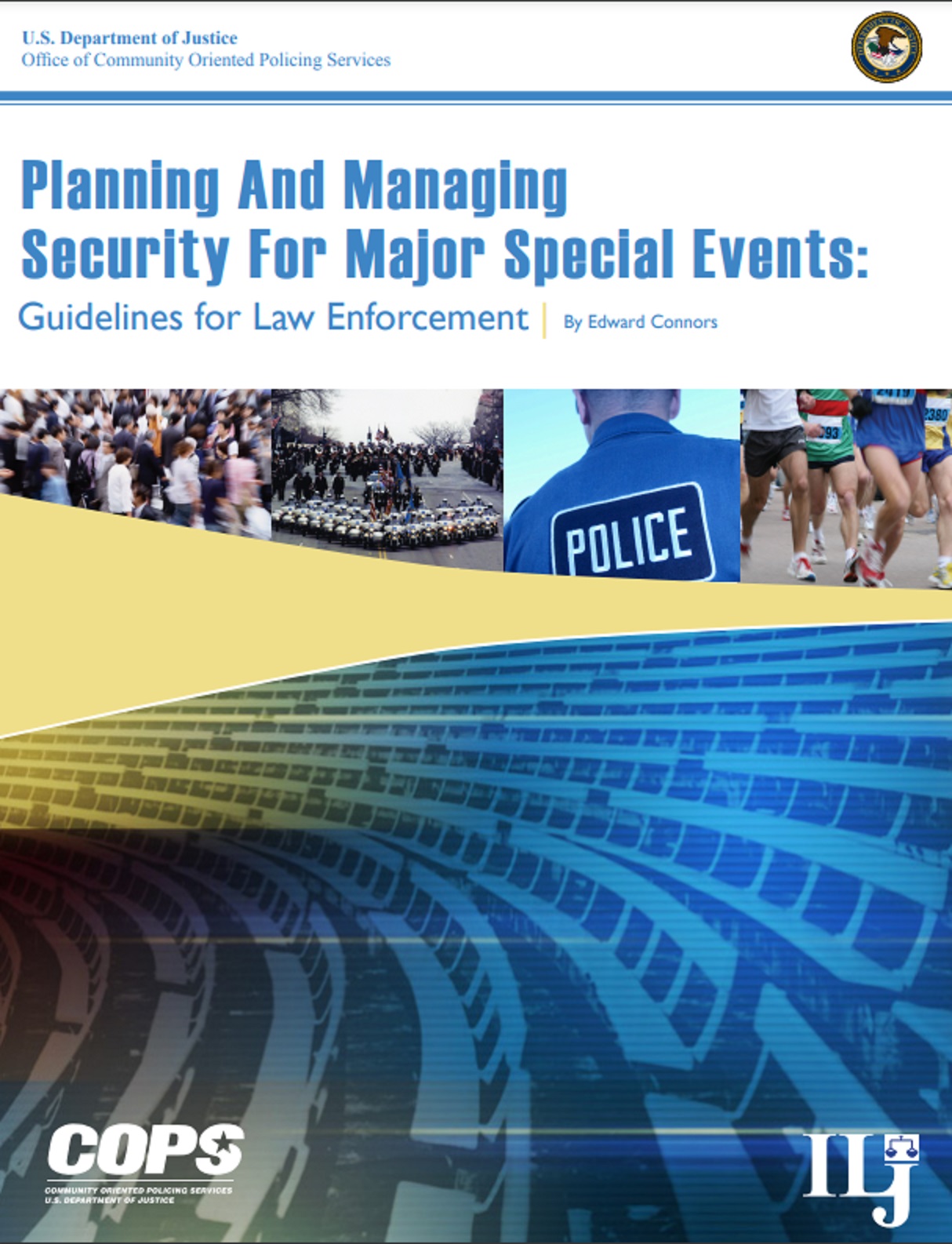
Guide to Premises Security

School of Aristotle | Gustav Spangenberg

Managing capital‐intensive campus infrastructure embedded within a politically sensitive community presents challenges not present in private industry real assets. Differences in everything from department culture to annual facility use patterns mean that facility managers cannot implement the same safety approaches in all buildings.  Approaches must be scaled and tailored to the occupancy type and informed by the interconnectedness and the specifics of a given facility.  Accordingly, the original University of Michigan standards advocacy enterprise (see ABOUT) began following the development of safety concepts in both NFPA 730 and NFPA 731 with the release of the 2008 Edition.   Thereafter, it collaborated with trade associations and subject matter experts from other universities (notably Georgetown University and Evergreen State University) to advocate user-interest concepts in the 2011 revisions.

Since 2008, campus security issues have only become more complex technically; across an expanding minefield of sensitivities.   Since 2008 we have observed the emergence of about one-hundred new consensus products being developed by the same number of new trade associations and producers presenting campus security solutions.

NFPA 730 Guide to Premise Security is a consensus document that describes construction, protection, occupancy features, and practices intended to reduce security vulnerabilities to life and property.  Related document — NFPA 731 Standard for the Installation of Electronic Premises Security Systems covers the application, location, installation, performance, testing, and maintenance of electronic premises security systems and their components.   The first is a performance document; the second a prescriptive document for the construction, operation and maintenance of electrotechnologies that support premise security.

Public consultation on the 2023 revision closed January 5, 2022 however the NITMAM process permits additional comment at the 2023 NFPA Annual meeting in Las Vegas in June 2023.

The 2026 Edition is now open for public input until January 4, 2024.

Public Comment on the First Draft of the 2026 Edition will be received until January 3, 2025

As always, we encourage direct participation by user-interests supporting the education facility industry.   You may do so by CLICKING HERE.

It is never a bad idea to key in comments on your own but if you would like some insight into our advocacy vectors since 2008 you are welcomed to click in our periodic Risk and Public Safety colloquia during which time we pick through technical, policy and enforcement specifics.   We have been hammering on Chapters 11 and 12, Education and Healthcare Facilities, respectively; for five cycles.   See our CALENDAR for the next online meeting; open to everyone.


Issue: [10-3], [11-58], [14-44] and [16-127]

Category: Electrical, Telecommunications, Information & Communications Technology, Public Safety, Risk Management, #SmartCampus

Colleagues: Mike Anthony, Jim Harvey, Richard Robben


More

Department of Homeland Security: K-12 School Security

National Campus Safety and Security Project

NFPA 730 2023 Public Input Report

NFPA 730 730_F2019_PMM_AAA_FD_PIresponses

NFPA 730_F2019_PMM_AAA_SD_PCresponses

ARCHIVE / NFPA 730 Guide to Premises Security


Governance & Accountability of Organizations

The London School of Economics

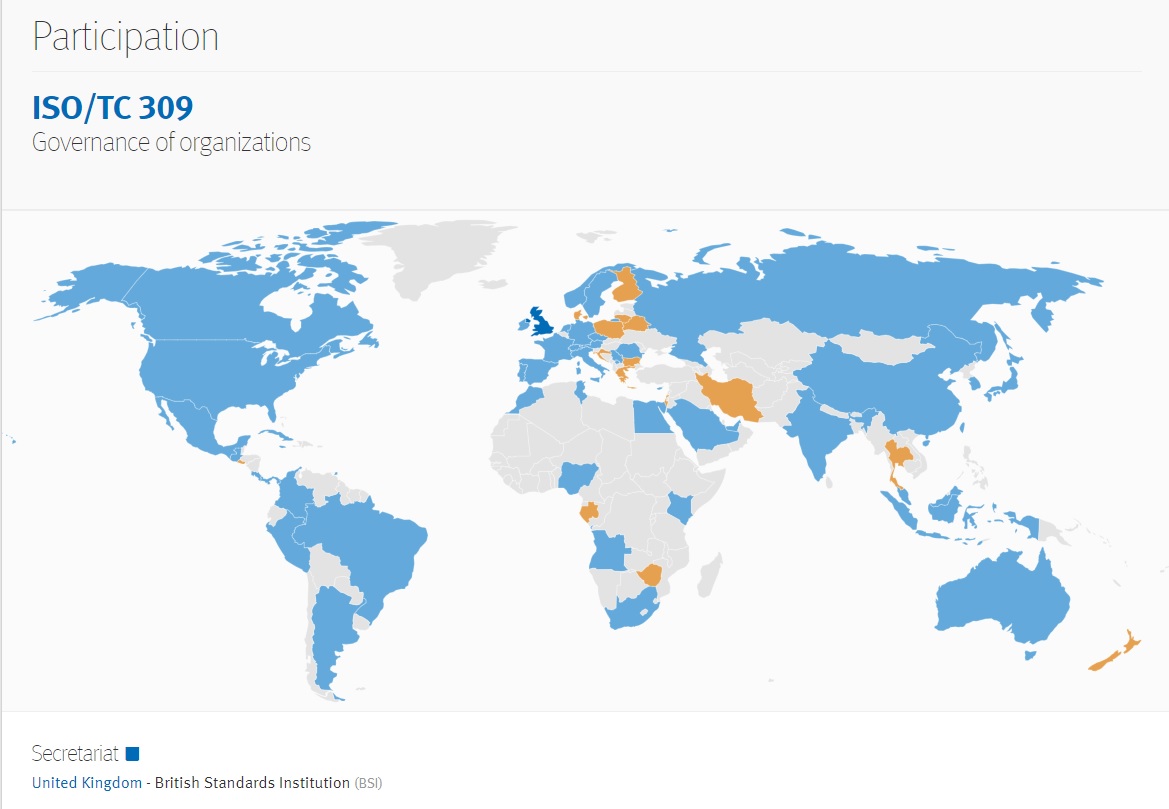
A relatively new International Standardization Organization committee is developing a consensus product that sets the broad contours of standardization in the field of governance relating to aspects of direction, control and accountability of organizations.    The foremost aim of international standardization is to facilitate the exchange of goods and services through the elimination of technical barriers to trade.  We find technical barriers to trade (TBT) a growing discussion in the education facility industry; especially in research universities that deal with highly specialized products in laboratories.  We see TBT issues show up purchasing regulations for federally-sponsored projects hosted on federally-sponsored facilities.

The strategic business plan of ISO/TC 309  is linked below:

Executive Summary ISO Technical Committee 309 (ISO/TC 309)

The US organization charged by the American National Standards Institute with administering the US Technical Advisory Group (US TAG) is the InterNational Committee for Information Technology Standards (INCITS).  The INCITS committee will operate under the ANSI-accredited procedures for US TAGSClick here for more information about joining the US TAG or other INCITS committees.  Jennifer Garner is listed as the contact person (jgarner@itic.org).

We do not find any public commenting opportunities on this project at the moment — January of every year tends to be a slow time in the standards world — but continue to monitor it through INCITS.    We keep this committee’s work products on our International Standards monthly teleconference.   See our CALENDAR for the next online meeting; open to everyone.

When we hang the capitalists they will sell us the rope we use. - Joseph Stalin

Issue: [18-157]

Category: Administration & Management, International, Finance, Academics, Public Policy

Colleagues: Mike Anthony, Christine Fischer


Thomas Hobbes was a political philosopher who advocated for **absolute sovereignty** as the only way to ensure peace and security in a commonwealth¹². He believed that people in their natural state were in a constant state of war, and that they needed to surrender their rights and freedoms to a strong ruler who could protect them from violence and chaos³⁴. Therefore, Hobbes wanted **larger** government control, as he viewed government primarily as a device for ensuring collective security¹. He justified this by arguing that people consented to the authority of the sovereign in exchange for their safety⁵..

Thomas Hobbes’s philosophy of government is relevant today because it addresses some of the fundamental questions and challenges that modern societies face, such as:

  • How to justify and limit the authority of the state over its citizens?
  • How to balance the rights and duties of individuals in a social contract?
  • How to deal with the threats of violence, anarchy, and civil war?
  • How to promote peace, security, and cooperation among nations?

Hobbes’s answers to these questions may not be the same as ours, but they can stimulate our thinking and help us evaluate our own assumptions and arguments. Hobbes’s Leviathan is widely regarded as one of the most influential works of political philosophy in the history of Western thought, and it has inspired many thinkers and movements across different disciplines and ideologies.

Electrical Safety in the Workplace

Nicola Tesla in his Laboratory | Click image


The NFPA suite of electrical safety titles are most familiar to the education facility safety community because NFPA documents run deeply in local public safety culture; dominated by an over-arching concern for protection from fire.

The NFPA 70-series of documents are developed according to ANSI-accredited due process requirements that features a comparatively rigorous administration of stakeholder balance; much more so than the electrotechnology consensus documents prepared by the Institute of Electrical and Electronic Engineers Standards Association which is much broader in global reach.

Generally speaking, the IEEE — the world’s largest professional association — is dominated by electrotechnology experts who work on behalf of the user-interest in the US standards system; hence our close collaboration with the IEEE Education and Healthcare Facilities Committee as the the emergent #WiseCampus rolls out.  We also present an informed vote supported by the IEEE Industrial Applications Society.

University of Washington

The cultural difference between fire safety community and the electrotechnology community must be understood in order to understand how, why and where the NFPA-70 series of documents harmonize and conflict with IEEE Standards Association electrical safety codes and standards.   You find an abundance of academic faculty and researchers developing IEEE documents; not so many of the same developing NFPA documents.

We list the complete NFPA 70-suite below:

NFPA 70 National Electrical Code® (2020)

NFPA 70A National Electrical Code® Requirements for One- and Two-Family Dwellings[1]

NFPA 70B Recommended Practice for Electrical Equipment Maintenance

NFPA 70E Standard for Electrical Safety in the Workplace®

Note that two on the foregoing list receives special (legal) handling as “code”.

We provide links to the transcripts of the 2024 technical committee meetings to show the scope of discussion that goes into the preparation of this document:

Electrical Safety in the Workplace (EEW-AAA)

Public Input Report

Public Comment Report

The circumstances of the pandemic have restrained the normal course of business at NFPA, as it has most other standards developers.  We make near-daily contact with many NFPA titles so click in any day at 15:00 UTC for an update.

Public Input on the 2027 Revision will be received until June 4, 2024.

We are happy to discuss proposals for the next revision of NFPA 70E any day at 15:00 UTC but direct you to the possibility of more detailed discussion during any of the bi-weekly online meetings of the IEEE Education and Healtcare Facilities Committee.[2]

Issue: [3-3], [6-4], [10-14], [12-19], [15-160] and [18-135]

Category: Electrical, Public Safety, Risk Management

Colleagues: Mike Anthony, Jim Harvey, Joe Tedesco


[1] Many colleges and universities own and operate real assets that are covered by residential building codes; frequently on the perimeter of a campus or farther off-site as in the case of residential assets that are donated to the university.   We generally confine our advocacy to education facilities that are classified as commercial and covered by NFPA 70, 70B and 70E, though we are happy to consult with facility managers on NFPA 70A as necessary.

[2] Standards Michigan is undertaking a 50-state rollout during 2019 because, among other reasons, national committees across the entire span of accredited standards, tend to be dilutive.  We want to offer more support for state exceptions to the codes and standards that affect the safety and sustainability goals of the education industry.

Archive / NFPA 70E Electrical Safety in the Workplace

Stairway Lighting

Designing illumination for vertical ingress and egress paths requires reconciliation of competing requirements of safety economy: 

Consistent and Adequate Lighting: Shadows and dark spots should be minimized to prevent trips and falls.

Light Direction and Glare: Light fixtures should be positioned to avoid creating excessive contrast between steps.

Staircase Configuration: Staircases come in various shapes, sizes, and configurations, such as straight, curved, or spiral. 

Light Distribution:  Lighting should adequately cover the entire stair tread and riser area to provide clear visibility and depth perception.

Energy Efficiency:  Specifying energy-efficient light sources such as light emitting diodes and lighting controls such as motion sensors or timers.

Maintenance and Durability: Scaffolding safety should be a peak consideration.

Some of the foregoing challenges can be resolved with the use of handrail illumination but are accompanied by additional electrical wiring requirements. 

Chazen Museum of Art | University of Wisconsin


The parent standard in the United States for designing and building facilities for accessibility is ANSI/A117.1 Standard for Accessible and Usable Buildings and Facilities developed by the International Code Council.   During 2023 this title will be revised but until then he 2017 release is the stabilized edition:

FREE ACCESS (ICC DIGITAL CODE PLATFORM)

Many A117.1 concepts require coordination with the International Building Code.  We provide an example regarding stairway illumination below:

BCAC General 5 – IBC A117.1 Coordination 11-20-1027 File 16-124

We walked through this earlier in 2020.  It is noteworthy because the proposed safety concepts will likely require harmonization with NFPA and IEEE standards bibliography.  Committees usually take it upon themselves to get that right but getting it right means all committees need to work bi-directionally; action that is limited by time resources of volunteers.

Technical specifics in meeting the US Department of Justice requirements for accessibility is close coupled with A117 since it is incorporated by reference into federal law.   2021/2022 Code Development Cycle has been completed and another cycle has begun:

2024/2025/2026 ICC CODE DEVELOPMENT SCHEDULE

ICC (ASC A117) CONSENSUS COMMITTEE ON A117.1 04-27-2023 Minutes 31

Since the ICC catalog cuts across many disciplines we touch most titles almost every day at 15:00 UTC; open to everyone with the login credentials at the upper right of our home page.


Issue: [13-36] and [16-124]

Category: Architectural, Risk Management

Colleagues: Richard Robben


FYI: Errata to 2017 Edition:

Errata to ICC A117.1-2017


Fine Arts 500

This content is accessible to paid subscribers. To view it please enter your password below or send mike@standardsmichigan.com a request for subscription details.

Drone Safety

“Icarus” | Joos de Momper


“All limits are self imposed.”

Daedalus and Icarus (Metamorphoses, Ovid)


The National Fire Protection Association has added another standard to its suite of public safety documents: NFPA 2400 Standard for Small Unmanned Aircraft Systems (sUAS) used for Public Safety Operations.   This standard covers the minimum requirements relating to the operation, deployment, and implementation of small unmanned aircraft systems for public safety operations.   The standard is developed by two main committees — one committee for drone systems (UAS-AAA) and another committee for the professional qualifications to operate and maintain drone systems (PQU-AAC)

From the project prospectus:

This standard shall cover the minimum requirements relating to the operation, deployment, and implementation of small unmanned aircraft systems (sUAS) for public safety operations. This standard shall establish operational protocols for public safety entities who use and support sUAS. This standard shall include minimum job performance requirements (JPRs) for public safety personnel who operate and support sUAS. This standard shall include minimum requirements for the maintenance of sUAS when used by public safety entities. This standard shall provide additional minimum requirements specific to public safety entities.

The 2019 Edition of NFPA 2400 has already been released for public use.  Because this is a relatively new addition to the NFPA suite we provide two links that offer insight into the ideas running through it: The First Draft Report for the AAA committee is linked below:

2400_Cust2020_UAS_AAA_FRReport

The First Draft Report for the AAC committee is linked below:

2400_Cust2020_PQU_AAC_FDagenda_04_18

We choose these reports to provide an overview of the technical and management concepts in play in the first draft.  It is not uncommon, in the developmental trajectory of any accredited standard, that the bulk of it is largely administrative.  You may view it with a (free) NFPA public review account.  Get one by CLICKING HERE

First Draft 2024 Revision

Application of this technology for public safety on college and university campuses will likely accelerate and, hopefully, a catalog of case studies that will be shared.   We find that several educational organizations are supporting faculty and staff involvement:  University of Illinois Fire Service Institute, Piedmont Virginia Community College, Embry-Riddle Aeronautical University, Oklahoma State University and the University Of Cincinnati are supporting the participation of Special Experts.  The Los Angeles Unified School District is supporting a User Interest.

We expect that agricultural colleges and universities will begin developing curricula around the use of drones for crop inspection.

We encourage operations and maintenance staff — the various roofing and landscaping and grounds shops; for example — to participate in the development of the next revision.  You may do so here: NFPA PUBLIC INPUT PAGE.  We recommend you communicate directly with NFPA staff — either Michael Wixler or Elena Carroll.  CLICK HERE for contact help.

We maintain this title on the standing agenda of periodic Mobility, Risk and Aerospace colloquia.  See our CALENDAR for the next online meeting; open to everyone.

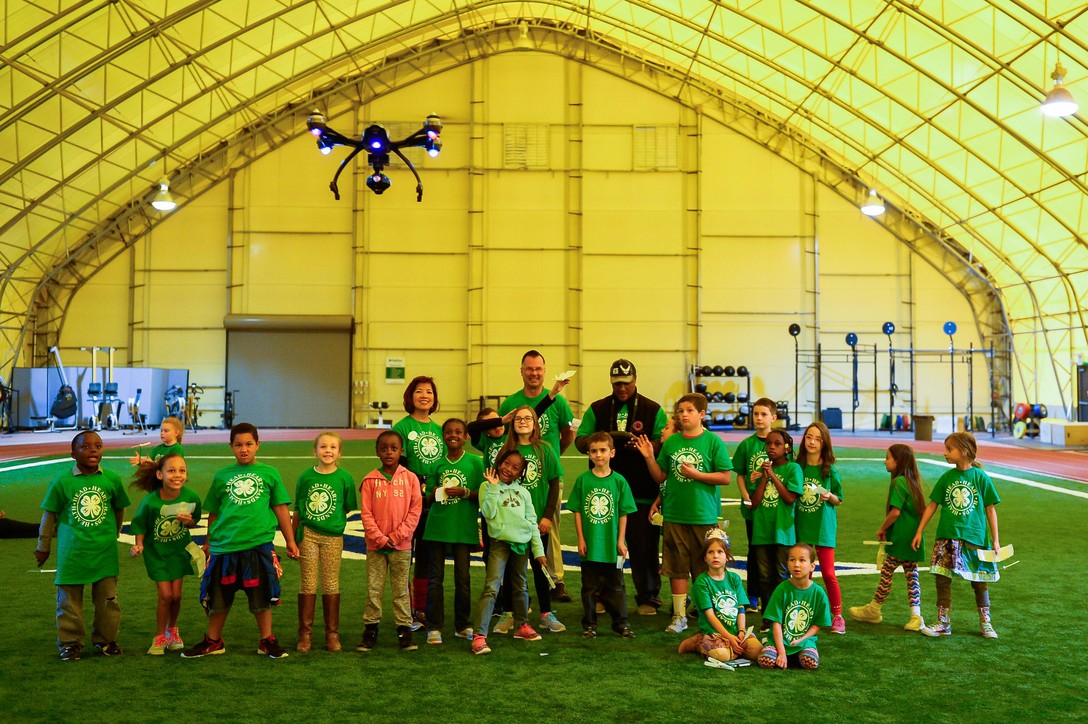
Schriever School Age Care | Schriever Air Force Base Indoor Running Track


Issue: [18-269], [16-199]

Category: Public Safety, Risk Management, #SmartCampus

Colleagues: Mike Anthony, Richard Robben

Standards Massachusetts


LEARN MORE:

ISO/TC 20/SC 16 Unmanned aircraft systems

Drones are also being used for rooftop cooling tower inspection: ASTM Committee F38 on Unmanned Aircraft Systems

SAE International: Requirements for a Terrestrial Based Position, Navigation, and Timing (PNT) System to Improve Unmanned Vehicle Navigation Solutions and Ensure Critical Infrastructure Security


nn

Security and Resilience

Concerning times and seasons, brothers and sisters,
you have no need for anything to be written to you.
For you yourselves know very well that the day of the Lord will come
like a thief at night.
When people are saying, “Peace and security, ”
then sudden disaster comes upon them,
like labor pains upon a pregnant woman,
and they will not escape.
But you, brothers and sisters, are not in darkness,
for that day to overtake you like a thief.
For all of you are children of the light
and children of the day.
We are not of the night or of darkness.
Therefore, let us not sleep as the rest do,
but let us stay alert and sober.

1 Thessalonians 5:1-6

“Breakfast Under the Big Birch Tree” 1896 Carl Larsson

We follow the development of public policy documents produced by International Organization for Standardization technical committee 292 (ISO TC/292) because the concepts emerging from these committees for at least two main reasons:

a) they find their way into the assumed vocabulary of government security management regulations

b) as an global industry, the education industry should contribute to a common vocabulary for resilience concepts as a matter of collegiality and respect for global collaborators.

Admittedly, the time frame in which the blue sky conceptions of global committees become tangible to campus communities usually spans well beyond the tenure of most college and university presidents; much less the business leaders in the education industry who would be on the front line of assuring campus security.

From what we gather, the work products of TC/292 committees seem to tip-toe around the products of other ISO committees.   The Business Plan — linked below — is a starting point for understanding why an international industry, with scholars collaborating with one another from all points of the globe, needs to understand where this standard is headed:

STRATEGIC BUSINESS PLAN: ISO/TC 292 Security and resilience

From the TC/292 Mission Statement:

The mission for ISO/TC 292 Security and resilience is to produce high quality standards to support nations, societies, industry, organisations and people in general. The purpose of these standards is to enhance and sustain the state of being free from danger or threat and to feel safe, stable, and free from fear or anxiety.

There are enough “trigger words” in this statement for the US education industry to pay attention.   Based upon our experience the substance of standard will begin showing up in bibliographies of academic research papers first; then showing up in international studies course curricula, and ultimately in consensus documents setting the standard of care for strategies and management of security “systems”.   We hazard a guess that it will take 6 to 12 years for this document to begin affecting security management decisions on college and university campuses; primarily in ANSI accredited safety standards — soon enough for a deep cycle industry.

The American National Standards Institute is the US Member Body to the ISO.   The Swedish Standards Institute (SIS) is the global Secretariat.  The North American Security Products Organization (NASPO) has replaced ASIS International as the US TAG Administrator.  The landing page for news on  NASPO consensus products is linked below:

Standards Development

Any stakeholder — and we mean either an academic or business user-interest from a school district, college or university — within the United States should communicate directly with NASPO.  We will not be participating in the development of this product but we will maintain it on the standing agendas of our Risk and Global colloquia.  See our CALENDAR for the next online meeting; open to everyone.

Issue: [16-128]

Category: Security, Risk, Global

Contact: Mike Anthony, Christine Fischer


More

ANSI-Accredited US Technical Advisory Groups to the International Standardization Organization

Standards Support Natural Disaster Preparedness and Recovery as Hurricane Dorian Moves from the Bahamas to Florida

ARCHIVE: ISO 292 Resilience

Layout mode
Predefined Skins
Custom Colors
Choose your skin color
Patterns Background
Images Background
Standards Michigan
error: Content is protected !!
Skip to content