


Western Michigan University | Kalamazoo County 269
School teachers mimicked their students by leaving right when the bell rang pic.twitter.com/bd9CRVZeYm — The Net Daily (@TheNetDaily) April 4, 2026 A 1965 episode of Candid Camera captures the priceless reactions of two schoolboys meeting a very attractive new teacher.https://t.co/uSk39MmsYJ — Massimo (@Rainmaker1973) January 28, 2026 Can you tell which invention is fake? Trick question: none of them! These may seem like April Fools’ Day jokes, but they’re real – and they’re patented. All patents represent creativity and innovation, and we’re not fooling around when it comes to protecting your inventions. pic.twitter.com/xUvoGoUJEn — USPTO (@uspto) April 1, 2026 Have a word that’s overstayed its welcome? It’s time to banish it! 🗣️❌ 📝 Visit LSSU’s Banished Words entry form to submit a word for consideration: https://t.co/8lKrhomzFq #banishedwordslist #LSSU #traditions #2025 pic.twitter.com/hUkhhGIkYV — LSSU (@LifeatLSSU) October 25, 2024 I kwestion this decision and reject it.#AcademicTwitter #AcademicChatter #AcademicX #AprilFoolDay https://t.co/U472YpF3zO — Reviewer 2 (@GrumpyReviewer2) April 1, 2025 8th March 2014 — A Cambridge Diary (@acambridgediary) March 8, 2025 🤣🤣🤣 pic.twitter.com/tXKRTbixRB — Coach J (@coachj4592) March 8, 2025 https://standardsmichigan.com/gallery-april-fools-day-pranks-2022/ The Thursday before Easter, holds deep Christian significance in faith-influenced schools and colleges. It commemorates Jesus’ Last Supper with his disciples, where he instituted the Eucharist (Holy Communion) and issued a “new commandment” (mandatum in Latin, hence “Maundy”) to “love one another as I have loved you” (John 13:34).Central rituals include foot-washing (symbolizing humility and service) and the sharing of bread and wine. Many Anglican, Episcopal, and Christian-affiliated institutions mark the day with chapel services, special assemblies, or reflective events that teach values of compassion, equality, and servant leadership. It often signals the start of Easter school holidays, with some faith schools closing early or hosting observances. In faith-based US and Canadian colleges it begins the solemn Paschal Triduum leading to Good Friday and Easter; reminding educational settlements of sacrificial love in a historically Christian cultural context that lies at the foundation of the American Republic toward which so many international students flock. Passover (Pesach), one of Judaism’s most important festivals, commemorates the liberation of the Israelites from slavery in ancient Egypt, as recounted in the Book of Exodus. Celebrated for seven or eight days in spring, it emphasises themes of freedom, redemption, justice, and compassion.Passover holds growing significance amid increasing religious diversity. Jewish students observe the festival through family Seders — ritual meals featuring the Haggadah storytelling, symbolic foods like matzah and bitter herbs, and the Four Questions often asked by children. Many institutions support observance with religious accommodations: excused absences for Seders and holy days, kosher-for-Passover dining options, and events hosted by Hillel or Jewish student societies. Universities often provide guidance for staff and students on academic adjustments. Beyond Jewish communities, educational programs in faith schools, multicultural assemblies, and interfaith dialogues highlight Passover’s universal lessons of liberation from oppression and the pursuit of freedom, fostering greater cultural understanding of the spiritual underpinnings at the foundation of the American Republic. Lorem ipsum National Electrical Code 2029 CMP-2 https://standardsmichigan.com/current-issues-and-recent-research/
Fool's Day
Balloons are hard to ignore.
From my book ‘Cambridge – Town & Gown’ available at https://t.co/8I1DoF7Kzw and all bookshops pic.twitter.com/cY9LUeN0uh

Maundy Thursday
.jpg)

.jpg)
National Electrical Code 2029 CMP-2


On 9/11 the FDNY lost 343 of their own.
Not statistics. Sons, fathers, husbands from 75 firehouses across the five boroughs.
121 engine companies and 62 ladder companies answered the call. Every Rescue company in New York went in.
They knew the buildings were coming down and… pic.twitter.com/e4ArBUmfLq— Sassafrass84 (@Sassafrass_84) September 7, 2026

Scales Mound School District | Jo Daviess County Illinois 815
Oxford students after exams, 1989. pic.twitter.com/HQbO4r6dUE
— M (@0detobeauty) May 27, 2026
The calendar of Anglosphere educational settlements subtly shapes life of the mind, generally; and family and community life, specifically. Its cadence has roots in the cathedral schools and monastic learning communities of medieval Europe. Universities were not originally organized around modern “semesters.” Instead, the year followed the Christian liturgical calendar, agricultural seasons, food paths, daylight availability, and travel conditions.
In America educational calendars were nudged along by agricultural cycles. In the United Kingdom university calendars evolved into three major terms: Michaelmas in autumn, associated with arrival and beginnings; Hilary or Lent in winter, associated with discipline and study; and Trinity or Easter in spring, associated with examinations, outdoor rituals, music, rowing, gardens, and celebration.
Modern commencement traditions across the Anglosphere are descendants of medieval spring degree ceremonies. Academic gowns, hoods, processions, Latin phrases, formal dining, chapel music, and public recognition all preserve traces of the university as a scholarly guild and religious-civic community.
Before railways, electric lighting, and central heating, universities had to adapt to muddy roads, short winter days, limited candles, cold buildings, and agricultural obligations. Spring therefore became the natural season of culmination, reunion, athletic competition, courtship, and ceremony.
The medieval university was not merely a school but an educational settlement — a self-governing town of scholars, libraries, chapels, kitchens, workshops, residences, and dining halls. That settlement pattern survives in residential colleges, quadrangles, tutorial systems, common rooms, chapel choirs, and formal meals.
Anglosphere campuses retain this ancient emotional rhythm: autumn seriousness, winter inwardness, and spring release. That continuity helps explain why colleges and universities still feel culturally distinct from ordinary commercial society. (Relata: Gulliver Visits the Great Academy of Lagado)

We’re “organized” but not too organized; like the bookseller who knows where every book can be found.
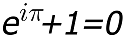
at a conference where you don’t have to present
— Peyman Milanfar (@docmilanfar) April 4, 2025
#AcademicChatter #AcademicTwitter
Academics be like 👇 pic.twitter.com/6cpVEw3PVS
— Reviewer 2 (@GrumpyReviewer2) April 2, 2024





