


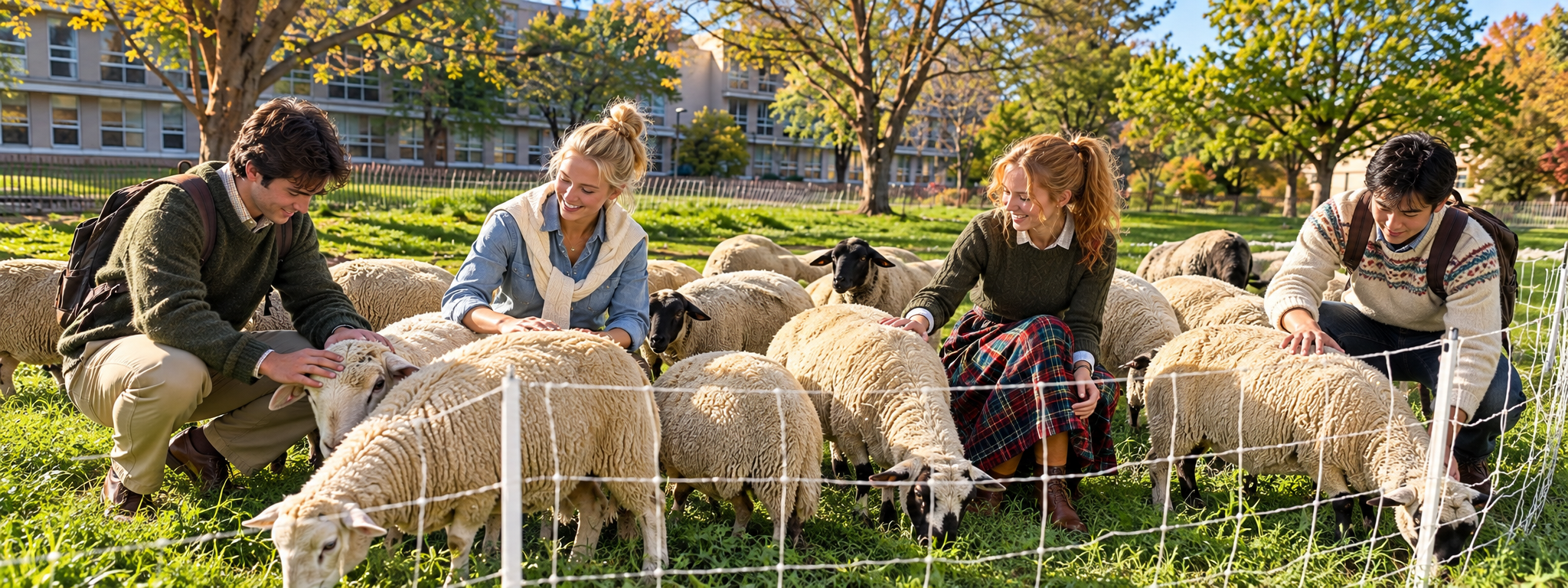
University of California Davis Sheep Mowers

Patriot’s Day | Boston Marathon International students enrolling in U.S. colleges encounter Academic English — the formal register of lectures, textbooks, papers, and discussions. This variety often embeds assumptions that diverge sharply from the American Founding’s emphasis on limited government, individual liberty, natural rights, and skepticism of centralized authority. The Founders designed a republic of enumerated powers, checks and balances, and federalism to restrain government and protect personal sovereignty. They viewed government as a necessary but dangerous servant. Deference was owed primarily to law and reason, not to elites or the state. Modern university discourse, however, frequently frames issues through lenses that normalize expansive government. Terms like “equity,” “systemic oppression,” “social justice,” “sustainability,” and “public good” recur in required writing, readings, and class analysis. These presuppose that societal problems demand coordinated state or institutional intervention and expert guidance. International students, often writing in a second language, must master not only grammar but also these rhetorical conventions to succeed. Essays commonly reward framing arguments around collective victimhood, institutional reform, or government solutions, while skepticism of authority or defense of limited government can be marked down. This creates subtle acculturation. Students absorb a version of English that subtly legitimizes big government as moral progress — contrasting the Founding’s core warning: unchecked power threatens liberty. Proficiency thus includes ideological fluency in progressive norms dominant in humanities and social sciences. In short, many international graduates internalize habits of thought prioritizing collective authority and equity over the Founders’ individualism and restraint — shaping future global elites away from the Republic’s original limited-government ethos. Happy Patriots’ Day, America! 🇺🇸 pic.twitter.com/3NqWX1lfSG — US Department of the Interior (@Interior) April 20, 2026 “Nighthawks” | Edward Hopper NEMA (ASC C136) (National Electrical Manufacturers Association) BSR C136.42-201x, Standard for Roadway and Area Lighting Equipment – SSL Cobra Head Retrofit Mechanical and Electrical Interchangeability (new standard) This standard defines the mechanical and electrical requirements for transforming installed HID streetlights to Solid State streetlights. Single copy price: $30.00 “The Doctor” | Sir Luke Fildes (1891) Monthly walk-through the developmental status of all regulations, codes, standards and other consensus documents relevant to university-affiliated healthcare facilities “U.S. Army Teaches a Trade (G.I. Telegrapher)” | Norman Rockwell (1919) Monthly walk through of information and communications technology regulations, codes and standards that affect safety and sustainability of the emergent #SmartCampus. Use the login credentials at the upper right of our home page. For an advance agenda, send a request to bella@standardsmichigan.com Duke University Proposal development for ICC Group B Codes. Facility management data to inform proposals is gratefully received. You are welcomed to submit proposals on your own by CLICKING HERE.
Open University:History of English

Area Lighting Retrofit Comments Due

Order from: David.Richmond@nema.org
Send comments (with copy to psa@ansi.org) to: Same
Healthcare Facilities

ICT Standards
_-_Google_Art_Project.jpg)

ICC Group B Code Proposal Writing




On 9/11 the FDNY lost 343 of their own.
Not statistics. Sons, fathers, husbands from 75 firehouses across the five boroughs.
121 engine companies and 62 ladder companies answered the call. Every Rescue company in New York went in.
They knew the buildings were coming down and… pic.twitter.com/e4ArBUmfLq— Sassafrass84 (@Sassafrass_84) September 7, 2026
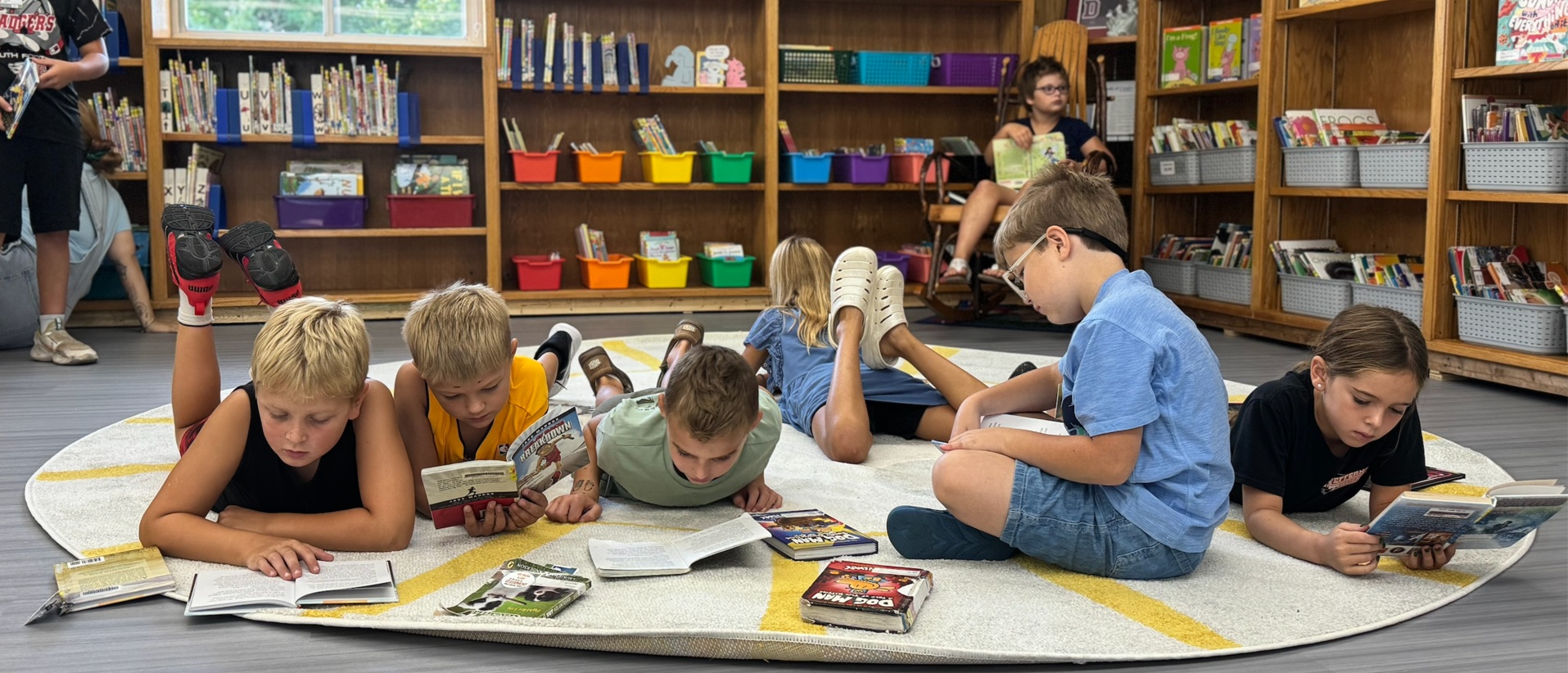
Scales Mound School District | Jo Daviess County Illinois 815
Oxford students after exams, 1989. pic.twitter.com/HQbO4r6dUE
— M (@0detobeauty) May 27, 2026
The calendar of Anglosphere educational settlements subtly shapes life of the mind, generally; and family and community life, specifically. Its cadence has roots in the cathedral schools and monastic learning communities of medieval Europe. Universities were not originally organized around modern “semesters.” Instead, the year followed the Christian liturgical calendar, agricultural seasons, food paths, daylight availability, and travel conditions.
In America educational calendars were nudged along by agricultural cycles. In the United Kingdom university calendars evolved into three major terms: Michaelmas in autumn, associated with arrival and beginnings; Hilary or Lent in winter, associated with discipline and study; and Trinity or Easter in spring, associated with examinations, outdoor rituals, music, rowing, gardens, and celebration.
Modern commencement traditions across the Anglosphere are descendants of medieval spring degree ceremonies. Academic gowns, hoods, processions, Latin phrases, formal dining, chapel music, and public recognition all preserve traces of the university as a scholarly guild and religious-civic community.
Before railways, electric lighting, and central heating, universities had to adapt to muddy roads, short winter days, limited candles, cold buildings, and agricultural obligations. Spring therefore became the natural season of culmination, reunion, athletic competition, courtship, and ceremony.
The medieval university was not merely a school but an educational settlement — a self-governing town of scholars, libraries, chapels, kitchens, workshops, residences, and dining halls. That settlement pattern survives in residential colleges, quadrangles, tutorial systems, common rooms, chapel choirs, and formal meals.
Anglosphere campuses retain this ancient emotional rhythm: autumn seriousness, winter inwardness, and spring release. That continuity helps explain why colleges and universities still feel culturally distinct from ordinary commercial society. (Relata: Gulliver Visits the Great Academy of Lagado)

We’re “organized” but not too organized; like the bookseller who knows where every book can be found.
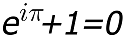
at a conference where you don’t have to present
— Peyman Milanfar (@docmilanfar) April 4, 2025
#AcademicChatter #AcademicTwitter
Academics be like 👇 pic.twitter.com/6cpVEw3PVS
— Reviewer 2 (@GrumpyReviewer2) April 2, 2024





