


Western Michigan University | Kalamazoo County 269
International Brotherhood of Electrical Workers Ann Arbor | Local 252 The phrase “Lies, Damned Lies, and Statistics” is commonly attributed to Mark Twain, who popularized it in his writings. Specifically, Twain wrote in his 1906 autobiography, Chapters from My Autobiography, published in the North American Review: “Figures often beguile me, particularly when I have the arranging of them myself; in which case the remark attributed to Disraeli, ‘There are three kinds of lies: lies, damned lies, and statistics,’ is peculiarly applicable.” Twain credited the phrase to Benjamin Disraeli, the former British Prime Minister, but there’s no definitive evidence that Disraeli ever said or wrote it. Some scholars suggest the phrase may have originated elsewhere or been a common saying at the time. Despite this, Twain’s attribution to Disraeli is the most widely recognized source, and he’s often credited with popularizing it. NFPA and Center for Campus Fire Safety Ring the Alarm on Fire Risks https://standardsmichigan.com/campus-fire-safety-month/ @STCFireServices is at @BrockUniversity tonight spreading the word about practicing fire safety in your residence. Reminder to students to never charge anything on a soft surface & use listed products only #FireSafeSTC @St_Catharines @firefighters_st pic.twitter.com/KwNLWAVXjM — St. Catharines Fire Services (@STCFireServices) September 1, 2025 🔥 Keep hallways, exits, and stairwells clear at all times! In a fire, every second counts. Don’t block your way out. Your life could depend on it.#CampusFireSafety #StudentLife #FireSafetyFirst pic.twitter.com/XKSjV4P7DJ — Mississauga Fire (@MississaugaFES) August 27, 2025 September is Campus Fire Safety Month! Share vital information to help students reduce the risk of fires in dorms and off-campus housing. Learn how: https://t.co/3VgMY8nagZ pic.twitter.com/Blra1tTKJ1 — Sparky the Fire Dog (@Sparky_Fire_Dog) September 3, 2024 NFPA and Center for Campus Fire Safety Ring the Alarm on Fire Risks https://standardsmichigan.com/campus-fire-safety-month/ @STCFireServices is at @BrockUniversity tonight spreading the word about practicing fire safety in your residence. Reminder to students to never charge anything on a soft surface & use listed products only #FireSafeSTC @St_Catharines @firefighters_st pic.twitter.com/KwNLWAVXjM — St. Catharines Fire Services (@STCFireServices) September 1, 2025 🔥 Keep hallways, exits, and stairwells clear at all times! In a fire, every second counts. Don’t block your way out. Your life could depend on it.#CampusFireSafety #StudentLife #FireSafetyFirst pic.twitter.com/XKSjV4P7DJ — Mississauga Fire (@MississaugaFES) August 27, 2025 September is Campus Fire Safety Month! Share vital information to help students reduce the risk of fires in dorms and off-campus housing. Learn how: https://t.co/3VgMY8nagZ pic.twitter.com/Blra1tTKJ1 — Sparky the Fire Dog (@Sparky_Fire_Dog) September 3, 2024 https://standardsmichigan.com/campus-surveillance/ <iframe width=”800″ height=”5005″ src=”https://www.youtube.com/embed/AVJCF6QVJ-c?si=cJ1RrzUSm8ohRMW7″ title=”YouTube video player” frameborder=”0″ allow=”accelerometer; autoplay; clipboard-write; encrypted-media; gyroscope; picture-in-picture; web-share” referrerpolicy=”strict-origin-when-cross-origin” allowfullscreen></iframe>
Labor Day Holiday

Campus Fire Safety Month
Campus Fire Safety Month

Campus Surveillance

On 9/11 the FDNY lost 343 of their own.
Not statistics. Sons, fathers, husbands from 75 firehouses across the five boroughs.
121 engine companies and 62 ladder companies answered the call. Every Rescue company in New York went in.
They knew the buildings were coming down and… pic.twitter.com/e4ArBUmfLq— Sassafrass84 (@Sassafrass_84) September 7, 2026

Scales Mound School District | Jo Daviess County Illinois 815
Oxford students after exams, 1989. pic.twitter.com/HQbO4r6dUE
— M (@0detobeauty) May 27, 2026
The calendar of Anglosphere educational settlements subtly shapes life of the mind, generally; and family and community life, specifically. Its cadence has roots in the cathedral schools and monastic learning communities of medieval Europe. Universities were not originally organized around modern “semesters.” Instead, the year followed the Christian liturgical calendar, agricultural seasons, food paths, daylight availability, and travel conditions.
In America educational calendars were nudged along by agricultural cycles. In the United Kingdom university calendars evolved into three major terms: Michaelmas in autumn, associated with arrival and beginnings; Hilary or Lent in winter, associated with discipline and study; and Trinity or Easter in spring, associated with examinations, outdoor rituals, music, rowing, gardens, and celebration.
Modern commencement traditions across the Anglosphere are descendants of medieval spring degree ceremonies. Academic gowns, hoods, processions, Latin phrases, formal dining, chapel music, and public recognition all preserve traces of the university as a scholarly guild and religious-civic community.
Before railways, electric lighting, and central heating, universities had to adapt to muddy roads, short winter days, limited candles, cold buildings, and agricultural obligations. Spring therefore became the natural season of culmination, reunion, athletic competition, courtship, and ceremony.
The medieval university was not merely a school but an educational settlement — a self-governing town of scholars, libraries, chapels, kitchens, workshops, residences, and dining halls. That settlement pattern survives in residential colleges, quadrangles, tutorial systems, common rooms, chapel choirs, and formal meals.
Anglosphere campuses retain this ancient emotional rhythm: autumn seriousness, winter inwardness, and spring release. That continuity helps explain why colleges and universities still feel culturally distinct from ordinary commercial society. (Relata: Gulliver Visits the Great Academy of Lagado)

We’re “organized” but not too organized; like the bookseller who knows where every book can be found.
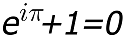
at a conference where you don’t have to present
— Peyman Milanfar (@docmilanfar) April 4, 2025
#AcademicChatter #AcademicTwitter
Academics be like 👇 pic.twitter.com/6cpVEw3PVS
— Reviewer 2 (@GrumpyReviewer2) April 2, 2024





