


Blair County Pennsylvania 814
School teachers mimicked their students by leaving right when the bell rang pic.twitter.com/bd9CRVZeYm — The Net Daily (@TheNetDaily) April 4, 2026 A 1965 episode of Candid Camera captures the priceless reactions of two schoolboys meeting a very attractive new teacher.https://t.co/uSk39MmsYJ — Massimo (@Rainmaker1973) January 28, 2026 Can you tell which invention is fake? Trick question: none of them! These may seem like April Fools’ Day jokes, but they’re real – and they’re patented. All patents represent creativity and innovation, and we’re not fooling around when it comes to protecting your inventions. pic.twitter.com/xUvoGoUJEn — USPTO (@uspto) April 1, 2026 Have a word that’s overstayed its welcome? It’s time to banish it! 🗣️❌ 📝 Visit LSSU’s Banished Words entry form to submit a word for consideration: https://t.co/8lKrhomzFq #banishedwordslist #LSSU #traditions #2025 pic.twitter.com/hUkhhGIkYV — LSSU (@LifeatLSSU) October 25, 2024 I kwestion this decision and reject it.#AcademicTwitter #AcademicChatter #AcademicX #AprilFoolDay https://t.co/U472YpF3zO — Reviewer 2 (@GrumpyReviewer2) April 1, 2025 8th March 2014 — A Cambridge Diary (@acambridgediary) March 8, 2025 🤣🤣🤣 pic.twitter.com/tXKRTbixRB — Coach J (@coachj4592) March 8, 2025 https://standardsmichigan.com/gallery-april-fools-day-pranks-2022/ The Thursday before Easter, holds deep Christian significance in faith-influenced schools and colleges. It commemorates Jesus’ Last Supper with his disciples, where he instituted the Eucharist (Holy Communion) and issued a “new commandment” (mandatum in Latin, hence “Maundy”) to “love one another as I have loved you” (John 13:34).Central rituals include foot-washing (symbolizing humility and service) and the sharing of bread and wine. Many Anglican, Episcopal, and Christian-affiliated institutions mark the day with chapel services, special assemblies, or reflective events that teach values of compassion, equality, and servant leadership. It often signals the start of Easter school holidays, with some faith schools closing early or hosting observances. In faith-based US and Canadian colleges it begins the solemn Paschal Triduum leading to Good Friday and Easter; reminding educational settlements of sacrificial love in a historically Christian cultural context that lies at the foundation of the American Republic toward which so many international students flock. Passover (Pesach), one of Judaism’s most important festivals, commemorates the liberation of the Israelites from slavery in ancient Egypt, as recounted in the Book of Exodus. Celebrated for seven or eight days in spring, it emphasises themes of freedom, redemption, justice, and compassion.Passover holds growing significance amid increasing religious diversity. Jewish students observe the festival through family Seders — ritual meals featuring the Haggadah storytelling, symbolic foods like matzah and bitter herbs, and the Four Questions often asked by children. Many institutions support observance with religious accommodations: excused absences for Seders and holy days, kosher-for-Passover dining options, and events hosted by Hillel or Jewish student societies. Universities often provide guidance for staff and students on academic adjustments. Beyond Jewish communities, educational programs in faith schools, multicultural assemblies, and interfaith dialogues highlight Passover’s universal lessons of liberation from oppression and the pursuit of freedom, fostering greater cultural understanding of the spiritual underpinnings at the foundation of the American Republic. Lorem ipsum National Electrical Code 2029 CMP-2 https://standardsmichigan.com/current-issues-and-recent-research/ https://standardsmichigan.com/colloquy-april/ Good morning pic.twitter.com/M1TybjxEwN — 𝒩𝒶𝓉𝒶𝓁𝒾𝒶 (@classicspilled) November 24, 2025 “He who does not speak foreign languages — Johann Wolfgang von Goethe “The Tower of Babel” 1563 / Pieter Bruegel the Elder Here’s a rough breakdown of the top languages on the web: English: 55.4% – Russian: 6.6% – Japanese: 5.4% – Spanish: 5.2% – Chinese: 4.6% One of the most contentious aspects of best practice discovery and promulgation in any domain, and no less so in educational settlements, is an agreed-upon vocabulary and shared understanding. As we explain elsewhere in this history, when a counter-party disagrees with you, he simply switches out the vocabulary — i.e. changes definitions or adds or subtracts from the traditional meanings of things. So we approach this topic several times a year to confirm our bearing on the meaning of things. We begin 2025 by breaking down this topic into four sections Language 100: Survey of vocabulary in the standards catalogs relevant to building and managing education settlement real assets; including legal terms. Language 200: Electrotechnology standard catalogs; including computer programming languages. Language 300: The English as the language of science and innovation; the birthplace of computing and programming, the internet’s native tongue, standardization & open source development; etc. Language 400: Reserved. Received Pronunciation RE: National Debate and Speech Association https://youtube.com/shorts/JGyuv9MLxJg?si=Cq2P5TX9N8S7rMHh Come see ‘Pygmalion’ this weekend at Arno Gustin Hall on campus! University of Mary students bring this classic to life in a riveting weekend of performances. 🎬 Showtimes: — University of Mary (@umary) March 21, 2025 In the United Kingdom, National Poetry Month is celebrated in October, and it is known as “National Poetry Day” which has been observed since 1994. It is an initiative of the Forward Arts Foundation, which aims to encourage people to read, write and perform poetry. Other countries also have their own poetry celebrations, such as World Poetry Day, which is observed annually on March 21 by UNESCO (United Nations Educational, Scientific and Cultural Organization) to promote the reading, writing, and teaching of poetry worldwide. In past years we used a Tamil mnemonic because Tamil is the oldest surviving language and remains the spoken language of 80-odd million people of South Asia. Alas, use of Tamil confounds our Wordpress content management system so in 2024 we began coding this topic in American English https://standardsmichigan.com/%e0%ae%ae%e0%af%8a%e0%ae%b4%e0%ae%bf-2/ Latin Phrases You Should Know. pic.twitter.com/Erq61gVW29 — Learn Latin (@latinedisce) May 5, 2024 Once median household income is adjusted for cost of living, Utah emerges as the wealthiest state in the nation and Mississippi yet again ranks last. Source: https://t.co/AN3JZqtNnF pic.twitter.com/kv8U3LZlvh — Simon Kuestenmacher (@simongerman600) January 3, 2025 HAPPY BIRTHDAY MISS JONES (SCHOOL TEACHER), 1956 Chalkboards vs Whiteboards – A Comparison Liebfrauenschule Cloppenburg https://standardsmichigan.com/writing-boards/ Luleå tekniska universitet | Svenska institutet för standarder | Standards Sweden “Swedes and Immigration: A Mismatch?” by Tino Sanandaji (Fondapol, 2019): This paper analyzes Sweden’s shift from low immigration to high inflows from non-Western/third-world countries (e.g., Syria, Iraq, Somalia, Afghanistan), noting that net migration peaked at 0.8% of the population in 2014–2015. Sanandaji, a Swedish economist of Kurdish-Iranian origin, argues that poor labor market integration (with foreign-born employment at 59.6% vs. 82.9% for natives) and fiscal costs (1.5–2% of GDP annually) make unrestricted immigration unsustainable for Sweden’s welfare state. He explicitly advocates for very restrictive policies, including tighter border controls, stricter asylum rules, and reduced family-based immigration to limit low-skilled inflows from developing countries. “Sweden: Rape Capital of the West” by Ingrid Carlqvist and Lars Hedegaard. Gatestone Institute, 2015): Carlqvist, a Swedish journalist, co-authors this piece linking Sweden’s 1,472% rise in reported rapes (from 421 in 1975 to 6,620 in 2014) to mass immigration from Muslim-majority/third-world countries (e.g., Iraq, Syria, Somalia). It cites studies showing foreign-born men overrepresented in rape convictions (up to 19.5 times more likely) and attributes this to cultural differences. The article calls for policy changes to restrict such immigration to protect Swedish society and women, criticizing authorities for downplaying the issue Äntligen vintervitt på @LTUniv och med -10 grader, julsång, kaffe och bullar firades vintern och den årliga marschalltändningen av Regnbågsallén in.https://t.co/ujbAp3bM6a pic.twitter.com/GhX56T7avG — Luleå tekniska universitet (@LTUniv) November 29, 2019 At 90 years old, Menahem Pressler becomes more than a pianist while playing Chopin, turning each note into a lifetime of mastery and elegance from a true living legend. 🎶 😍pic.twitter.com/vVVjfByYgS — Enezator (@Enezator) January 31, 2026 “If you steal from one person that is plagiarism. If you steal from many people, that is research” Missed it live? We planned for that! At a recent USPTO Hour, America’ Branding Agency dives into how name, image, likeness (NIL) connects with branding and trademarks – on the field, off the field, and everywhere between. Catch the recording here: https://t.co/b3fh7aVOy7 pic.twitter.com/gvgn5HCJmH — USPTO (@uspto) February 25, 2026 Chronicle of Higher Education: The Campus Cold War — Faculty vs. Administrators Università Cattolica del Sacro Cuore Student Art Innovation – Standardization – Commoditization run along a continuum. Today we unpack some of the ideas that hasten (and prohibit) leading practice discovery; how quickly goods and services become a “human right”; why all of this is relevant to education communities and why some believe that commoditization is a myth. From the Wikipedia In business literature, commoditization is defined as the process by which goods that have economic value and are distinguishable in terms of attributes (uniqueness or brand) end up becoming simple commodities in the eyes of the market or consumers. It is the movement of a market from differentiated to undifferentiated price competition and from monopolistic competition to perfect competition. Hence, the key effect of commoditization is that the pricing power of the manufacturer or brand owner is weakened: when products become more similar from a buyer’s point of view, they will tend to buy the cheapest. Related: Why High-Tech Commoditization Is Accelerating After months of hard work, the top five teams met at USPTO headquarters today for the final round of the 2025 National Patent Application Drafting Competition. 🏆 And the winners are … ⬇️ 🥇 First place — @UofMNLawSchool pic.twitter.com/uwNSJR0oBy — USPTO (@uspto) April 4, 2025 From creating a race car safety device that protects drivers from injury to revolutionizing chemotherapy, Spartans have contributed to more than 3,300 inventions. #SpartansWill pic.twitter.com/dchCs0BFBx — MSU (@michiganstateu) February 21, 2025 For 58 years, 7-Eleven has been protecting its iconic semi-frozen soft drink, the Slurpee. But it doesn’t stop there. The store has more than 200 registered trademarks to protect its goods and services, including “Oh thank Heaven for 7-Eleven” in 1978 and “Brainfreeze” in 1993. pic.twitter.com/b9bkkcijGg — USPTO (@uspto) July 11, 2025 Playgrounds Morning Recess = A place of Kindness! pic.twitter.com/Q1KBO8UhqZ — Amy Alzina, Ed.D (@alzina_amy) April 9, 2025 Teacher of the year-Candace O’Brien pic.twitter.com/oLVMAXMX2t — McKinney High School (@MHSLions) January 24, 2019 St. George’s Day — Patron Saint of England — is celebrated on April 23 to honor England’s patron saint, St. George, a Roman soldier martyred in 303 AD for his Christian faith. His legend, particularly the slaying of a dragon, became emblematic of good triumphing over evil, resonating deeply in medieval England. By the 14th century, St. George was officially recognized as England’s patron, with his feast day marked by religious observances and chivalric celebrations. In UK educational settings, the day’s history reflects evolving cultural and pedagogical priorities. During the medieval period, schools tied to monasteries or cathedrals included St. George’s Day in religious curricula, emphasizing moral lessons through hagiographies. The Reformation diminished saintly feasts, but St. George’s Day persisted in schools as a symbol of English identity, especially in the 19th century amid imperial pride. Victorian-era schools celebrated with pageants, plays, and readings of patriotic tales. In USA educational settings multiculturalism and secularism reduced its prominence in schools, with observances often limited to assemblies or history lessons; most commonly observed in the American South and Midwest. Happy St. George’s Day! — Kate Garner (@KateGarnerMusic) April 23, 2025 Last week, we marked the 100th anniversary of the groundbreaking for the St. George’s Chapel. As seen below, students outlined the space where the Chapel would be built. The Chapel was donated by John Nicholas Brown Jr., St. George’s Class of 1918. pic.twitter.com/wHh9woPYJh — St. George’s School (@DragonsofSG) April 29, 2024

Balloons are hard to ignore.
From my book ‘Cambridge – Town & Gown’ available at https://t.co/8I1DoF7Kzw and all bookshops pic.twitter.com/cY9LUeN0uh
.jpg)

.jpg)



knows nothing about his own.“ 

Friday – 7:00pm
Saturday – 2:00pm & 7:00pm
Sunday – 2:00pm#Lifeatmary pic.twitter.com/5w5MnEWk4K
We observe National Poetry Month (April) in the United States and Canada every year with an inquiry into changes in the (meaning of) definitions at the foundation of best practice literature; frequently the subject of sporty debate among experts writing codes and standards for the built environment of education communities.




Mass Challenge: The Socioeconomic Impact of Migration to a Scandinavian Welfare State by Tino Sanandaji** (Palgrave Macmillan, 2020): In this book chapter, Sanandaji discusses Sweden’s “unique” experiment with large-scale third-world immigration, which has shifted its image from a model society to one facing exaggerated but real challenges like social issues and exclusion. As a Swedish author, he provides a data-driven critique without explicit policy calls in the intro, but the broader work argues for controls on low-skilled migration to mitigate economic and integration failures.
Featured in my Talking Pictures TV series, once arranged by composer Edward German in his ‘Old English Melody’ series and my regular vocal warm up song before a gig! Here’s Early One Morning’ #StGeorgesDay pic.twitter.com/WT0BK50bBD





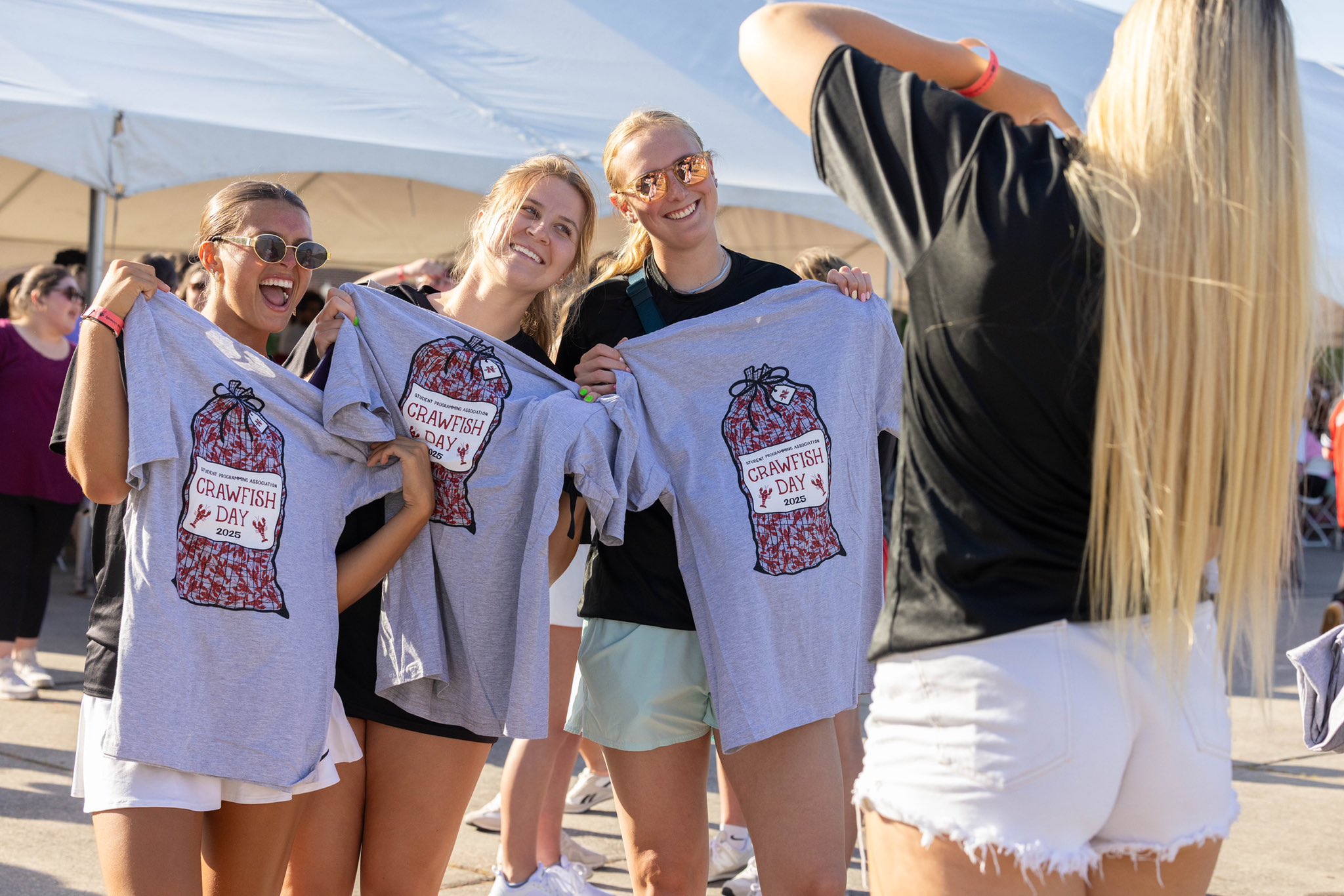



We’re “organized” but not too organized; like the bookseller who knows where every book can be found.
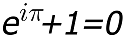
at a conference where you don’t have to present
— Peyman Milanfar (@docmilanfar) April 4, 2025
#AcademicChatter #AcademicTwitter
Academics be like 👇 pic.twitter.com/6cpVEw3PVS
— Reviewer 2 (@GrumpyReviewer2) April 2, 2024





