


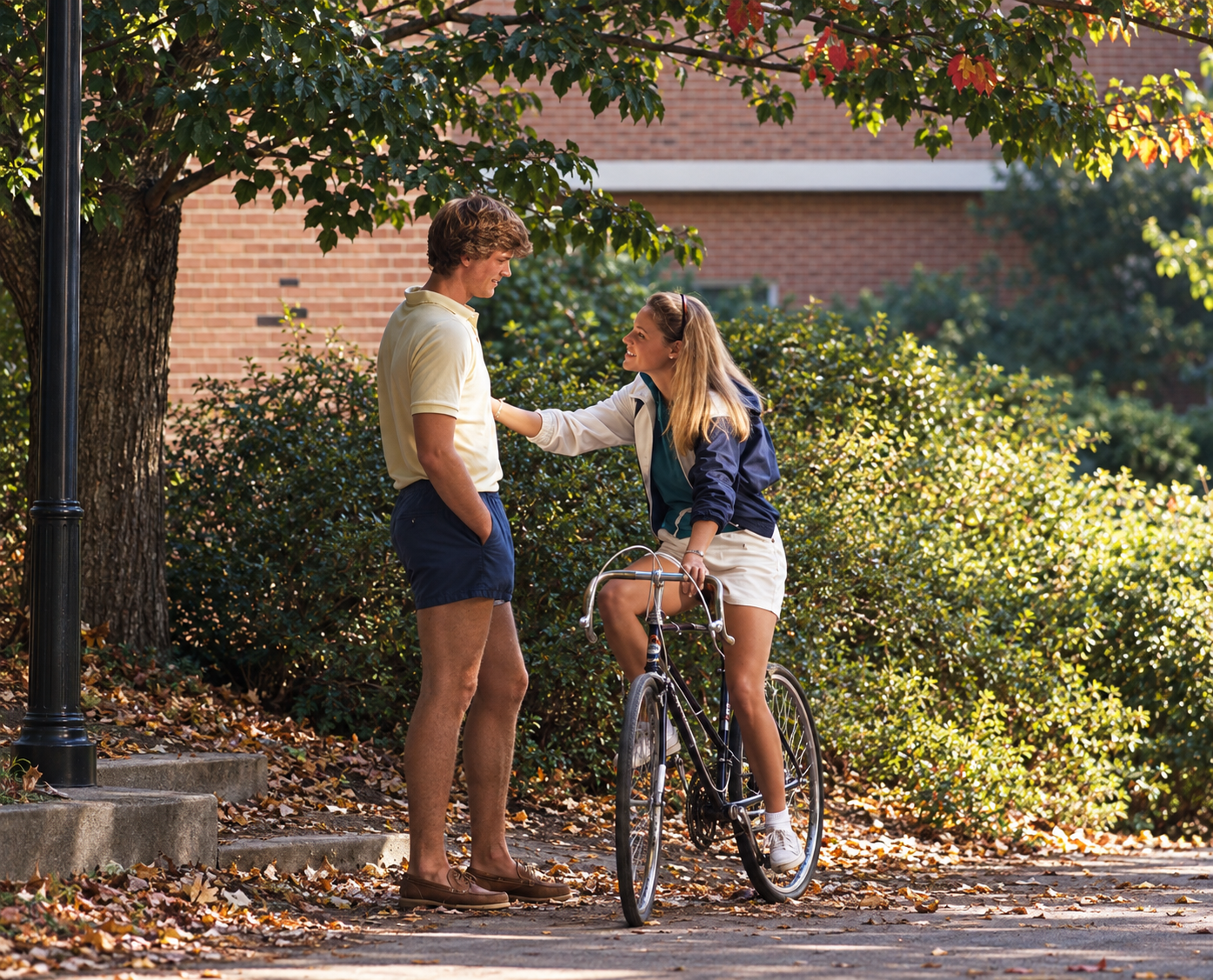
University of Delaware
The annual sports moratorium week, often called Dead Week or the Summer Dead Period, is a longstanding tradition observed by many American high schools during late June or early July. Established by state athletic associations, it temporarily suspends organized practices, workouts, camps, and coach-directed activities. The tradition reflects the belief that interscholastic athletics should complement, rather than dominate, family and community life. During the moratorium, student-athletes are encouraged to rest, recover from the demands of summer conditioning, spend time with family, take vacations, or simply enjoy an unstructured week before preseason preparations begin. Coaches likewise receive a welcome pause before the demanding fall season. Coming just before football, soccer, volleyball, cross-country, and marching band practices begin in late July or early August, the moratorium serves as a symbolic transition from summer recreation to the disciplined routines of a new academic and athletic year. https://standardsmichigan.com/exploring-the-impacts-of-elite-youth-sports-on-family-life/ “Tradition and the Individual Talent” T.S.Eliot 1818 ♫ American conservatives and liberals often disagree because they attach different meanings, priorities, and emotional associations to the same words. Political language evolves as society changes, and each movement seeks terminology that reflects its values and persuades others. Conservatives may emphasize continuity, tradition, and established definitions, while liberals may advocate revised language that reflects changing social norms or emerging perspectives and technologies. As new terms gain acceptance and older meanings shift, debates arise over whether language is clarifying reality or reshaping it. These disagreements extend beyond vocabulary, reflecting deeper differences about history, identity, law, culture, and the proper role of institutions — such as standards setting organizations — in defining and communicating public values. ♫ Popular music is one of the chief ways that American vernacular English is created, refined, and shared. A successful song can introduce a phrase, metaphor, or rhythm of speech that quickly spreads beyond its original audience into everyday conversation. Because songs are repeated on radio, streaming services, at sporting events, and in schools, their lyrics become familiar across generations and regions. Memorable lines are quoted in casual conversation, advertising, journalism, and even political speeches, giving them cultural authority. Songwriters pick up on the language of ordinary people while expressing it with economy, wit, and emotional force. As a result, lyrics preserve regional expressions, technical domains, idioms, thus reshaping older ones into forms that feel fresh and memorable. Over time, the most enduring lyrics become part of the nation’s shared vocabulary, enriching American vernacular English by providing common expressions, cultural references, and memorable turns of phrase that unite speakers from diverse backgrounds. 
Sport Moratorium Week
§


Language 600

On 9/11 the FDNY lost 343 of their own.
Not statistics. Sons, fathers, husbands from 75 firehouses across the five boroughs.
121 engine companies and 62 ladder companies answered the call. Every Rescue company in New York went in.
They knew the buildings were coming down and… pic.twitter.com/e4ArBUmfLq— Sassafrass84 (@Sassafrass_84) September 7, 2026

Scales Mound School District | Jo Daviess County Illinois 815
Oxford students after exams, 1989. pic.twitter.com/HQbO4r6dUE
— M (@0detobeauty) May 27, 2026
The calendar of Anglosphere educational settlements subtly shapes life of the mind, generally; and family and community life, specifically. Its cadence has roots in the cathedral schools and monastic learning communities of medieval Europe. Universities were not originally organized around modern “semesters.” Instead, the year followed the Christian liturgical calendar, agricultural seasons, food paths, daylight availability, and travel conditions.
In America educational calendars were nudged along by agricultural cycles. In the United Kingdom university calendars evolved into three major terms: Michaelmas in autumn, associated with arrival and beginnings; Hilary or Lent in winter, associated with discipline and study; and Trinity or Easter in spring, associated with examinations, outdoor rituals, music, rowing, gardens, and celebration.
Modern commencement traditions across the Anglosphere are descendants of medieval spring degree ceremonies. Academic gowns, hoods, processions, Latin phrases, formal dining, chapel music, and public recognition all preserve traces of the university as a scholarly guild and religious-civic community.
Before railways, electric lighting, and central heating, universities had to adapt to muddy roads, short winter days, limited candles, cold buildings, and agricultural obligations. Spring therefore became the natural season of culmination, reunion, athletic competition, courtship, and ceremony.
The medieval university was not merely a school but an educational settlement — a self-governing town of scholars, libraries, chapels, kitchens, workshops, residences, and dining halls. That settlement pattern survives in residential colleges, quadrangles, tutorial systems, common rooms, chapel choirs, and formal meals.
Anglosphere campuses retain this ancient emotional rhythm: autumn seriousness, winter inwardness, and spring release. That continuity helps explain why colleges and universities still feel culturally distinct from ordinary commercial society. (Relata: Gulliver Visits the Great Academy of Lagado)

We’re “organized” but not too organized; like the bookseller who knows where every book can be found.
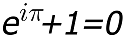
at a conference where you don’t have to present
— Peyman Milanfar (@docmilanfar) April 4, 2025
#AcademicChatter #AcademicTwitter
Academics be like 👇 pic.twitter.com/6cpVEw3PVS
— Reviewer 2 (@GrumpyReviewer2) April 2, 2024





