


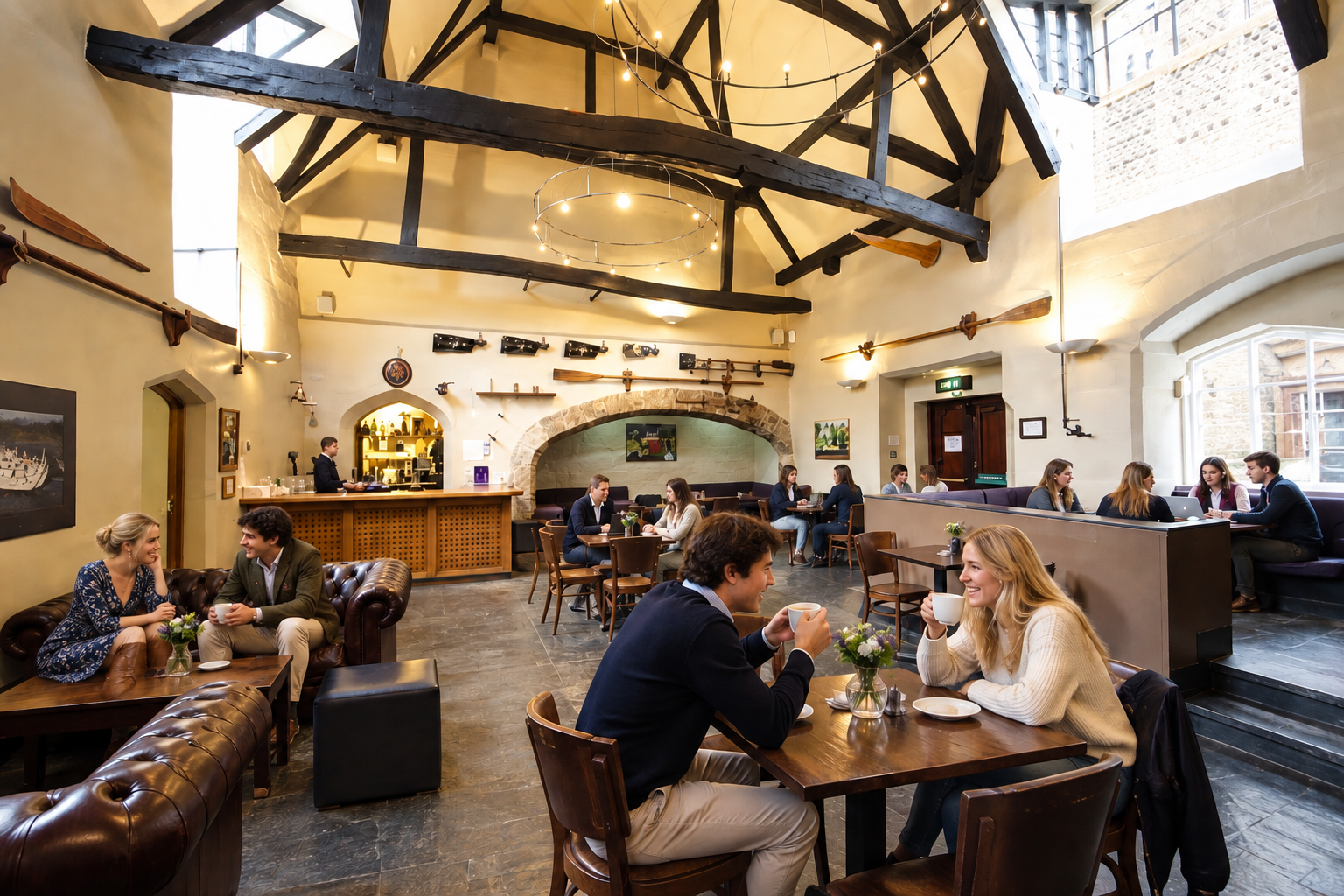
Old Kitchen Bar | Magdalen College

Aperçu The first working Monday of January is sometimes called “Divorce Day,” an unofficial observance arising from reports by family lawyers of increased inquiries after the Christmas holidays. Whether the single-day surge is real or largely a media tradition, the underlying subject is not imaginary. Divorce remains a common outcome of American marriage, although the familiar claim that one-half of all marriages end in divorce is an approximation rather than a reliable statistic for every generation or social group. That makes “Happy Together” more than an agreeable old love song. Marriage joins two people, but its durability affects children, housing, household wealth, schools and the communities in which families live. Divorce likewise reaches beyond the two adults whose names appear on the decree. Universities ordinarily approach marriage and divorce as matters for sociology, psychology, law or counseling. Yet higher education also shapes the circumstances in which young adults meet, form households and begin families. Housing costs, the length of education, student debt, childcare and the transition into employment all bear upon domestic life. “Happy Together” therefore carries a slightly darker resonance on Divorce Day. Staying together is not merely the conclusion of a three-minute pop song. For families and for the institutions that surround them, it is one of the difficult questions of domestic life and culture. “I’m sick of not having the courage to be an absolute nobody.” Famous People Discussing the Divine Comedy with Dante Periodic walk-through of Human Resource best practice catalog for labor markets generally; and units within the education facility industry specifically. We inform our discussion based upon periodic release on the Employment Situation Summary from the US Bureau of Labor Statistics. University of Michigan Facilities & Operations Organization Chart Recommended Reading: “The Human Side of Enterprise” 1960 Douglas McGregor University of Chicago Press: Readings in Managerial Psychology Alone is where the magic happens…apparently although I got so bored. This 10 mile run was the first time I’ve ran double digits since October 2021! The last two miles felt dreadful however, it’s done. I’m now going to smash a 🍕 #ukrunchat #training pic.twitter.com/fUP43c5yGi — Lil Morris 🏃♀️ (@BlondeLilmo) February 3, 2024 My biggest wins come when I do things out of discipline even when I have no motivation. pic.twitter.com/ozSDYqdwiQ — Travis Harrison (@TJHarrison22) February 9, 2025 Children should be proud that Whites in the West ended slavery worldwide, which had existed for thousands of years — Elon Musk (@elonmusk) December 8, 2025 All because two ppl fell in love 😍😅 pic.twitter.com/sGWGIJyLdu — Catarina Senora Gatita (@WyattCatarina) January 17, 2026 🇦🇺 How big is Australia? pic.twitter.com/T1jV9uAjvd — World of Statistics (@stats_feed) January 12, 2025 https://standardsmichigan.com/standards-australia/ 
"Happy Together"

Human Resources Hilary
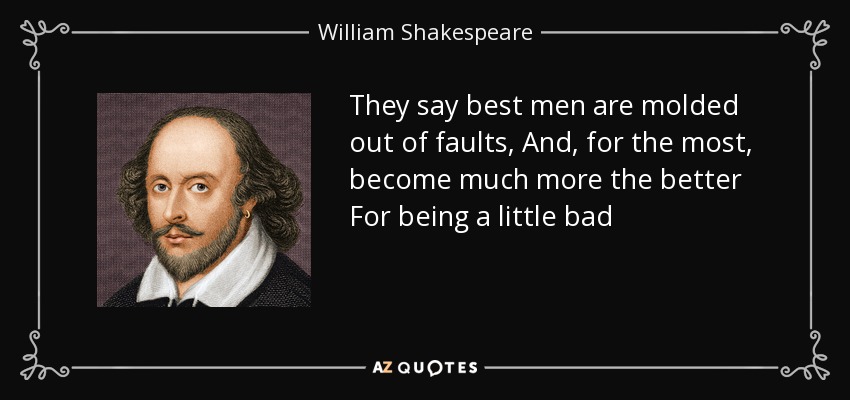
— Franny and Zooey” (J.D. Salinger)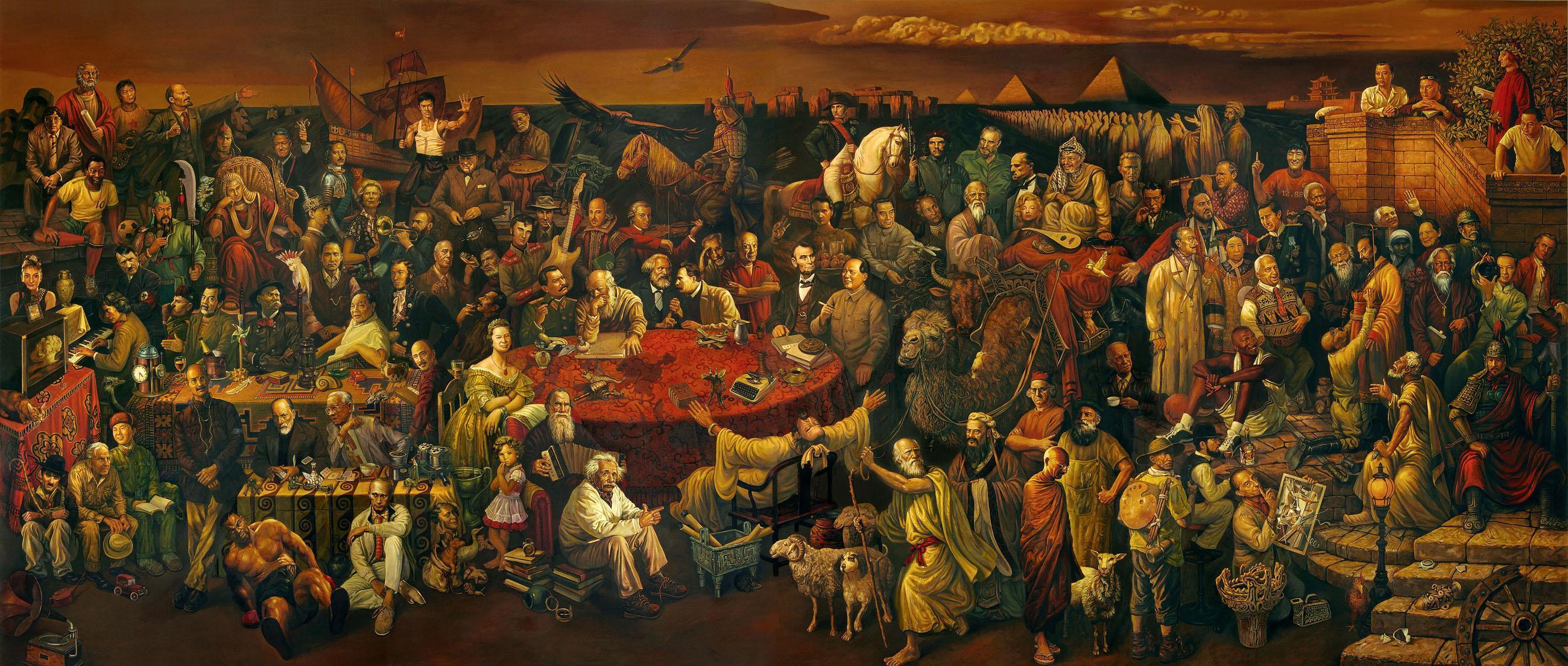

pic.twitter.com/cf7EnWRKfh

Australia Day

On 9/11 the FDNY lost 343 of their own.
Not statistics. Sons, fathers, husbands from 75 firehouses across the five boroughs.
121 engine companies and 62 ladder companies answered the call. Every Rescue company in New York went in.
They knew the buildings were coming down and… pic.twitter.com/e4ArBUmfLq— Sassafrass84 (@Sassafrass_84) September 7, 2026
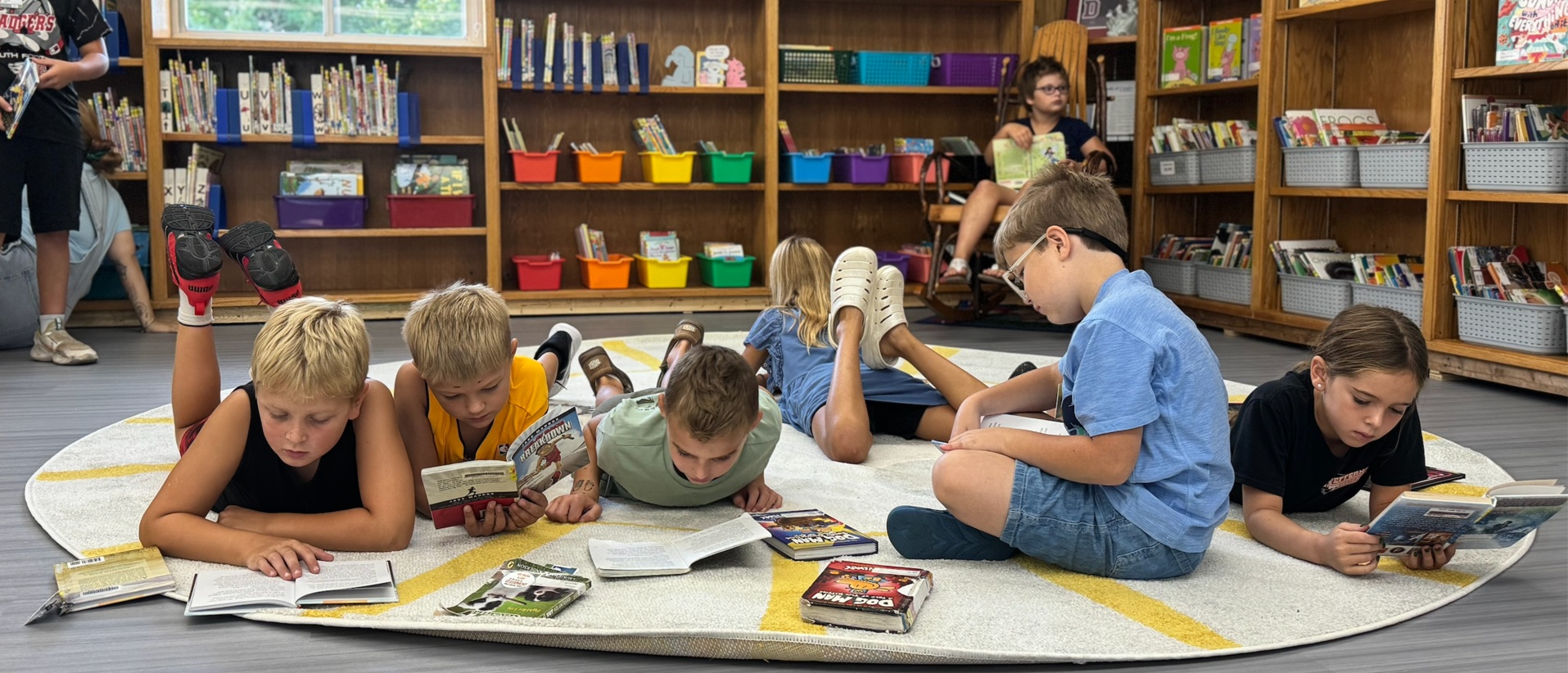
Scales Mound School District | Jo Daviess County Illinois 815
Oxford students after exams, 1989. pic.twitter.com/HQbO4r6dUE
— M (@0detobeauty) May 27, 2026
The calendar of Anglosphere educational settlements subtly shapes life of the mind, generally; and family and community life, specifically. Its cadence has roots in the cathedral schools and monastic learning communities of medieval Europe. Universities were not originally organized around modern “semesters.” Instead, the year followed the Christian liturgical calendar, agricultural seasons, food paths, daylight availability, and travel conditions.
In America educational calendars were nudged along by agricultural cycles. In the United Kingdom university calendars evolved into three major terms: Michaelmas in autumn, associated with arrival and beginnings; Hilary or Lent in winter, associated with discipline and study; and Trinity or Easter in spring, associated with examinations, outdoor rituals, music, rowing, gardens, and celebration.
Modern commencement traditions across the Anglosphere are descendants of medieval spring degree ceremonies. Academic gowns, hoods, processions, Latin phrases, formal dining, chapel music, and public recognition all preserve traces of the university as a scholarly guild and religious-civic community.
Before railways, electric lighting, and central heating, universities had to adapt to muddy roads, short winter days, limited candles, cold buildings, and agricultural obligations. Spring therefore became the natural season of culmination, reunion, athletic competition, courtship, and ceremony.
The medieval university was not merely a school but an educational settlement — a self-governing town of scholars, libraries, chapels, kitchens, workshops, residences, and dining halls. That settlement pattern survives in residential colleges, quadrangles, tutorial systems, common rooms, chapel choirs, and formal meals.
Anglosphere campuses retain this ancient emotional rhythm: autumn seriousness, winter inwardness, and spring release. That continuity helps explain why colleges and universities still feel culturally distinct from ordinary commercial society. (Relata: Gulliver Visits the Great Academy of Lagado)

We’re “organized” but not too organized; like the bookseller who knows where every book can be found.
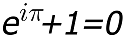
at a conference where you don’t have to present
— Peyman Milanfar (@docmilanfar) April 4, 2025
#AcademicChatter #AcademicTwitter
Academics be like 👇 pic.twitter.com/6cpVEw3PVS
— Reviewer 2 (@GrumpyReviewer2) April 2, 2024





