


Abstract: A new committee* under the Industrial and Commercial Power Systems (I&CPS) Department of the Industry Applications Society (IAS) received approval at the October 2014 IAS Annual Meeting, in Vancouver. This committee will be dedicated to the special needs and characteristics of the Educational and Healthcare segments of the US and World economies. For example, these two segments of the US economy, alone, annually spend $60 billion on electrical and telecommunication systems; yet, these two segments are either underrepresented, or not represented at all, in most electrical engineering forums, code writing, and/or standards writing institutions. (May 2015)
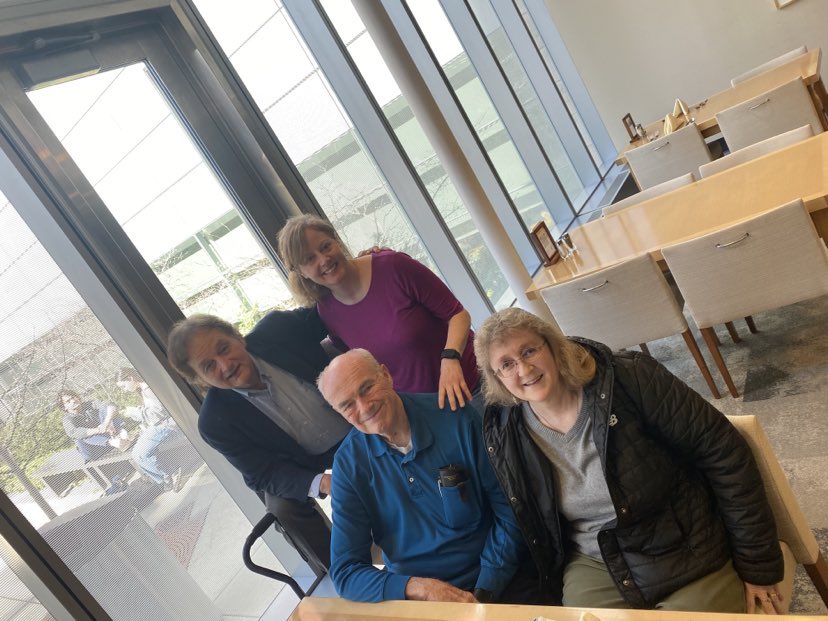
A few of the University’s Electrical Engineers
The change from IEEE Education & Healthcare Facilities Committee
to IEEE Education, Health & Sport Essential Works Committee
is more than a change of label. It better describes the territory.
“Facilities” directs attention toward buildings. Our work has never stopped at
the building envelope. Universities, schools, hospitals and athletic enterprises
depend upon networks of electrical power, communications, water, transportation,
energy storage, emergency systems and digital infrastructure extending across
campuses and into the surrounding public utility fabric.
Essential Works describes the systems that make them work.
Essential Works is therefore the larger and more accurate idea.
It directs attention toward the infrastructure necessary for an educational
settlement to function continuously, safely and economically.
Replacing Healthcare with Health broadens the
field as well. Health encompasses hospitals and clinical facilities but also
research laboratories, public health, student health, rehabilitation, wellness
and the increasingly interconnected medical and research systems found on
university campuses.
Adding Sport recognizes another substantial class of infrastructure.
Stadiums, arenas, natatoria, field houses and outdoor athletic complexes present
demanding problems of illumination, power quality, emergency power, broadcasting,
communications, crowd safety, refrigeration and increasingly sophisticated
digital systems.
The three words — Education, Health & Sport — describe enduring
human activities. Essential Works describes the technical systems
that sustain them.
That is closer to what the committee actually does: not merely standards for
facilities, but engineering for the complex settlements in which people
learn, heal, compete and live.