Fireworks are synonymous with celebration in the twenty-first century. But pyrotechnics—in the form of rockets, crackers, wheels, and bombs—have exploded in sparks and noise to delight audiences in Europe ever since the Renaissance. Here, Simon Werrett shows that, far from being only a means of entertainment, fireworks helped foster advances in natural philosophy, chemistry, mathematics, and many other branches of the sciences.
Fireworks brings to vibrant life the many artful practices of pyrotechnicians, as well as the elegant compositions of the architects, poets, painters, and musicians they inspired. At the same time, it uncovers the dynamic relationships that developed between the many artists and scientists who produced pyrotechnics. In so doing, the book demonstrates the critical role that pyrotechnics played in the development of physics, astronomy, chemistry and physiology, meteorology, and electrical science. Richly illustrated and drawing on a wide range of new sources, Fireworks takes readers back to a world where pyrotechnics were both divine and magical and reveals for the first time their vital contribution to the modernization of European ideas.
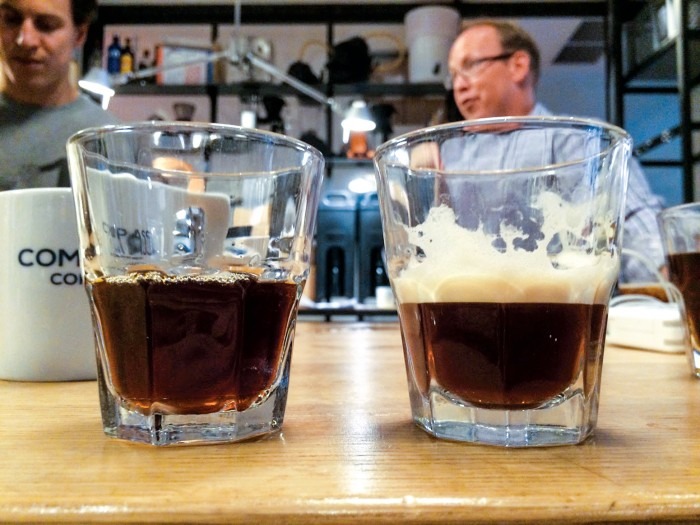
Nitro cold brew is bubbling up in coffee shops almost everywhere. The nitrogen-infused beverage became one of the hottest new offerings for coffee lovers looking for something different. The cold brew — made by steeping coffee grinds in cold water for multiple hours — is dispensed from a stout tap, similar to what you’d find at your local bar.
Meet Ria McGuire (@BU_CAS’25), Student CEO of Saxbys café inside the CDS building. We talked to McGuire about her responsibilities, her time at BU, and how this experience will aid her as she prepares to graduate. ☕
Howard Zinn taught at Boston University from 1964 to 1988. His intellectual legacy has not held up well among serious historians. Zinn presented American history as a simplistic morality play of evil elites versus virtuous “the people.” Scholars across the political spectrum, including left-leaning historians like Michael Kazin and Sam Wineburg, have criticized it as a “polemic disguised as history” and a Manichean fable rather than rigorous scholarship.
The book is filled with selective quoting, decontextualized facts, major omissions, and heavy reliance on secondary sources that support his Marxist-tinged narrative. Detailed critiques, such as Mary Grabar’s Debunking Howard Zinn, document numerous factual distortions regarding Columbus, the American Revolution, slavery, WWII, and more.
Zinn openly rejected “disinterested scholarship” in favor of activism, producing advocacy rather than balanced analysis. While influential in activist and popular circles, its methodological flaws and lack of nuance have kept it outside mainstream academic respect.
Discusses the collapse of Kendi’s Center for Antiracist Research at Boston University, alleging mismanagement of $55 million with minimal research output. Describes Kendi as a “symbol of the BLM era’s destructive passions” and notes his move to Howard University.
— Christopher F. Rufo
BU’s 2024 #GivingTuesday will support several programs, including several scholarship funds and campus resources, including BU’s Newbury Center, LGBTQIA+Student Resource Center, Undergraduate Research Opportunities Program (UROP), and more.
Call us biased, but we have the best group of future occupational therapists in @CSU_OT 💚💛
Last week’s convocation, where we welcomed our cohorts of OT Rams back to campus, was filled with good vibes and high energy for the year ahead 🐏⚡️ pic.twitter.com/8wTJ2rPi8S
The United States Food and Drug Administration and the National Coffee Association recommended standard temperature for safe hot coffee is around 160°F to 165°F (71°C to 74°C). This temperature range is considered hot enough to be enjoyable while minimizing the risk of scalding or burning.
These agencies do not have specific regulations or guidelines solely dedicated to cold brew coffee. However, there are general principles and best practices for handling and storing perishable food products that can be applied to cold brew coffee to ensure safety.*
Cold brew coffee typically requires more time to prepare than traditional hot brew coffee. While hot brew coffee can be made in just a few minutes, cold brew coffee is made by steeping coffee grounds in cold water for an extended period of time, usually between 12 to 24 hours.
The longer steeping time allows the coffee to extract more slowly and results in a smoother, less acidic coffee concentrate. After steeping, the coffee grounds are usually filtered out and the resulting concentrate can be diluted with water, milk, or other liquids and served over ice.
While cold brew coffee does require more time to prepare, many coffee drinkers prefer its smoother, less bitter taste and lower acidity compared to hot brewed coffee. Additionally, the longer shelf life of cold brew coffee concentrate makes it a popular choice for those who like to prepare coffee in advance and have it ready to drink throughout the day.
We cover the technical standards applicable to small to medium sized coffee preparation installations in a cross-cutting way during our Kitchens 200 colloquium.
* These recommendations are based on general food safety practices:
Water quality: Start with clean, potable water to brew your cold brew coffee. Make sure the water source is safe and free from contaminants.
Brewing process: Follow good manufacturing practices and ensure that your brewing equipment and utensils are clean and sanitized. Cold brew coffee is typically brewed using room temperature or cold water over an extended period. Ensure that the brewing container is properly sealed and protected from any potential sources of contamination.
Filtration: After the brewing process, filter the cold brew coffee to remove any sediment or particles. This can be done using a fine-mesh sieve or a dedicated filtration system.
Storage: Store the cold brew coffee in a clean, airtight container in the refrigerator. This helps to inhibit the growth of bacteria and maintain the quality of the coffee. Cold brew coffee can typically be stored for a few days to a couple of weeks, depending on the specific recipe and preparation method.
Temperature control: Keep the cold brew coffee refrigerated at a temperature below 41°F (5°C) to prevent the growth of harmful bacteria.
Serve safely: When serving cold brew coffee, use clean and sanitized utensils, containers, and dispensing equipment to avoid cross-contamination. If you add any additional ingredients like milk or sweeteners, ensure that they are stored properly and do not exceed their recommended storage times.
Congratulations to our Lumen Scholars who are going out into the world and making a difference. Learn more about the projects they worked on during their time at Elon and what's next here: https://t.co/iuh9wQ16NBpic.twitter.com/NJ3RiNTVS3
Charcuterie refers to a variety of cured meats, often accompanied by an assortment of cheeses, fruits, nuts, bread, and spreads. Originating from France, charcuterie was initially focused solely on prepared meat products, such as sausages, pâtés, and confits. Today, a charcuterie board is a popular way to serve an array of meats and complementary foods in a visually appealing and flavorful arrangement as demonstrated here for the Office of Alumni and Family Engagement by Alaura Westrol, Class of 2011.
Written by William Walsham How in 1871 for the Church Hymns collection, this Christian standard is a celebration of God’s creation and love, set to the tune “Ruth” by Samuel Smith (1865). How, an Anglican bishop known for his pastoral work, crafted the hymn to reflect the joy of summer, with its vibrant imagery of glowing suns, flowing light, and nature’s voices uniting in praise.
The hymn’s four stanzas emphasize God’s mercy, eternal love, and guidance through life’s challenges, urging steadfast faith even in dark times. Its meaning centers on gratitude for divine providence, the beauty of creation, and trust in God’s presence, with the final stanza affirming hope in eternal light.
Published in over 239 hymnals, it remains a cherished expression of summer’s warmth and spiritual reassurance.
New update alert! The 2022 update to the Trademark Assignment Dataset is now available online. Find 1.29 million trademark assignments, involving 2.28 million unique trademark properties issued by the USPTO between March 1952 and January 2023: https://t.co/njrDAbSpwBpic.twitter.com/GkAXrHoQ9T