Tag Archives: michc

Loading
loading..

Iced Americano

University of Michigan Net Position 2024: $22.335 billion

Michigan Central | Michigan West | Michigan Upper Peninsula | Michigan East

Bert Askwith worked his way through college shuttling students to and from Detroit Metropolitan Airport until his graduation in 1931; when two semester tuition cost $300.  With no student debt he founded and grew Campus Coach Lines that still provides the same services at many other US campuses.  He donated part of his fortune to establish a cafe in the Undergraduate Library; which now serves an expanding and bewildering catalog of caffeine-based drinks found in educational settlements worldwide.


When new foreign national students arrive at U.S. colleges and universities, they often enter environments where a left-leaning worldview is prominent and pervasive. Many campuses today emphasize themes of social justice, equity, and systemic critique that align with a preference for larger, more interventionist government. Faculty and administrative messaging can reinforce these ideas, portraying government as the primary instrument for addressing inequality, redistributing resources, and regulating social behavior.

For many international students, this can be both eye-opening and disorienting. They may come from countries with different political traditions, including skepticism of state power due to experiences with corruption or authoritarianism. Yet, in the university setting, they encounter curricula and campus cultures that valorize activist government solutions while often criticizing markets, traditional institutions, or individual responsibility. Programs in the humanities and social sciences in particular tend to frame policy questions through a progressive lens that sees expansive government action as not just beneficial but morally necessary.

This immersion—some might call it a “marination”—shapes perspectives over time. Students adopt the language of social justice, climate policy, and identity politics, often without exposure to robust counterarguments. While this experience can broaden horizons and foster empathy for marginalized groups, it also risks narrowing intellectual diversity and suppressing debate about the limits and costs of government power. For international students, it can mean graduating with a worldview significantly more aligned with the American academic left than with the diverse political traditions of their home countries.

Kitchenettes

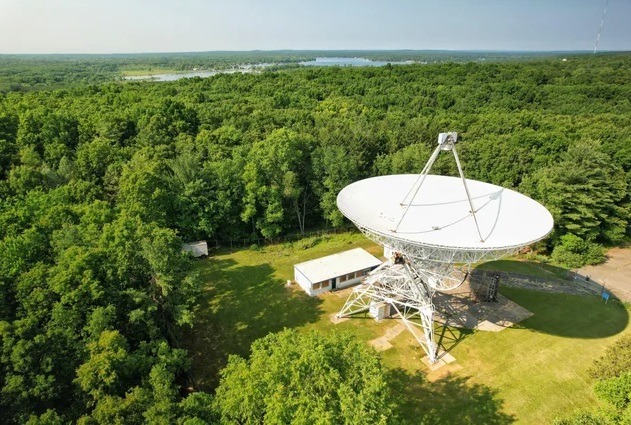
Peach Mountain Radio Observatory

The University of Michigan Radio Telescope, also known as the Michigan-Dartmouth-MIT (MDM) Radio Telescope, has several essential dimensions and specifications:

Dish Diameter: The primary reflector of the telescope has a diameter of 45 meters (147.6 feet). This large size allows it to collect radio waves effectively.

Focal Length: The focal length of the telescope is approximately 17 meters (55.8 feet). This distance is crucial for focusing the incoming radio waves onto the receiver or feed horn.

Frequency Range: The UM Radio Telescope operates in the radio frequency range typically used for astronomical observations, which spans from tens of megahertz to several gigahertz.

Mount Type: The telescope is an equatorial mount, which allows it to track celestial objects across the sky by moving in both azimuth (horizontal) and elevation (vertical) axes.

Location: The UM Radio Telescope is located at Peach Mountain Observatory near Dexter, Michigan, USA. Its geographical coordinates are approximately 42.39°N latitude and 83.96°W longitude.

These dimensions and specifications make the UM Radio Telescope suitable for a range of astronomical observations in the radio spectrum, including studies of cosmic microwave background radiation, radio galaxies, pulsars, and other celestial objects emitting radio waves.

Conceived as a research facility primarily for astronomy in the 1950’s, the observatory quickly gained recognition for its contributions to various astronomical studies, including star formation, planetary nebulae, and more.

“Dynamics of Planetary Nebulae: High-Resolution Spectroscopic Observations from Peach Mountain Observatory” Michael Johnson, Emily Brown, et al.

“Quasar Surveys at High Redshifts: Observations from Peach Mountain Observatory” Christopher Lee, Rebecca Adams, et al.

“Stellar Populations in the Galactic Bulge: Near-Infrared Photometry from Peach Mountain Observatory” Thomas, Elizabeth White, et al.

“Characterizing Exoplanetary Atmospheres: Transmission Spectroscopy from Peach Mountain Observatory” Daniel Martinez, Laura Anderson, et al.

Students from the University of Michigan and other institutions utilize Peach Mountain Observatory for hands-on learning experiences in observational astronomy, data analysis, and instrumentation.

Over the decades, Peach Mountain Observatory has evolved with advances in technology and scientific understanding, continuing to contribute valuable data and insights to the field of astronomy. Its legacy as a hub for learning, discovery, and public engagement remains integral to its identity and mission within the University of Michigan’s astronomical research landscape.

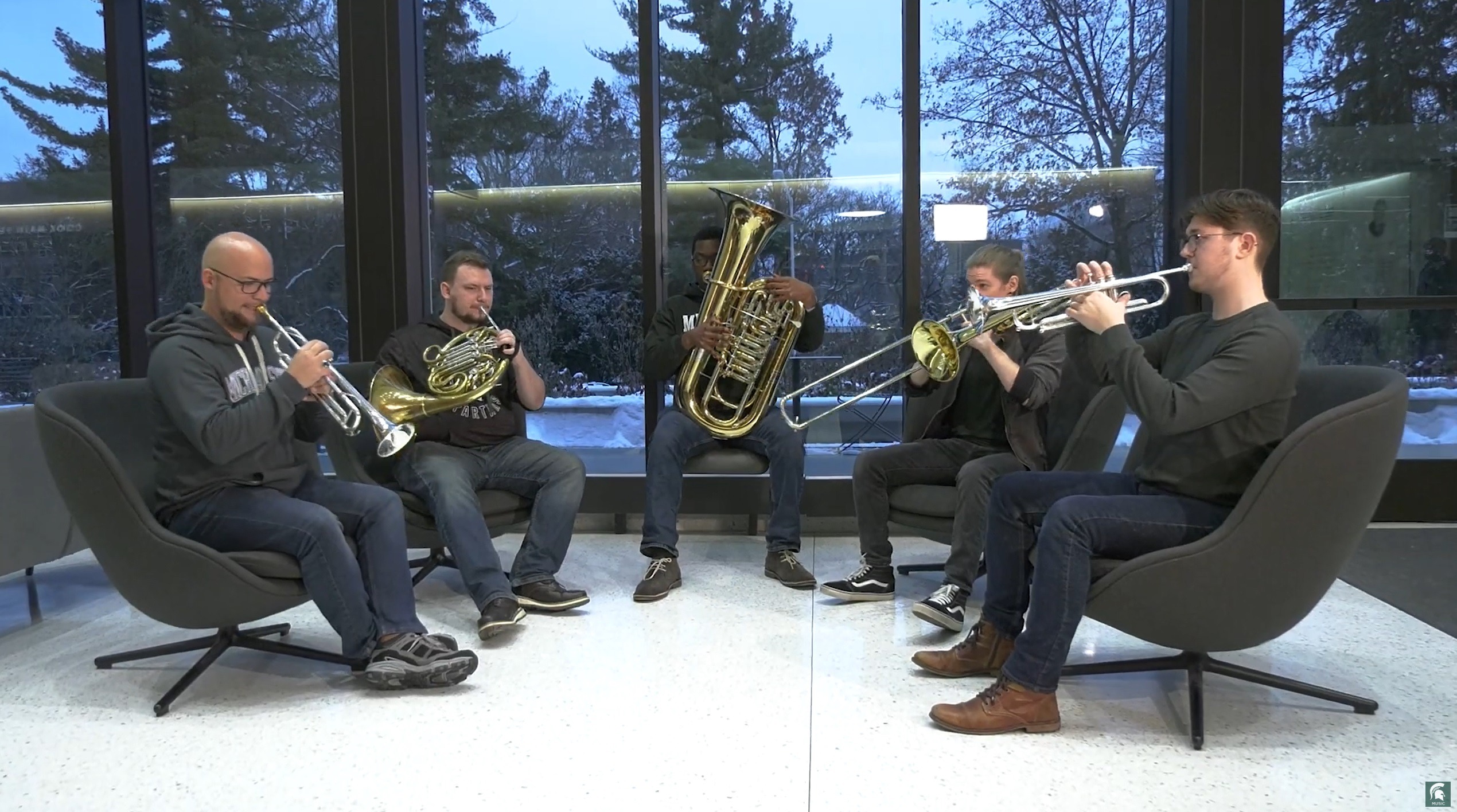
Sleigh Ride

Michigan Central


WMHW-FM

This content is accessible to paid subscribers. To view it please enter your password below or send mike@standardsmichigan.com a request for subscription details.

Hayward Street Geothermal Cooling $20M

ACTION REQUEST: $20M

Leinweber Computer and Information Science

Leinweber Foundation Gift

Business & Finance: We Make Blue Go

Geothermal cooling plants have far fewer moving parts and thus pay for themselves by combining immediate energy savings, revenue from excess energy or services, government incentives, and long-term operational efficiency. “Classical” payback period depends on factors like the plant’s scale and available incentives through DTE Energy.

1. Energy Cost Savings

  • Reduced Operating Costs: Geothermal systems use the relatively constant temperature of the earth to provide heating and cooling, which can be much more energy-efficient than traditional HVAC systems. This efficiency leads to lower utility bills for the facility, resulting in significant cost savings over time.
  • Lower Maintenance Costs: Geothermal systems generally have fewer moving parts than conventional systems, leading to lower maintenance and repair costs.

2. Revenue Generation

  • Selling Excess Energy: In some cases, geothermal plants can produce more energy than needed for cooling. This excess energy can be sold back to the grid or used for other purposes, providing an additional revenue stream.
  • Leasing and Service Agreements: Some facilities enter into agreements with nearby buildings or industries to provide geothermal cooling services, generating income.

3. Government Incentives and Subsidies

  • Tax Credits and Rebates: Many governments offer financial incentives, such as tax credits, grants, and rebates, for the installation and operation of geothermal systems. These incentives can significantly reduce the upfront costs and improve the payback period.
  • Renewable Energy Certificates(RECs): In some regions, geothermal plants can earn RECs for generating renewable energy. These certificates can be sold to other companies to offset their carbon emissions, generating additional income.

4. Environmental and Social Benefits

  • Carbon Credits: By reducing greenhouse gas emissions compared to traditional systems, geothermal plants can earn carbon credits, which can be sold or traded in carbon markets.
  • Sustainability Branding: Businesses that use geothermal cooling can market themselves as environmentally friendly, potentially attracting more customers or tenants, which indirectly supports the plant’s financial viability.

5. Long-Term Investment

  • Long Lifespan: Geothermal systems typically have a long lifespan (20-50 years), allowing for a long-term return on investment. While the initial capital costs are high, the system’s durability and low operating costs contribute to a favorable payback over time.
  • Resilience Against Energy Price Volatility: Geothermal systems provide protection against fluctuating energy prices, offering stable and predictable costs, which is financially beneficial over the long term.

6. Financing Models

  • Power Purchase Agreements (PPAs): Some geothermal plants are financed through PPAs, where a third party finances the installation and the facility pays for the energy produced, typically at a lower rate than conventional energy sources.
  • Energy Service Companies (ESCOs): These companies can finance, install, and maintain geothermal systems, with the facility paying for the service over time, usually based on the energy savings achieved.

7. Scalability and Integration

  • Integration with Other Renewable Systems: Geothermal cooling can be part of a broader renewable energy strategy, integrating with solar or wind power to further enhance efficiency and reduce costs, improving the overall financial outlook.

Earth Energy Systems

Layout mode
Predefined Skins
Custom Colors
Choose your skin color
Patterns Background
Images Background
Standards Michigan
error: Content is protected !!
Skip to content