
Tag Archives: Michigan

Loading
loading..

Autumn Wind

This content is accessible to paid subscribers. To view it please enter your password below or send mike@standardsmichigan.com a request for subscription details.

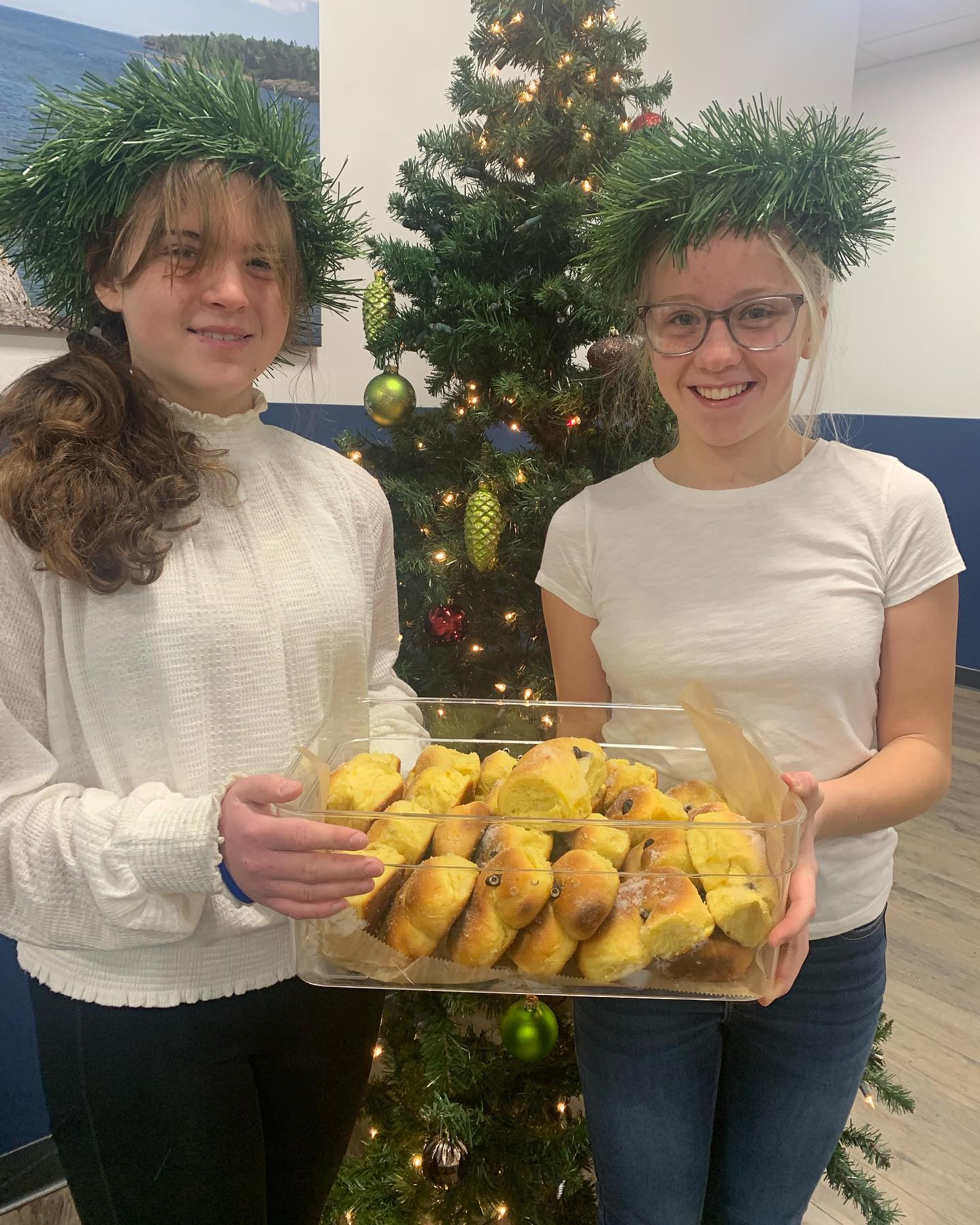
Sisu

Standards Michigan Upper Peninsula

The Finnish presence in Northern Michigan stems from mass immigration during the late 19th and early 20th centuries. Between 1870 and 1929, over 350,000 Finns arrived in the U.S., with Michigan drawing about 40% due to its copper and iron mines, lumber mills, and farms.

Recruited from Norway’s mines starting in 1864, they settled in towns like Hancock, Calumet, Ishpeming, and Ironwood, drawn by the region’s harsh winters, long summer days, and forested terrain mirroring Finland’s.

By 1930, nearly 75,000 Finnish descendants lived there, forming the largest ethnic group in five northwestern UP counties (35% Finnish heritage per recent census). They built saunas, cooperatives, and Lutheran churches, including the Suomi Synod (1890) and Finlandia University (1896, since closed).

Cultural festivals like Heikinpäivä and pasties (adapted from Cornish miners) endure, sustaining a “Sauna Belt” legacy amid mining booms that rivaled California’s Gold Rush.

Home

https://www.facebook.com/photo.php?fbid=618967290235062&set=pb.100063653885165.-2207520000&type=3

Copper Island Academy | Houghton County Michigan

Abiit sed non oblitus | Houghton County Michigan

Finland

Milk

The Cow

The friendly cow all red and white,
I love with all my heart:
She gives me cream with all her might,
To eat with apple-tart.

She wanders lowing here and there,
And yet she cannot stray,
All in the pleasant open air,
The pleasant light of day;

And blown by all the winds that pass
And wet with all the showers,
She walks among the meadow grass
And eats the meadow flowers.

Robert Louis Stevenson


“De Jonge Stier” 1647 Paulus Potter

Dairy milk products remain a vital part of global food supply.  Since 1970 an ISO Technical Subcommittee —  ISO/TC 34/SC 5 Milk and milk products — seeks globally effective standardization solutions in the methods of analysis and sampling for milk and milk products, covering the dairy chain from primary production to consumption.   The business plan of its parent committee is linked below:

BUSINESS PLAN ISO/TC 34 FOOD PRODUCTS

The Stichting Koninklijk Nederlands Normalisatie Instituut is the Global Secretariat for TC34/SC5.  Participating and Observing nations are shown on the map below:


The American Society of Agricultural and Biological Engineers is the US Technical Advisory Group Administrator to the parent TC34 committee but ANSI does not have a Technical Advisory Group leader.  As the U.S. member body to the ISO,  ANSI is always on the hunt for its members and/or relevant stakeholders to participate in discovering standardization solutions in a broad range of technologies and markets with like-minded experts in other national standards bodies.  The full sweep of ANSI’s participation in consensus documents developed by the ISO is described in the link below:

ISO Programs – Overview

This committee has functioned since 1970 — long enough for many of the best practice titles it produces to have stabilized.   There is other market action in the global dairy supply — notably the growth of non-dairy food supply — but we find no public consultations open on proposed standardization solutions as of this posting.  When they are released they will appear in the link below:

ISO Standards Under Development 

Ontario Veterinary College

Land grant colleges and universities are likely stakeholders in this domain.  Apart from the passion that young people have for fair trade in any market, we see this as an opportunity for faculty and students to gain insight into the geo-politics of food supply generally and the subtleties of coffee markets.   Business schools, agricultural colleges, international studies program developers who may be, and should be, interested in a leadership opportunity on behalf of the United States should communicate directly with ANSI’s ISO Team ((isot@ansi.org).

Sunday, Animal, Farm, Agri august

We devote at least an hour every month breaking down public consultations on food safety and sustainability.   The work products of TC 34  appears on the standing agenda of both our Global and Food colloquia.   See our CALENDAR for the next online meeting; open to everyone.

Issue: [19-46]

Category: Academic, Global

Colleagues: Mike Anthony, Christine Fischer, Akkeneel Talsma


Pool, Spa & Recreational Waters

“Innenansicht des Kaiserbades in Aachen” | Jan Luyken (1682)

Education communities provide a large market for recreational and therapeutic water technology suppliers.  Some of the larger research universities have dozens of pools including those in university-affiliated healthcare facilities.  Apart from publicly visible NCAA swimming programs there are whirpools in healthcare facilities and therapeutic tubs for athletes in other sports.   Ownership of these facilities requires a cadre of conformance experts to assure water safety.

NSF International is one of the first names in this space and has collaborated with key industry stakeholders to make pools, spas and recreational water products safer since 1949.   The parent document in its suite is NSF 50 Pool, Spa and Recreational Water Standards  which  covers everything from pool pumps, strainers, variable frequency drives and pool drains to suction fittings, grates, and ozone and ultraviolet systems.  

The workspace for this committee is linked below:

Joint Committee on Recreational Water Facilities

(Standards Michigan is an observer on this and several other NSF committees and is the only “eyes and ears” for the user interest; arguably the largest market for swimming pools given their presence in schools and universities.)

There are 14 task groups that drill into specifics such as the following:

Chemical feeders

Pool chemical evaluation

Flotation systems

Filters

Water quality

Safety surfacing

The meeting packet is confidential to registered attendees.  You may communicate directly with the NSF Joint Committee Chairperson, Mr. Tom Vyles (admin@standards.nsf.org) about arranging direct access as an observer or technical committee member.   

Almost all ANSI accredited technical committees have a shortage of user-interests (compliance officers, manufacturers and installers usually dominate).  We encourage anyone in the education facility industry paying the bill for the services of compliance officers, manufacturers and installers to participate. 

We maintain this title on the standing agenda of our Water and Sport colloquia.  See our CALENDAR for the next onine meeting; open to everyone.

Fullerton College

Issue: [13-89]

Category: Water, Sport

Colleagues: Mike Anthony, Ron George, Larry Spielvogel


More

Model Aquatic Health Code

IAPMO Swimming Pool & Spa Standards 

UL 1081 Standard for Swimming Pool Pumps, Filters, and Chlorinators | (UL Standards tend to be product standards so we rank them lower in our priority ranking than interoperability standards.)

Aquatic Health Code

Layout mode
Predefined Skins
Custom Colors
Choose your skin color
Patterns Background
Images Background
Standards Michigan
error: Content is protected !!
Skip to content