New Central Campus Residential Development
Related:
Category: Student Accommodation
New residence hall to be named for E. Royster Harper
The friendly cow all red and white,
I love with all my heart:
She gives me cream with all her might,
To eat with apple-tart.
She wanders lowing here and there,
And yet she cannot stray,
All in the pleasant open air,
The pleasant light of day;
And blown by all the winds that pass
And wet with all the showers,
She walks among the meadow grass
And eats the meadow flowers.

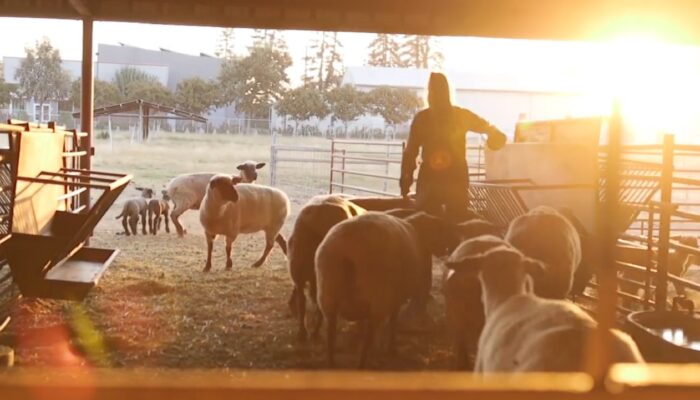
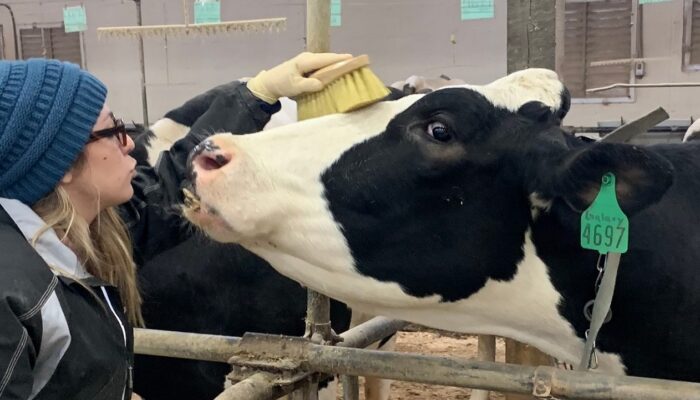
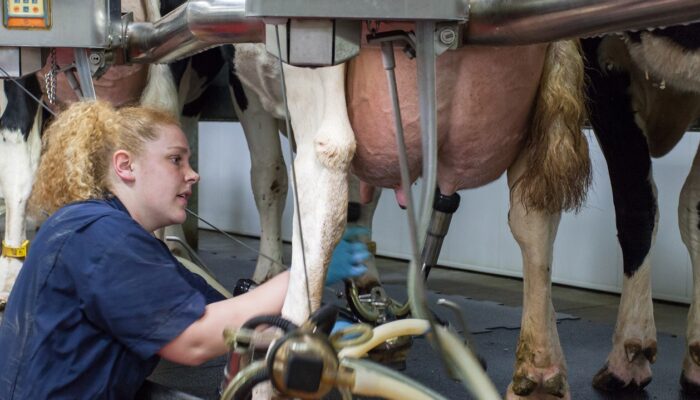
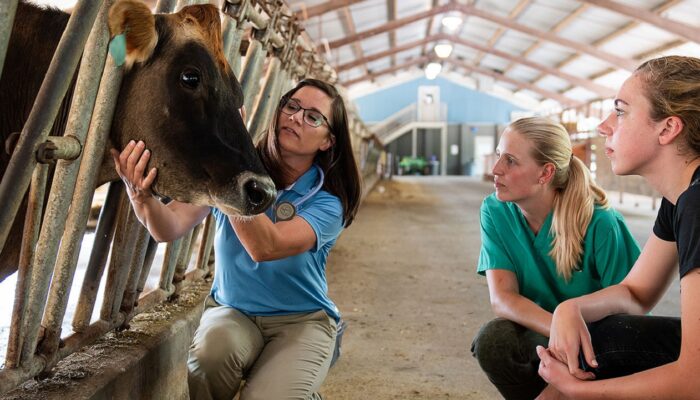
Dairy milk products remain a vital part of global food supply. Since 1970 an ISO Technical Subcommittee — ISO/TC 34/SC 5 Milk and milk products — seeks globally effective standardization solutions in the methods of analysis and sampling for milk and milk products, covering the dairy chain from primary production to consumption. The business plan of its parent committee is linked below:
BUSINESS PLAN ISO/TC 34 FOOD PRODUCTS
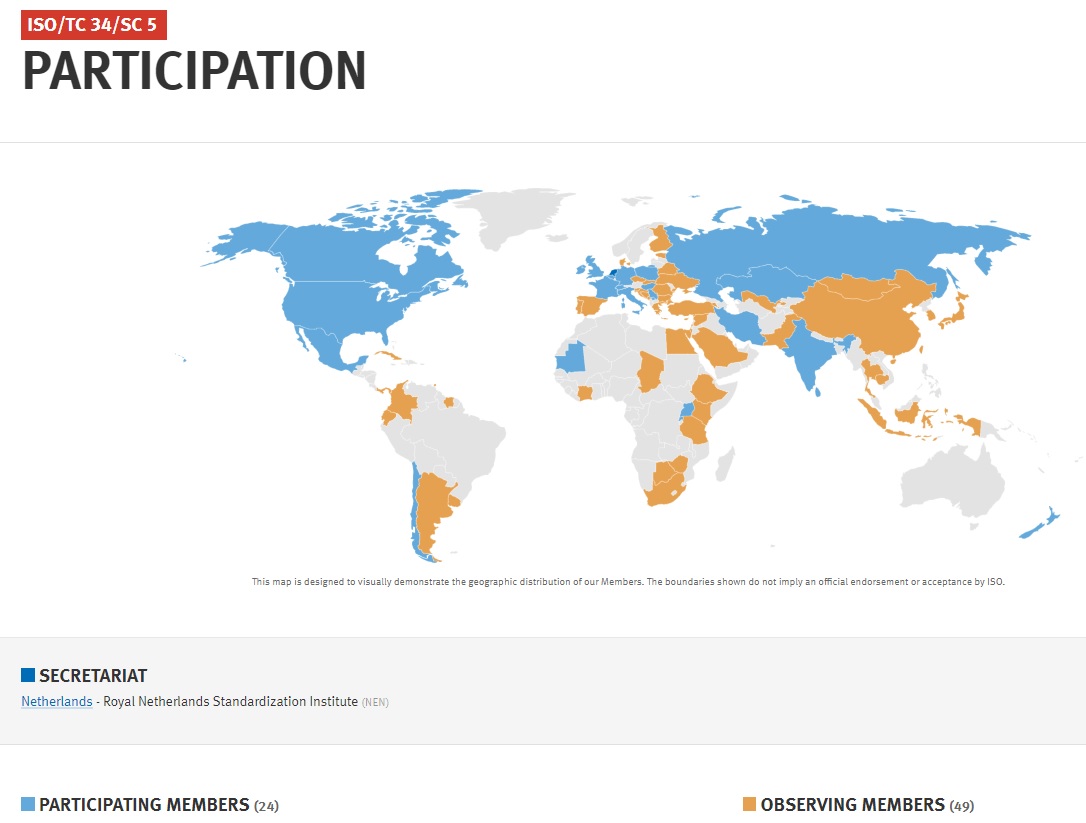
The Stichting Koninklijk Nederlands Normalisatie Instituut is the Global Secretariat for TC34/SC5. Participating and Observing nations are shown on the map below:
The American Society of Agricultural and Biological Engineers is the US Technical Advisory Group Administrator to the parent TC34 committee but ANSI does not have a Technical Advisory Group leader. As the U.S. member body to the ISO, ANSI is always on the hunt for its members and/or relevant stakeholders to participate in discovering standardization solutions in a broad range of technologies and markets with like-minded experts in other national standards bodies. The full sweep of ANSI’s participation in consensus documents developed by the ISO is described in the link below:
This committee has functioned since 1970 — long enough for many of the best practice titles it produces to have stabilized. There is other market action in the global dairy supply — notably the growth of non-dairy food supply — but we find no public consultations open on proposed standardization solutions as of this posting. When they are released they will appear in the link below:
ISO Standards Under Development

Land grant colleges and universities are likely stakeholders in this domain. Apart from the passion that young people have for fair trade in any market, we see this as an opportunity for faculty and students to gain insight into the geo-politics of food supply generally and the subtleties of coffee markets. Business schools, agricultural colleges, international studies program developers who may be, and should be, interested in a leadership opportunity on behalf of the United States should communicate directly with ANSI’s ISO Team ((isot@ansi.org).





We devote at least an hour every month breaking down public consultations on food safety and sustainability. The work products of TC 34 appears on the standing agenda of both our Global and Food colloquia. See our CALENDAR for the next online meeting; open to everyone.
Issue: [19-46]
Category: Academic, Global
Colleagues: Mike Anthony, Christine Fischer, Akkeneel Talsma

Bricklayers, sometimes known as masons, are skilled craftsmen that must be physically fit, have a high level of mathematical skill and a love for precision and detail.
Bricklaying standards are guidelines and specifications that ensure the quality and safety of bricklaying work. These standards are often established by industry organizations, regulatory bodies, or national building codes. While specific standards may vary by region, some core bricklaying standards include:
Building Codes: Compliance with local building codes is essential. These codes provide regulations for construction practices, including specifications for masonry work. Bricklayers must adhere to the building codes relevant to the specific location of the construction project.
ASTM International Standards: ASTM International (formerly known as the American Society for Testing and Materials) develops and publishes technical standards for various industries, including construction. ASTM standards related to bricklaying cover materials, testing procedures, and construction practices.
Masonry Construction Standards: Organizations like the Masonry Standards Joint Committee (MSJC) in the United States publish standards specifically focused on masonry construction. These standards address topics such as mortar, grout, reinforcement, and structural design considerations.
Quality Control: Standards related to quality control in bricklaying include specifications for mortar mixtures, proper curing of masonry, and guidelines for inspecting finished work. Adherence to these standards helps ensure the durability and longevity of the masonry construction.
Safety Standards: Occupational safety standards, such as those outlined by the Occupational Safety and Health Administration (OSHA) in the United States, are critical for protecting workers on construction sites. These standards cover aspects like fall protection, scaffolding safety, and the proper use of personal protective equipment.
Brick and Block Standards: Standards related to the dimensions, composition, and properties of bricks and concrete blocks are important for achieving structural integrity. These standards specify characteristics such as compressive strength, absorption, and dimensional tolerances.
Construction Tolerances: Tolerances dictate acceptable variations in dimensions and alignments in bricklaying work. These standards help ensure that the finished structure meets design specifications and industry-accepted tolerances.
Testing and Inspection: Standards related to the testing and inspection of masonry work help verify that construction meets specified requirements. This includes procedures for mortar testing, grout testing, and overall quality inspections.
It’s important for bricklayers and construction professionals to be aware of and follow these standards to guarantee the safety, quality, and compliance of their work. Additionally, staying informed about updates to industry standards is crucial as they may evolve over time to reflect advancements in materials, techniques, and safety practices.
Standards Michigan, spun-off in 2016 from the original University of Michigan Business & Finance Operation, has peppered NFPA 70 technical committees writing the 2016-2026 National Electric Code with proposals to reduce the size of building premise feeder infrastructure; accommodating the improvements made in illumination and rotating machinery energy conservation since the 1980’s (variable frequency drives, LED lighting, controls, etc.)
These proposals are routinely voted down in 12-20 member committees representing manufacturers (primarily) though local inspection authorities are complicit in overbuilding electric services because they “bill by the service panel ampere rating”. In other words, when a municipality can charge a higher inspection fee for a 1200 ampere panel, what incentive is there to support changes to the NEC that takes that inspection fee down to 400 amperes?
The energy conservation that would result from the acceptance of our proposals into the NEC are related to the following: reduced step down transformer sizes, reduced wire and conduit sizes, reduced panelboard sizes, reduced electric room cooling systems — including the HVAC cooling systems and the ceiling plenum sheet metal carrying the waste heat away. Up to 20 percent energy savings is in play here and all the experts around the table know it. So much for the economic footprint of the largest non-residential building construction market in the United States — about $120 billion annually.
The market incumbents are complicit in ignoring energy conservation opportunity. To paraphrase one of Mike Anthony’s colleagues representing electrical equipment manufacturers:
“You’re right Mike, but I am getting paid to vote against you.”
NFPA Electrical Division knows it, too.
Rightsizing Commercial Electrical Power Systems: Review of a New Exception in NEC Section 220.12
Michael A. Anthony – James R. Harvey
University of Michigan, Ann Arbor
University of Houston, Clear Lake, Texas
For decades, application of National Electrical Code (NEC) rules for sizing services, feeders and branch circuits has resulted in unused capacity in almost all occupancy classes. US Department of Energy data compiled in 1999 indicates average load on building transformers between 10 and 25 percent. More recent data gathered by the educational facilities industry has verified this claim. Recognizing that aggressive energy codes are driving energy consumption lower, and that larger than necessary transformers create larger than necessary flash hazard, the 2014 NEC will provide an exception in Section 220.12 that will permit designers to reduce transformer kVA ratings and all related components of the power delivery system. This is a conservative, incremental step in the direction of reduced load density that is limited to lighting systems. More study of feeder and branch circuit loading is necessary to inform discussion about circuit design methods in future revisions of the NEC.
CLICK HERE for complete paper
How Do You Measure the Percentage of Alcohol in Beer, Wine and Other Beverages?
Readings:
Pew Research Center: “Childlessness Up Among All Women; Down Among Women with Advanced Degrees”
Business Insider: More and more women just don’t want children: ‘Kids are expensive and sticky’
BBC: The adults celebrating child-free lives
How To Cope With The Loneliness Of Being Single: Being Single in the 21st Century
The Historical Role of Women in Higher Education
Bridge Michigan: Researchers say a copper shortage could imperil Michigan’s EV future
Copper can’t be mined fast enough to electrify the US
Copper cannot be mined quickly enough to keep up with current U.S. policy guidelines to transition the country’s electricity and vehicle infrastructure to renewable energy, according to a University of Michigan study.
The… pic.twitter.com/wm2qNrlAZB
— Michigan News (@UMichiganNews) May 15, 2024
Related:
New update alert! The 2022 update to the Trademark Assignment Dataset is now available online. Find 1.29 million trademark assignments, involving 2.28 million unique trademark properties issued by the USPTO between March 1952 and January 2023: https://t.co/njrDAbSpwB pic.twitter.com/GkAXrHoQ9T
— USPTO (@uspto) July 13, 2023
Standards Michigan Group, LLC
455 East Eisenhower Parkway, Suite 300
Ann Arbor, MI 48108 USA
888-748-3670