This hymn traces back to the 16th century; also known as “The Old Hundredth”. The hymn first appeared in the Anglo-Genevan Psalter, a collection of psalms and hymns used by English-speaking Protestant congregations in Geneva and later in England. The tune is credited to Louis Bourgeois, a French composer and music editor who collaborated on the Genevan Psalter. The psalter was influenced by the work of John Calvin and other Reformed theologians.
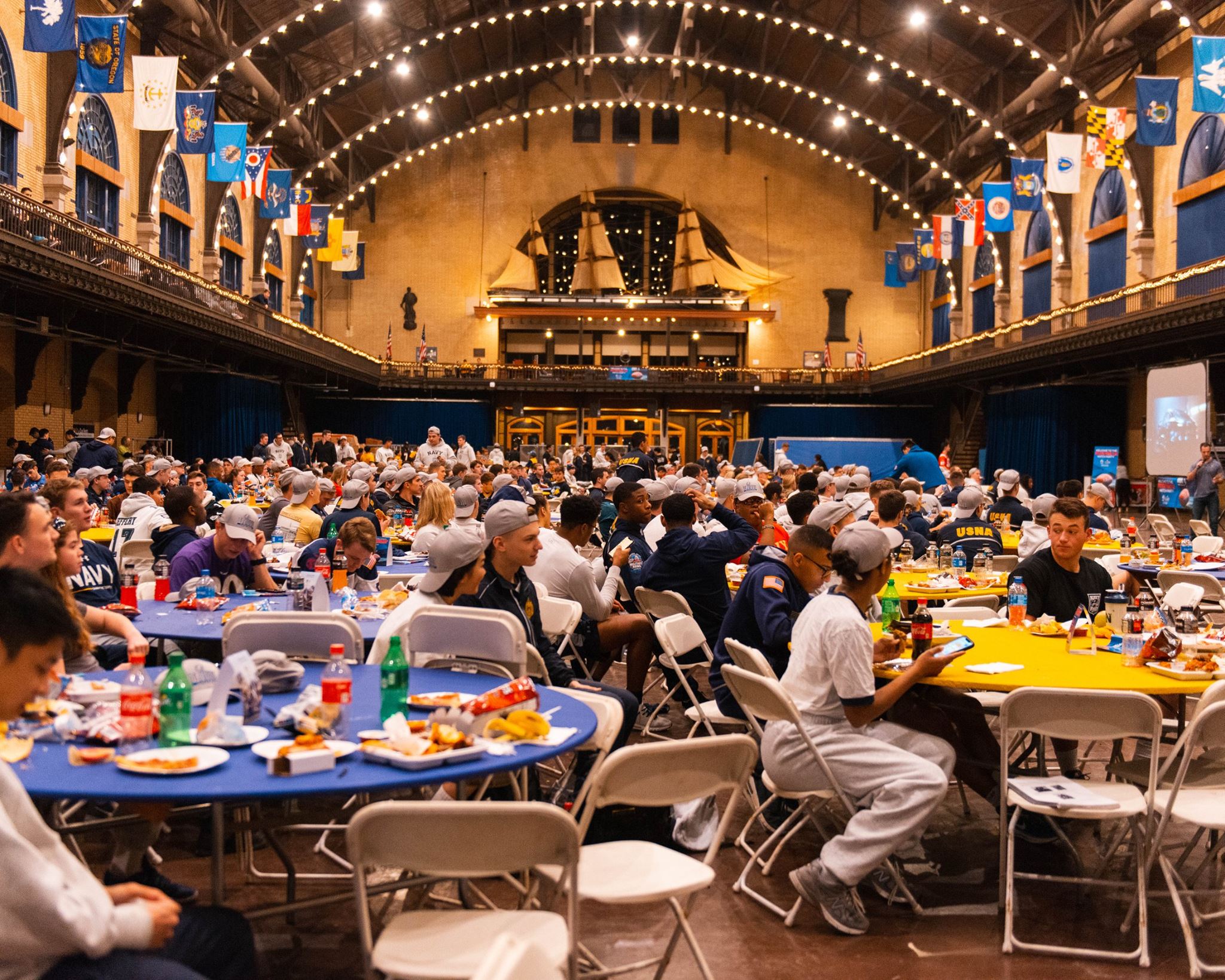
Named after Rear Admiral John A. Dahlgren, an influential figure in the development of naval ordnance. Its large, open space was ideal for indoor drills and military exercises. The hall was constructed between 1899 and 1903. Its design was overseen by Ernest Flagg, a prominent architect who designed several buildings at the Naval Academy. Today it houses the Drydock Restaurant, a gathering place for midshipmen, faculty, and visitors.
Named after Rear Admiral John A. Dahlgren (1809-1870) an influential figure in the development of naval ordnance during the United States Civil War. It served as an armory and drill hall for midshipmen. Its open space was ideal for indoor drills and military exercises.
The hall was constructed between 1899 and 1903. Its design was overseen by Ernest Flagg, a prominent architect who designed several buildings at the Naval Academy. Today it houses the Drydock Restaurant, a gathering place for midshipmen, faculty, and visitors.
The Flying Tigers, officially the First American Volunteer Group (AVG), were American pilots led by Claire Lee Chennault, formed in 1941 to aid China against Japanese forces during the Second Sino-Japanese War. Equipped with Curtiss P-40 Warhawks, they were tasked with defending Chinese skies and supply lines. However, the Flying Tigers did not directly stop the Rape of Nanking, which occurred from December 1937 to January 1938, as they were not yet formed.
By the time they saw combat on December 20, 1941, after Pearl Harbor, Nanjing had already fallen. Their role was significant later, defending key areas like Kunming and the Burma Road, disrupting Japanese air operations, and boosting Chinese morale. With only 62 combat-ready pilots, they destroyed 296 Japanese aircraft, but their impact came post-Nanjing, aiding China’s broader resistance against Japanese aggression.
Reveille, from the French réveiller (“to wake up”), originated in 17th–18th century European armies as a drum or bugle signal to rouse troops at dawn. Formalized in the British and later U.S. military, it marked the start of the duty day, prompting soldiers to rise, dress, and assemble. The traditional U.S. bugle call, composed around 1812, features a lively, ascending melody played at first light (typically 5–6 AM). In barracks and bases, it remains a daily ritual, symbolizing discipline, readiness, and unity—often followed by flag-raising and morning formation.
🌲 When you’re out in the field, there are no shortcuts.
Survival training prepares cadets for those moments—teaching them how to navigate unknown terrain, sustain themselves with limited resources, and always stay mission-ready. #CST2025pic.twitter.com/36GPy4EApW
— U.S. Military Academy at West Point (@WestPoint_USMA) June 16, 2025
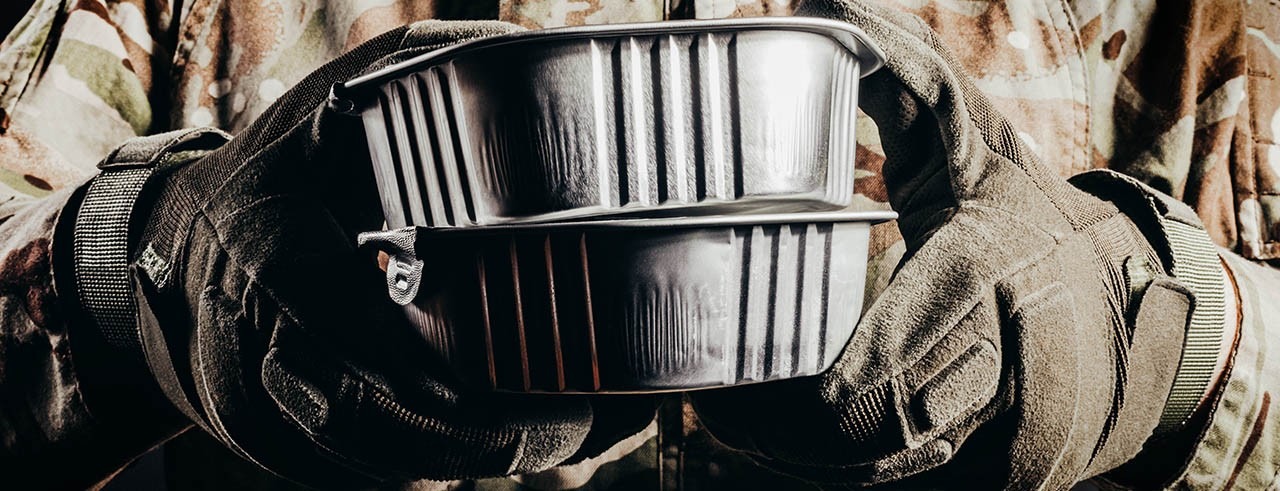
“Whether it’s chili with beans, barbecued beef or meatballs in marinara sauce, members of the United States military are served up a rotating menu of entrees through meals, ready to eat rations. Packed in individual pouches, these self-contained meals can be eaten during combat operations, humanitarian missions or field trainings, providing nourishment on the go. Yet while MREs were first piloted for U.S. military members during the Vietnam War, it wasn’t until the 1990s that it’s been possible for these meals to be served hot…
…We can thank a University of Cincinatti Professor of Mechanical Engineering for that.” (And transforming the civilian emergency food industry, to boot)
New update alert! The 2022 update to the Trademark Assignment Dataset is now available online. Find 1.29 million trademark assignments, involving 2.28 million unique trademark properties issued by the USPTO between March 1952 and January 2023: https://t.co/njrDAbSpwBpic.twitter.com/GkAXrHoQ9T