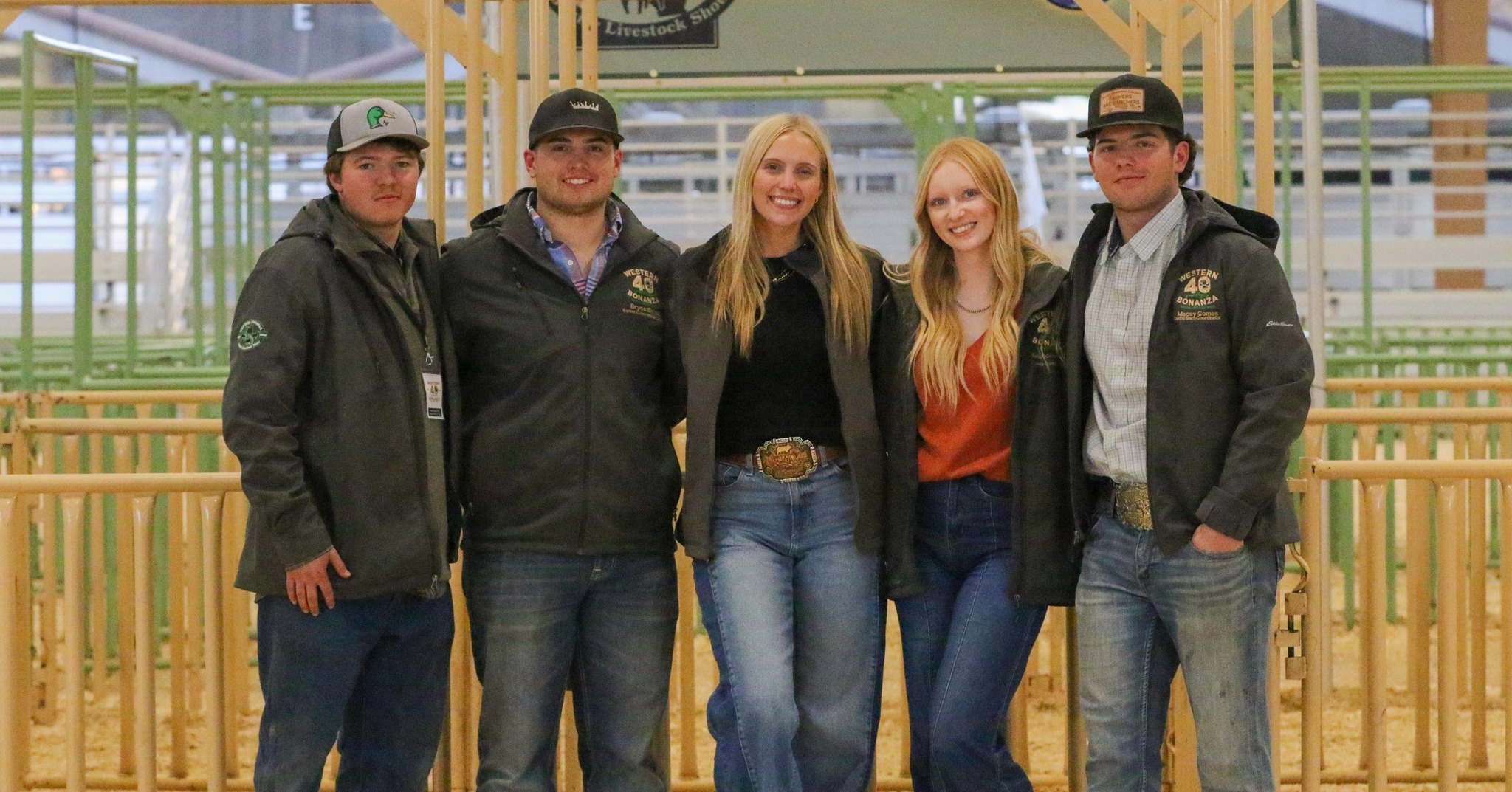
Some places just feel like home. From the big-time SEC experience to the even bigger opportunities, here’s what makes Mississippi State unforgettable. pic.twitter.com/rUjxUnq6FM
The thunderbolt steers all things. —Heraclitus, c. 500 BC
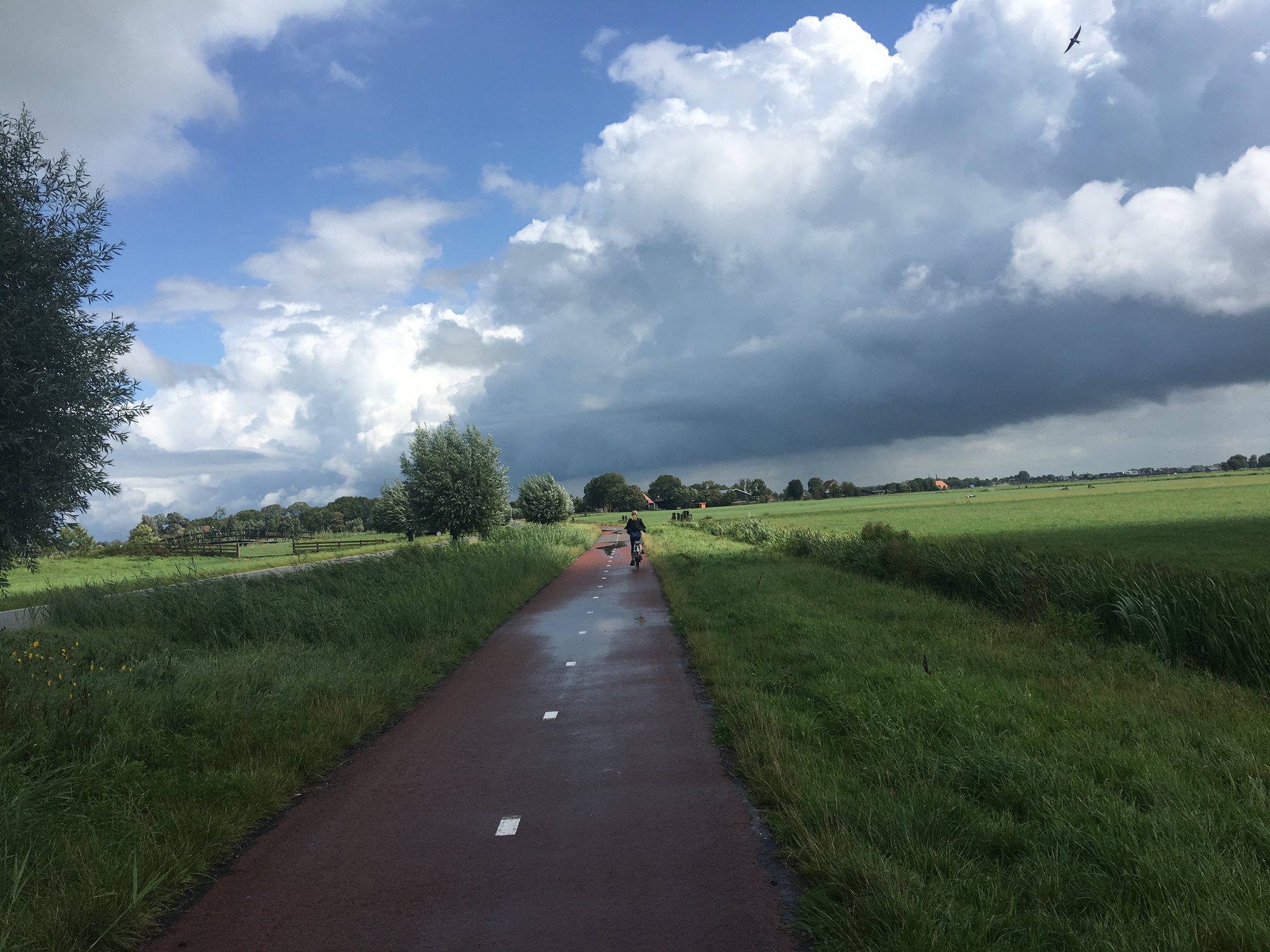
After the rain. Personal photograph taken by Mike Anthony biking with his niece in Wirdum, The Netherlands
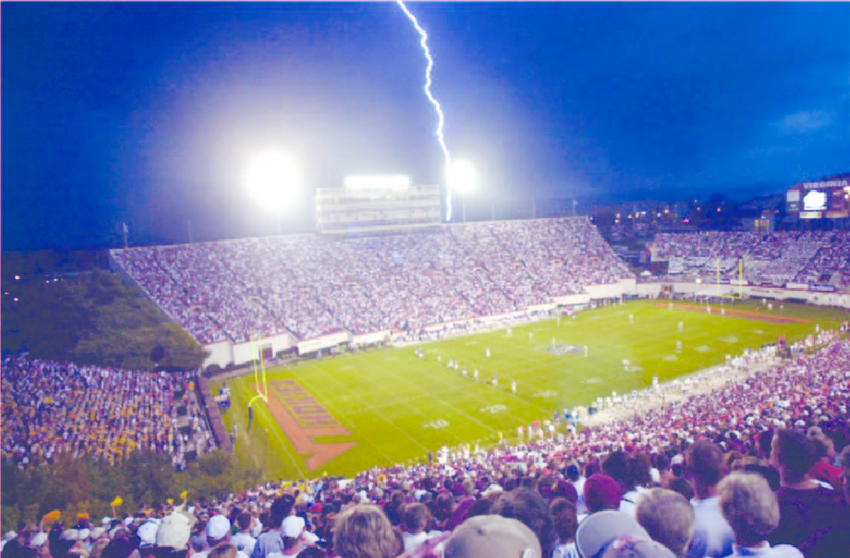
Today at 15:00 UTC we examine the technical literature about rainwater management in schools, colleges and universities — underfoot and on the roof. Lightning protection standards will also be reviewed; given the exposure of outdoor athletic activity and exterior luminaires.
We draw from previous standardization work in titles involving water, roofing systems and flood management — i.e. a cross-cutting view of the relevant standard developer catalogs. Among them:
American Society of Civil Engineers
American Society of Plumbing Engineers
ASHRAE International
ASTM International
Construction Specifications Institute (Division 7 Thermal and Moisture Protection)
As always, our daily colloquia are open to everyone. Use the login credentials at the upper right of our home page.
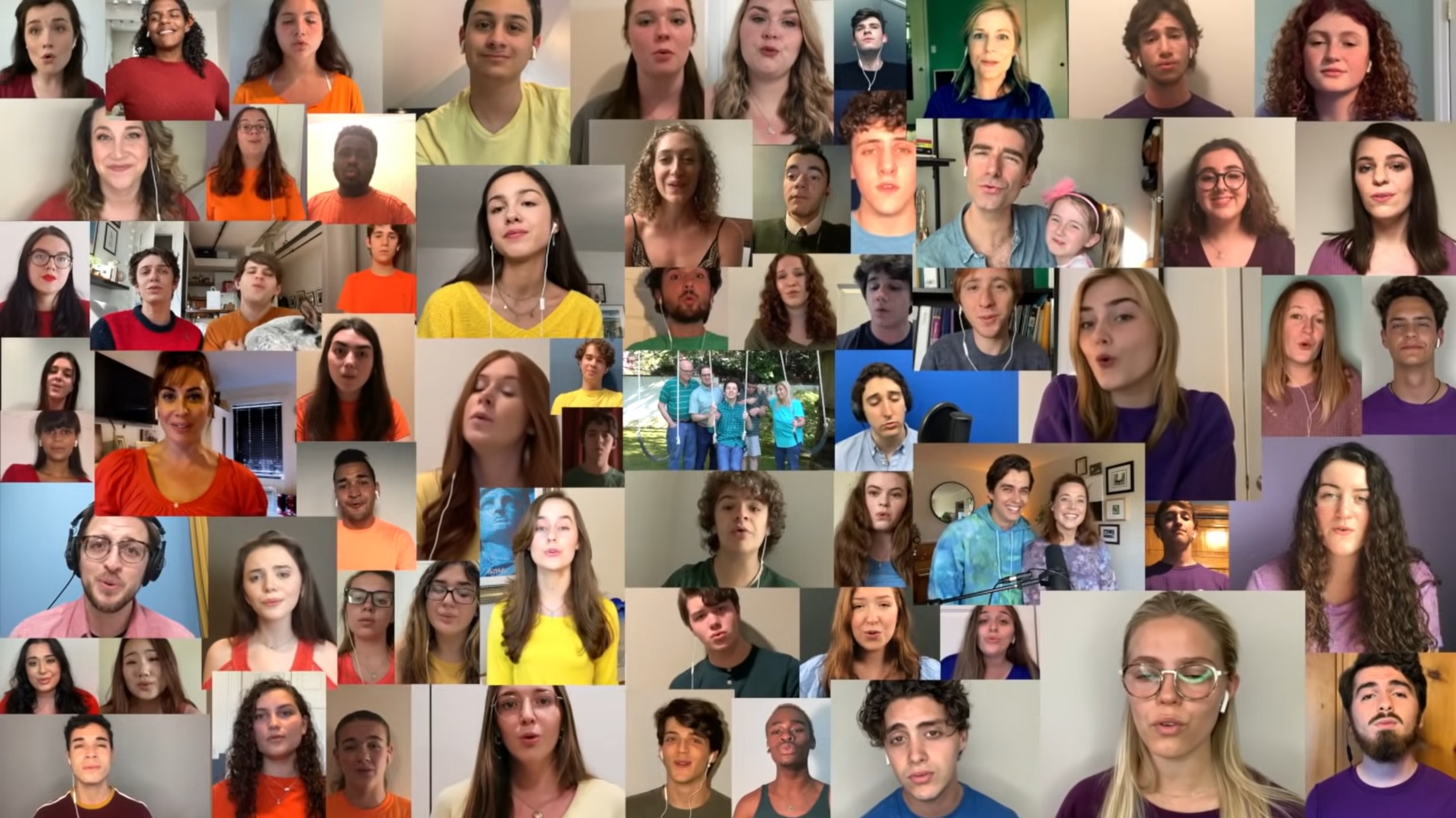
“Rainbow Connection”
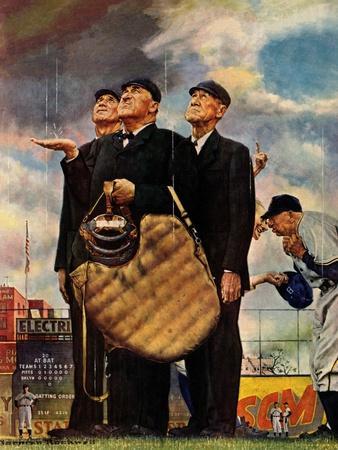
“Tough Call” | Norman Rockwell 1949
The “lightning effect” seen in carnival tricks typically relies on a scientific principle known as the Lichtenberg figure or Lichtenberg figure. This phenomenon occurs when a high-voltage electrical discharge passes through an insulating material, such as wood or acrylic, leaving behind branching patterns resembling lightning bolts.
The process involves the creation of a temporary electric field within the material, which polarizes its molecules. As the discharge propagates through the material, it causes localized breakdowns, creating branching paths along the way. These branching patterns are the characteristic Lichtenberg figures.
In the carnival trick, a high-voltage generator is used to create an electrical discharge on a piece of insulating material, such as acrylic. When a person touches the material or a conductive object placed on it, the discharge follows the path of least resistance, leaving behind the branching patterns. This effect is often used for entertainment purposes due to its visually striking appearance, resembling miniature lightning bolts frozen in the material. However, it’s crucial to handle such demonstrations with caution due to the potential hazards associated with high-voltage electricity.
“Benjamin Franklin Drawing Electricity from the Sky” 1816 Benjamin West
Benjamin Franklin conducted his famous experiment with lightning on June 10, 1752.
He used a kite and a key to demonstrate that lightning was a form of electricity.
This experiment marked an important milestone in understanding the nature of electricity
and laid the foundation for the development of lightning rods and other lightning protection systems.
Seasonal extreme weather patterns in the United States, resulting in damages to education facilities and delays in outdoor athletic events — track meets; lacrosse games, swimming pool closures and the like — inspire a revisit of the relevant standards for the systems that contribute to safety from injury and physical damage to buildings: NFPA 780 Standard for the Installation of Lightning Protection Systems
This document shall cover traditional lightning protection system installation requirements for the following: (1) Ordinary structures (2) Miscellaneous structures and special occupancies (3) Heavy-duty stacks (4) Structures containing flammable vapors, flammable gases, or liquids with flammable vapors (5) Structures housing explosive materials (6) Wind turbines (7) Watercraft (8) Airfield lighting circuits (9) Solar arrays
This document shall address lightning protection of the structure but not the equipment or installation requirements for electric generating, transmission, and distribution systems except as given in Chapter 9 and Chapter 12.
(Electric generating facilities whose primary purpose is to generate electric power are excluded from this standard with regard to generation, transmission, and distribution of power. Most electrical utilities have standards covering the protection of their facilities and equipment. Installations not directly related to those areas and structures housing such installations can be protected against lightning by the provisions of this standard.)
This document shall not cover lightning protection system installation requirements for early streamer emission systems or charge dissipation systems.
“Down conductors” must be at least #2 AWG copper (0 AWG aluminum) for Class I materials in structures less than 75-ft in height
“Down conductors: must be at least 00 AWG copper (0000 AWG aluminum) for Class II Materials in structures greater than 75-ft in height.
Related grounding and bonding requirements appears in Chapters 2 and Chapter 3 of NFPA 70 National Electrical Code. This standard does not establish evacuation criteria.
University of Michigan | Washtenaw County (Photo by Kai Petainen)
The current edition is dated 2023 and, from the transcripts, you can observe concern about solar power and early emission streamer technologies tracking through the committee decision making. Education communities have significant activity in wide-open spaces; hence our attention to technical specifics.
Public input on the 2026 revision is receivable until 1 June 2023.
We always encourage our colleagues to key in their own ideas into the NFPA public input facility (CLICK HERE). We maintain NFPA 780 on our Power colloquia which collaborates with IEEE four times monthly in European and American time zones. See our CALENDAR for the next online meeting; open to everyone.
Lightning flash density – 12 hourly averages over the year (NASA OTD/LIS) This shows that lightning is much more frequent in summer than in winter, and from noon to midnight compared to midnight to noon.
Issue: [14-105]
Category: Electrical, Telecommunication, Public Safety, Risk Management
Colleagues: Mike Anthony, Jim Harvey, Kane Howard
Didn't really plan for all possibilities, did they. 🤓
Churches and chapels are more susceptible to lightning damage due to their height and design. Consider:
Height: Taller structures are more likely to be struck by lightning because they are closer to the cloud base where lightning originates.
Location: If a church or chapel is situated in an area with frequent thunderstorms, it will have a higher likelihood of being struck by lightning.
Construction Materials: The materials used in the construction of the building can affect its vulnerability. Metal structures, for instance, can conduct lightning strikes more readily than non-metallic materials.
Proximity to Other Structures: If the church or chapel is located near other taller structures like trees, utility poles, or buildings, it could increase the chances of lightning seeking a path through these objects before reaching the building.
Lightning Protection Systems: Installing lightning rods and other lightning protection systems can help to divert lightning strikes away from the structure, reducing the risk of damage.
Maintenance: Regular maintenance of lightning protection systems is essential to ensure their effectiveness. Neglecting maintenance could result in increased susceptibility to lightning damage.
Historical Significance: Older buildings might lack modern lightning protection systems, making them more vulnerable to lightning strikes.
The risk can be mitigated by proper design, installation of lightning protection systems, and regular maintenance.
This content is accessible to paid subscribers. To view it please enter your password below or send mike@standardsmichigan.com a request for subscription details.
Yes — and there is serious academic treatment of the New England clambake, enough that it could support something richer than a food post.
The place I would begin is Katherine D. Neustadt’s Clambake: A History and Celebration of an American Tradition, published by the University of Massachusetts Press edition listing in 1992. It is essentially a scholarly ethnography/history of the clambake. Neustadt organizes the subject around its social, economic, political and regional history, then studies the long-running Allen’s Neck clambake in Massachusetts and finally treats the clambake as food, ritual and festival.
That last formulation is especially promising for Standards Michigan. Neustadt’s work treats the meal not simply as a recipe but as a community institution — something through which people express place, season, memory and belonging. An Indiana University scholarly review describes the book as an ethnography concerned with the “invention of tradition,” usable pasts, power and the relationship between observer and participant.
There is also an interesting historical complication. The familiar story says coastal Native Americans taught colonists the clambake. The scholarship is considerably more cautious. A University of Rhode Island Sea Grant environmental history, drawing on Neustadt, notes that archaeological and written evidence does not establish the familiar nineteenth-century version of that origin story. Neustadt consequently sees something more complicated: Native cultural inheritance intertwined with a tradition subsequently constructed and ritualized by white New Englanders. Historic New England reaches much the same conclusion: Indigenous peoples unquestionably harvested and cooked shellfish, but the genealogy of the recognizable New England beach clambake is not securely established.
What really catches my attention for an August Sunday, however, is a scholarly archaeological treatment that quotes Neustadt describing clambaking as a seasonal rite marking the end of summer and as a means of transmitting traditional knowledge. The same research discusses the physical process itself — gathering stone, firewood and rockweed, heating the stones and orchestrating the bake — as part of the tradition rather than merely a cooking technique.
And there is a campus connection. Massachusetts Institute of Technology has actually used the New England clambake as part of institutional social life: its 2014 reunion program included a clambake on Kresge Oval for the 25th reunion class.
So I think you’ve stumbled onto an unusually good late-August Sunday subject. It gives us seafood and summer dining on the surface, but underneath it are season, landscape, fire, water, inherited practice, community assembly and the transmission of culture. In other words, rather more Standards Michigan material than the clams initially let on.
McGrath Clambakes and Catering
Yes. Harvard gives you a couple of good college-site examples, though one is stronger on the tradition itself and another on how the custom survives in university life.
The best historical/cultural reference I found is a Harvard Environmental Law Review article that explicitly describes the New England clambake as a longstanding regional custom with origins in the cooking practices of Indigenous coastal peoples, later adopted broadly into New England culture.
For a more accessible campus-life angle, Harvard’s Biophysics Graduate Program has an annual Year-End Clambake held around Commencement. The university describes it as a recurring celebration for graduating Ph.D. students, faculty and guests, featuring lobster and other traditional fare.
Harvard College Observatory has also hosted a summer staff and faculty clambake, with lobster, littleneck clams, New England clam chowder, mussels, corn and strawberry shortcake—a very recognizable New England summer menu.
For Standards Michigan, I think the Harvard Biophysics example is especially useful: it shows the clambake not merely as regional cuisine, but as a summer academic custom marking the end of the university year. That’s exactly the kind of ordinary cultural continuity you’ve been looking for in educational settlements.
This content is accessible to paid subscribers. To view it please enter your password below or send mike@standardsmichigan.com a request for subscription details.
“Do you remember the Shire, Mr. Frodo? It’ll be spring soon. And the orchards will be in blossom. And the birds will be nesting in the hazel thicket. And they’ll be sowing the summer barley in the lower fields… and eating the first of the strawberries with cream. Do you remember the taste of strawberries?” — Sam Gamgee (J.R.R. Tolkien (from ‘The Return of the King’ 1955)
📢 Have you heard? Cal Poly has once again been named a top producer of Fulbright U.S. Scholars! Learn more about the three impressive faculty that are taking their expertise global 🌎
* Why is the Net Position number so elusive in college and university financial statements? Short answer: So goes the nature of non-profit organizations. More.
New update alert! The 2022 update to the Trademark Assignment Dataset is now available online. Find 1.29 million trademark assignments, involving 2.28 million unique trademark properties issued by the USPTO between March 1952 and January 2023: https://t.co/njrDAbSpwBpic.twitter.com/GkAXrHoQ9T









_-_Benjamin_Franklin_Drawing_Electricity_from_the_Sky_-_Google_Art_Project.jpg)





.jpg)