
Tag Archives: United Kingdom
- Home
- Posts tagged "United Kingdom" (Page 7)


Social networks and culture in birds

Birds are social creatures and many species have complex social networks. Social networks are defined as the patterns of social interactions between individuals within a population. Here are some things that are known about the social networks of birds:
- Flocking behavior: Many bird species form flocks, which are large groups of individuals that fly together and exhibit coordinated behavior. Flocking behavior is thought to help birds reduce the risk of predation, share information about food sources and mating opportunities, and maintain social connections with other birds. §1202 of the International Building Code prohibits building envelope openings that encourage flocking behavior in attics,
- Communication: Birds use a variety of vocal and visual cues to communicate with one another, such as calls, songs, displays, and body language. Communication plays an important role in establishing and maintaining social connections between individuals.
- Social hierarchies: Within bird flocks, there may be social hierarchies, where some individuals have more dominant positions than others. Dominant individuals may have access to better food sources, mating opportunities, and nesting sites.
- Mate choice: Many bird species choose mates based on social signals, such as displays, vocalizations, and courtship behavior. Mate choice can influence the structure of social networks within a population.
- Information sharing: Birds may share information about food sources and predator threats with one another. For example, some bird species engage in “public information use,” where they use the behavior of other individuals as a signal about the quality of a food source or the presence of predators.
- Family bonds: Some bird species form long-lasting family bonds, where parents and offspring remain together for extended periods of time. Family bonds can influence the social structure of bird populations and may contribute to the formation of social networks.
Overall, the social networks of birds are complex and dynamic, and play important roles in many aspects of bird behavior, including mating, foraging, and avoiding predators. Studying bird social networks can provide insights into the evolution of social behavior and the ecological factors that shape animal populations. We examine the risks (and reward) of bird behavior on education community campuses.
Birds present several hazards to overhead electric and telecommunication circuits:
- Electrocution: Birds that perch or nest on power lines or other electrical equipment can come into contact with live electrical wires and be electrocuted if their body presents a path to ground potential.
- Nesting: Birds may build nests on or near power lines or other electrical equipment, which can create a fire hazard if the nest materials come into contact with electrical components. Nests can also cause power outages if they interfere with the electrical flow or if birds build nests in inconvenient locations, such as on transformers or other important components.
- Collisions: Birds may collide with power lines while in flight, which can cause injury or death to the birds and also damage power lines or equipment. In some cases, these collisions can also cause power outages or fires.
- Droppings: Bird droppings can build up on power lines and electrical equipment, which can create a safety hazard if the droppings come into contact with electrical components. Droppings can also cause corrosion or damage to equipment over time.
Accordingly, the 2023 National Electrical Safety Code specifies minimum clearances between power lines and surrounding trees and vegetation to help prevent birds from coming into contact with the lines; requires the use of bird guards or other protective devices on power lines in areas where birds are likely to perch or nest and, where possible; removal of nests from power lines and equipment to prevent fire hazards and equipment damage.
Additionally, the U.S. Fish and Wildlife Service has developed guidelines for the protection of birds and other wildlife from power line hazards. These guidelines provide recommendations for utilities on how to identify and manage potential bird hazards on power lines and equipment. The International Electrotechnical Commission has developed similar standards

Flight is the most complex form of movement in the animal kingdom. Bird research has informed how humans design airplanes. For example:
- Wing design: Bird wings have evolved over millions of years to provide efficient lift and maneuverability. Researchers have studied the shape, size, and structure of bird wings to design airplane wings that are more efficient and fuel-efficient. For example, the shape of the wings of the Albatross inspired the design of the wings of the Boeing 777, which has one of the highest fuel efficiencies of any commercial aircraft.
- Flight control: Researchers have studied how birds control their flight, particularly during takeoff and landing. This research has led to the development of technologies such as wing flaps, slats, and spoilers, which help airplanes achieve better control during takeoff and landing.
- Aerodynamics: The study of bird flight has also helped researchers understand the complex physics of aerodynamics, such as airflow patterns, lift, drag, and turbulence. This understanding has led to the development of more advanced computer simulations and wind tunnel testing, which are used to design airplanes that are more aerodynamically efficient.
- Materials: Birds have lightweight but strong bones and feathers, which have inspired researchers to develop new lightweight materials for use in airplane construction. For example, carbon fiber composites, which are used extensively in modern airplanes, were inspired by the lightweight but strong structure of bird bones.


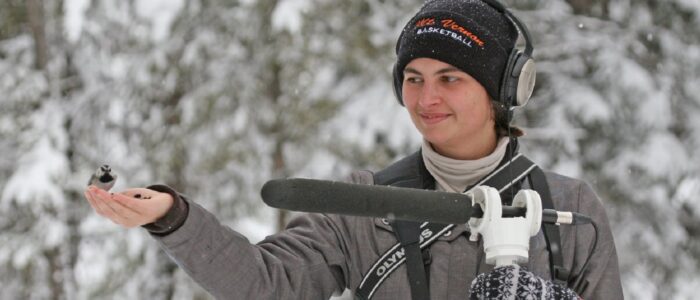

There are standards and regulations for bird control in various industries and settings. These standards and regulations aim to prevent bird strikes, which can be dangerous for aircraft, and to manage bird populations that can cause damage or spread disease. For example:
- The Federal Aviation Administration in the United States requires airports to have a Wildlife Hazard Management Plan that includes bird control measures. This plan must address the potential for bird strikes and detail strategies for reducing the risk, such as habitat modification, bird scaring techniques, and lethal control methods in extreme cases.
- In the agriculture industry, there are guidelines and regulations for bird control to prevent crop damage and protect public health. The US Environmental Protection Agency regulates the use of bird repellents and bird poisons to ensure that they are used safely and do not harm non-target species or the environment.
- There are also international standards for bird control in certain industries, such as the oil and gas industry, which has guidelines for managing bird populations that could be impacted by oil spills.

“A Girl Writing; The Pet Goldfinch” 1870 Henriette Browne
Bird control on college and university campuses should prioritize humane and non-lethal methods to manage bird populations and prevent bird-related hazards. Here are some best practices for bird control on college and university campuses:
- Habitat modification: Modify the campus environment to make it less attractive to birds. This may involve removing or trimming trees and vegetation that provide food and shelter for birds, reducing open water sources, and using bird netting or barriers to block access to areas where birds may nest.
- Education: Educate students, faculty, and staff about the importance of bird control and the negative impacts of feeding birds on campus. Encourage the campus community to report bird-related hazards, such as bird nests in building ventilation systems or bird droppings on walkways.
- Non-lethal deterrents: Use non-lethal bird deterrents, such as visual scare devices, noise makers, and bird repellents, to discourage birds from congregating on campus. These methods are often effective in the short term but may need to be rotated or changed periodically to maintain their effectiveness.
- Integrated pest management: Implement an integrated pest management (IPM) plan that includes bird control measures. IPM is a holistic approach that combines multiple strategies to manage pests, including birds, in an environmentally responsible and effective manner.
- Monitoring and evaluation: Monitor the effectiveness of bird control measures on campus and evaluate their impact on bird populations and hazards. Adjust strategies as needed to ensure that they are effective and humane.
Overall, a comprehensive and humane approach to bird control on college and university campuses should prioritize prevention and management of bird hazards while minimizing negative impacts on bird populations and the environment.

Related Research
Design and Improvement of Anti-Bird Devices for Transmission Line Towers
Application and Challenges of an IoT Bird Repeller System As a result of Bird Behavior
A Bird-caused Damage Risk Assessment System for Power Grid Based on Intelligent Data Platform

Monteverdi VESPERS of 1610

Claudio Monteverdi’s “Vespro della Beata Vergine” that sets the high point in early Baroque sacred music. It is a collection of liturgical pieces — psalms, hymns, and motets — all set to Latin texts.
Monteverdi employs a variety of musical forms and textures, from expansive polychoral settings that exploit the spatial possibilities of the church interior, to intimate solo passages and intricate instrumental ritornellos. The Vespers also integrate elements of secular music, such as dance rhythms and dramatic vocal lines, highlighting Monteverdi’s innovative approach to sacred composition.
Notable sections include the “Dixit Dominus,” with its choral and instrumental interplay, and the “Magnificat,” which concludes the Vespers with a triumphant affirmation of faith.
Monteverdi’s Vespers are celebrated for their emotional depth, technical brilliance, and their role in bridging the Renaissance and Baroque musical eras.
History of Western Civilization Told Through the Acoustics of its Worship Spaces
“Abide with Me”

Abide with me; fast falls the eventide;
The darkness deepens; Lord with me abide.
When other helpers fail and comforts flee,
Help of the helpless, O abide with me.
Swift to its close ebbs out life’s little day;
Earth’s joys grow dim; its glories pass away;
Change and decay in all around I see;
O Thou who changest not, abide with me.
Not a brief glance I beg, a passing word,
But as Thou dwell’st with Thy disciples, Lord,
Familiar, condescending, patient, free.
Come not to sojourn, but abide with me.
Come not in terror, as the King of kings,
But kind and good, with healing in Thy wings;
Tears for all woes, a heart for every plea.
Come, Friend of sinners, thus abide with me.
Thou on my head in early youth didst smile,
And though rebellious and perverse meanwhile,
Thou hast not left me, oft as I left Thee.
On to the close, O Lord, abide with me.
I need Thy presence every passing hour.
What but Thy grace can foil the tempter’s power?
Who, like Thyself, my guide and stay can be?
Through cloud and sunshine, Lord, abide with me.
I fear no foe, with Thee at hand to bless;
Ills have no weight, and tears no bitterness.
Where is death’s sting? Where, grave, thy victory?
I triumph still, if Thou abide with me.
Hold Thou Thy cross before my closing eyes;
Shine through the gloom and point me to the skies.
Heaven’s morning breaks, and earth’s vain shadows flee;
In life, in death, O Lord, abide with me.
History of Western Civilization Told Through the Acoustics of its Worship Spaces

Engineering a Fair Future: Why we need to train unbiased AI
OpenAI was founded in 2015 by a group of technology luminaries, including Elon Musk, Sam Altman, Greg Brockman, Ilya Sutskever, John Schulman, and Wojciech Zaremba. The organization was created with the goal of developing advanced artificial intelligence technologies in a way that is safe and beneficial for humanity. It is written in multiple programming languages, but the primary language used to build the model is Python but relies on a range of other software tools and frameworks, including TensorFlow and PyTorch for training and deploying the deep learning models, and various libraries for data preprocessing and postprocessing, such as spaCy, NLTK, and Transformers.
Since its founding, OpenAI has grown to become one of the world’s leading AI research organizations, with a team of hundreds of researchers and engineers working on a wide range of projects in areas such as natural language processing, robotics, computer vision, and more. Much like humans, ChatGPT will likely struggle negotiating “bias”. As of this posting it seems clear that the algorithm produces answers that are biased toward large central government; most likely the result of not having enough historical input about how a smaller central government is largely responsible for inventing it.


Ubi Caritas et Amor
“Tradition is the democracy of the dead”

History of Western Civilization Told Through the Acoustics of its Worship Spaces
Other sacred compositions by Maurice Duruflé:
- Requiem, Op. 9: Duruflé’s “Requiem” is his most renowned composition. It incorporates the Gregorian Chant melodies for the “Dies Irae” and “In Paradisum” sections. While not hymns in the traditional sense, these chants are significant components of the Catholic liturgy.
- Four Motets on Gregorian Themes, Op. 10: In this choral composition, Duruflé takes inspiration from Gregorian Chant and includes pieces such as “Ubi caritas et amor” and “Tota pulchra es.” These are not hymns but rather choral settings of Latin liturgical texts.
- Fugue on the Theme of the “Carillon des Heures de la Cathédrale de Soissons”: This composition for organ is based on a hymn-like theme, although it is not a hymn in the traditional sense. It showcases Duruflé’s skill as an organist and composer.
- Prelude on the Introit of the Epiphany (for organ): Duruflé composed this piece for organ, incorporating the Gregorian Chant “O Lux Beata Trinitas,” which is associated with the Epiphany in the liturgical calendar.

Evensong “Sonata for Arpeggione and Piano” (Franz Schubert)
Evensong is a traditional Anglican choral service that takes place in the late afternoon or early evening, typically around sunset. It is also known as Evening Prayer or Vespers.
The service consists of a series of prayers, psalms, canticles, and readings from the Bible, which are sung or chanted by a choir in four-part harmony. The choral music often features elaborate harmonies and complex counterpoint, and is usually accompanied by an organ or other instruments.
Evensong has been an important part of the British choral tradition for centuries, and is still performed in many Anglican churches throughout the UK and beyond. The tradition is particularly strong in Oxford and Cambridge, where the famous college choirs perform regular Evensong services that are open to the public.
The origins of Evensong can be traced back to the monastic offices of the Middle Ages, when monks would gather in the evening to sing the psalms and other prayers. Over time, these services evolved into more elaborate and musically sophisticated forms, which were eventually adopted by the Anglican Church and other Protestant denominations.
Today, Evensong is appreciated for its beauty and spiritual depth, as well as its contribution to the rich heritage of British choral music.

Tea
“Monday morning” as a concept since the modern idea of weekdays, including Monday as the start of the workweek, is a relatively recent development. In ancient times, different cultures had their own systems for organizing time, often based on astronomical or religious cycles rather than the structured workweek we’re familiar with today.
From ancient writings, however, we learn about the start of the week in various contexts. For instance, in Greco-Roman literature, there are numerous references to the beginning of the day and the importance of starting tasks early. Additionally, certain religious texts, such as the Bible, may contain references to the first day of the week, which could be interpreted in a similar context to Monday.

“No matter where you are in the world,
you are at home when tea is served.”
– Earlene Grey
There is an American way for drinking tea, a British way of drinking tea, a Japanese way of drinking tea and so forth and so on. However, the International Organization for Standardization (ISO) section ISO 3103 concludes upon an “international way” of drinking tea. The ISO even created a standard on how to run a standard organization. Their goal for this standard, no matter where you are in the world, is to have one way to play it safe in terms of making tea. To maintain consistent results, the following are recommendations given by the standard:
- The pot should be white porcelain or glazed earthenware and have a partly serrated edge. It should have a lid that fits loosely inside the pot.
- If a large pot is used, it should hold a maximum of 310 ml (±8 ml) and must weigh 200 g (±10 g).
- If a small pot is used, it should hold a maximum of 150 ml (±4 ml) and must weigh 118 g (±10 g).
- 2 grams of tea (measured to ±2% accuracy) per 100 ml boiling water is placed into the pot.
- Freshly boiling water is poured into the pot to within 4-6 mm of the brim.
- The water should be similar to the drinking water where the tea will be consumed
- Brewing time is six minutes.
- The brewed tea is then poured into a white porcelain or glazed earthenware bowl.
- If a large bowl is used, it must have a capacity of 380 ml and weigh 200 g (±20 g)
- If a small bowl is used, it must have a capacity of 200 ml and weigh 105 g (±20 g)
- If the test involves milk, then it can be added before or after pouring the infused tea.
- Milk added after the pouring of tea is best tasted when the liquid is between 65 – 80 °C.
- 5 ml of milk for the large bowl, or 2.5 ml for the small bowl, is used.
If you travel out of the country and are not informed on the countries traditions and practices for drinking tea, according to the ISO, you can’t go wrong by using the above standards. Their standards does not make your way of making tea wrong. It just sets a default and reproducible cup for everyone to make.
More
The International Standard Cup of Tea
NSF International: Drinking Water Quality

There are several universities around the world that specialize in tea research. Some of the most well-known include:
University of North Carolina at Greensboro (USA): The UNCG has a Center for Applied Research in Tea and is dedicated to tea research in the areas of health, culture, and sustainability.
Huazhong Agricultural University (China): Huazhong Agricultural University has a Tea Science Institute that conducts research in the areas of tea breeding, tea processing, tea quality, and tea culture.
University of Shizuoka (Japan): The University of Shizuoka has a Faculty of Agriculture that includes a Department of Tea Science, which conducts research in the areas of tea production, processing, and quality.
University of Darjeeling (India): The University of Darjeeling has a Department of Tea Science and Technology that offers courses in tea science and conducts research in the areas of tea cultivation, processing, and marketing.
University of Colombo (Sri Lanka): The University of Colombo has a Department of Plant Sciences that conducts research in the areas of tea breeding, cultivation, and processing.
Anhui Agricultural University (China): Anhui Agricultural University has a Tea Research Institute that conducts research in the areas of tea breeding, cultivation, processing, and marketing.
Nice cup of tea before bed pic.twitter.com/Wfr16IUGaz
— Rachey (@Rachelle_Hulme) April 2, 2025
New update alert! The 2022 update to the Trademark Assignment Dataset is now available online. Find 1.29 million trademark assignments, involving 2.28 million unique trademark properties issued by the USPTO between March 1952 and January 2023: https://t.co/njrDAbSpwB pic.twitter.com/GkAXrHoQ9T
— USPTO (@uspto) July 13, 2023
Standards Michigan Group, LLC
455 East Eisenhower Parkway, Suite 300
Ann Arbor, MI 48108 USA
888-748-3670
DIRECTIONS
 |
 |
|
 |
 |
|
 |
 |