
Tag Archives: West Virginia
- Home
- Posts tagged "West Virginia"


Dolce Vita
Standards West Virginia | 2024 Net Position $2.586B (Page 26) | Master Plans

West Virginia University is integrated with the city of Morgantown in a way that shares some strong similarities with many European universities, though not identically in every aspect.
Many classic European universities (e.g., in cities like Oxford, Cambridge, Bologna, Paris/Sorbonne, Heidelberg, or Utrecht) are deeply embedded in their urban fabric. Buildings are often scattered throughout the historic city center, with lecture halls, libraries, and administrative spaces intermixed among shops, residences, cafes, and public streets rather than being confined to a walled-off or peripheral “campus.”
In Morgantown the university and city feel like one continuous, walkable entity — the institution essentially helped shape or co-evolved with the town over centuries, creating a seamless “town-gown” blend where university life spills directly into city life and vice versa.
West Virginia University Drinking Water Sanitation Program

Did you grab a photo tonight with one of our four Mountaineer finalists? 🤳 pic.twitter.com/99fXWs5lF2
— WVU Mountaineers · Let’s Go! (@WestVirginiaU) February 19, 2026

It’s an electric feeling when 60,000 of your closest friends lock arms and sing together as one.
When the Coliseum goes dark, and swirls of gold and blue flood the stands.@CharlesWesleyG‘s anthem captures the incredible feeling of being a Mountaineer. https://t.co/kqApoC4VdU pic.twitter.com/zMzI2Znms3
— WVU Mountaineers · Let’s Go! (@WestVirginiaU) November 24, 2025
West Virginia University is cutting over 140 faculty and gutting its liberal arts programs, but it still has money for training sessions on implicit bias, microaggressions, and DEI in research. pic.twitter.com/DYoTk8RjTL
— Steve McGuire (@sfmcguire79) February 12, 2024
Flagship public universities likely to cut more humanities, staff — especially in rural states
WVU walks it off & has the entire stadium singing Country Roads
Chills pic.twitter.com/T5Ng4bP3mw
— Barstool Sports (@barstoolsports) June 2, 2026
Parkersburg School of Cosmetology & Esthetics

Symphony No 3, “Pastoral Symphony”
This content is accessible to paid subscribers. To view it please enter your password below or send mike@standardsmichigan.com a request for subscription details.
Broccoli and Corn Bake
This content is accessible to paid subscribers. To view it please enter your password below or send mike@standardsmichigan.com a request for subscription details.
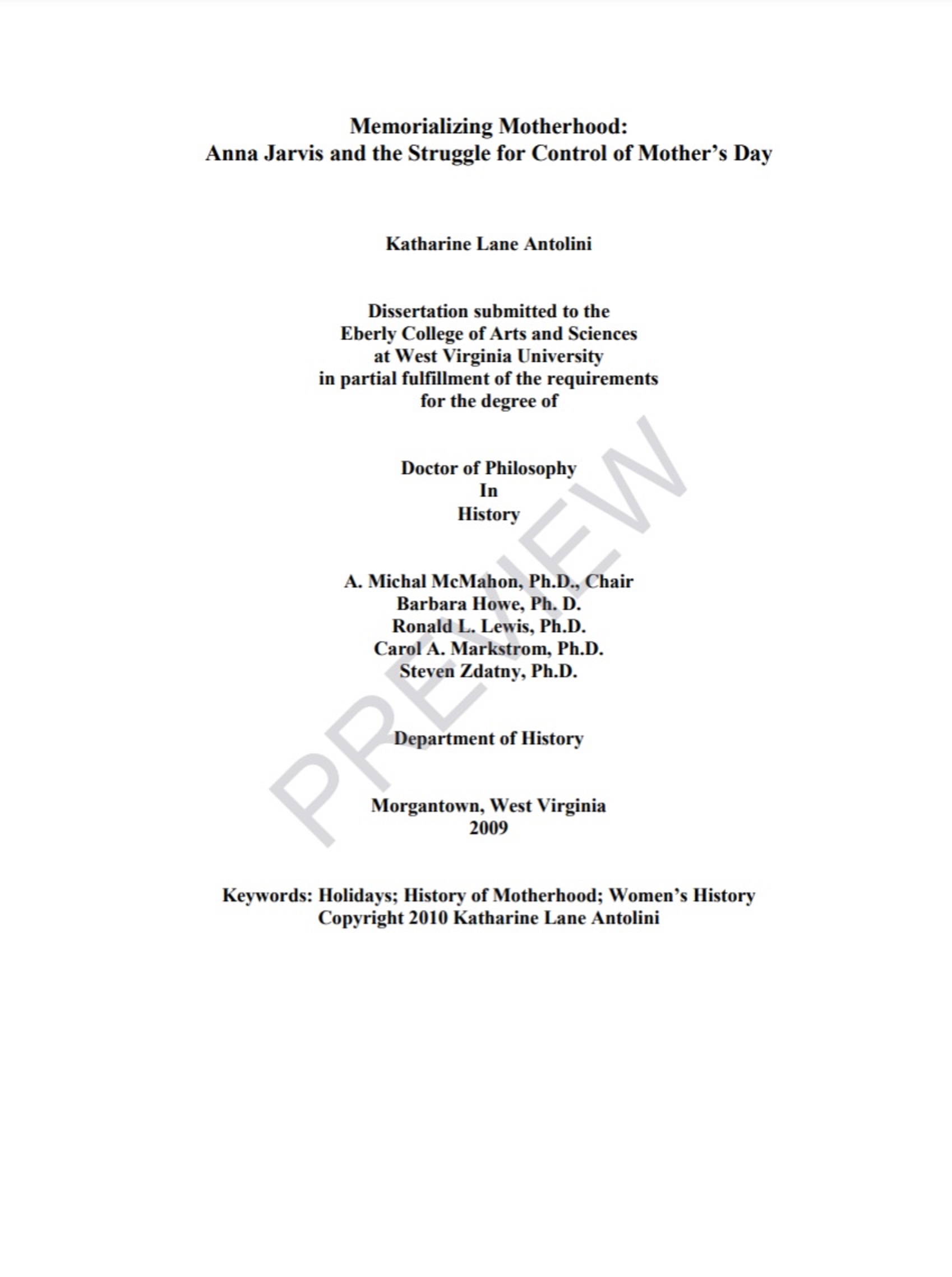
The Struggle for Control of Mother’s Day
CLICK IMAGE

“Mother with Child” | Leon Jean Basile Perrault 1894
Mother’s Day is celebrated on different days in different countries and regions. However, here is a list of some countries and the dates:
United States: Second Sunday in May
United Kingdom: Fourth Sunday in Lent
Australia: Second Sunday in May
Canada: Second Sunday in May
New Zealand: Second Sunday in May
India: Second Sunday in May
Mexico: May 10th
Japan: Second Sunday in May
France: Last Sunday in May or First Sunday in June
Germany: Second Sunday in May
Italy: Second Sunday in May
Brazil: Second Sunday in May
Egypt, Mother’s Day is celebrated on March 21st.
Israel, Mother’s Day is celebrated on the 30th day of the Jewish month of Shvat, which usually falls in February.
India, Mother’s Day is not an official holiday, but it is celebrated on the second Sunday of May, the same as in the United States.
Japan, Mother’s Day is celebrated on the second Sunday of May, but it is not a public holiday.
South Africa, Mother’s Day is celebrated on the second Sunday of May, the same as in the United States.
Thailand, Mother’s Day is celebrated on August 12th, which is the birthday of Queen Sirikit, the current queen consort of Thailand.

Shamrock Shakes
The Shamrock Shake tradition centers on festive St. Patrick’s Day celebrations hosted by the Collegiate Recovery Program. Each March (e.g., events on March 7, 2024, and March 12, 2026), students gather for free Shamrock Shakes—minty green treats—alongside crafts, games, and sober fun at locations like Serenity Place. This annual event promotes community, recovery support, and holiday spirit in a welcoming, alcohol-free environment for all WVU students.
WVU Medicine $460M projects to expand healthcare access across West Virginia
Fiscal Year 2026 Financial Plan
Board of Governors: Finance and Administration Rule 5.4 – Campus Facilities Plan
Campus Rail Transit
The West Virginia University PRT (Personal Rapid Transit) system is a unique and innovative form of public transportation that serves the WVU campus and the city of Morgantown, West Virginia. The PRT system consists of a series of automated, driverless vehicles that operate on an elevated track network, providing fast and convenient transportation to key destinations on and around the WVU campus.
The PRT system was first developed in the 1970s as a solution to the growing traffic congestion and parking demand on the WVU campus. The system was designed to be efficient, reliable, and environmentally friendly, and to provide a high-tech, futuristic mode of transportation that would appeal to students and visitors.
The PRT system currently operates five different stations, with stops at key campus locations such as the Mountainlair Student Union, the Engineering Research Building, and the Health Sciences Center. The system is free for all WVU students, faculty, and staff, and also offers a low-cost fare for members of the general public.
The PRT system has been recognized as one of the most advanced and innovative public transportation systems in the world, and has won numerous awards for its design, efficiency, and environmental sustainability. It has also become an iconic symbol of the WVU campus, and is often featured in promotional materials and advertising campaigns for the university.
More
Federal Transit Administration
West Virginia Department of Education: School Transportation
“Evaluation of the West Virginia University Personal Rapid Transit System” | A. Katz and A. Finkelstein (Journal of Transportation Engineering, 1987) This paper evaluates the technical and operational performance of the WVU PRT system based on data collected over a six-year period. The authors identify several issues with the system, including maintenance problems, limited capacity, and difficulties with vehicle docking and undocking.
“Modeling of the West Virginia University Personal Rapid Transit System” by J. Schroeder and C. Wilson (Transportation Research Record, 2002) This paper presents a mathematical model of the WVU PRT system that can be used to analyze its performance and identify potential improvements. The authors use the model to evaluate the impact of various factors, such as station dwell time and vehicle capacity, on the system’s overall performance.
“Evaluating the Effectiveness of Personal Rapid Transit: A Case Study of the West Virginia University System” by K. Fitzpatrick, M. Montufar, and K. Schreffler (Journal of Transportation Technologies, 2013) This paper analyzes the effectiveness of the WVU PRT system based on a survey of users and non-users. The authors identify several challenges facing the system, including low ridership, reliability issues, and high operating costs.
Association for Commuter Transportation: Accreditation Standards

Fruit Smoothie
West Virginia University Financial Statement 2022 | $1.178M
The WVU Extension is a primary outreach division of West Virginia University. With offices in each of the state’s 55 counties, Extension faculty and staff develop and deliver programs in leadership development, rural and community-based economic development, youth development, workforce development, and health education.
Ingredients
3 cups frozen strawberries or other frozen fruit
1 banana
1 cup yogurt (plain or vanilla)
1 handful spinach or kale
2 cups of milk
Directions
Wash fresh produce.
Collect and measure all ingredients before starting recipe.
Add the fruit, yogurt and greens to the blender.
Pour the milk into the blender.
Blend 30 to 45 second until smooth.
Refrigerate leftovers within two hours, and finish within two days.
Nutrition information per serving (recipe makes six one-cup servings):
Calories — 120; fat — 2g; carbohydrates — 21g; fiber — 2g; protein — 5g


Geoffrey Hinton & Joel Hellermark
This conversation was recorded in April 2024 at the Royal Institute of Great Britain in London. An edited version was premiered at Sana AI Summit on May 15 2024 in Stockholm, Sweden.
Geoffrey Hinton has been called “the godfather of AI” and is considered one of the most prominent thought leaders on the emergence of artificial intelligence. He has served as a faculty member at Carnegie-Mellon and a fellow of the Canadian Institute for Advanced Research. He is now Emeritus Professor at the University of Toronto. In 2023, Geoffrey left his position at Google so that he could speak freely about AI’s impact on humankind.
Fun fact: University Park is located right next to Smoothie King! 🥤 pic.twitter.com/Gmrlb2nKPb
— WVU University Apartments (@WvuApartments) September 15, 2023
Students living off campus can purchase Go plans, or any of our Prime and Dining Dollars-only plans that are available to be used at all of our retail or residential dining locations on campus.
Read about all of our plans here! ⬇️https://t.co/TxouPEuFTl pic.twitter.com/8Ga5pKADAk
— WVU Dining (@WVUDining) March 10, 2022
Easter Bread & Yaupon Tea
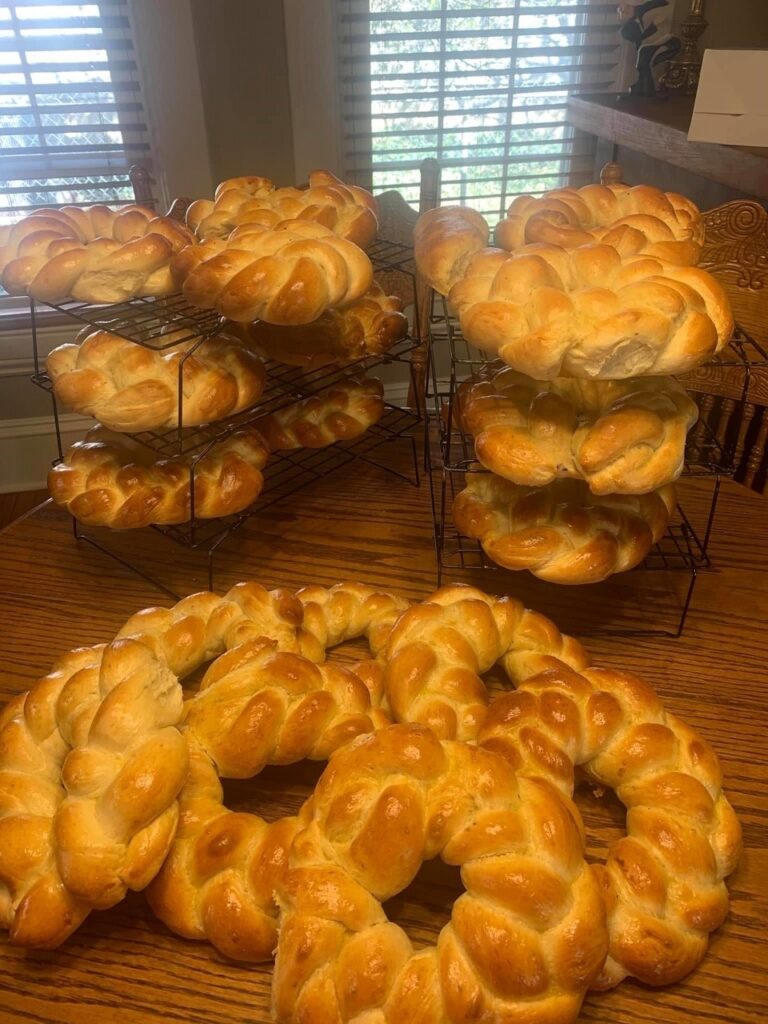
“Every year as Easter approaches, if you are lucky, you might catch the scent of baking bread and fragrant anise wafting in the air in my hometown of Clarksburg, West Virginia. Easter bread, sweet and flavored with anise seed, is a holiday ritual in the Italian-American community here. With roots stretching back to Calabria, making Easter bread is a foodways tradition that now thrives in North Central West Virginia” — Lori Hostuttler, Assistant Director at West Virginia & Regional History Center
Standards West Virginia | Lane Department of Computer Science & Electrical Engineering
Yaupon Drink: A Medicine Bundle in the Atlantic World
Steven P. Carriger Jr, University of Tennessee, Knoxville
Abstract. This dissertation examines yaupon drink, a tea made from yaupon holly along with other ingredients, as a medicine bundle in the Atlantic World. Originally a medicinal drink used by Native Americans across the what is today the American South, over time the tea became a trade good demanded by the Spanish and a medicinal herb sought by European botanists and medical practitioners. Chapter One traces yaupon’s origins across the southeast and bundles the drink into the many cosmic and social connections it held. Chapter Two shows how the Spanish colonial presence offered an alternative to yaupon in Florida, through Christianity and its Sacraments even as the Spanish themselves began to commodify it, demanding it as an item of tribute. Chapter Three looks beyond Spanish Florida into the interior of the southeast as Creek, Cherokee, and Natchez towns negotiated the “Shatter Zone” and shows how towns of the Native Americans preserved or changed how they used yaupon in response to European colonialism. Chapter Four explains how the yaupon became a part of medicine and gardens in early modern Europe and how its leaves negotiated the changes that the Enlightenment brought. Using archaeology and European narrative histories, this dissertation examines yaupon drink within its relational fields, recognizing its affordances and how these help write a small piece of a decolonized history of the tangled relationships among Native Americans and Europeans in Southeast and the larger Atlantic World.

“Spring Turning” 1936 Grant Wood
Related:
New update alert! The 2022 update to the Trademark Assignment Dataset is now available online. Find 1.29 million trademark assignments, involving 2.28 million unique trademark properties issued by the USPTO between March 1952 and January 2023: https://t.co/njrDAbSpwB pic.twitter.com/GkAXrHoQ9T
— USPTO (@uspto) July 13, 2023
Standards Michigan Group, LLC
455 East Eisenhower Parkway, Suite 300
Ann Arbor, MI 48108 USA
888-748-3670
DIRECTIONS
 |
 |
|
 |
 |
|
 |
 |