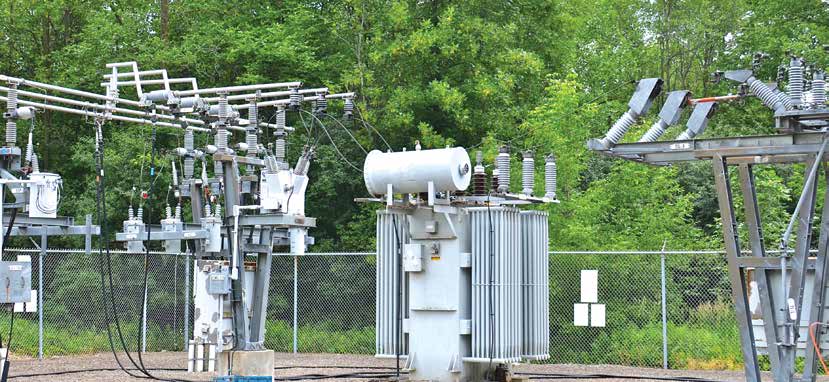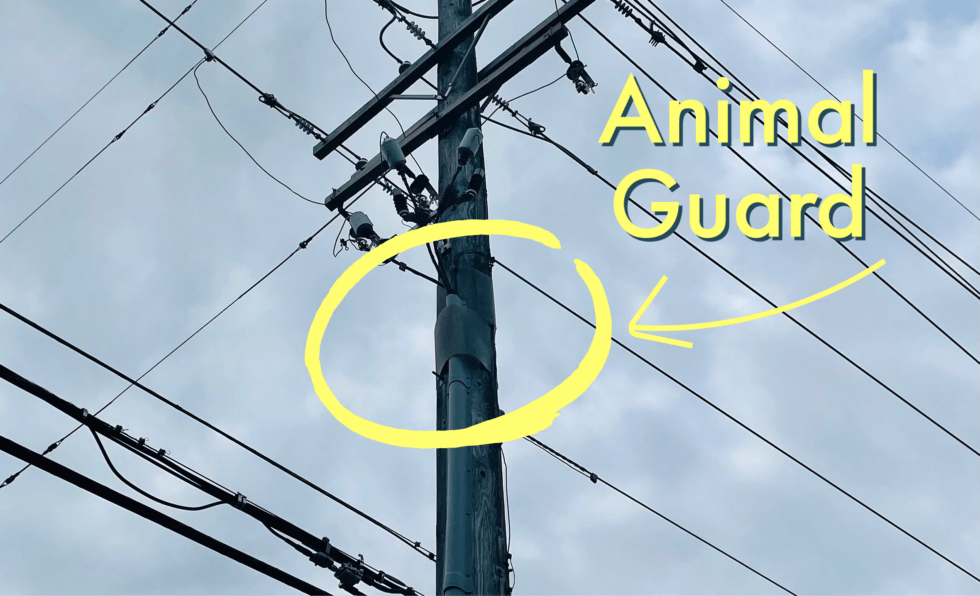
Today at the usual hour we examine a few proposals for the 2028 National Electrical Safety that involve the degree to which merchant utilities should be required to replace system elements with elements meeting a higher standard than the standard to which the system element was originally built. Use the login credentials at the upper right of our home page.
The Earth’s precession is a slow, cyclical motion of the rotational axis that causes the position of the celestial poles to change over time. This motion is caused by the gravitational influence of the Moon and Sun on the Earth’s equatorial bulge, and it has a period of about 26,000 years.
Over astronomical time, the Earth’s precession has caused a number of changes in the position of the stars and constellations in the sky. For example, due to precession, the position of the North Star, or Polaris, has shifted over time, and in ancient times, other stars, such as Thuban, were used as celestial markers for navigation. Additionally, precession can cause changes in the length and timing of the seasons over long timescales.
The Earth’s precession is affected by a number of factors, including the gravitational pull of other planets, the shape of the Earth’s orbit around the Sun, and the distribution of mass within the Earth itself. These factors can cause slight variations in the rate and direction of precession over time.
Overall, while the effects of precession on the Earth’s rotation and position in the sky are not easily observable on human timescales, they are an important component of the Earth’s long-term astronomical behavior.
🌾 “UNL Extension and the Crop/Water Specialists helped me find success in my return to the farm. The TAPS competition has been instrumental AND is helping spread awareness of the myriad challenges of production agriculture,” shared a donor. ❤️
🙏 Thank you, Glow Big Red donors! pic.twitter.com/y4FRMBk1mc
“Road to Versailles at Louveciennes” 1869 Camille Pissarro
Today and its Slip and Fall season everywhere. Accordingly, at the usual hour, we review best practice literature for the safety and sustainability of the surfaces beneath our feet; with special focus on the risk aggregation in educational estates.
Heat tracing is a process used to maintain or raise the temperature of pipes and vessels in order to prevent freezing, maintain process temperature, or ensure that products remain fluid and flow through the system properly.
Heat tracing works by using an electric heating cable or tape that is wrapped around the pipe or vessel, and then insulated to help retain the heat. The heating cable is connected to a power source and temperature control system that maintains the desired temperature by regulating the amount of heat output from the cable. Heat tracing is commonly used in industrial applications where temperature control is critical, such as in chemical plants, refineries, and oil and gas facilities.
There are several types of heat tracing, including electric heat tracing, steam tracing, and hot water tracing, each of which have their own unique advantages and disadvantages. The selection of the appropriate type of heat tracing depends on the specific application and the required temperature range, as well as factors such as cost, maintenance, and safety considerations.
The literature for snow and ice management (and enjoyment) produced by these standards-setting organizations:
It is a surprisingly large domain with market-makers in every dimension of safety and sustainability; all of whom are bound by state and federal regulations.
Join us at 16:00 UTC with the login credentials at the upper right of our home page.
— The Catholic University of America (@CatholicUniv) January 14, 2025
There have been several recent innovations that have made it possible for construction activity to continue through cold winter months. Some of the most notable ones include:
Heated Job Site Trailers: These trailers are equipped with heating systems that keep workers warm and comfortable while they take breaks or work on plans. This helps to keep morale up and prevent cold-related health issues.
Insulated Concrete Forms (ICFs): ICFs are prefabricated blocks made of foam insulation that are stacked together to form the walls of a building. The foam insulation provides an extra layer of insulation to keep the building warm during cold winter months.
Warm-Mix Asphalt (WMA): WMA is a type of asphalt that is designed to be used in colder temperatures than traditional hot-mix asphalt. This allows road construction crews to work through the winter months without having to worry about the asphalt cooling and becoming unusable.
Pneumatic Heaters: These heaters are used to warm up the ground before concrete is poured. This helps to prevent the concrete from freezing and becoming damaged during the winter months.
Electrically Heated Mats: These mats are placed on the ground to prevent snow and ice from accumulating. This helps to make the job site safer and easier to work on during the winter months.
Overall, these innovations have made it possible for construction crews to work through the winter months more comfortably and safely, which has helped to keep projects on schedule and minimize delays.
On #MemorialDay, Brown remembers those who have died serving in the U.S. military.
Along with several other monuments on campus, Soldiers Memorial Gate stands as a reminder of the service, sacrifice and selflessness of those who have lost their lives serving their country. pic.twitter.com/Au4zBynruY
— Brown University (@BrownUniversity) May 27, 2024
Soybeans play a critical role in the food chain as a source of protein and oil for human consumption, animal feed, food processing, industrial applications, and sustainable agricultural practices. They are a versatile and widely used crop that contributes to various aspects of the global food system.
Building, operating, and maintaining athletic scoreboards requires a range of technologies, including hardware and software components. These are central features in nearly every athletic event, governing the state of play and attendee response.
Scoreboard Hardware: A range of hardware components, including display panels, control consoles, sound systems, and wiring, is necessary to build an athletic scoreboard. While there are no universal standards for LED displays in athletic scoreboards, but there is a common vocabulary used by manufacturers and installers follow to ensure quality, performance, and safety:
Brightness and Contrast: LED displays should be bright enough to be visible from a distance, but not so bright that they cause glare or eye strain. The contrast ratio between the LED display and the surrounding environment should be optimized for visibility.
Pixel Density and Resolution: The pixel density and resolution of an LED display should be appropriate for the size of the scoreboard and the viewing distance. Higher pixel density and resolution can improve the clarity and detail of the scoreboard display.
Color Accuracy: Athletic scoreboards often display team colors and logos, so color accuracy is important. LED displays should be capable of reproducing colors accurately and consistently.
Refresh Rate: The refresh rate of an LED display refers to how quickly the display can update its image. A higher refresh rate can reduce motion blur and improve the clarity of fast-moving action on the scoreboard.
Environmental Factors: Athletic scoreboards are often exposed to outdoor elements such as sunlight, rain, and extreme temperatures. LED displays should be designed and manufactured to withstand these environmental factors and maintain their performance over time.
Safety: Athletic scoreboards should be designed and installed to minimize the risk of injury to players or spectators. This may include factors such as the height and location of the scoreboard, the durability of the display panels, and the strength of mounting hardware.
Wireless Communications: Many modern athletic scoreboards use wireless communication systems to connect the scoreboard control console to the scoreboard display. This allows for greater flexibility in installation and reduces the need for cabling.
LED Technology: LED technology has revolutionized athletic scoreboards in recent years. LED displays offer superior brightness, color accuracy, and energy efficiency compared to traditional scoreboards but must conform to local night-sky regulations.
Power Management Systems: Athletic scoreboards require significant amounts of power to operate, and efficient power management systems are necessary to ensure reliable and continuous operation. Maintaining temperatures — heating and cooling within specification — is a priority for maximum operable life.
Maintenance and Diagnostic Tools: To maintain and troubleshoot athletic scoreboards, specialized tools and software are necessary. This may include diagnostic software, specialized cables, and other testing equipment.
Overall, the technologies required to build, operate, and maintain athletic scoreboards are diverse and constantly evolving. A range of specialized hardware and software components, as well as skilled technicians, are necessary to ensure that athletic scoreboards remain functional and reliable.
Join us today at 11 AM/ET (15:00 UTC) when we review best practice literature. Open to everyone. Use the login credentials at the upper right of our home page. This topic is also tracked by experts in the IEEE Education & Healthcare Facilities Committee which meets online 4 times monthly in Central European and American time zones and is also open to everyone.
This content is accessible to paid subscribers. To view it please enter your password below or send mike@standardsmichigan.com a request for subscription details.
A wrongful death suit filed November 3, 2025 against FirstEnergy Corporation. Allegation: Improper maintenance and inspection of power infrastructure led to the son’s fatal electrocution near State College, Pennsylvania. It is a relatively new filing so s full public docket appears not available at this time. We include it in today’s agenda as we prepare our comments on the First Draft of the 2028 National Electrical Safety Code.
New update alert! The 2022 update to the Trademark Assignment Dataset is now available online. Find 1.29 million trademark assignments, involving 2.28 million unique trademark properties issued by the USPTO between March 1952 and January 2023: https://t.co/njrDAbSpwBpic.twitter.com/GkAXrHoQ9T