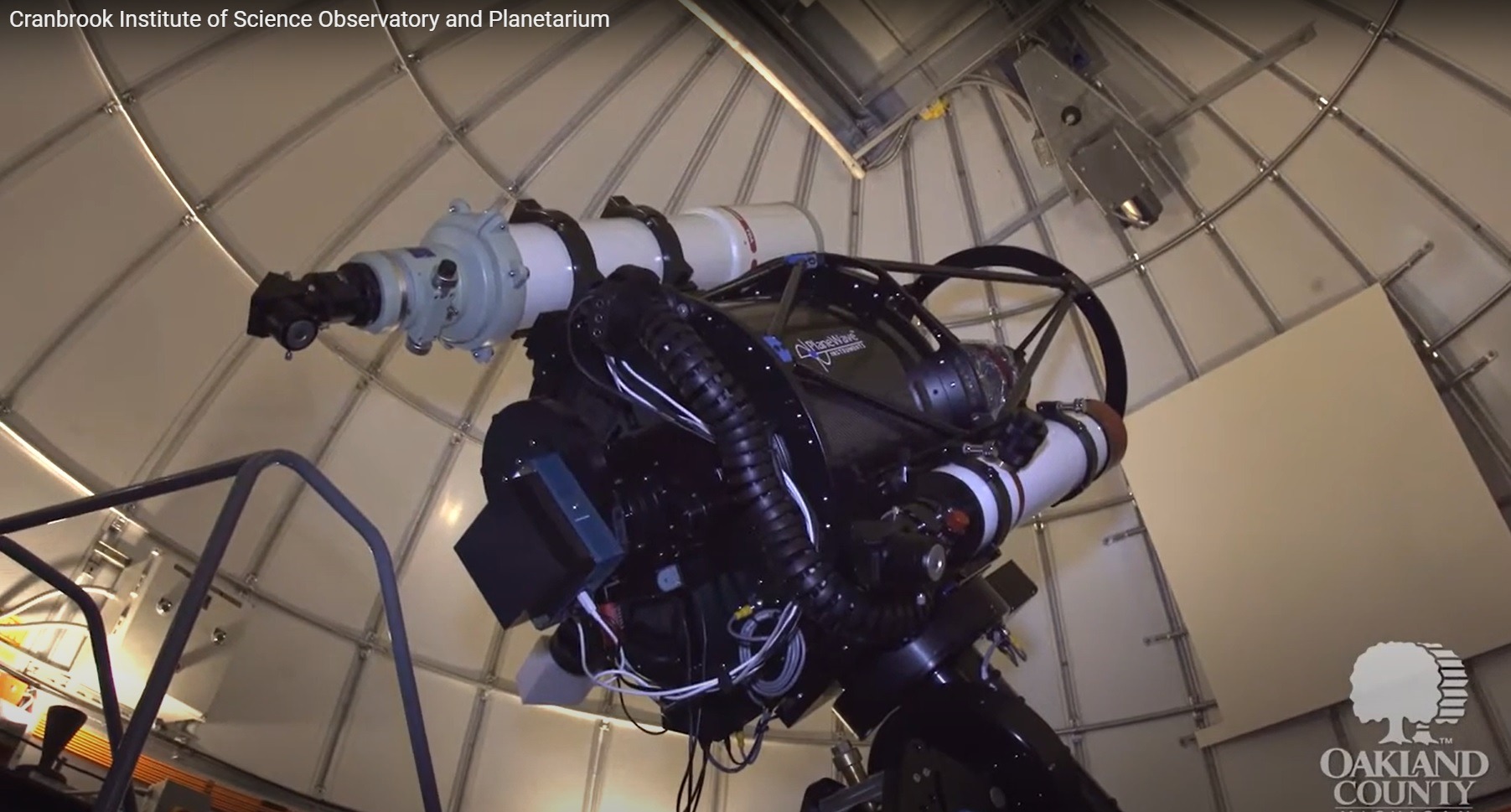
Which one of those bright little dots is the city of Ellinwood, KS? That's where I spent an enjoyable morning presenting a #planetarium show to the 7th graders at Ellinwood Middle School. Thanks to teacher Kelsie Riedl for having me back to work with her students again this year! pic.twitter.com/pq3g0Zg4XF
Occupancy classifications inform every dimension and every discipline of the built environment. Classifications are grouped primarily based on their relative fire hazard and life safety properties such as how many people will be in the area, are there hazardous materials or manufacturing, and are people sleeping, cooking, living etc. Getting people and animals out of a built space with an unobstructed egress path to exit buildings, structures, and spaces inform occupancy classifications. A means of egress is comprised of exit access, exit, and exit discharge.
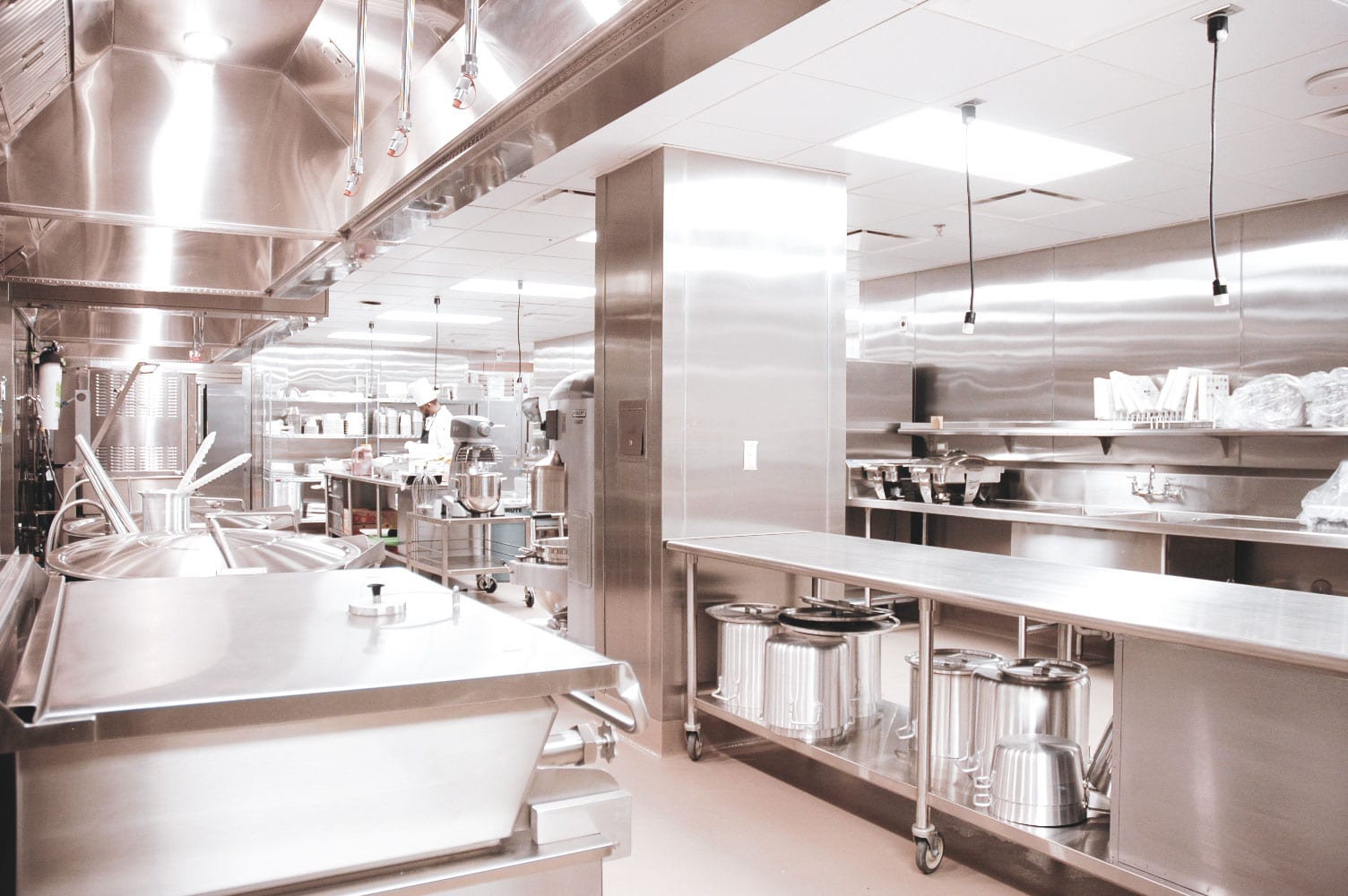
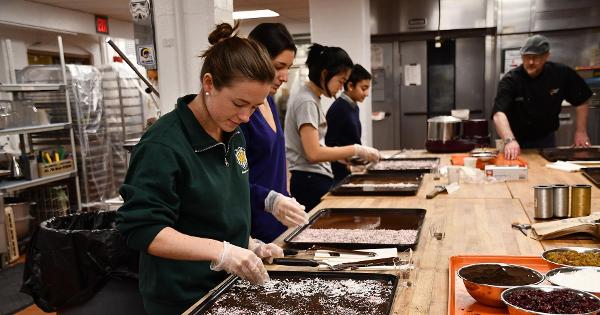
Commercial kitchens in school cafeterias and college dormitories are designed to meet strict health and safety standards, accommodate high-volume food production, and provide nutritious meals to students in an efficient and organized manner. Some common features:
Industrial-grade cooking equipment: This may include commercial ovens, grills, ranges, fryers, steamers, and other specialized cooking equipment designed for high-volume cooking.
Food preparation areas: These may include spacious prep tables, cutting boards, sinks, and other food preparation stations for washing, chopping, and assembling ingredients.
Walk-in refrigerators and freezers: These are used for storing large quantities of perishable food items at appropriate temperatures to maintain freshness and safety.
Food storage facilities: These may include shelves, racks, and cabinets for storing dry goods, canned goods, and other non-perishable food items.
Dishwashing area: This may include commercial dishwashers capable of handling a large number of dishes and utensils efficiently.
Serving stations: These may include counters, warming stations, and other facilities for serving food to students.
Ventilation and exhaust systems: These are essential for maintaining a clean and safe kitchen environment by properly removing smoke, steam, and odors generated during cooking.
Safety features: These may include fire suppression systems, emergency exits, and other safety measures to ensure compliance with local health and safety regulations.
Owing to the complexity of the domain, starting 2023 we will break down the standards for education community safety and sustainability into two separate colloquia:
Kitchens 100 will deal primarily safety — fire, shock hazard, sanitation, floors, etc.
Kitchens 300 will deal with sustainability criteria in large commercial kitchens common in school cafeterias, dormitories, sports venues and hospitals.
Williams P. Clements Jr. University Hospital
Owing to the complexity of the domain, starting 2023 we will break down the standards for education community safety and sustainability into two separate colloquia:
Kitchens 100 will deal primarily safety — fire, shock hazard, sanitation, floors, etc.
Kitchens 300 will deal with sustainability criteria in large commercial kitchens common in school cafeterias, dormitories, sports venues and hospitals.
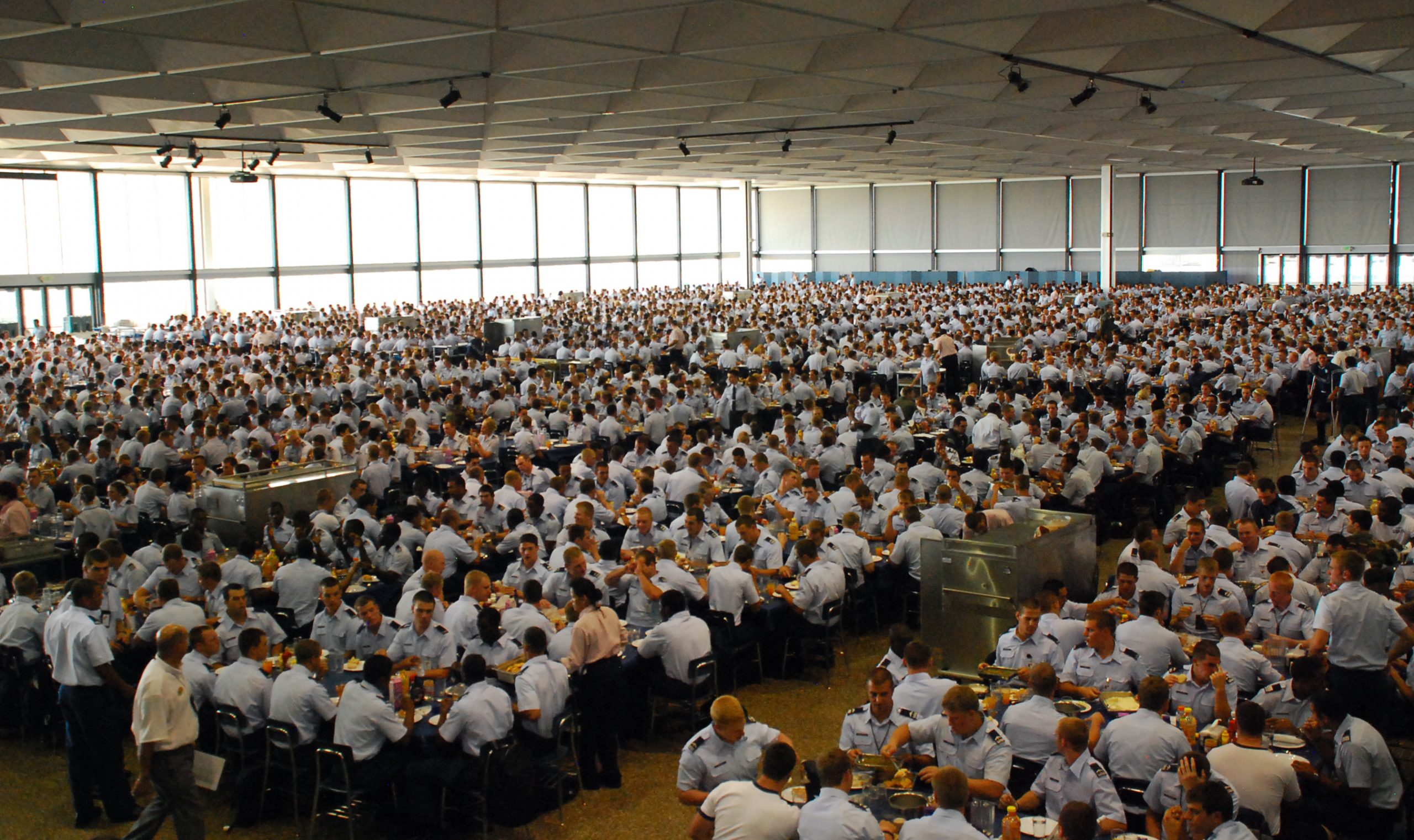
One of the concentrated risk aggregations in any school district, college, university and technical school, athletic venues and university-affiliated healthcare systems, rests in the food preparation units. On a typical large research university there are hundreds of kitchens in dormitories, student unions, athletic venues, hospitals and — to a surprising degree — kitchen facilities are showing up in classroom buildings. Kitchens that used to be located on the periphery of campus and run by private industry are now moving into instructional spaces and operated by private food service vendors.
Food preparation facilities present safety challenges that are on the same scale as district energy plants, athletic concession units, media production facilities and hospital operating rooms. There are 20 accredited standards setting organizations administering leading practice discovery in this space. Some of them concerned with fire safety; others concerned with energy conservation in kitchens, still others concerned with sanitation. The International Kitchen Exhaust Cleaning Association is one of the first names in this space and maintains an accessible standards development home page; linked below:
The IKECA catalog of titles establish a standard of care for cleaning activity that fills gaps in related ASHRAE, ASME, ICC and NFPA titles. For example:
IKECA I10 Standard for the Methodology for Inspection of Commercial Kitchen Exhaust Systems
IKECA C10 Standard for the Methodology for Cleaning Commercial Kitchen Exhaust Systems
We encourage subject matter experts in food enterprises in the education industry to communicate directly with John Dixon at IKCEA (jdixon@fernley.com) or Elizabeth Franks, (215) 320-3876, information@ikeca.org, International Kitchen Exhaust Cleaning Association, 100 North 20th Street, Suite 400, Philadelphia, PA 19103.
We are happy to get specific about how the IKECA suite contributes to lower education community cost during our Food teleconferences. See our CALENDAR for the next online meeting; open to everyone.
Kitchen cooking ranks high as the causes of fire hazard in the built environment. ASHRAE 154 provides design criteria for the performance of commercial cooking ventilation systems. Education communities have hundreds of food preparation enterprises in school districts, residence halls, hospitals and athletic venues. It is not intended to circumvent any safety, health or environmental requirement; however we find a fair amount of drama regarding the competing requirements of fire safety and sustainability among subject matter experts. The stabilized version is dated 2022.
“Dutch Kitchen” / Artist Unknown
A noteworthy title in the ASHRAE standards catalog is ASHRAE 154 Ventilation for Commercial Cooking Operations. Food preparation enterprises in school districts, residence halls, hospitals and athletic venues and central features in education communities. Access to the 2022 edition is linked below:
The purpose of ASHRAE 154 is to provide design criteria for the performance of commercial cooking ventilation systems. It covers kitchen hoods, exhaust systems and replacement air systems, It is not intended to circumvent any safety, health or environmental requirement; however we find a fair amount of drama between partisans of air movement controls and energy conservation interests. Fire safety and the sustainability advocates are well funded voices.
There are no open consultations at the moment; but you may track release of any at the link below:
Titles in the ASHRAE catalog move swiftly; many of them consultations lasting less than 45 days.
Interior environmental air safety is a concern that cuts across many professional disciplines. Accordingly, we maintain this title on the standing agendas of several colloquia — Mechanical Engineering, Energy and Housing. Starting 2022 we will break out this the subject of a separate, dedicated colloquium See our CALENDAR for the next online meeting; open to everyone.
Colleagues: David Conrad, Richard Robben, Larry Spielvogel
Kitchen cooking ranks high as the causes of fire hazard in the built environment. ASHRAE 154 provides design criteria for the performance of commercial cooking ventilation systems. Education communities have hundreds of food preparation enterprises in school districts, residence halls, hospitals and athletic venues. It is not intended to circumvent any safety, health or environmental requirement; however we find a fair amount of drama regarding the competing requirements of fire safety and sustainability among subject matter experts. The stabilized version is dated 2022.
Abstract.This article makes three related arguments. First, that although many definitions of the smart city have been proposed, corporate promoters say a smart city uses information technology to pursue efficient systems through real-time monitoring and control. Second, this definition is not new and equivalent to the idea of urban cybernetics debated in the 1970s. Third, drawing on a discussion of Rio de Janeiro’s Operations Center, I argue that viewing urban problems as wicked problems allows for more fundamental solutions than urban cybernetics, but requires local innovation and stakeholder participation. Therefore the last section describes institutions for municipal innovation and IT-enabled collaborative planning.
So proud to announce the @ellisoninst is beginning construction on our new campus at the @UniofOxford and broadening our mission: Science & Engineering for Humanity. EIT develops & deploys technology in pursuit of solving four of humanity’s most challenging & enduring problems.… pic.twitter.com/vSkHWSS8EK
We were pleased to welcome Minister @StephenMorganMP who visited our medical researchers and LifeLab facility to see how we are helping to improve children’s long-term health prospects.
Last week we enjoyed hosting colleagues from universities in the Netherlands @tweetsunl to discuss the opportunities and challenges of using generative AI in education.
The National Institute of Standards and Technology seeks information to assist in carrying out several of its responsibilities under the Executive order on Safe, Secure, and Trustworthy Development and Use of Artificial Intelligence issued on October 30, 2023. Among other things, the E.O. directs NIST to undertake an initiative for evaluating and auditing capabilities relating to Artificial Intelligence (AI) technologies and to develop a variety of guidelines, including for conducting AI red-teaming tests to enable deployment of safe, secure, and trustworthy systems.
Attention Is All You Need | Authors: Ashish Vaswani et al. (2017). This groundbreaking paper introduced the Transformer architecture, replacing recurrent layers with self-attention mechanisms to enable parallelizable, efficient sequence modeling. It laid the foundational blueprint for all subsequent LLMs, revolutionizing natural language processing by capturing long-range dependencies without sequential processing.
BERT: Pre-training of Deep Bidirectional Transformers for Language Understanding | Authors: Jacob Devlin et al. (2018). BERT pioneered bidirectional pre-training via masked language modeling, allowing models to understand context from both directions. As an encoder-only Transformer, it achieved state-of-the-art results on 11 NLP tasks and established the pre-training/fine-tuning paradigm that underpins bidirectional LLMs like those in search and classification.
Training Compute-Optimal Large Language Models | Authors: Jordan Hoffmann et al. (2022). Known as the Chinchilla paper, it revealed that optimal LLM performance requires balanced scaling of model size and data volume (e.g., 70B parameters trained on 1.4T tokens outperform larger models with less data). This shifted research toward data-efficient training, influencing efficient LLM development.
Did you know? If you’ve seen clocks advertised to consumers as “atomic clocks,” those are actually listening to NIST radio stations’ time signals so they can count the seconds accurately. pic.twitter.com/hTTO0smikl
— National Institute of Standards and Technology (@NIST) January 31, 2024
PDF Page 570: Outlets for educational occupancies (STDMi comment)
PDF Page 52: Demand factors for schools (Definition of schools/colleges should correlate with ICC and ASHRAE occupancies — our historical claim and proposals).
PDF Page 539: “Meeting rooms” should recognize school occupancies according to ICC.
The University of Michigan has supported the voice of the United States education facility industry since 1993 — the second longest tenure of any voice in the United States. That voice has survived several organizational changes but remains intact and will continue its Safer-Simpler-Lower Cost-Longer Lasting advocacy on Code Panel 3 in the 2029 Edition.
Today, during our customary “Open Door” teleconference we will examine the technical concepts under the purview of Code Panel 1; among them:
Article 206 Signaling Circuits
Article 300 General Requirements for Wiring Methods and Materials
Article 590 Temporary Installations
Chapter 7 Specific Conditions for Information Technology
Chapter 9 Conductor Properties Tables
Public Input on the 2029 Edition will be received until April 9, 2026.
New update alert! The 2022 update to the Trademark Assignment Dataset is now available online. Find 1.29 million trademark assignments, involving 2.28 million unique trademark properties issued by the USPTO between March 1952 and January 2023: https://t.co/njrDAbSpwBpic.twitter.com/GkAXrHoQ9T