Today we review the codes and standards that apply to the instructional and research facilities that support nursing science and practice. There is no single organization with a best practice catalog as there are in other disciplines we follow. Best practice is inspired by the inherited wisdom of practitioners, faculty and students who work alongside other members of healthcare provider teams.
Use the login credentials at the upper right of our home page.
Safety and sustainability for any facility begins with an understanding of who shall occupy the built environment and how. University settings, with mixed-use phenomenon arising spontaneously and temporarily, often present challenges. Educational communities are a convergent settings for families; day care facilities among them. First principles regarding occupancy classifications for day care facilities appear in Section 308 of the International Building Code, Institutional Group I; linked below:
The ICC Institutional Group I-4 classification includes buildings and structures occupied by more than five persons of any age who received custodial care for fewer than 24 hours per day by persons other than parents or guardian, relatives by blood, marriage or adoption, and in a place other than the home of the person cared far. This group includes both adult and child day care.
We maintain focus on child day care. Many educational communities operate child day care enterprises for both academic study and/or as auxiliary (university employee benefit) enterprises.
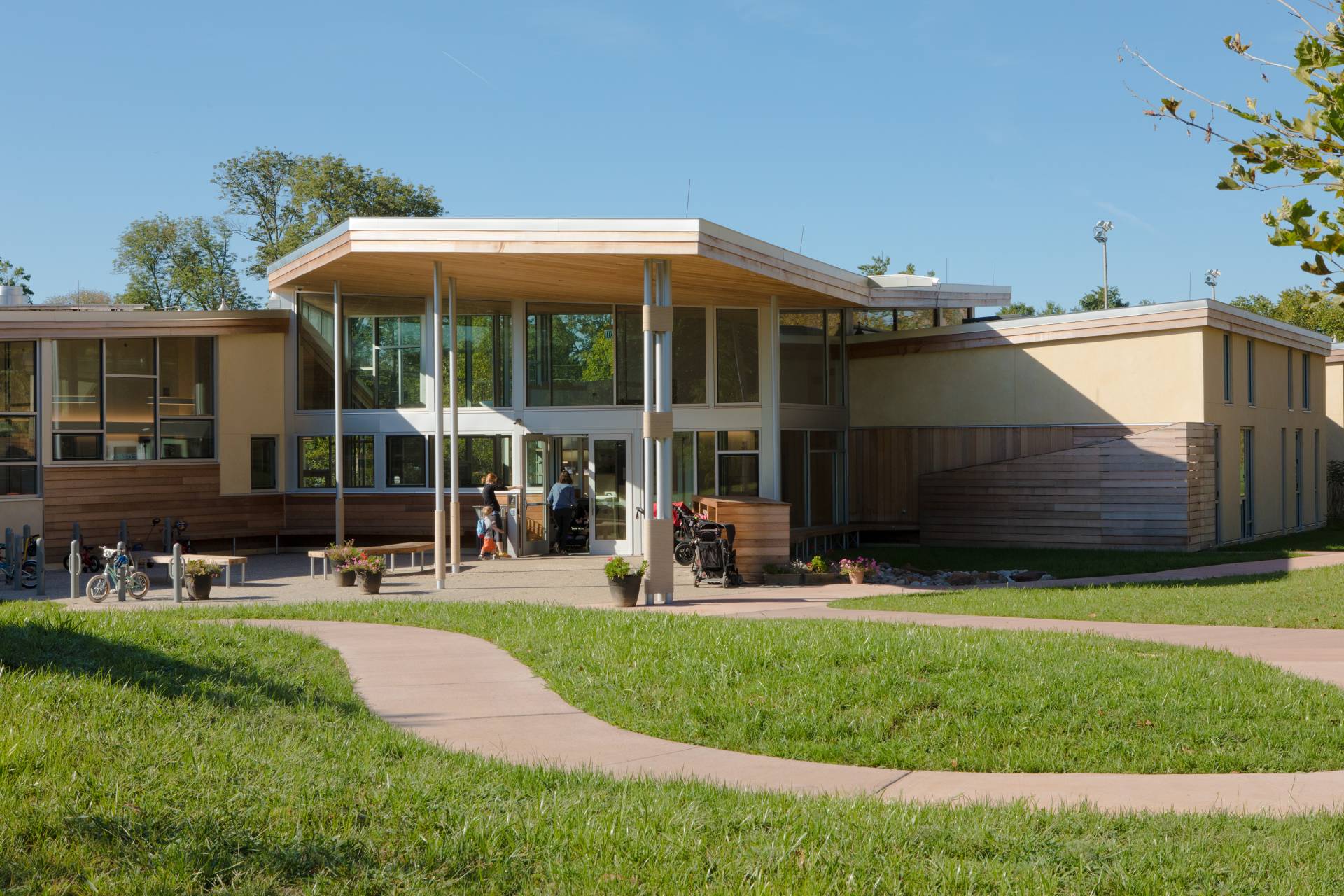
Princeton University Child Care Center
Each of the International Code Council code development groups fetch back to a shared understanding of the nature of the facility; character of its occupants and prospective usage patterns.
The 2024 revision of the International Building code is in production now. Ahead of the formal, market release of the Group A tranche of titles you can sample the safety concepts in play during this revision with an examination of the documents linked below:
Search on the terms “day care” and “daycare” in the link at the top of this page to get a sample of the prevailing concepts; use of such facilities as storm shelters, for example.
“The Country School” | Winslow Homer
We encourage our safety and sustainability colleagues to participate directly in the ICC Code Development process. We slice horizontally through the disciplinary silos (“incumbent verticals”) created by hundreds of consensus product developers every week and we can say, upon considerable authority that the ICC consensus product development environment is one of the best in the world. Privately developed standards (for use by public agencies) is a far better way to discover and promulgate leading practice than originating technical specifics from legislative bodies. CLICK HERE to get started. Contact Kimberly Paarlberg (kpaarlberg@iccsafe.org) for more information.
There are competitor consensus products in this space — Chapter 18 Day-Care Occupancies in NFPA 5000 Building Construction and Safety Code, for example; a title we maintain the standing agenda of our Model Building Code teleconferences. It is developed from a different pool of expertise under a different due process regime. See our CALENDAR for the next online meeting; open to everyone.
Traditional Hanukkah foods (Spoon University) are often fried or cooked in oil, symbolizing the miracle of the oil that lasted eight days in the rededication of the Second Temple in Jerusalem.
Latkes (Potato Pancakes): Grated potatoes mixed with onions, eggs, and flour, then fried until crispy. They are often served with applesauce or sour cream.
Sufganiyot (Jelly-filled Doughnuts): Deep-fried doughnuts filled with jelly or custard and dusted with powdered sugar. They represent the oil that miraculously burned for eight days.
Brisket: Slow-cooked beef brisket is a popular main course for Hanukkah dinners.
Applesauce: Often served as a topping for latkes or as a side dish.
Matzo Ball Soup: While traditionally associated with Passover, some families also serve matzo ball soup during Hanukkah. It consists of light, fluffy dumplings made from matzo meal in a chicken broth.
Kugel: A baked casserole dish that can be sweet or savory, made with noodles, potatoes, or other ingredients.
Chocolate Gelt: Chocolate coins wrapped in gold or silver foil, often used in the game of dreidel.
Dreidel Cookies: Cookies shaped like the spinning top used in the traditional Hanukkah game of dreidel.
Cheese: In reference to the story of Judith, who is said to have fed cheese to an enemy general to make him thirsty and then gave him wine to make him drunk.
This content is accessible to paid subscribers. To view it please enter your password below or send mike@standardsmichigan.com a request for subscription details.
“The Alchemists Laboratory” 1625 | Heinrich Khunrath
The size of the U.S. Testing, Inspection, and Certification (TIC) industry is approximately $48.19 billion in 2023 and is projected to grow to about $60.06 billion by 2032. The industry is driven by factors such as increasing government regulatory action, consumer awareness about safety, and the rising need for quality assurance in various sectors like automotive, healthcare, consumer goods, municipal and campus building construction. TIC standards are found in design guidelines, construction contracts, building commissioning and acceptance.
Today we focus on the public commenting facilities of the dominant standards developers relevant to our work:
Each of the foregoing organizations have global affiliates such as SGS, Bureau Veritas, and TÜV SÜD which we cover in a separate session at some point in the future. We deal with electrotechnical TIC standards in any of our electrotechnology-oriented sessions every Tuesday.
Use the login credentials at the upper right of our home page.
New update alert! The 2022 update to the Trademark Assignment Dataset is now available online. Find 1.29 million trademark assignments, involving 2.28 million unique trademark properties issued by the USPTO between March 1952 and January 2023: https://t.co/njrDAbSpwBpic.twitter.com/GkAXrHoQ9T







.jpg)