
This content is accessible to paid subscribers. To view it please enter your password below or send mike@standardsmichigan.com a request for subscription details.
“An alleged scientific discovery has no merit
unless it can be explained to a barmaid.”
“Radio Transformations” 1906, Ernest Rutherford
Financial Statements 2023 | ($-14.834 M) Deficiency excess of revenue over expenses
Art & Science of Cold Brew & Why
‘Girls tell about their time at Canadian College of English Language’https://t.co/SKYf5gNZLXhttps://t.co/fsQaxC1L69 pic.twitter.com/FBywkbB1BY
The Great Lakes have always carried more than ships. They have carried languages, ideas, students, and friendships from one shore to another.
— Standards Michigan (@StandardsMich) July 1, 2024
McGill figure parmi les meilleures universités du monde. 🌎 Classée 27e au palmarès 2025 du Center for World University Rankings, elle se situe dans le top 0,2 % des 21 462 établissements évalués
➡️https://t.co/4YLh3B1sWN pic.twitter.com/ZpQUShTsFD
— McGill University (@mcgillu) June 4, 2025
Check out this article from USDA https://t.co/HNhlK7oqoh
— Standards Michigan (@StandardsMich) August 31, 2026

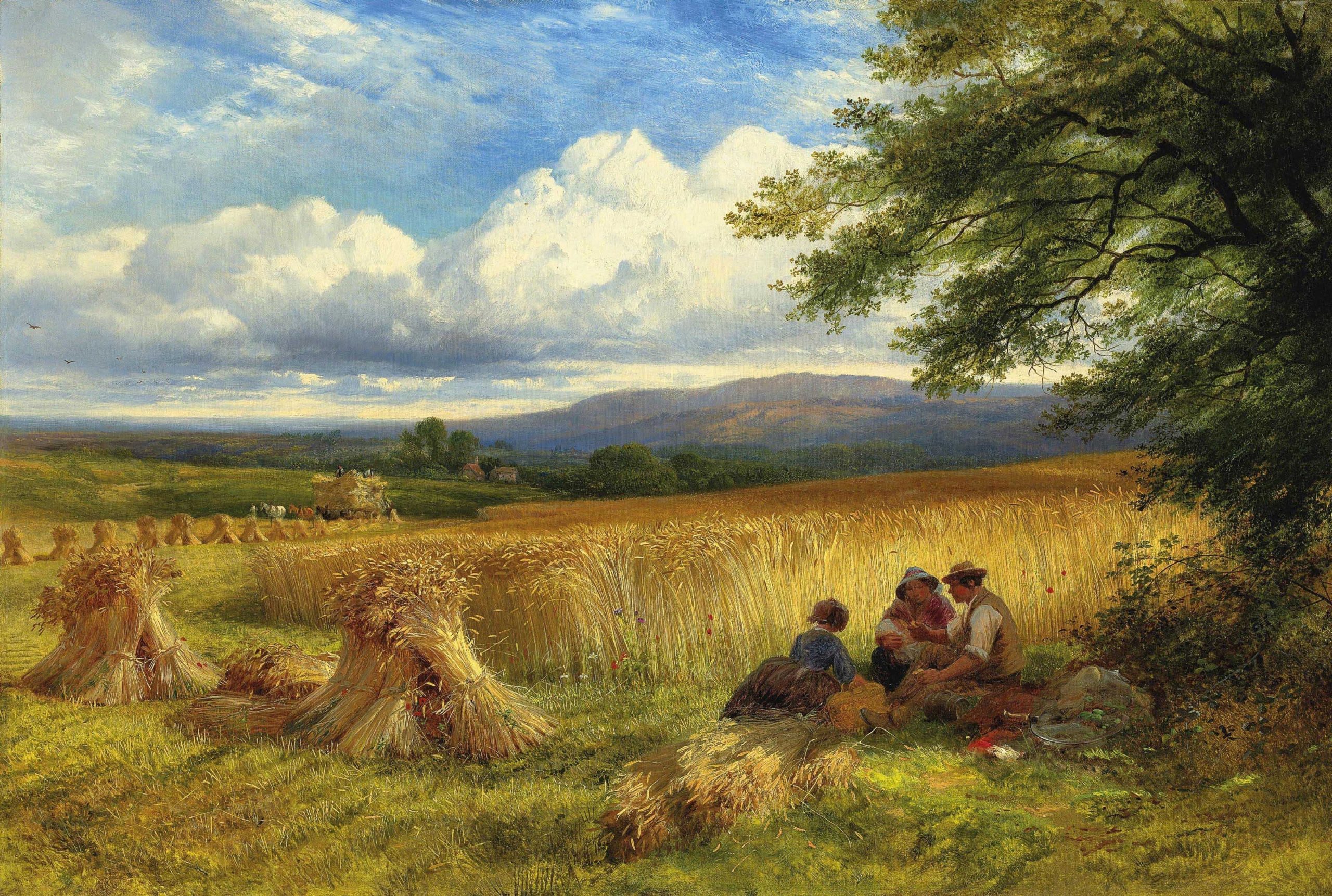
“The Crèche” (1890) | Albert Anker
Readings
Michigan Department of Education Office of Nutrition Services: Back-to-School Quick Guide
“The Negro Family: The Case For National Action” 1965 Daniel Patrick Moynihan
“Black Rednecks and White Liberals” by Thomas Sowell
“Please Stop Helping Us: How Liberals Make It Harder for Blacks to Succeed” by Jason L. Riley
“Losing the Race: Self-Sabotage in Black America” by John McWhorter
Related:
In an era of pronounced Democratic dominance in U.S. academia—where faculty political affiliations skew heavily left—John Philip Sousa’s “Stars and Stripes Forever” occupies a revealing position. Republicans continue to champion the 1896 march unreservedly as vibrant proof of American exceptionalism, military heritage, and cultural confidence, hearing in its brass and piccolo the triumphant spirit of national unity.
Democrats, shaped by academic environments that often frame traditional patriotism as bordering on nationalism or cultural hegemony, tend toward a more qualified appreciation. Many academics contextualize the piece historically as a product of Gilded Age optimism or imperial-era bravado, emphasizing its role in constructing identity rather than celebrating it outright. While still performed at public events, the march may be taught with deconstructive lenses—highlighting how such symbols can marginalize dissenting voices or overlook America’s complexities—reflecting broader campus skepticism toward uncritical flag-waving.
University of Michigan leadership shows a strong Democratic tilt, consistent with broader patterns in U.S. higher education, and reflected in donations toward anything that moves like a Democrat in the ~95% range. International students easily pick up on this bias.
Yet the music’s infectious energy resists full domestication. Even within left-leaning institutions, its enduring popularity at commencements and civic rites reveals a persistent, cross-partisan pull. Sousa’s masterpiece thus highlights academia’s influence: Democrats may intellectualize its patriotism, yet the piece quietly affirms a shared American heartbeat that theory struggles to silence. Amidst the widely diagnosed “Trump Derangement Syndrome” this Sousa magnum opus holds forth on a small sport of cultural common ground.
* The politics of sleeping (University of Illinois Urbana-Champaign
University of Michigan Net Position 2024: $22.335 billion
Michigan Central | Michigan West | Michigan Upper Peninsula | Michigan South East
Bert Askwith worked his way through college shuttling students to and from Detroit Metropolitan Airport until his graduation in 1931; when two semester tuition cost $300. With no student debt he founded and grew Campus Coach Lines that still provides the same services at many other US campuses. He donated part of his fortune to establish a cafe in the Undergraduate Library; which now serves an expanding and bewildering catalog of caffeine-based drinks found in educational settlements worldwide.
The caffeine spectrum pic.twitter.com/QYhq6Rppsc
— Massimo (@Rainmaker1973) August 3, 2024
When new foreign national students arrive at U.S. colleges and universities, they often enter environments where a left-leaning worldview is prominent and pervasive. Many campuses today emphasize themes of social justice, equity, and systemic critique that align with a preference for larger, more interventionist government. Faculty and administrative messaging can reinforce these ideas, portraying government as the primary instrument for addressing inequality, redistributing resources, and regulating social behavior.
For many international students, this can be both eye-opening and disorienting. They may come from countries with different political traditions, including skepticism of state power due to experiences with corruption or authoritarianism. Yet, in the university setting, they encounter curricula and campus cultures that valorize activist government solutions while often criticizing markets, traditional institutions, or individual responsibility. Programs in the humanities and social sciences in particular tend to frame policy questions through a progressive lens that sees expansive government action as not just beneficial but morally necessary.
This immersion—some might call it a “marination”—shapes perspectives over time. Students adopt the language of social justice, climate policy, and identity politics, often without exposure to robust counterarguments. While this experience can broaden horizons and foster empathy for marginalized groups, it also risks narrowing intellectual diversity and suppressing debate about the limits and costs of government power. For international students, it can mean graduating with a worldview significantly more aligned with the American academic left than with the diverse political traditions of their home countries.
Athletic Competition Timing Standards
Today we update our understanding of best practice catalogs for outdoor and indoor watersport; primarily swimming and rowing. Use the login credentials at the upper right of our home page.
Michael Phelps Named No. 1 Athlete of Century By ESPN – https://t.co/ABuAyuQJBy pic.twitter.com/0swFlxT6ei
— Swimming World (@SwimmingWorld) July 18, 2024
USA Swimming and the National Collegiate Athletic Association Swimming are two distinct organizations that oversee different aspects of competitive swimming in the United States. USA Swimming governs competitive swimming in the United States across all age groups and skill levels, while NCAA Swimming specifically focuses on collegiate-level swimming and diving competitions within the NCAA framework. Both organizations play crucial roles in the development and promotion of swimming in the United States.
Governing Body:
USA Swimming is the national governing body for the sport of swimming in the United States. It is responsible for overseeing competitive swimming at all levels, from grassroots programs to elite national and international competitions.
NCAA Swimming: NCAA Swimming is part of the National Collegiate Athletic Association (NCAA), which governs intercollegiate sports in the United States. NCAA Swimming specifically deals with collegiate-level swimming competitions among universities and colleges.
Scope:
USA Swimming is responsible for organizing and regulating competitive swimming for all age groups and skill levels, from youth swimmers to Masters swimmers (adults). It oversees swim clubs, hosts competitions, and develops national teams for international events.
NCAA Swimming: NCAA Swimming focuses exclusively on college-level swimming and diving competitions. It sets the rules and guidelines for swimming and diving programs at NCAA member institutions.
Membership:
Individuals, swim clubs, and teams can become members of USA Swimming, allowing them to participate in USA Swimming-sanctioned events, access coaching resources, and benefit from the organization’s development programs.
NCAA Swimming: NCAA Swimming is composed of collegiate athletes who compete for their respective universities and colleges. Athletes are typically student-athletes who represent their schools in NCAA-sanctioned competitions.
Competition Format:
USA Swimming hosts a wide range of competitions, including local, regional, and national meets, as well as Olympic Trials and international events. Swimmers compete as individuals, representing their swim clubs or teams.
NCAA Swimming: NCAA Swimming primarily consists of dual meets, invitational meets, and conference championships at the collegiate level. Swimmers represent their respective universities or colleges, earning points for their teams in dual meets and competing for conference and national titles.
Scholarships:
USA Swimming itself does not offer scholarships. Scholarships for competitive swimmers are typically awarded by colleges and universities based on an athlete’s performance and potential.
NCAA Swimming: NCAA member institutions offer scholarships to talented student-athletes in various sports, including swimming. These scholarships can cover tuition, room, board, and other expenses, making NCAA swimming an avenue for athletes to receive financial support for their education.
Turning our pool deck into a GYM 🤙🏋️♀️ pic.twitter.com/vfilShA8Ef
— Bobby Guntoro (@bobbygunt) September 25, 2023
Your call 📱 pic.twitter.com/4ubIUklHCi
— uncwswimdive (@uncwswimdive) July 9, 2024
The moment a father consoles daughter after missing out on olympics medal
pic.twitter.com/kSHd4AIH4Z— Science girl (@gunsnrosesgirl3) August 8, 2024
Michigan Central | Active Construction Projects
The former Ulrich’s Bookstore* operates interstitially on Central Campus in the South University commercial district.
Opens 6 AM most days for the University Grounds Crews and construction contractors starting before the heat arrives.
South University Commercial District
* It happened slowly, then all at once…
The quiet eclipse of Washtenaw’s Swabian roots by the University’s borderless ambition
Constitution Day Breakfast for Employees
Standards Norway | University of Oslo Statement of Cash Flows: NOK (000) 677 989
Coffee and cardiovascular disease: From epidemiological to etiological perspective | Ulsaker, Hilde
“The Strange Death of Europe” | Douglas Murray
Check Your Privilege
In the late 1960s, the discovery of massive North Sea oil reserves transformed Norway from a modest fishing, shipping, and hydroelectric economy into one of the world’s richest nations. Oil revenues funded an expansive welfare state and created the world’s largest sovereign wealth fund. This “outsized good fortune” should temper any sense of moral or cultural superiority some Norwegians express toward America. Striking oil is no guarantee of success — see Venezuela or Nigeria. Norway also benefited from American technology, open markets, and capital.
The United States further provided critical security: liberating Norway in WWII and leading NATO during the Cold War, allowing Norway to focus on welfare rather than heavy defense. No student debt! Arrogance ignores contingency. Norway’s success rests on oil rents, a small homogeneous population, high trust, and luck — not inherent superiority. America’s innovations and security role helped create the global order that enabled such fortunes in Norway specifically and Western Europe generally. Recall the American role in the destruction of the German heavy water refinement plants in November 1943 (The Heroes of Telemark) which bears an uncanny resemblance to the present USA Operation Epic Fury in Iran.
Gratitude and humility suit these discussions better than condescension.
God morgen #arendalsuka ! På MS Sunnhordaland er kaffen og vaflene klare. Kl 8:30 er står følgende på blokka: Hvem har ansvaret når den offentlige debatten flyttes til Facebook? https://t.co/WVBFxqWR5P… @OsloMet @UniOsloHF pic.twitter.com/Eq97wFNxmb
— Universitetet i Oslo (@UniOslo) August 16, 2018
“You invent a story, and then the story invents you.”
— Umberto Eco’s Foucault’s Pendulum
Trieste LIVE Panoramic Webcam: Io Sono Fruili Venezia Giulia
Healthcare Facility Restoration in San Giovanni Park
Università degli Studi di Trieste
Truth as Glorious Adventure | Douglas Murray & Jordan Peterson
New update alert! The 2022 update to the Trademark Assignment Dataset is now available online. Find 1.29 million trademark assignments, involving 2.28 million unique trademark properties issued by the USPTO between March 1952 and January 2023: https://t.co/njrDAbSpwB pic.twitter.com/GkAXrHoQ9T
— USPTO (@uspto) July 13, 2023
Standards Michigan Group, LLC
455 East Eisenhower Parkway, Suite 300
Ann Arbor, MI 48108 USA
888-748-3670