1 pound dried split peas, rinsed and picked over 1 ham hock, ham bone, or 1 pound diced ham 1 onion, chopped 2 carrots, chopped 2 celery stalks, chopped 2 cloves garlic, minced 8 cups chicken or vegetable broth 2 bay leaves Salt and pepper to taste Optional: thyme, parsley, or other herbs for flavor
Instructions:
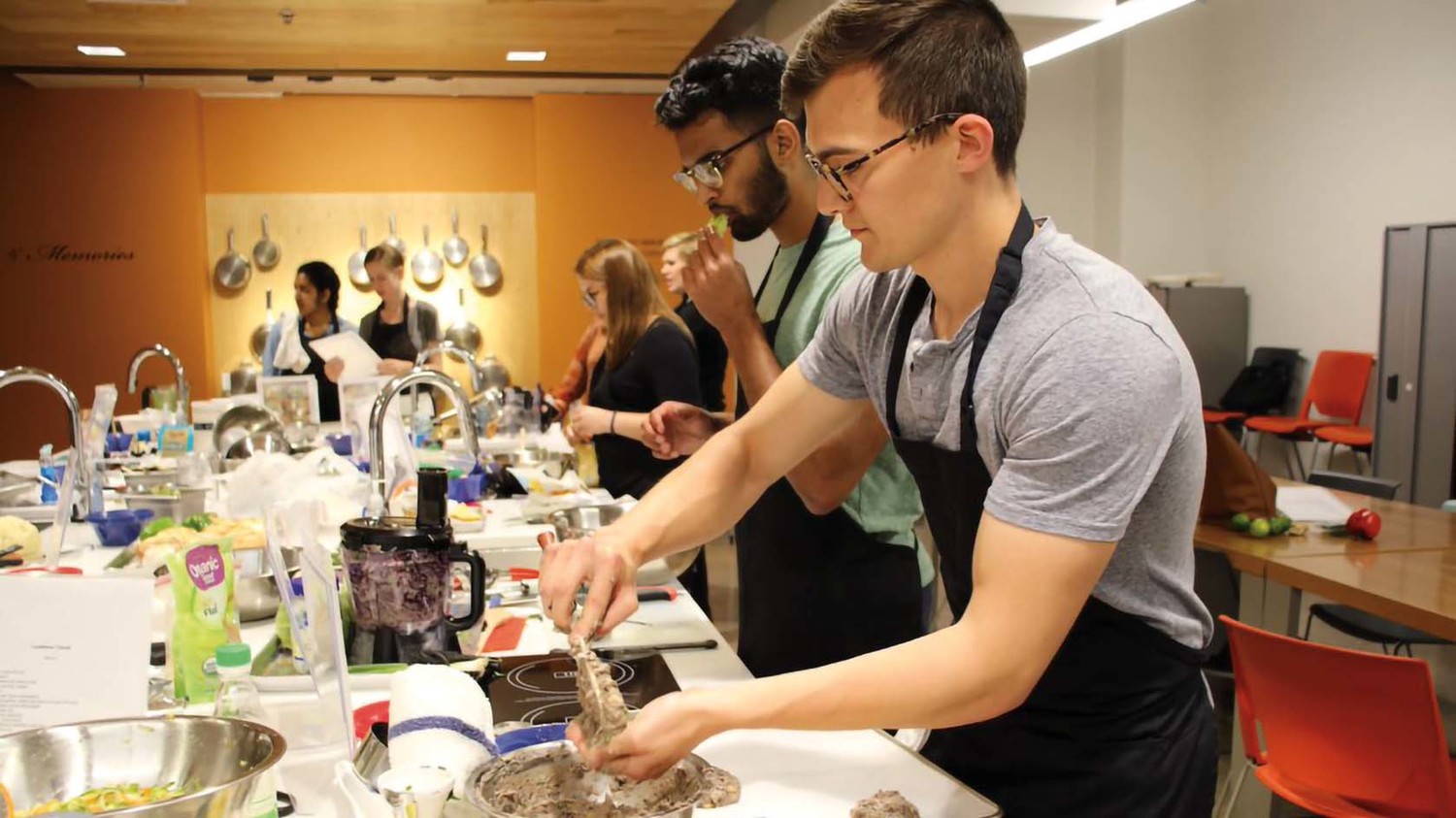
Prepare the ingredients: Rinse the split peas under cold water and pick out any debris. Chop the onion, carrots, and celery. Mince the garlic.
Sauté aromatic vegetables: In a large pot or Dutch oven, heat some olive oil over medium heat. Add the chopped onion, carrots, celery, and garlic. Sauté until softened, about 5-7 minutes.
Add split peas and broth: Add the rinsed split peas to the pot, along with the ham hock, ham bone, or diced ham. Pour in the chicken or vegetable broth. Add bay leaves and any other herbs you’re using.
Simmer the soup: Bring the soup to a boil, then reduce the heat to low. Let it simmer, uncovered, stirring occasionally, until the split peas are tender and the soup has thickened, about 1 to 1.5 hours. If using a ham hock or bone, remove it from the soup once the meat is falling off the bone; shred the meat and return it to the pot.
Season to taste: Taste the soup and season with salt and pepper as needed. Adjust any other seasonings to your liking.
Serve: Remove the bay leaves before serving. Ladle the soup into bowls and enjoy hot. Optionally, you can garnish with chopped fresh parsley or a drizzle of olive oil.
Tips: You can customize the soup by adding other vegetables like potatoes or leeks. For a vegetarian version, omit the ham and use vegetable broth instead of chicken broth. Split pea soup tends to thicken as it sits, so you may need to add more broth or water when reheating leftovers.
This content is accessible to paid subscribers. To view it please enter your password below or send mike@standardsmichigan.com a request for subscription details.
Today we examine the catalog of several ANSI-accredited, consortia and ad hoc standard developers with titles relevant to the planning, construction and management of the built environment of education communities nested within human settlements characterized by a high population density, extensive infrastructure, and various economic, social, and cultural activities. In other words, from the point of view of a campus as a “city within a city” with attention to infrastructure.
Several organizations and bodies in the United States that develop model codes and standards related to zoning and land use. These model codes and standards are often adopted or referenced by municipalities in their zoning ordinances. Here are some prominent organizations and their model codes:
Each of the foregoing titles have some bearing upon decisions about land use. However, keep in mind, that zoning regulations are primarily established at the local level by municipalities, cities, and counties, rather than through national standard bodes. These organizations and their codes provide guidance and best practices for zoning, but specific regulations can vary significantly between different jurisdictions. They are frequently incorporated by reference into regulations by governments at all levels.
Join us today with the login credentials at the upper right of our home page.
Here are some community colleges in the United States that are embedded within cities, offering students the advantages of an urban setting:
City College of San Francisco – San Francisco, California
Los Angeles City College – Los Angeles, California
Borough of Manhattan Community College – New York, New York
Miami Dade College – Wolfson Campus – Miami, Florida
City College of Chicago – Chicago, Illinois
Seattle Central College – Seattle, Washington
Austin Community College – Rio Grande Campus – Austin, Texas
Houston Community College – Central Campus – Houston, Texas
San Antonio College – San Antonio, Texas
Portland Community College – Cascade Campus – Portland, Oregon
Washtenaw Community College – Ann Arbor-Ypsilanti, Michigan
These community colleges not only provide access to higher education but also offer the benefits of being located within major urban centers, including proximity to job markets, cultural institutions, and public transportation.
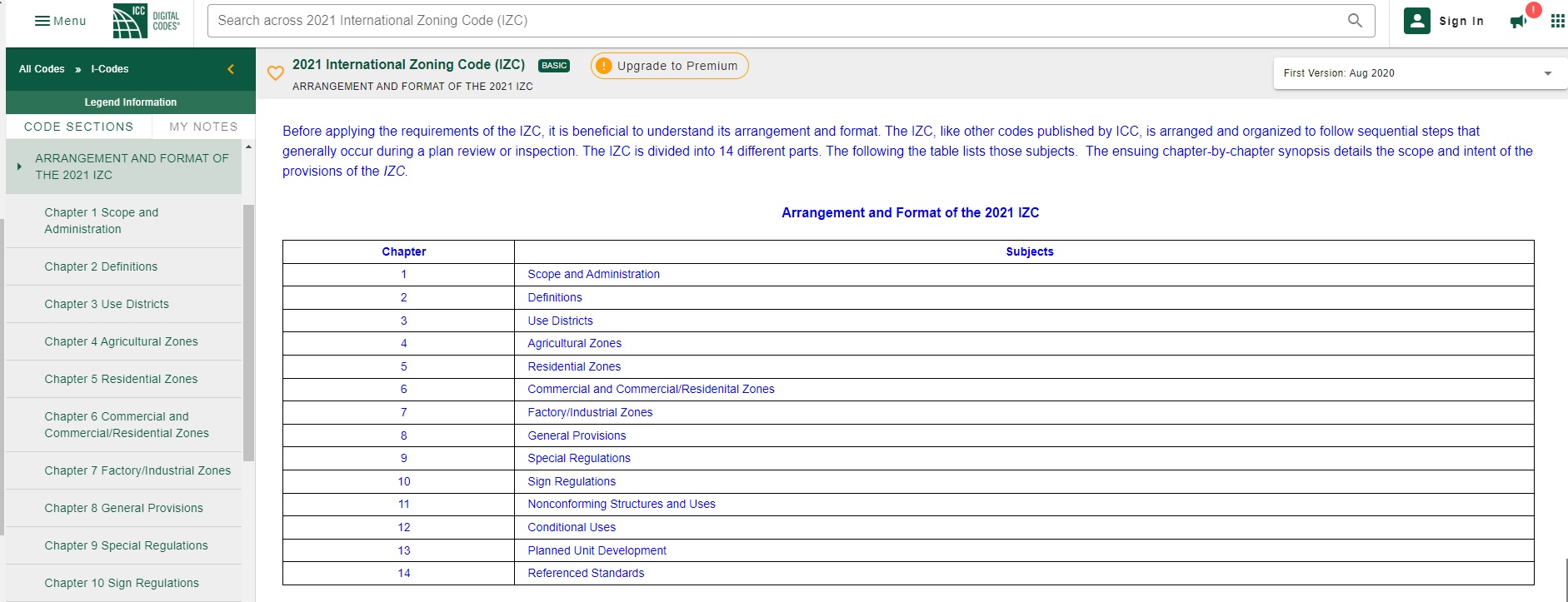
The purpose of the code is to establish minimum requirements to provide a reasonable level of health, safety, property protection and welfare by controlling the design, location, use or occupancy of all buildings and structures through the regulated and orderly development of land and land uses within this jurisdiction.
CLICK IMAGE
Municipalities usually have specific land use or zoning considerations to accommodate the unique needs and characteristics of college towns:
Mixed-Use Zoning: Cities with colleges and universities often employ mixed-use zoning strategies to encourage a vibrant and diverse urban environment. This zoning approach allows for a combination of residential, commercial, and institutional uses within the same area, fostering a sense of community and facilitating interactions between students, faculty, and residents.
Height and Density Restrictions: Due to the presence of educational institutions, cities may have specific regulations on building height and density to ensure compatibility with the surrounding neighborhoods and maintain the character of the area. These restrictions help balance the need for development with the preservation of the existing urban fabric.
Student Housing: Cities with colleges and universities may have regulations or guidelines for student housing to ensure an adequate supply of affordable and safe accommodations for students. This can include requirements for minimum bedroom sizes, occupancy limits, and proximity to campus.
Parking and Transportation: Given the concentration of students, faculty, and staff, parking and transportation considerations are crucial. Cities may require educational institutions to provide parking facilities or implement transportation demand management strategies, such as promoting public transit use, cycling infrastructure, and pedestrian-friendly designs.
Community Engagement: Some cities encourage colleges and universities to engage with the local community through formalized agreements or community benefit plans. These may include commitments to support local businesses, contribute to neighborhood improvement projects, or provide educational and cultural resources to residents.
This is a relatively new title in the International Code Council catalog; revised every three years in the Group B tranche of titles. Search on character strings such as “zoning” in the link below reveals the ideas that ran through the current revision:
Reed v. Town of Gilbert (2015): This Supreme Court case involved a challenge to the town of Gilbert, Arizona’s sign code, which regulated the size, location, and duration of signs based on their content. The court held that the sign code was a content-based restriction on speech and therefore subject to strict scrutiny.
City of Ladue v. Gilleo (1994): In this Supreme Court case, the court struck down a municipal ordinance that banned the display of signs on residential property, except for signs that fell within specific exemptions. The court held that the ban was an unconstitutional restriction on the freedom of speech.
Metromedia, Inc. v. San Diego (1981): This Supreme Court case involved a challenge to a San Diego ordinance that banned off-premises advertising signs while allowing on-premises signs. The court held that the ordinance was an unconstitutional restriction on free speech, as it discriminated against certain types of speech.
City of Ladue v. Center for the Study of Responsive Law, Inc. (1980): In this Supreme Court case, the court upheld a municipal ordinance that prohibited the display of signs on public property, but only if the signs were posted for longer than 10 days. The court held that the ordinance was a valid time, place, and manner restriction on speech.
City of Boerne v. Flores (1997): This Supreme Court case involved a challenge to a municipal sign code that regulated the size, location, and content of signs in the city. The court held that the sign code violated the Religious Freedom Restoration Act, as it burdened the exercise of religion without a compelling government interest.
Mike Anthony is ID Number 469 | Proposal period closes 11:59 PM US Pacific Time | May 15
Meeting Notes in red
Loss of electric power and internet service happens more frequently and poses at least an equal — if not greater threat — to public safety. So why does neither the National Electrical Code or the National Electrical Safety Code integrate reliability into their core requirements? Reliability requirements appear in a network of related documents, either referenced, or incorporated by reference; sometimes automatically, sometimes not.
NESC Main Committee Membership: Page xii
Apart from the IEEE as the accredited standards developer, there are no “pure non-government user-interests” on this committee; although ANSI’s Essential Requirements for balance of interests provides highly nuanced interpretation. The Classifications on Page xiii represents due diligence on meeting balance of interest requirements.
In our case, we are one of many large universities that usually own district energy plants that both generate and purchase generate electric power (as sometimes provide var support to utilities when necessary; as during the August 2003 North American outage). For University of Michigan, for example, has about 20 service points at 4.8 – 120 kV. Its Central Power Plant is the largest cogeneration plant on the DTE system.
Contents: Page xxviii | PDF Page 29
Absence of internet service is at least as much a hazard, and more frequent, than downed wires. Is there a standards solution? Consideration of interoperability of internet service power supported on utility poles should track in the next revision.
No mention of any reliability related IEEE reliability standards in the present edition. Why is this?
Section 2: Definitions of Special Terms| PDF Page 46
In the 2023 Handbook, the term “reliability” shows up 34 times.
availability (from Bob Arno’s IEEE 3006-series and IEEE 493 Gold Book revision)
reliability (Bob Arno)
utility (PDF Page 57)
communication | PDF Page 47
list of terms defined in the 2023 National Electrical Code that are new and relevant to this revision: (Article 100 NEC)
municipal broadband network, digital subscriber line, surveillance cameras
wireless communication system
010. Purpose | PDF Page 40
Looks like improvement since last edition. Suggest explicit Informational Note, as in the NEC, using “reliability” and referring to other agencies. “Abnormal events” could be tighter and refer to other standards for abnormal, steady-state events. The clarification of purpose is welcomed although a great deal remains uncovered by other best practice literature; though that can be repaired in this edition.
Legacy of shared circuit path standards. Should provisions be made for municipal surveillance, traffic and vehicle control infrastructure. What would that look like?
011. Scope | Covered PDF Page 40
3. Utility facilities and functions of utilities that either (a) generate energy by conversion from some other form of energy such as, but not limited to, fossil fuel, chemical, electrochemical, nuclear, solar, mechanical, wind or hydraulic or communication signals, or accept energy or communication signals from another entity, or (b) provide that energy or communication signals through a delivery point to another entity.
5. Utility facilities and functions on the line side of the service point supplied by underground or overhead conductors maintained and/or installed under exclusive control of utilities located on public or private property in accordance with legally established easements or rights-of-way, contracts, other agreements (written or by conditions of service), or as authorized by a regulating or controlling body. NOTE: Agreements to locate utility facilities on property may be required where easements are either (a) not obtainable (such as locating utility facilities on existing rights-of-way of railroads or other entities, military bases, federal lands, Native American reservations, lands controlled by a port authority, or other governmental agency), or (b) not necessary (such as locating facilities necessary for requested service to a site).
012. General Rules | Covered PDF Page 42
For all particulars not specified, but within the scope of these rules, as stated in Rule 011A, design, construction, operation, and maintenance should be done in accordance with accepted good practice for the given local conditions known at the time by those responsible for the communication or supply lines and equipment
General purpose clause could use some work since no definition of “accepted good practice”. Refer to IEEE bibliography.
Section 2: Definition of special terms | PDF Page 46
Recommendations elsewhere should track here.
The word “installation” appears 256 times and is generally understood in context by experts. Suggest borrow from NEC to clarify our concern for including co-linear/communication circuits.
conduit. exclusive control, lines, photovoltaic, NEC interactive. qualified
Section 3: Reference
NFPA 70®, National Electrical Code® (NEC®). [Rules 011B4 NOTE, 099C NOTE 1, and 127
IEEE Std 4™-1995, IEEE Standard Techniques for High-Voltage Testing. [Table 410-2 and Table 410-3]
IEEE Std 516™-2009, IEEE Guide for Maintenance Methods on Energized Power-Lines. [Rules 441A4
NOTE 2, 446B1, and 446D3 NOTE, and Table 441-5, Footnote 4]
IEEE Std 1427™-2006, IEEE Guide for Recommended Electrical Clearances and Insulation Levels in
Air-Insulated Electrical Power Substations. [Rule 124A1 NOTE, Table 124-1, 176 NOTE, and 177 NOTE]
IEEE Std 1584™-2002, IEEE Guide for Performing Arc Flash Hazard Calculations. [Table 410-1,
Footnotes 1, 3, 6, and 14]
IEEE Std C62.82.1™-2010, IEEE Standard for Insulation Coordination—Definitions, Principles, and Rules.
[Table 124-1 Footnote 5]
Add references to Gold Book, 1386, etc. IEC since multinationals conform.
Safety Rules for the Installation and Maintenance of Overhead Electric Supply and Communication Line | PDF Page 111
Has anyone confirmed that these tables match NEC Table 495.24 lately? If it helps: there were no meaningful changes in the 2023 NEC in Article 495, the high voltage article
Section 11. Protective arrangements in electric supply stations | PDF Page 77
A safety sign shall be displayed on or beside the door or gate at each entrance. For fenced or walled electric supply stations without roofs, a safety sign shall be displayed on each exterior side of the fenced or wall enclosure. Where the station is entirely enclosed by walls and roof, a safety sign is required only at ground level entrances. Where entrance is gained through sequential doors, the safety sign should be located at the inner door position. (A clarification but no change. See Standards Michigan 2017 proposals)
Recommend that all oil-filled cans be removed and services upgraded through energy regulations with new kVA ratings
Section 12: Installation and maintenance of equipment
093. Grounding conductor and means of connection
Fences The grounding conductor for fences required to be effectively grounded by other parts of this Code shall meet the requirements of Rule 093C5 or shall be steel wire not smaller than Stl WG No. 5.
D. Guarding and protection | PDF Page 67
124. Guarding live parts| PDF Page 85
Propose roofs required for exterior installations
Part 2. Safety Rules for the Installation and Maintenance of Overhead Electric Supply and Communication Line | Page 72
Section 22. Relations between various classes of lines and equipment | Page 80
222. Joint use of structures | Page 82
Where the practice of joint use is mutually agreed upon by the affected utilities, facilities shall be subject to the appropriate grade of construction specified in Section 24. Joint use of structures should be
considered for circuits along highways, roads, streets, and alleys. The choice between joint use of structures and separate lines shall be determined through cooperative consideration with other joint
users of all the factors involved, including the character of circuits, worker safety, the total number and weight of conductors, tree conditions, number and location of branches and service drops, structure
conflicts, availability of right-of-way, etc.
Reliability considerations for sustaining internet service when power supply is absent.
Par2 Section 20 Safety Rules for the Installation and Maintenance of Overhead Electric Supply and Communication Line | PDF Page 111
Has anyone confirmed that these tables match NEC Table 495.24 lately?
Part 3. Safety Rules for the Installation and Maintenance of Underground Electric Supply and Communication Lines | Page 220
Renewable energy for internet access
311. Installation and maintenance
A. Persons responsible for underground facilities shall be able to indicate the location of their facilities.
B. Reasonable advance notice should be given to owners or operators of other proximate facilities that
may be adversely affected by new construction or changes in existing facilities.
C. For emergency installations, supply and communication cables may be laid directly on grade if the
cables do not unreasonably obstruct pedestrian or vehicular traffic and either:
1. The cables are covered, enclosed, or otherwise protected, or
2. The locations of the cables are conspicuous.
Supply cables operating above 600 V shall meet either Rule 230C or 350B.
NOTE: See Rules 014B2 and 230A2d.
Part 4. Work Rules for the Operation of Electric Supply and Communications Lines and Equipment | PDF Page 289
When and why was the term “Work” added to the title of this section?
Core text for the definition of wireless communication system reliability
Appendix E Bibliography| PDF Page 355
Index | PDF Page 398
The word “reliability” appears only three times. Should it track in the NESC or should it track in individual state requirements. So neither the NEC nor the NESC couples closely with power and communication reliability; despite the enormity and speed of research.
Starting from the canonicals of any standard suitable for optimizing innovation (and incorporation by reference into public law) — Title, Scope, Purpose and Definitions — we will turn our attention to the Call for Public Comment by NIST which is open until July 28th.
Artificial intelligence is built upon language, but the meaning of “standard language” becomes complicated when machines learn from billions of human expressions. Unlike electrical, building or safety standards, language standards are rarely governed by a single authority. Dictionaries, style manuals, universities, publishers, governments and professional societies establish conventions, while ordinary speakers continuously modify them. AI systems operate in the middle of this tension between prescription and usage.
Training data. Large language models learn statistical patterns from books, websites, journalism, academic literature, software and other sources. The composition of that material influences what the model recognizes as normal, authoritative or acceptable language. Decisions about inclusion, exclusion and weighting can therefore function as de facto standards, even when no formal standards organization is involved.
Grammar and intelligibility. AI can reinforce conventional spelling, syntax and technical terminology, making communication across institutions and borders easier. This is particularly valuable in engineering, medicine, law and education, where small differences in terminology can have substantial consequences. Yet excessive normalization may flatten dialect, regional vocabulary and inherited forms of expression.
Meaning. Words change over time and contested words often carry political, cultural or institutional assumptions. When an AI system chooses one definition over another, it may unintentionally appear to settle a dispute that society itself has not settled. Transparency about ambiguity is therefore an important characteristic of trustworthy AI.
Tchnical standardization. AI increasingly depends upon formal vocabularies, ontologies, metadata, machine-readable definitions and interoperability protocols. Standards organizations such as International Organization for Standardization, IEEE and National Institute of Standards and Technology have roles in developing frameworks through which AI systems can be evaluated and governed.
Above all we still face the question: Who gets to set the language standard? Should AI reflect contemporary majority usage, established literary traditions, professional terminology, institutional style or the language of particular communities? Probably some combination is unavoidable.
For Standards Michigan, the deeper question may be this: AI does not merely follow language standards; through widespread daily use, it may increasingly help create them. If millions of students, teachers, engineers and institutions rely upon AI to write and interpret language, the model’s linguistic choices can become conventions themselves. Understanding how those choices are made may therefore become as important as understanding the standards written by traditional standards-setting bodies.
Abstract. The recently introduced continuous Skip-gram model is an efficient method for learning high-quality distributed vector representations that capture a large number of precise syntactic and semantic word relationships. In this paper we present several extensions that improve both the quality of the vectors and the training speed. By subsampling of the frequent words we obtain significant speedup and also learn more regular word representations. We also describe a simple alternative to the hierarchical softmax called negative sampling.
An inherent limitation of word representations is their indifference to word order and their inability to represent idiomatic phrases. For example, the meanings of “Canada” and “Air” cannot be easily combined to obtain “Air Canada”. Motivated by this example, we present a simple method for finding phrases in text, and show that learning good vector representations for millions of phrases is possible.
Large Language Models and Infrastructure Technical Standards
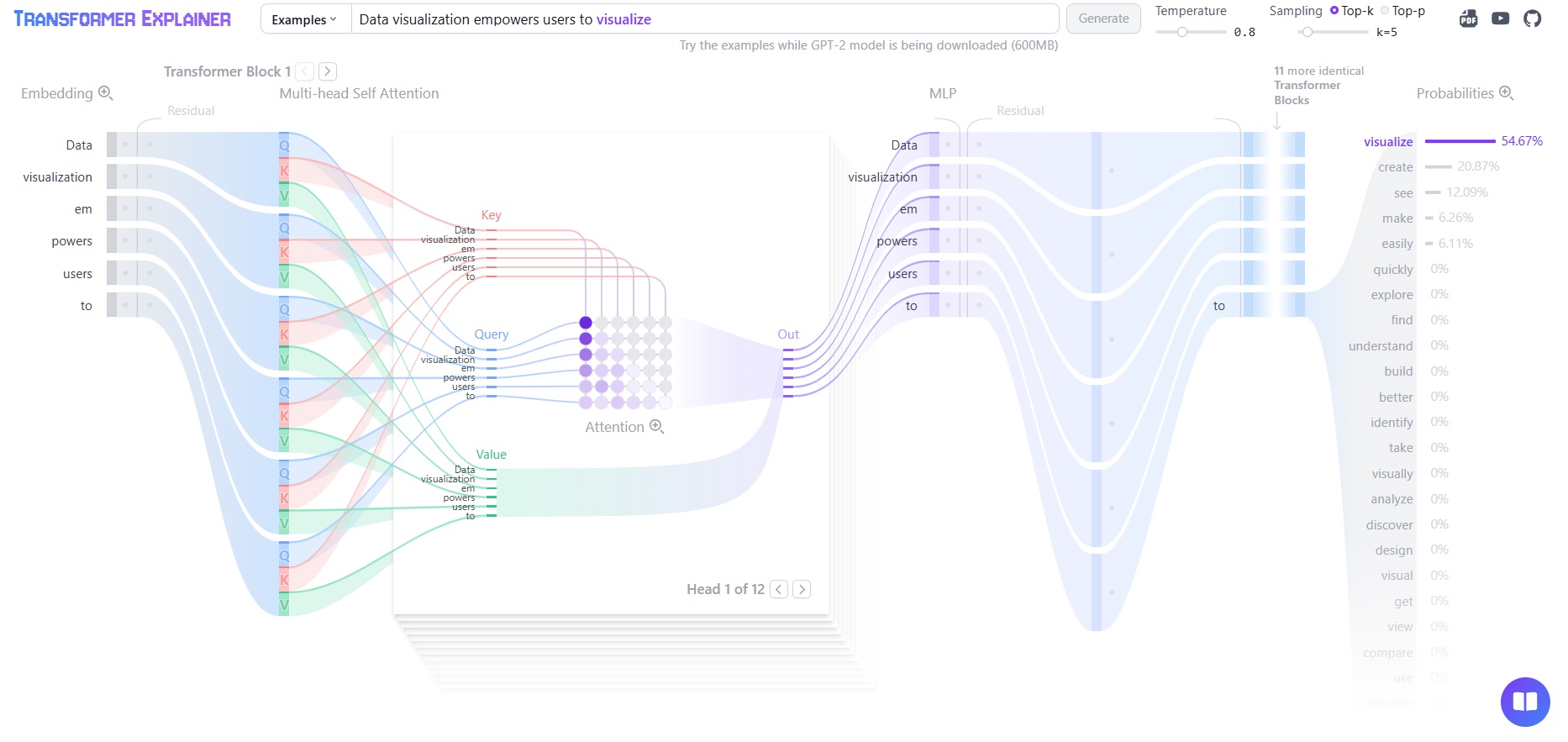
Large Language Models (LLMs) are poised to significantly accelerate and reshape the development of infrastructure standards — including engineering codes, technical specifications for civil works, transportation, energy grids, water systems, and related Standards Development Organization (SDO) processes at ASTM, IEEE, ASABE, ISO, and similar bodies. This connection traces back to foundational ideas in distributed representations (Hinton et al., Mikolov’s Word2Vec) that powered the transformer revolution, which in turn enabled modern LLMs and the shift from passive generative AI to active, goal-directed agentic AI.
While LLMs will not replace human expertise, consensus-building, or rigorous validation, they will transform traditionally slow, document-heavy workflows into faster, more collaborative, and data-driven processes.
1. Faster Drafting, Summarization, and Gap Analysis
LLMs can rapidly summarize lengthy documents, extract key requirements, identify inconsistencies across related standards, and generate initial draft sections or comparison tables. This is especially valuable for reviewing historical codes, research papers, regulations, and stakeholder inputs.
Infrastructure example: In renewable energy permitting or grid interconnection standards, LLMs excel at processing complex environmental impact statements and regulatory texts to accelerate reviews.
2. Enhanced Requirements Engineering and Consistency Checking
LLMs support formal requirements extraction, flag ambiguities, suggest measurable criteria, and translate between domains. They help maintain alignment between textual standards and digital implementations such as Building Information Modeling (BIM) or simulation tools.
3. Improved Accessibility, Education, and Stakeholder Participation
LLMs make standards more usable by generating plain-language explanations, FAQs, examples, and tailored training materials. They lower barriers for broader participation in SDO committees by helping non-experts understand and contribute to drafts.
4. Domain-Specific Applications in Infrastructure
Civil, Structural & Agricultural Engineering: Design ideation, safety analysis, and updating standards for new materials and climate resilience.
Permitting & Compliance: Summarizing environmental documents and speeding up infrastructure deployment.
Interoperability & Testing: Verification support for software-heavy systems such as smart grids and autonomous infrastructure.
5. Broader Process Changes for SDOs
Zero-draft acceleration for preliminary stakeholder review
Continuous monitoring for maintenance and timely updates
Multi-agent LLM systems for parallel virtual expert review before human consensus
Limitations and Important Caveats
“Hallucinations” & Validation: Outputs must always be human-verified, especially in safety-critical areas. Domain-specific fine-tuning and retrieval-augmented generation (RAG) help but are not foolproof.
Bias, Copyright & Accountability: Standards demand traceability and consensus; LLMs can introduce subtle biases or IP concerns.
Not a Full Replacement: Human judgment remains essential for risk assessment, ethics, and real-world tradeoffs.
Expect 2–5× faster iteration on drafts, superior knowledge management, and more adaptive standards. Early adopters using LLM assisted tools with proper governance will lead the next generation of infrastructure standards development.
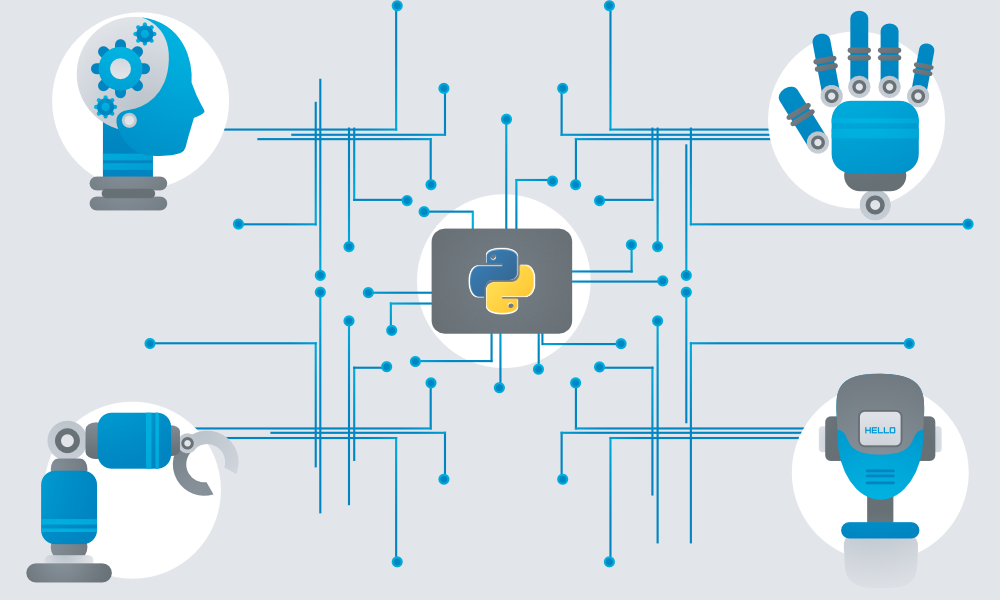
Open source standards development is characterized by very open exchange, collaborative participation, rapid prototyping, transparency and meritocracy. The Python programming language is a high-level, interpreted language that is widely used for general-purpose programming. Python is known for its readability, simplicity, and ease of use, making it a popular choice for beginners and experienced developers alike. Python has a large and active community of developers, which has led to the creation of a vast ecosystem of libraries, frameworks, and tools that can be used for a wide range of applications. These include web development, scientific computing, data analysis, machine learning, and more.
Another important aspect of Python is its versatility. It can be used on a wide range of platforms, including Windows, macOS, Linux, and even mobile devices. Python is also compatible with many other programming languages and can be integrated with other tools and technologies, making it a powerful tool for software development. Overall, the simplicity, readability, versatility, and large community support of Python make it a valuable programming language to learn for anyone interested in software development including building automation.
As open source software, anyone may suggest an improvement to Python(3.X) starting at the link below:
Python can be used to control building automation systems. Building automation systems are typically used to control various systems within a building, such as heating, ventilation, air conditioning, lighting, security, and more. Python can be used to control these systems by interacting with the control systems through the building’s network or other interfaces.
There are several Python libraries available that can be used for building automation, including PyVISA, which is used to communicate with instrumentation and control systems, and PyModbus, which is used to communicate with Modbus devices commonly used in building automation systems. Python can also be used to develop custom applications and scripts to automate building systems, such as scheduling temperature setpoints, turning on and off lights, and adjusting ventilation systems based on occupancy or other variables. Overall, Python’s flexibility and versatility make it well-suited for use in building automation systems.
.@PyCon US 2025 is a wrap, and our hearts are full with #Python community love! Thanks to every single one of you who organized, volunteered, attended, & sponsored 🐍🫶 #PyConUS
The PSF office will be closed May 26-28 so our staff can rest & recover. See you back online soon! pic.twitter.com/Sy1hiRmvw4
— Python Software Foundation (@ThePSF) May 27, 2025
“Happy families are all alike; every unhappy family is unhappy in its own way.”
— Leo Tolstoy, Anna Karenina, trans. Constance Garnett
“In 1964, in Albuquerque, New Mexico, a 17-year-old girl gave birth to a son. The school administrators had told her she couldn’t finish high school. She pushed back anyway.
Her name was Jacklyn Gise. And the baby she was determined to raise would one day become one of the most… pic.twitter.com/O1NYzRh1Gr
On Friday this group Facetimed me. This is their yearly get together. They tell me that they “are connected for life.” When you commit to something bigger than yourself you don’t just give yourself a better chance to win, the bonds you build are for life. pic.twitter.com/mSc4BECrb3
I can confirm that @GreenPlusAnE spent part of his wedding reception discussing entitlement reform. And the new Mrs. Greene is possibly the most elegant Tocqueville scholar in existence. https://t.co/XRfnxJ027G
In non soccer, non portal, non athletic news, our family just grew by one 😀 we gained a future son in law!!! So happy for Madison and Dylan. #weddingplanspic.twitter.com/3DNx0tNr5D
Congrats to my son for graduating with Honors from Eastern Michigan – don’t blink time flies – so so proud of what he’s accomplished & love him to pieces 💙🎉🥳 pic.twitter.com/qAj2ndRVwA
We need a reality dating show called “Average SEC Couples” that’s just 15 Average Joe’s from the South wooing 15 gorgeous women with generational wealth. pic.twitter.com/hhNGYUPw3S
Since I’m making happy announcements, Anne and I are expecting our first grandchild (a grandson we’re told) in February. We’re very proud of and happy for our oldest son Aedan and his wife Addy. Thanks be to God! pic.twitter.com/3xFXGYaes0
💙Last middle school dance💙
Time is flying, but I’ve loved every moment of this phase — shopping for his unique style, the cologne hunts, the late-night talks, and watching him chase what he loves. Keep being authentically you, GT!💥 pic.twitter.com/glH8AHyid4
One week postpartum with the sweetest baby ever. I am blessed beyond measure to have had my 5th successful home birth and a very smooth recovery. God is so good! pic.twitter.com/bWBqAtOUkj
A South African man who recently picked up an abandoned baby in Mpumalanga suburb of Emalahleni is now applying for court permission to adopt the boy and get him a birth certificate
Ten years after our wedding, our triplets have finally arrived… Thank you to everyone who sent us congratulations. These are our most precious treasures. #fblifestylepic.twitter.com/AXKOj7vL7Q
The body of 8-year-old Mystic camper Virginia Hollis was found along the Guadalupe River earlier this week, more than a week after the July 4 floods in Texas.
Yesterday, this angel’s favorite horse followed her casket through the streets to bid her farewell. 😭 pic.twitter.com/T8f8O6n4q3
After 15 years of marriage, the first child is actually twins! 🥳Maybe no one will say it, but we want to share this joy anyway. 🌹 pic.twitter.com/T60zPJZ0tT
He was with me almost every day for 12 years. The best living creature I’ve ever known including humans.
He protected children and loved his job out here.
I hope I can be half the man this dog was to our world. I buried him last evening in his beloved woods.
A heartfelt surprise for her best friend on graduation day.. She didn’t expect it because they hadn’t seen each other in so long, ever since her friend moved to another citypic.twitter.com/3pxswYFVNt
From couple matching to couple chief-ing!!!thrilled and honored to serve as chief residents together at the program that shaped us. Grateful for the journey and excited for what’s ahead! #HUHpic.twitter.com/lClrJpGABW
20th March 2010
A couple – just married – choose to cycle from the church to their reception.
From my book ‘Cambridge – Town & Gown’. pic.twitter.com/Y9zzcUsHh4
We got him moved into the new house! His bride-to-be is helping him decorate and put things away and will be joining him there on their wedding night! Today, only a few tears were shed (out of his sight). We are beyond happy for them! @BrandonLansdownpic.twitter.com/NSNmzg8hyG
Naistenpäivän kunniaksi haluan jakaa, että minulla on onni ja siunaus odottaa omaa tytärtä. Toivon näyttäväni hänelle samanlaista naisen mallia kuin oma äitini on näyttänyt minulle. Nainen voi olla vahva ja lempeä, sitkeä ja kaunis, herkkä ja periksiantamaton. Nainen voi olla… pic.twitter.com/MivsLRh1wJ
Syracuse University. Kissing Bench: This bench on the Quad is steeped in tradition. Legend has it that if a couple kisses on the bench, they will eventually marry. Conversely, if a single person sits there alone, they risk staying single forever.
University of Idaho. Hello Walk and Kissing Rock: While not a bench, this area on campus features a large rock where students have historically kissed. It’s a romantic tradition for couples at the university.
It is so rare for people to see a normal, white family that lefties think it gives ”Third Reich vibes”. This really tells us that we need to make it less rare.
New update alert! The 2022 update to the Trademark Assignment Dataset is now available online. Find 1.29 million trademark assignments, involving 2.28 million unique trademark properties issued by the USPTO between March 1952 and January 2023: https://t.co/njrDAbSpwBpic.twitter.com/GkAXrHoQ9T