Author Archives: mike@standardsmichigan.com

Loading
loading...

Wayfinding

Modelling and Simulation Wayfinding in Unfamiliar Campus Environment

Designing digital signage for better wayfinding performance: New visitors’ navigating campus of university

Wayfinding Behavior Detection by Smartphone

Human Behavior During Emergency Evacuation: Cell Transmission Model

Almawhere 2.0: a pervasive system to facilitate indoor wayfinding

Managing egress of crowd during infrastructure disruption

A Fuzzy-Theory-Based Cellular Automata Model for Pedestrian Evacuation From a Multiple-Exit Room

Emergency exit sign detection system for visually impaired people

Evacuating Routes in Indoor-Fire Scenarios with Selection of Safe Exits on Known and Unknown Buildings Using Machine Learning

Exits choice based on cellular automaton model for pedestrians’ evacuation

Computer aided architectural design: Wayfinding complexity analysis

Using space syntax to understand knowledge acquisition and wayfinding in indoor environments

Wayfinding by auditory cues in virtual environments

Computer Vision Method in Means of Egress Obstruction Detection

Map Displays And Landmark Effects On Wayfinding In Unfamiliar Environments

Informing the design of an automated wayfinding system for individuals with cognitive impairments

Virtual Reality to Study Pedestrian Wayfinding: Motivations and an Experiment on Usability

AR-enabled wayfinding kiosk

Research on the terrain cognition in small-scale environment

A comparison study of stationary and mobile eye tracking on EXITs design in a wayfinding system

CityGuide: A Seamless Indoor-Outdoor Wayfinding System for People With Vision Impairments

Poster: Evaluation of Wayfinding Aid Techniques in Multi-Level Virtual Environments

Automatic Optimization of Wayfinding Design

Implementing game artificial intelligence to decision making of agents in emergency egress

Navigating MazeMap: Indoor human mobility, spatio-logical ties and future potential

Energy conservation from retrofit ‘exit‘ sign in public premises


British High Schoolers Try American Fried Chicken, Biscuits & Sausage Gravy

Biscuits and sausage gravy is firmly rooted in Southern American cuisine, which has a rich history influenced by African, Native American, European, and other culinary traditions. The combination of biscuits and sausage gravy reflects the availability of ingredients in the South, where biscuits (similar to a type of British scone) and pork products were common.

The concept of biscuits, similar to what Americans call biscuits, has British origins. Early settlers brought this baking technique with them to the American colonies. However, the American biscuit evolved over time to become lighter and fluffier compared to the denser British biscuit.

Kitchens 300

American Highschoolers try REAL British food for the first time!

Late Night Breakfast | May

Late Night Breakfast (December & May)

No photo description available.

ProPublica: Statement of Financial Position | Capital Master Plan

Creator of Beloved Roger Williams Statue on RWU Campus Dies at Age 87 | Roger Williams University

The greatest crime is not developing your potential. When you do what you do best, you are helping not only yourself, but the world. - Roger Williams

No photo description available.

Severe Weather Preparedness Plan

POLI SCI 425 (Summer) “Political Psychology of Polarization

This content is accessible to paid subscribers. To view it please enter your password below or send mike@standardsmichigan.com a request for subscription details.

Baked Potato Strips

Recipe Guide

Maine Major Capital School Construction Programs | Maine Farm Safety Programs

Maine Extension Homemakers Newsletter, January-February-March 2025


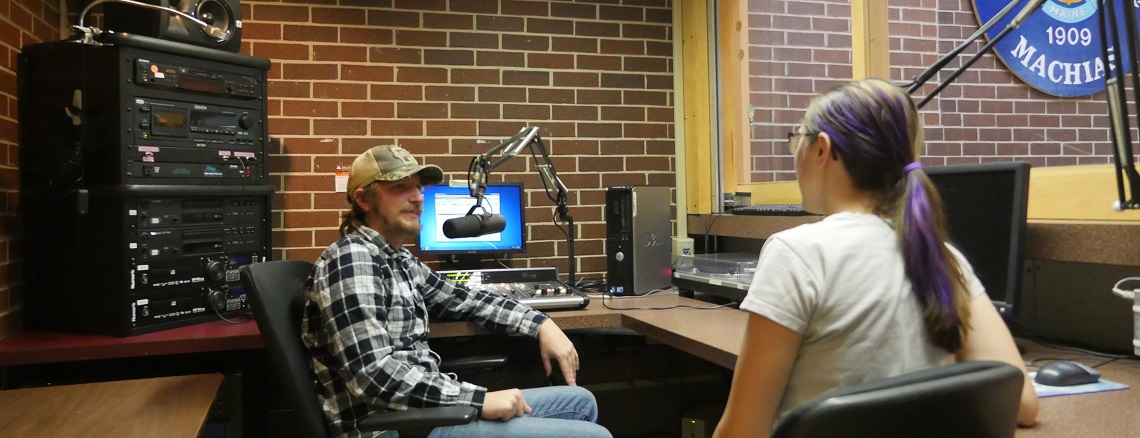
Radio Machias WUUM 91.1 MHz FM

Maine


Sarah Lawrence College

This content is accessible to paid subscribers. To view it please enter your password below or send mike@standardsmichigan.com a request for subscription details.

Homegating

This content is accessible to paid subscribers. To view it please enter your password below or send mike@standardsmichigan.com a request for subscription details.

Digital Agonistes

Today at the usual hour we explore how Best Practice Case Studies on the use of cell phones in K-12 schools “might” evolve into a de-facto standard for all school districts.  Use the login credentials at the upper right of our home page.

Case studies evolve into general consensus standards through a multi-stage, evidence-driven process:

  1. Discovery & Proof-of-Concept (individual success)
    A few organizations implement an innovative approach and achieve dramatically better results.
  2. Validation & Replication (early adopters)
    Other organizations study the cases, replicate the approach, and publish similar positive outcomes → credibility grows.
  3. Widespread Discussion & Refinement (community phase)
    Conferences, journals, consultants, and industry groups analyze, critique, and refine the practice. Variations emerge and the strongest elements survive.
  4. Pattern Recognition & Codification (framework stage)
    Thought leaders and associations identify common success factors, create frameworks, guidelines, and maturity models.
  5. Institutionalization (consensus stage)
    Major standards bodies (ISO, NIST, ITIL, COBIT, etc.), regulators, or dominant industry players formalize the practice into official standards, certifications, or audit requirements.
  6. Taken-for-Granted Status
    The former “innovative case study” becomes the default expectation — “this is how things are done.”

Timeframe: typically 5–15 years, depending on industry pace and evidence strength.


Readings:

IEEE: How to use effectively smartphone in the classroom

IEEE: Possibilities and Challenges in Mobile Learning for K-12 Teachers: A Pilot Retrospective Survey Study

IEEE: Acceptable Use of Technology in Schools: Risks, Policies, and Promises

IEEE: A Review of the Repercussions of Mobile Phones and the Internet on Education

Bach Brandenburg Concerto III

§
Johann Sebastian Bach’s six Brandenburg Concertos (1719–1721) celebrate instrumental color, virtuosity, and joyful invention. Dedicated to the Margrave of Brandenburg, they showcase wildly diverse ensembles (from solo violin to trumpets, flutes, and horns) in a spirit of exuberant experimentation rarely heard before.  Unlike heavier Baroque works, their lightness, clarity, and forward energy gently lift the mind and spirit—ideal for shaking off sleep and greeting the day.
.

.

Home | Spokane County

No photo description available.

Layout mode
Predefined Skins
Custom Colors
Choose your skin color
Patterns Background
Images Background
Standards Michigan
error: Content is protected !!
Skip to content