
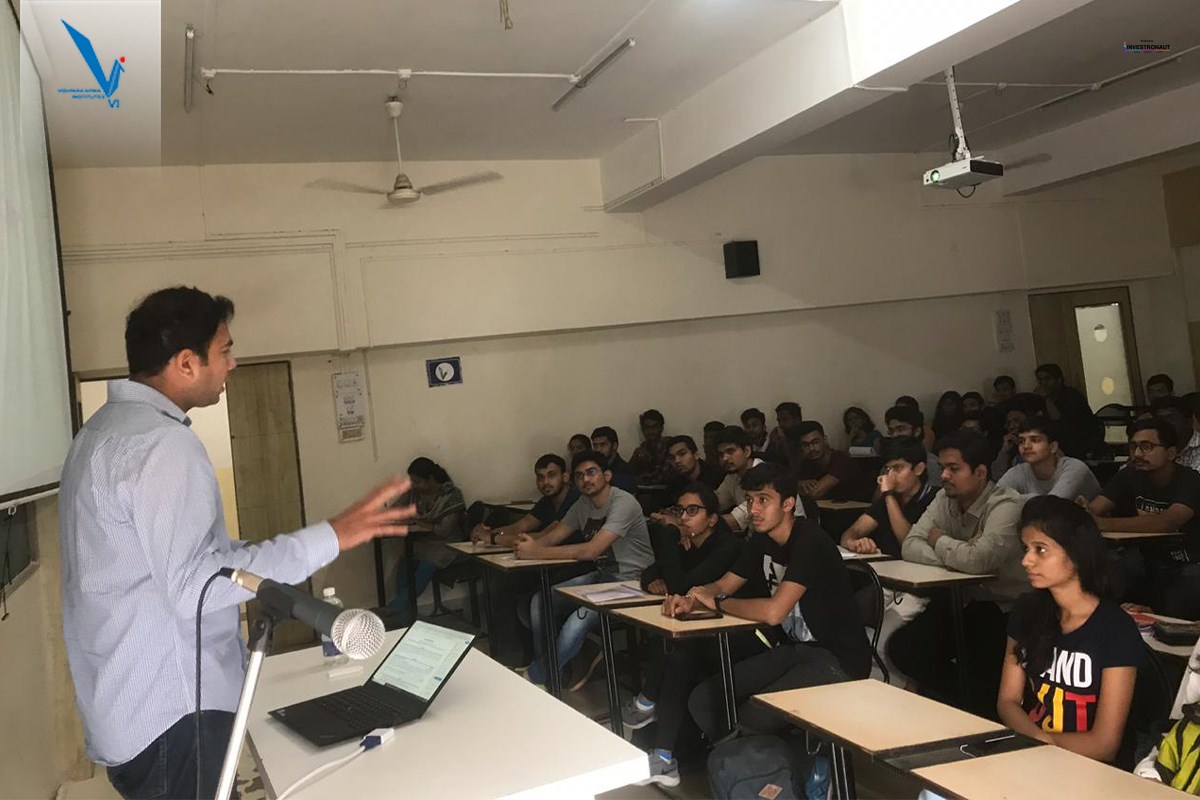
Vishwakarma Institute Of Technology

Coverage Improvement of IEEE 802.11n Based Campus Wide Wireless LANs
CLICK HERE for complete paper



Vishwakarma Institute Of Technology
Coverage Improvement of IEEE 802.11n Based Campus Wide Wireless LANs
CLICK HERE for complete paper
Here is the passage from the Gospel of John 1:29–34 in the King James Version (KJV), which recounts John the Baptist’s testimony about Jesus, alluding to His baptism through the sign of the descending Spirit:
29 The next day John seeth Jesus coming unto him, and saith, Behold the Lamb of God, which taketh away the sin of the world.
30 This is he of whom I said, After me cometh a man which is preferred before me: for he was before me.
31 And I knew him not: but that he should be made manifest to Israel, therefore am I come baptizing with water.
32 And John bare record, saying, I saw the Spirit descending from heaven like a dove, and it abode upon him.
33 And I knew him not: but he that sent me to baptize with water, the same said unto me, Upon whom thou shalt see the Spirit descending, and remaining on him, the same is he which baptizeth with the Holy Ghost.
34 And I saw, and bare record that this is the Son of God.
Unlike the Synoptic Gospels (Matthew, Mark, Luke), which narrate the baptism directly, John’s Gospel focuses on the Baptist’s witness to it.
“Conservatism starts from a sentiment that all mature people can readily share: the sentiment that good things are easily destroyed, but not easily created.”
Sir Roger Scruton pic.twitter.com/ixxTghlSR3
— Joshua D Phillips (@JoshPhillipsPhD) January 10, 2026
“Stand up for your friends especially when they’re right. There is every reason in the world to do so but one is not obvious — although perhaps it should be — and it’s this: it might be the only chance you get to show them how much they mean to you if you don’t seize this opportunity whenever it comes along.
To save the truth of your feelings for their funeral or obituaries it’s not much use to anyone then but if you defend a friend while they’re alive you might just give them the slightest intimation of how much you value them and love them and how much other people love them too…”
🌟 2023 Year in Review at RSLF 🌟
We’re taking a moment to look back at an incredible year of learning, culture and philosophy. Join us as we revisit some of our most memorable moments. #RSLFYearInReview pic.twitter.com/TAxtZVs3m0
— Roger Scruton Legacy Foundation (@Scruton_Legacy) December 28, 2023
We are delighted to invite students from across the West to participate in a series of essay contests designed to reflect on the philosophical contributions of Sir Roger Scruton.
For more info and to submit an essay, please see here: https://t.co/9jttjyaxDX pic.twitter.com/0WhD8U4ytL
— Roger Scruton Legacy Foundation (@Scruton_Legacy) November 22, 2023
Related:
Charlie Kirk (August 12, 2025): “Has U.S. President Donald Trump gone too far?”
This content is accessible to paid subscribers. To view it please enter your password below or send mike@standardsmichigan.com a request for subscription details.
This content is accessible to paid subscribers. To view it please enter your password below or send mike@standardsmichigan.com a request for subscription details.
This content is accessible to paid subscribers. To view it please enter your password below or send mike@standardsmichigan.com a request for subscription details.
§
Campus physical planning is more commonly addressed by organizations like the Society for College and University Planning (SCUP), and scholarly literature (e.g., in the Journal of the American Planning Association) notes limited APA focus on higher education facilities compared to K-12 schools.
International Building Code Development Schedule
Related:
The New Urban Order: Is the Rise of Homeschooling a Problem?
Do Texas public schools exist to serve the school district? Or do they exist to serve all the children and families in the community? Here is the list of schools discriminating against homeschoolers by not allowing those students to participate in UIL. #txlege…
— Matt Schaefer (@RepMattSchaefer) January 5, 2026
Group E occupancy covers buildings (or portions thereof) used for educational purposes by six or more persons at any time through the 12th grade.
This includes:
Key exceptions and notes:
Colleges and universities do not fall under Group E; higher education facilities typically classify as Group B (Business) for classrooms, offices, and labs, with assembly spaces (e.g., lecture halls, auditoriums) as Group A if they meet assembly criteria.
Section 308 defines Institutional Group I occupancies overall, with Group I-4 specifically addressing day care facilities requiring custodial care.
Group I-4 includes buildings occupied by more than five persons of any age who receive custodial care (supervision and assistance due to age or incapacity) for fewer than 24 hours per day, provided by non-relatives outside the home.
This explicitly covers:
For child day care:
Other notes:
Elementary schools and colleges do not fall under Section 308; elementary schools are Group E (as above), and colleges are typically Group B.
These classifications in the 2024 IBC remain consistent with prior editions (e.g., 2021). Local amendments may apply, so verify with the authority having jurisdiction. For the exact text, consult the official ICC digital codes.
This content is accessible to paid subscribers. To view it please enter your password below or send mike@standardsmichigan.com a request for subscription details.
This content is accessible to paid subscribers. To view it please enter your password below or send mike@standardsmichigan.com a request for subscription details.
New update alert! The 2022 update to the Trademark Assignment Dataset is now available online. Find 1.29 million trademark assignments, involving 2.28 million unique trademark properties issued by the USPTO between March 1952 and January 2023: https://t.co/njrDAbSpwB pic.twitter.com/GkAXrHoQ9T
— USPTO (@uspto) July 13, 2023
Standards Michigan Group, LLC
455 East Eisenhower Parkway, Suite 300
Ann Arbor, MI 48108 USA
888-748-3670
 |
 |
|
 |
 |
|
 |
 |