
Science at the Winter Olympics

Category Archives: Athletics/Sport/رياضة
- Home
- Archive by category "Athletics/Sport/رياضة" (Page 4)

loading...

“Citius, Altius, Fortius”
John Williams composed the official theme for the 2002 Winter Olympics in Salt Lake City as a grand cantata-fanfare for orchestra and chorus, premiered by the Mormon Tabernacle Choir and Utah Symphony. The piece directly draws from the Olympic motto “Citius, Altius, Fortius”(“Faster, Higher, Stronger”), originally coined in Latin by modern Olympics founder Pierre de Coubertin in 1894, but rooted in the ancient Greek ethos of athletic excellence, striving, and human potential celebrated by authors like Pindar and Aristotle.
Williams opens with the choir emphatically chanting “Citius! Altius! Fortius!” repeatedly, building heroic orchestral swells to evoke triumphant effort and glory—mirroring ancient ideals of arete (virtue through competition) and pushing limits, as in Aristotle’s praise of those who act and compete rather than merely possess talent. He innovatively adds “Clarius” (“clearer”) in the finale, suggesting clarity of mind alongside physical prowess, extending the motto to encompass intellectual and spiritual elevation of The Games.
Sung Elsewhere:

Mas-fhìor do: Goireasan Spòrs
“The only true sport is that which arises spontaneously
from the heart and the blood.”
— Alistair MacLean
The University of Stirling has produced several famous athletes over the years. Here are a few examples:
Duncan Scott: Duncan Scott is a Scottish swimmer who graduated from the University of Stirling in 2018. He has won numerous medals at major international competitions, including the Olympics, the World Championships, and the Commonwealth Games.
Andy Murray: While Andy Murray did not technically graduate from the University of Stirling, he did attend the university for a brief period in the early 2000s. Murray is a famous Scottish tennis player who has won multiple Grand Slam titles and an Olympic gold medal.
Ross Murdoch: Ross Murdoch is a Scottish swimmer who graduated from the University of Stirling in 2016. He has won multiple medals at major international competitions, including the Commonwealth Games.
Robbie Renwick: Robbie Renwick is a Scottish swimmer who graduated from the University of Stirling in 2009. He has won multiple medals at major international competitions, including the Olympics and the Commonwealth Games.
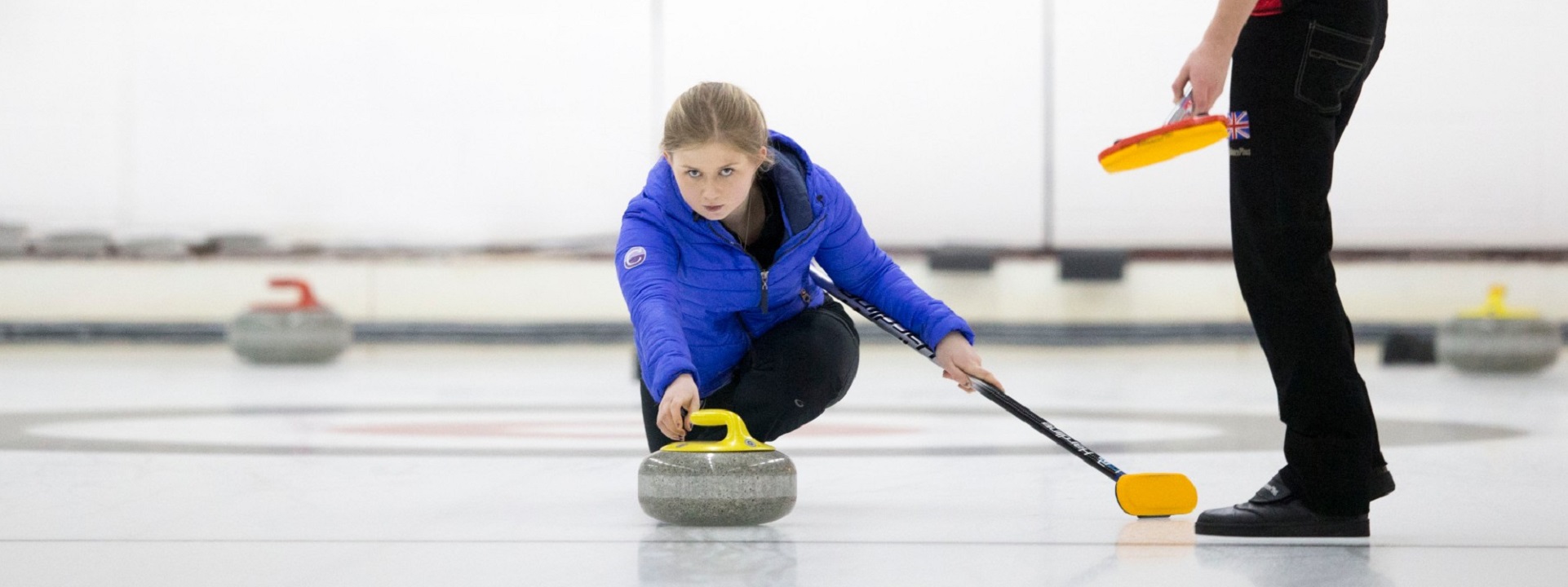
University of Stirling

Curlin’
Sport and Wellbeing | Standards Scotland
The term “curling” is thought to derive from the way the stone moves and “curls” as it travels over the ice. The key feature of curling that sets it apart from other ice sports is the deliberate rotation, or “curl,” applied to the stones as players release them. This rotation causes the stone to curve or “curl” on its path down the ice, adding an element of strategy to the game.
The precise origin of the term is not definitively known, but it likely emerged organically as people described the action of the stones on the ice. The word “curling” has been associated with the sport for centuries, and as the game evolved and gained popularity, the term became firmly established.
The concept of curling is integral to the sport’s strategy, as players use the curl to navigate the stones around guards and other stones strategically placed on the ice. The unique way in which the stones move and interact with the playing surface is one of the defining characteristics of curling, and the name captures this distinctive feature
World Curling Mixed Championship 2024
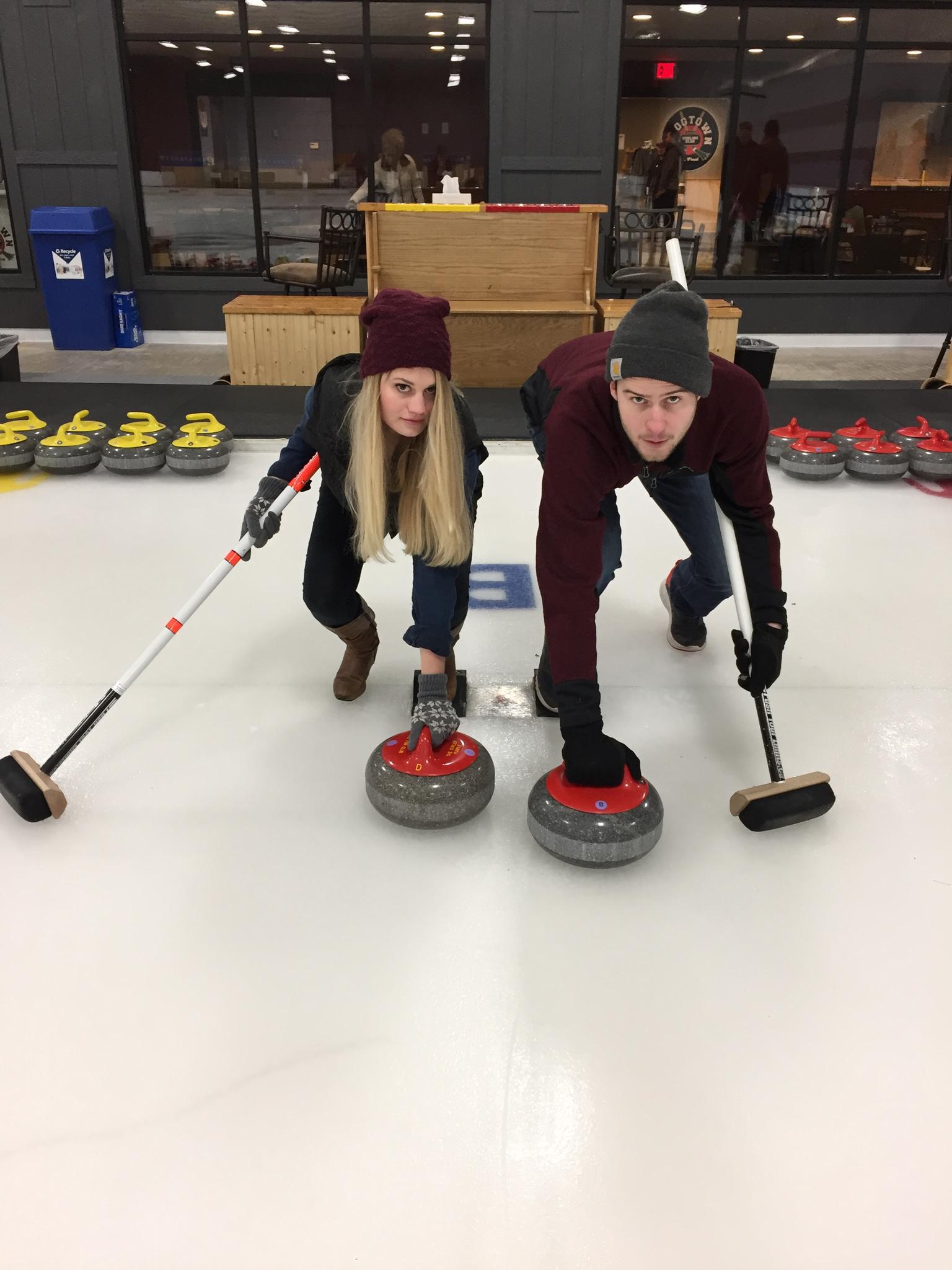
Scientific American: Why Do Curling Stones Curl?
A curling facility typically consists of several key components to support the sport and provide a suitable environment for players and spectators:
- Flooding equipment, refrigeration for 3 degrees C, fine mist sprayers, ice planer, infrared thermometers.
- The playing surface is called a “sheet,” and it is a rectangular area of ice where the game is played. Each sheet is divided into several sections called “curling houses,” which are the target circles.
- Curling stones are made of granite and weigh around 38 to 44 pounds. Each team has eight stones, and players take turns sliding them down the ice towards the target area, known as the House.
- The house is the target area with concentric circles marked on the ice. The center of the house is the “button,” and the circles are used for scoring points.
- The hacks are footholds on either end of the sheet where players push off to slide the stones. The player in control of the stone uses the hack as a starting point for their delivery.
- Brooms, also known as brushes, are used by players to sweep the ice in front of the sliding stone. Sweeping can affect the stone’s trajectory and speed.
- A scoreboard is essential for keeping track of the score in a curling game. It typically displays the current score, the end in progress, and other relevant information.
- Players use locker rooms for changing into their curling attire and storing their personal belongings.
- A designated area where players can warm up before a game. It may include stretching space and possibly a small practice sheet.
- A facility usually has a clubhouse or main building that includes amenities such as viewing areas, meeting rooms, a bar, and possibly a restaurant. In the case of the Windsor Curling Club: Scotch Whiskey
- Equipment like ice resurfacers or Zambonis are used to maintain the quality of the ice surface between games.
The origin of curling is sketchy but this much is agreed upon: Curling is thought to have originated in Scotland, and its roots can be traced back to medieval times. The first written record of curling dates back to 1541 in the records of the Scottish city of Paisley, where a challenge was issued for a contest on the ice between two rival churches.
The early form of the game involved players sliding stones across frozen ponds and lochs, attempting to reach a target. Over time, the sport evolved, and rules were established. Early versions of curling stones were likely rudimentary compared to the polished granite stones used today.
Curling gradually gained popularity in Scotland and spread to other parts of the world, especially among Scottish immigrants. The sport found a home in Canada in the 18th century, where it has become particularly popular. The first curling club in North America, the Montreal Curling Club, was established in 1807. The Detroit Curling Club was established in 1840; one of the oldest curling clubs in the United States, owing much to its across the river relationship with Windsor Canada.


Myron Hunt Architect
Your 2026 Rose Bowl Champion Indiana Hoosiers. pic.twitter.com/ULms8vwhy5
— Indiana Football (@IndianaFootball) January 2, 2026
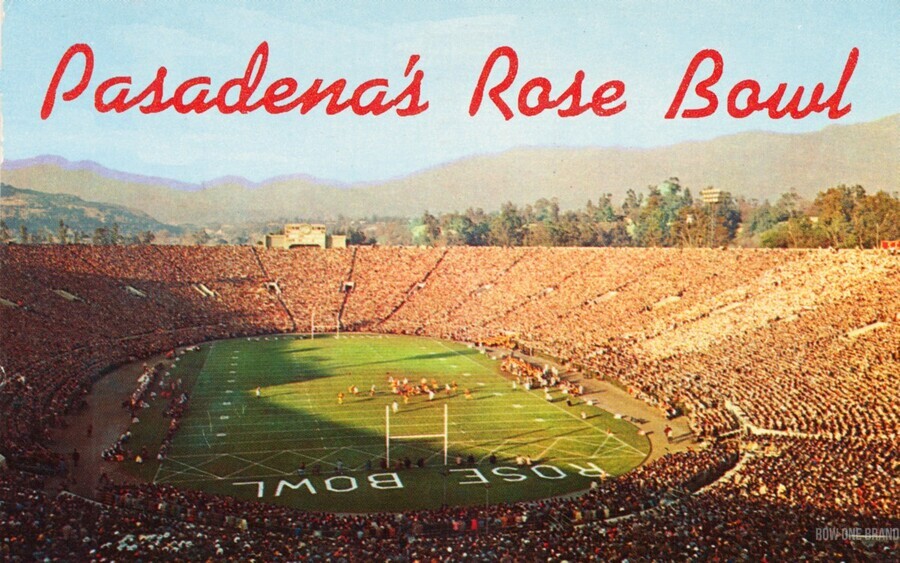
Myron Hubbard Hunt (February 27, 1868 – May 26, 1952) was an American architect whose numerous projects include many noted landmarks in Southern California; most notably, the Rose Bowl Stadium, where the University of Michigan Football team appears routinely on New Year’s Day. Hunt was elected a Fellow in the American Institute of Architects in 1908.

College Bowl Games
Football Stadium Facility Standards
Your 2026 Rose Bowl Champion Indiana Hoosiers. pic.twitter.com/ULms8vwhy5
— Indiana Football (@IndianaFootball) January 2, 2026
🏈
Thru Dec. 27, @ESPNCFB‘s non-CFP bowl viewership is up 13%, averaging 2.7M viewers with several games reaching multi-year highs
🏈 @PopTartsBowl | 8.7M viewers⁰🏈 @PinstripeBowl | 7.6M⁰🏈 @taxslayerbowl | 6.0M⁰🏈 @RateBowl | 4.4M⁰🏈 @LABowlGame | 3.8M⁰🏈 @FRBowl | 3.1M pic.twitter.com/AH0LfKYINz
— ESPN PR (@ESPNPR) January 2, 2026
Thru Dec. 27, @ESPNCFB‘s non-CFP bowl viewership is up 13%, averaging 2.7M viewers with several games reaching multi-year highs
🏈 @PopTartsBowl | 8.7M viewers⁰🏈 @PinstripeBowl | 7.6M⁰🏈 @taxslayerbowl | 6.0M⁰🏈 @RateBowl | 4.4M⁰🏈 @LABowlGame | 3.8M⁰🏈 @FRBowl | 3.1M pic.twitter.com/AH0LfKYINz
— ESPN PR (@ESPNPR) January 2, 2026
INTENSITY!
PASSION!
FINISH!#GoCanes | @CFBPlayoff pic.twitter.com/3ICty0djpx— Miami Hurricanes Football (@CanesFootball) January 2, 2026
Navy closes out their winningest two-year span EVER with a victory at the AutoZone Liberty Bowl 🔥🙌 pic.twitter.com/gEExNcpRip
— ESPN College Football (@ESPNCFB) January 3, 2026
ORANGE BOWL CHAMPIONS!
Oregon defeats Texas Tech to advance to the College Football Playoff Semifinals!#GoDucks x @CFBPlayoff pic.twitter.com/TsLyj65U6q
— Oregon Football (@oregonfootball) January 1, 2026
No Bones About It 🦴
Ole Miss 39 | Georgia 34#SugarBowl x #HottyToddy pic.twitter.com/xh6e45narJ
— Ole Miss Football (@OleMissFB) January 2, 2026

Wild Swimming
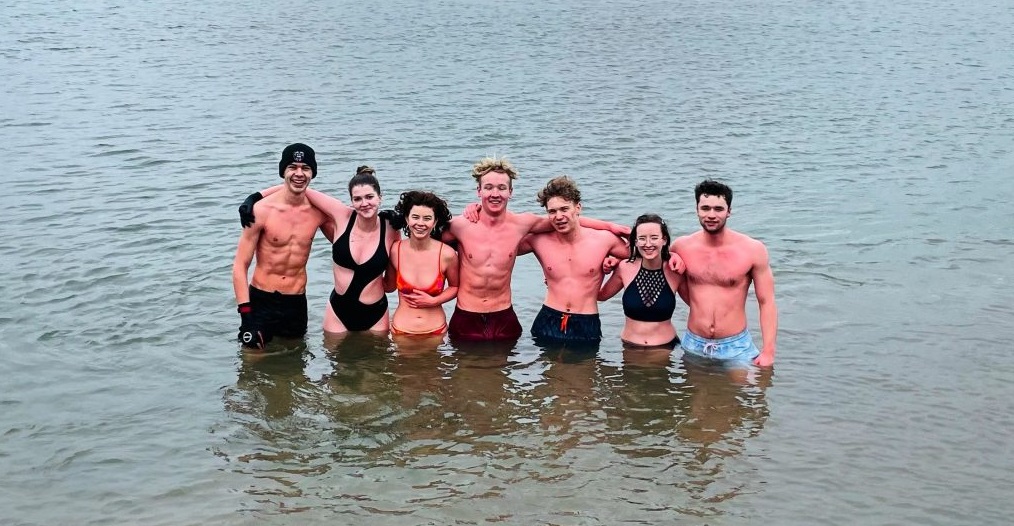
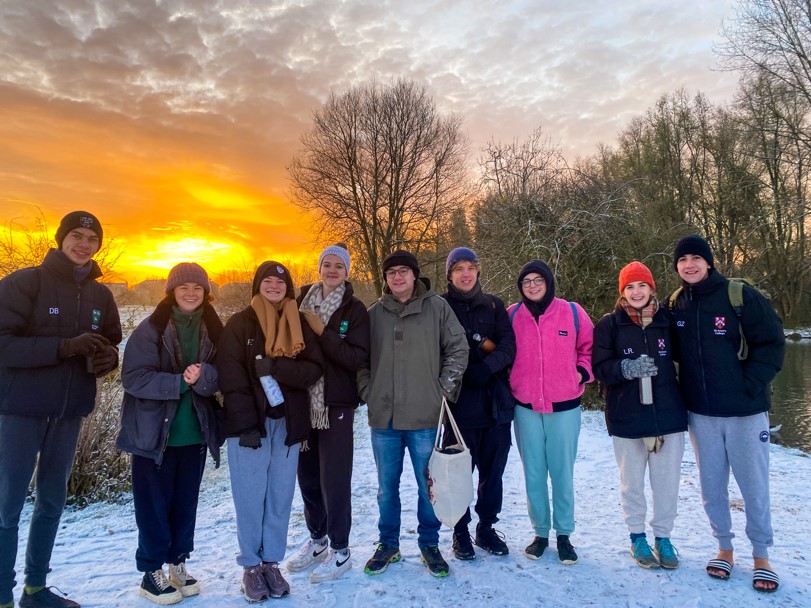
INTERVIEW: Student Ellie Ford on founding the University’s first cold water swimming group
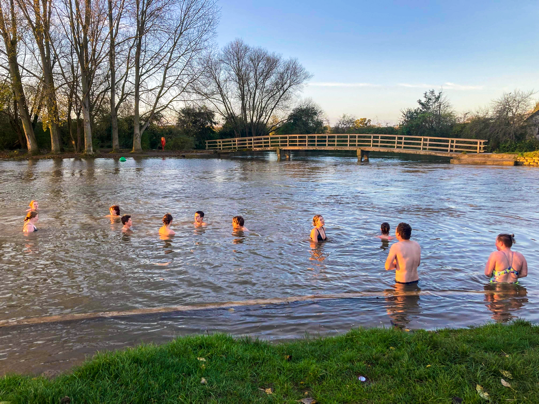
| “Port Meadow is absolutely beautiful and a wonderful place to swim. We often swim in a different spot from other open water swimming groups in order to create a more relaxed environment – especially for our beginners. We do special beginners swims on Saturdays, to ease new members into the practise slowly and very carefully.
Safety is paramount, so I’ll walk them in to the water and they can immerse themselves as much as they want. We never allow anyone to jump or dive into cold water – the shock can cause a swimmer to gulp for air and subsequently ingest water; it’s always a gentle process.” — Ellie |


Sex Difference in Female and Male Ice Swimmers


Hare Family Sports Performance & Training Center
Fall Field Sport Standards | Standards Pennsylvania
Dickinson's exciting new model of career services provides students with additional layers of tailored guidance and support. https://t.co/hMaS4Imalh pic.twitter.com/wNNC1O2Pzk
— Dickinson College (@DickinsonCol) January 2, 2025

Quidditch
The real-life sport of Quidditch was inspired by the Harry Potter franchise but has since changed its name to Quadball. Organizers hope the name change distances the sport from the social positions of author J,K. Rowling, perhaps growing the sport.
Quadball refers to the number of balls and positions in the sport; its playfield governed largely by field sport codes and standards.
Readings: The “30-30” Rule for Outdoor Athletic Events Lightning Hazard

Turkey Trot
In 2024, a record-breaking 936 Thanksgiving Turkey Trots were hosted across all 50 U.S. states, attracting over 1.1 million participants and raising more than $3.6 million for charities. This figure comes from comprehensive data compiled by RunSignup, a leading race management platform that tracked events nationwide, showing a 21% increase from 2023. Florida led with 56 events, followed by other populous states like California and Texas.
For 2025 (as of late November), early indicators suggest a similar or slightly higher total, with at least 70 new races identified and low event churn (under 2%). Registration trends show events averaging 39% of 2024 totals already, pointing to continued growth in this beloved holiday tradition. These races—mostly 5K fun runs or walks—emphasize family participation, costumes, and community support, with over 90% held on Thanksgiving Day itself

Join us for the oldest race in Kalamazoo, the #WMU Turkey Trot! 🦃 Lace up and run with us on Saturday, Nov. 22.
Registration closes Thursday, Nov. 20, at 11:59 p.m. EST.
Celebrate the race with an awards ceremony for the top male and female in both run and walk categories, and… pic.twitter.com/E7JeUDg8Wz
— Western Michigan University (@WesternMichU) November 12, 2025
New update alert! The 2022 update to the Trademark Assignment Dataset is now available online. Find 1.29 million trademark assignments, involving 2.28 million unique trademark properties issued by the USPTO between March 1952 and January 2023: https://t.co/njrDAbSpwB pic.twitter.com/GkAXrHoQ9T
— USPTO (@uspto) July 13, 2023
Welcome
Standards Michigan Group, LLC
455 East Eisenhower Parkway, Suite 300
Ann Arbor, MI 48108 USA
888-748-3670
DIRECTIONS
 |
 |
|
 |
 |
|
 |
 |
Layout mode
Predefined Skins
Custom Colors
Choose your skin color
Patterns Background
Images Background
error: Content is protected !!
Skip to content