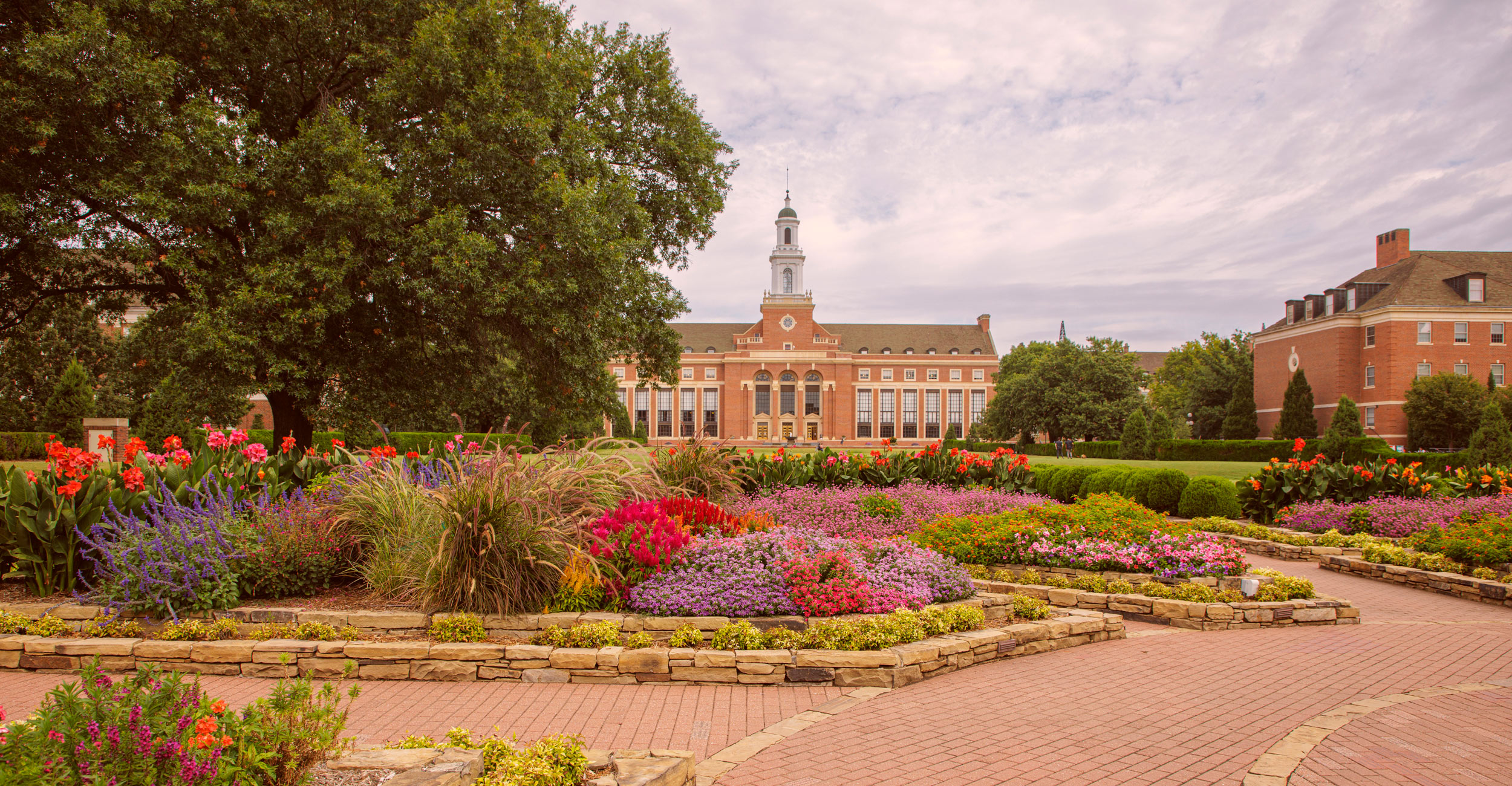
The Degree Course in Viticulture and Enology has the main objective of training oenological technicians with adequate skills to establish and manage wineries, enhancing both the agricultural product and the wine derived from it. This objective is pursued by providing, first, adequate basic scientific and cultural knowledge, based on mathematical, physical, chemical and biological sciences and, subsequently, professionalizing skills in the wine sector, aimed at developing operational skills of an agro-technological and managerial nature as well as framing the production activity from a historical, geographical, economic and environmental point of view….[Click image]
Strawberry sipper water is a flavored water beverage made by combining pureed strawberries with cold water, often enhanced with ice cubes for a refreshing taste. It’s typically prepared by blending fresh or thawed frozen strawberries into a puree, mixing it with water in a pitcher, and adding ice, sometimes with mint leaves frozen in the cubes for extra flavor.
Unlike infused water, where fruit sits in water for hours, strawberry sipper water is more akin to an agua fresca, blending fruit for immediate flavor and a vibrant pink color. It’s a hydrating, low-calorie drink popular for summer or as a soda alternative, often garnished with fresh strawberries or mint.
Founded in 1999, the European Bartender School (EBS) is the world’s leading bartending school, operating over 25 schools across five continents. Its mission is to provide top-quality, globally recognized bartending and barista courses designed by industry experts.
EBS aims to train aspiring bartenders with practical and theoretical skills, offering a comprehensive International Bartender Course that equips students for global career opportunities. With over 80,000 graduates, EBS fosters a vibrant community, connecting students to jobs via EBS MatchStaff. The school emphasizes a fun, social learning experience, blending professional education with personal growth and travel
The command issued by the character Captain Jean-Luc Picard in the television series “Star Trek: The Next Generation” finds its way into the archive of photographs of Nobel Laureates consorting with politicians at the University of Michigan and elsewhere.
Attendees of the Theoretical Physics Colloquium at the University of Michigan in 1929.
…”There’s not good math explaining forget the physics of it. Math explaining the behavior of complex systems yeah and that to me is both exciting and paralyzing like we’re at very early days of understanding you know how complicated and fascinating things emerge from simple rules…” — Peter Woit [1:16:00]
Since 1936 the Brown Jug has been the ancestral trough of generations of University of Michigan students and faculty — notably. Donald Glaser (inventor of the bubble chamber) and Samuel C. C. Ting (Nobel Laureate) whose offices at Randall Laboratory were a 2-minute walk around the corner from The Brown Jug. As the lore goes, the inspiration happened whilst watching beer bubbles one ordinary TGIF Friday.
“Some of my favorite places to spend my dining points are at the Coffee Club’s two locations on campus. I frequently trek down to the modern New College West (NCW) storefront that overlooks Poe Field before an afternoon of studying. I also love the quaint café at Campus Club, with its homey vibe and frequent musical performances. Typically, I go for the basic, predictable iced vanilla latte. However, Coffee Club seasonally experiments with its menu and releases temporary items that reflect the weather, holidays, or mood of the campus….” Isabella Dail
As reading period and exams begin, here are some favorite spots for students to study, catch up with friends or simply have a quiet moment.
Woodrow Wilson’s tenure as U.S. President (1913–1921) significantly weakened the constitutional republic designed by the Founders. As a Princeton professor and political scientist, Wilson openly rejected the Founders’ system of separated powers, limited government, and federalism. He viewed the Constitution as outdated and inefficient for the modern age, preferring rule by expert administrators in a powerful central state.
In office he advanced this vision through:
• The Federal Reserve Act (1913) – centralizing monetary power • The 16th Amendment income tax – funding vast federal expansion • Espionage and Sedition Acts – suppressing free speech • Racial segregation of the federal workforce • Aggressive push for the League of Nations, undermining American sovereignty
These changes shifted power from Congress and the states to the executive branch and unelected bureaucracy, creating the foundations of today’s administrative state. Wilson’s academic background made this outcome predictable: college progressives of his era distrusted “inefficient” constitutional restraints and placed faith in enlightened elites. His presidency proved that such intellectual contempt for the Founders’ republic inevitably leads to concentrated power and eroded liberties.
Furthermore, Wilson was an enthusiastic “eugenicist” supporting compulsory sterilization legislation aimed at preventing reproduction of people considered to be genetically inferior; including African-Americans whom he discouraged entering Princeton. Ironically, President Barack Obama was one of Wilson’s intellectual disciples — promoting activist federal government, expert-led reform, internationalism and the elevation of race into all public discourse.
University of Chicago Law School Lecturer: 1992-2004 President of the United States: 2009 – 2017
Artisanal coffee departs from mass-market approaches and replaces it with emphasis on craftsmanship, quality, and attention to detail throughout the entire process—from cultivation to brewing. Key aspects:
» Artisanal coffee producers often prioritize high-quality beans. They might focus on specific varieties, regions, or even single-origin beans, showcasing unique flavors and characteristics.
» The roasting process is considered an art in itself. Artisanal coffee roasters carefully roast the beans to bring out the best flavors. They may experiment with different roasting profiles to achieve specific taste profiles.
» Unlike mass-produced coffee, artisanal coffee is often roasted in smaller batches. This allows for better quality control and the ability to pay closer attention to the nuances of each batch.
» Artisanal coffee is appreciated for its distinct flavor profile. Roasters and baristas might highlight tasting notes, aromas, and other characteristics that make each cup unique.
» Artisanal coffee shops or enthusiasts often explore various brewing methods, such as pour-over, AeroPress, or siphon brewing. These methods can be more time-consuming but are believed to extract the best flavors from the beans.
From the way the beans are ground to the water temperature during brewing, artisanal coffee enthusiasts pay attention to every detail to ensure a superior cup of coffee.
“I have often pleased myself with considering the two different scenes of life which are carried on at the same time in those different places of rendezvous, and putting those of the playhouse and the coffee-house together.”
“For decades, left-wing radicals patiently built a revolution in the shadows. Then suddenly, after the death of George Floyd, their ideas exploded into American life.
Corporations denounced the United States as a “system of white supremacy.” Universities pushed racially segregated programs that forced students to address their racial and sexual “privilege.” And schools injected critical race theory in the classroom, dividing children into “oppressor” and “oppressed.”
In this New York Times bestseller, Christopher F. Rufo exposes the inner history of the left-wing intellectuals and militants who slowly and methodically captured America’s institutions, with the goal of subverting them from within. With profiles of Herbert Marcuse, Angela Davis, Paulo Freire, and Derrick Bell, Rufo shows how activists have profoundly influenced American culture with an insidious mix of Marxism and racialist ideology. They’ve replaced “equality” with “equity,” subverted individual rights in favor of group identity, and convinced millions of Americans that racism is endemic in all of society. Their ultimate goal? To replace the constitution with a race-based redistribution regime, administered by “diversity and inclusion” commissars within the bureaucracy.
America’s Cultural Revolution is the definitive account of the radical Left’s long march through the institutions. Through deep historical research, Rufo shows how the ideas first formulated in the pamphlets of the Weather Underground, Black Panther Party, and Black Liberation Army have been sanitized and adopted as the official ideology of America’s prestige institutions, from the Ivy League universities to the boardrooms of Wal-Mart, Disney, and Bank of America. But his book is not just an exposé. It is a meticulously-researched and passionate refutation of the arguments of CRT—and a roadmap for the counter-revolution to come.”
“To be at home is to have a place in the world which is yours, where you are not a stranger and where you find the outlines of your identity. In the modern world, however, where the sense of home has been eroded by technology and bureaucracy, architecture can create a substitute for this sense, by defining spaces which answer to the dreams and memories of the people who live in them.” — Roger Scruton
New update alert! The 2022 update to the Trademark Assignment Dataset is now available online. Find 1.29 million trademark assignments, involving 2.28 million unique trademark properties issued by the USPTO between March 1952 and January 2023: https://t.co/njrDAbSpwBpic.twitter.com/GkAXrHoQ9T