Category Archives: Security/Doors

Loading
loading...

Guide to Premises Security

School of Aristotle | Gustav Spangenberg

Managing capital‐intensive campus infrastructure embedded within a politically sensitive community presents challenges not present in private industry real assets. Differences in everything from department culture to annual facility use patterns mean that facility managers cannot implement the same safety approaches in all buildings.  Approaches must be scaled and tailored to the occupancy type and informed by the interconnectedness and the specifics of a given facility.  Accordingly, the original University of Michigan standards advocacy enterprise (see ABOUT) began following the development of safety concepts in both NFPA 730 and NFPA 731 with the release of the 2008 Edition.   Thereafter, it collaborated with trade associations and subject matter experts from other universities (notably Georgetown University and Evergreen State University) to advocate user-interest concepts in the 2011 revisions.

Since 2008, campus security issues have only become more complex technically; across an expanding minefield of sensitivities.   Since 2008 we have observed the emergence of about one-hundred new consensus products being developed by the same number of new trade associations and producers presenting campus security solutions.

NFPA 730 Guide to Premise Security is a consensus document that describes construction, protection, occupancy features, and practices intended to reduce security vulnerabilities to life and property.  Related document — NFPA 731 Standard for the Installation of Electronic Premises Security Systems covers the application, location, installation, performance, testing, and maintenance of electronic premises security systems and their components.   The first is a performance document; the second a prescriptive document for the construction, operation and maintenance of electrotechnologies that support premise security.

Public consultation on the 2023 revision closed January 5, 2022 however the NITMAM process permits additional comment at the 2023 NFPA Annual meeting in Las Vegas in June 2023.

The 2026 Edition is now open for public input until January 4, 2024.

Public Comment on the First Draft of the 2026 Edition will be received until January 3, 2025

As always, we encourage direct participation by user-interests supporting the education facility industry.   You may do so by CLICKING HERE.

It is never a bad idea to key in comments on your own but if you would like some insight into our advocacy vectors since 2008 you are welcomed to click in our periodic Risk and Public Safety colloquia during which time we pick through technical, policy and enforcement specifics.   We have been hammering on Chapters 11 and 12, Education and Healthcare Facilities, respectively; for five cycles.   See our CALENDAR for the next online meeting; open to everyone.


Issue: [10-3], [11-58], [14-44] and [16-127]

Category: Electrical, Telecommunications, Information & Communications Technology, Public Safety, Risk Management, #SmartCampus

Colleagues: Mike Anthony, Jim Harvey, Richard Robben


More

Department of Homeland Security: K-12 School Security

National Campus Safety and Security Project

NFPA 730 2023 Public Input Report

NFPA 730 730_F2019_PMM_AAA_FD_PIresponses

NFPA 730_F2019_PMM_AAA_SD_PCresponses

ARCHIVE / NFPA 730 Guide to Premises Security


Campus Outdoor Lighting

“The Starry Night” | Vincent van Gogh

The IEEE Education & Healthcare Facilities Committee has completed a chapter on recommended practice for designing, building, operating and maintaining campus exterior lighting systems in the forthcoming IEEE 3001.9 Recommended Practice for the Design of Power Systems for Supplying Commercial and Industrial Lighting Systems; a new IEEE Standards Association title inspired by, and derived from, the legacy “IEEE Red Book“.  The entire IEEE Color Book suite is in the process of being replaced by the IEEE 3000 Standards Collection™  which offers faster-moving and more scaleable, guidance to campus power system designers.

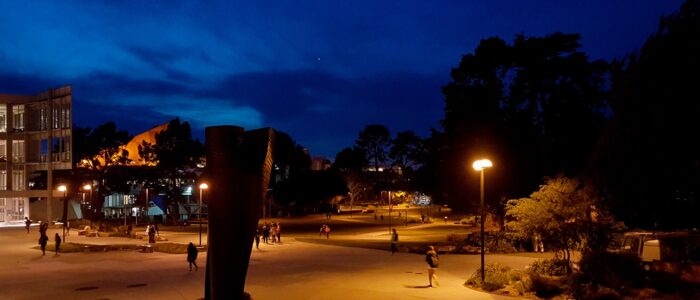
Campus exterior lighting systems generally run in the 100 to 10,000 fixture range and are, arguably, the most visible characteristic of public safety infrastructure.   Some major research universities have exterior lighting systems that are larger and more complex than cooperative and municipal power company lighting systems which are regulated by public service commissions.

While there has been considerable expertise in developing illumination concepts by the National Electrical Manufacturers Association, Illumination Engineering Society, the American Society of Heating and Refrigeration Engineers, the International Electrotechnical Commission and the International Commission on Illumination, none of them contribute to leading practice discovery for the actual power chain for these large scale systems on a college campus.   The standard of care has been borrowed, somewhat anecdotally, from public utility community lighting system practice.  These concepts need to be revisited as the emergent #SmartCampus takes shape.

Electrical power professionals who service the education and university-affiliated healthcare facility industry should communicate directly with Mike Anthony (maanthon@umich.edu) or Jim Harvey (jharvey@umich.edu).  This project is also on the standing agenda of the IEEE E&H committee which meets online 4 times monthly — every other Tuesday — in European and American time zones.  Login credentials are available on its draft agenda page.

Issue: [15-199]

Category: Electrical, Public Safety, Architectural, #SmartCampus, Space Planning, Risk Management

Contact: Mike Anthony, Kane Howard, Jim Harvey, Dev Paul, Steven Townsend, Kane Howard


LEARN MORE:

Operations Desk

This content is accessible to paid subscribers. To view it please enter your password below or send mike@standardsmichigan.com a request for subscription details.

Ingress

We have shouted from the mountaintops — beginning in the 2002 National Electrical Code and later in the International Building Code — that “ingress” concepts (the opposite of the canonical term “egress”; meaning the way INTO a building during an emergency) should become part of the vocabulary when exploring best practice concepts for security in education settlements.

Alas, so far without success.  Evidently, the term “ingress” has been appropriated by a variant — accessibility — which re-directs the discussion toward the American with Disabilities Act?

What about people who are not disabled who seek to enter a building?

We cite a 1981 study, sponsored by what is now the National Institute of Standards and Technology — Crowd ingress to Places of Assembly: Summary and Proceedings of an Experts’ Workshop –– to enlighten understanding how ingress is different from the term access.

We maintain this topic on all of our Security related colloquia; hosted on days that appear on our CALENDAR.  Use the login credentials at the upper right of our home page.

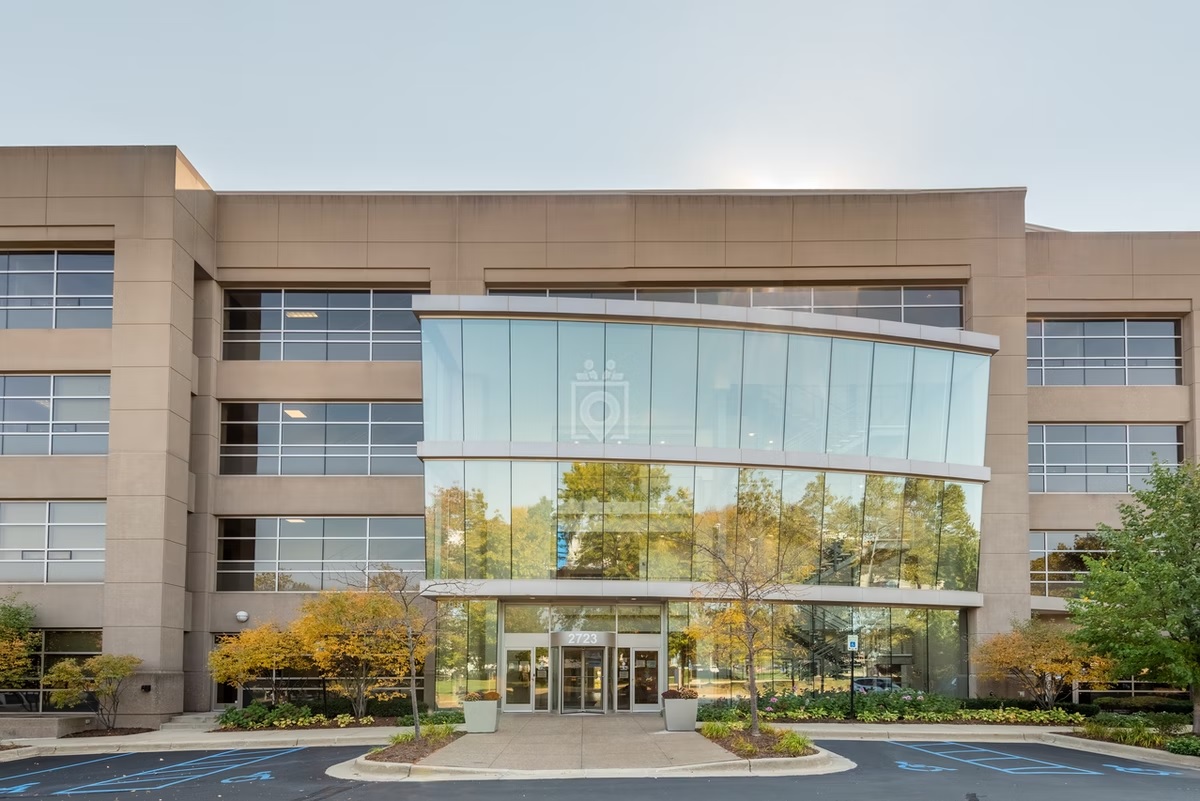
Entrance door to Standards Michigan Ann Arbor office

Means of Egress


Americans with Disabilities Act

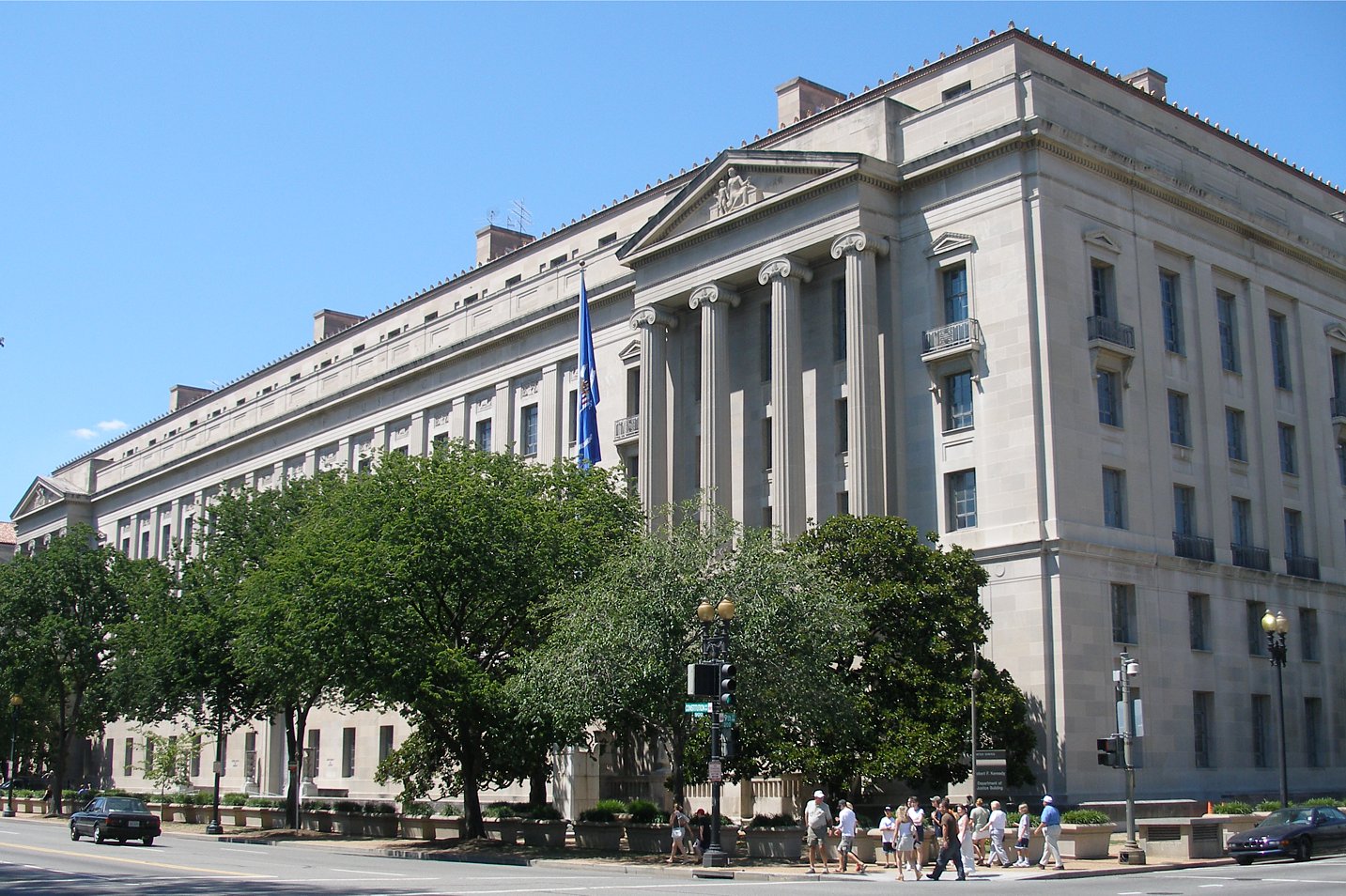
U.S. Department of Justice

Following is the current text of the Americans with Disabilities Act of 1990 (ADA), including changes made by the ADA Amendments Act of 2008 (P.L. 110-325), which became effective on January 1, 2009.

The ADA was originally enacted in public law format and later rearranged and published in the United States Code. The United States Code is divided into titles and chapters that classify laws according to their subject matter. Titles I, II, III, and V of the original law are codified in Title 42, chapter 126, of the United States Code beginning at section 12101. Title IV of the original law is codified in Title 47, chapter 5, of the United States Code. Since this codification resulted in changes in the numbering system, the Table of Contents provides the section numbers of the ADA as originally enacted in brackets after the codified section numbers and headings.

CHAPTER 126—EQUAL OPPORTUNITY FOR INDIVIDUALS WITH DISABILITIES


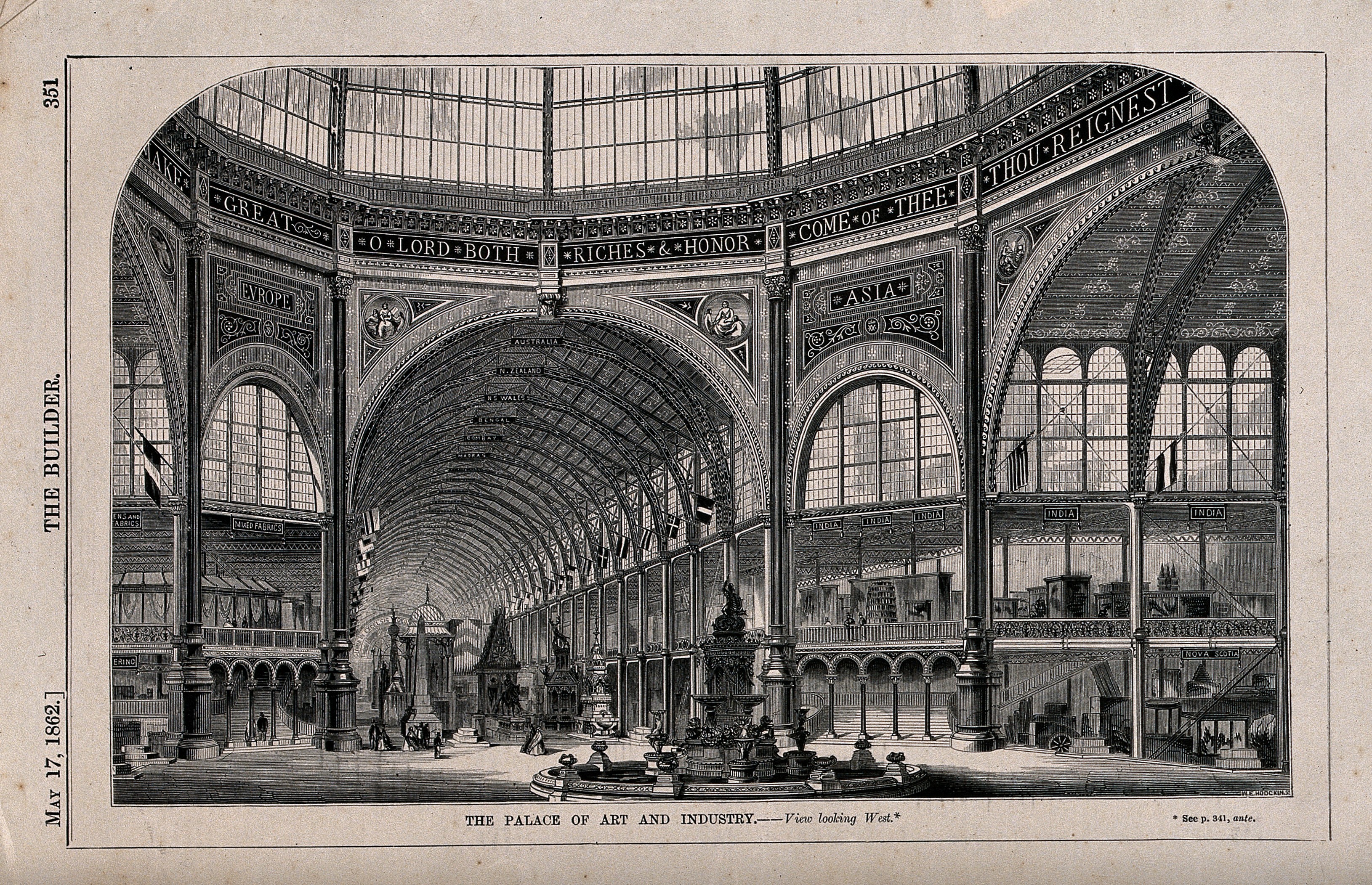
Revolving Pedestrian Doors

Gone are the days when a door was just a door (or “opening”) — at least insofar as public safety expectations are  concerned.   As we explain in our School Security Standards post the pace of standardization in public safety management and technology has increased; driven by events.  Some of the risk management can be accomplished with integrated electrotechnology solutions that are complex and more expensive to design, build, operate and maintain.  Architects, electrical and information and communications technology professionals usually have to collaborate on the application of the technology owing to the blistering pace of cross-disciplinary integration.

The Builders Hardware Manufacturers Association (BHMI) is an ANSI accredited consensus standards developer for building access and egress technology standards that facility managers may see incorporated by reference deep in the architectural and electrical sections of construction contract specifications.    An example of how BHMA standards show up in enforceable contracts can be found in most master construction contracts in the education facility industry.*on Page 38 Master Construction Contract

The front door to the BHMA public commenting facility is linked below:

BHMA Standards Home Page

No drafts have been released for public consultation at this time; however we maintain the BHMA catalog on our daily scan of building construction standards.

We always encourage direct participation in the BHMA standards development process by facility managers and those with oversight on campus security.  You may obtain an electronic copies of any of the foregoing from MTierney@kellencompany.com and send comments to the same (with copy to psa@ansi.org).

All education facility security standards can be discussed any day at our daily 11 AM Eastern time teleconference.  We also set aside one hour every month to review the status of the rapidly evolving “fabric” of school security standards.  See our CALENDAR for the next online meeting; always using the same login credentials and always open to everyone.

Issue: [19-52]

Category: Architectural, Electrical, Facility Asset Management, Telecommunication, Public Safety, #SmartCampus, Risk Management

Colleagues: Mike Anthony, Jim Harvey. Jim Vibbart

Source: ANSI Standards Action

* See Page 38: Master Construction Specifications (Samples) (E.729) : Note the requirement to “Use date of standard in effect as of Bid date”.  Standards  in this space are moving quickly, and integrate with other electrotechnology standards.   It is an uphill battle for architects, engineers, specifiers and contractors to keep pace with them.  Compliance authorities usually keep pace with them, however, because the compliance interest is very strong in all standards development committees and compliance revenue originates from enforcing them.


LEARN MORE:


Report: Revolving Door Usage

This content is accessible to paid subscribers. To view it please enter your password below or send mike@standardsmichigan.com a request for subscription details.

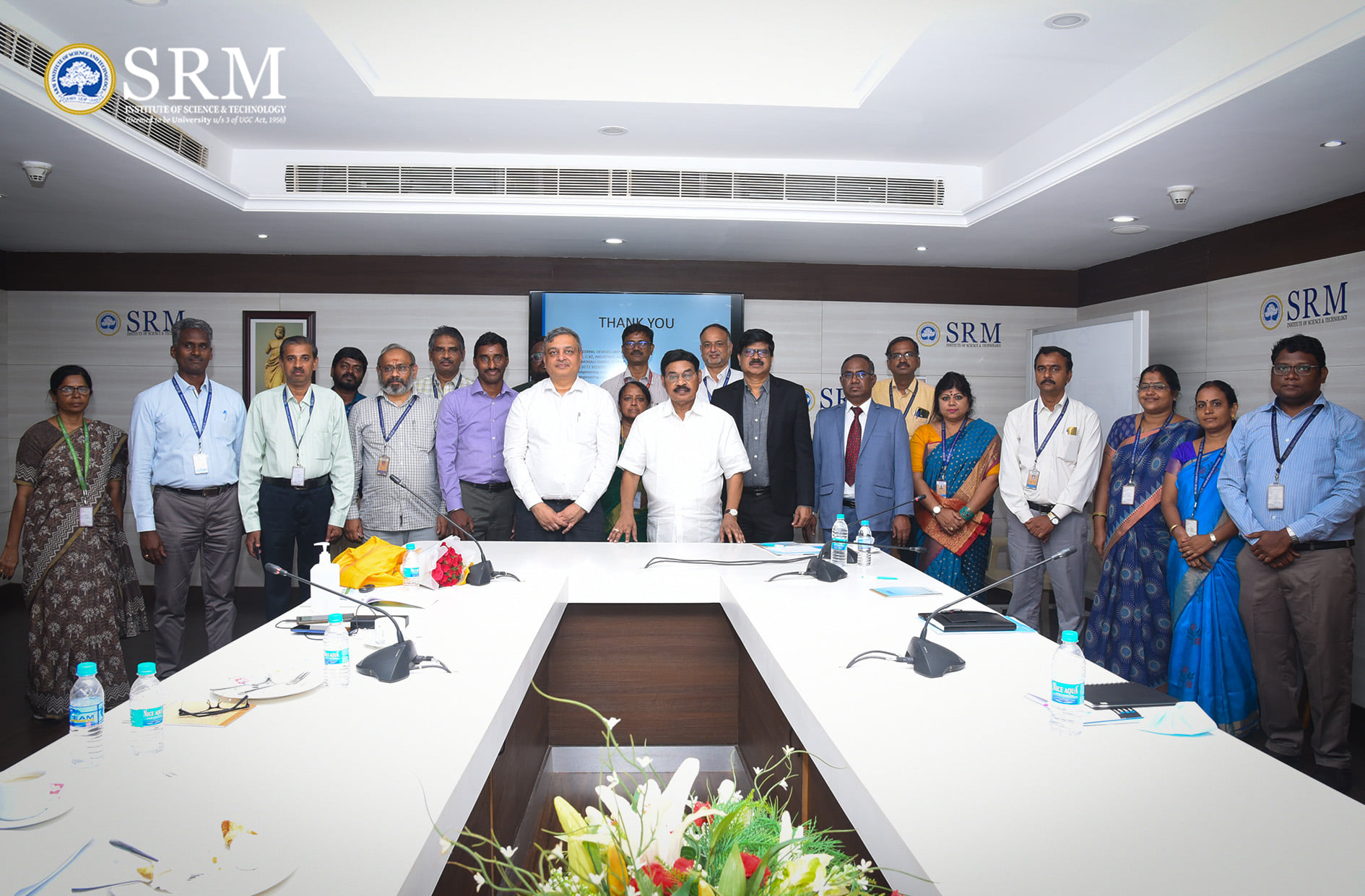
Real Time Door Security System With Three Point Authentication


Real Time Door Security System With Three Point Authentication


N. S. Vinoth Kumar – Lakshmi Narayanan K – Bharathi V – Naresh R

College of Engineering and Technology, SRM Institute of Science and Technology, Chennai

Vasim Babu M

KKR & KSR Institute of Technology and Sciences, Vinjanampadu, Andhra Pradesh


Abstract:  A smart way to solve the common problem of conventional door-locking system is proposed using conventional lock key methodology and it can be cloned and used by anyone. The proposed system is to make a secure door lock security system with two factor authentications. The user has to use Radio Frequency Identification tag. The tag’s data will be saved in a database. When the tag is read by the Radio Frequency Identification reader, the user has to input a pass code. After the pass code is entered, the user will receive a One-time password on his mobile device to unlock the door. The biggest advantage of proposed system is that the introduction of two factor authentication to gain the access to the door, which makes it more secure.


Electrical Safety in the Workplace

Nicola Tesla in his Laboratory | Click image


The NFPA suite of electrical safety titles are most familiar to the education facility safety community because NFPA documents run deeply in local public safety culture; dominated by an over-arching concern for protection from fire.

The NFPA 70-series of documents are developed according to ANSI-accredited due process requirements that features a comparatively rigorous administration of stakeholder balance; much more so than the electrotechnology consensus documents prepared by the Institute of Electrical and Electronic Engineers Standards Association which is much broader in global reach.

Generally speaking, the IEEE — the world’s largest professional association — is dominated by electrotechnology experts who work on behalf of the user-interest in the US standards system; hence our close collaboration with the IEEE Education and Healthcare Facilities Committee as the the emergent #WiseCampus rolls out.  We also present an informed vote supported by the IEEE Industrial Applications Society.

University of Washington

The cultural difference between fire safety community and the electrotechnology community must be understood in order to understand how, why and where the NFPA-70 series of documents harmonize and conflict with IEEE Standards Association electrical safety codes and standards.   You find an abundance of academic faculty and researchers developing IEEE documents; not so many of the same developing NFPA documents.

We list the complete NFPA 70-suite below:

NFPA 70 National Electrical Code® (2020)

NFPA 70A National Electrical Code® Requirements for One- and Two-Family Dwellings[1]

NFPA 70B Recommended Practice for Electrical Equipment Maintenance

NFPA 70E Standard for Electrical Safety in the Workplace®

Note that two on the foregoing list receives special (legal) handling as “code”.

We provide links to the transcripts of the 2024 technical committee meetings to show the scope of discussion that goes into the preparation of this document:

Electrical Safety in the Workplace (EEW-AAA)

Public Input Report

Public Comment Report

The circumstances of the pandemic have restrained the normal course of business at NFPA, as it has most other standards developers.  We make near-daily contact with many NFPA titles so click in any day at 15:00 UTC for an update.

Public Input on the 2027 Revision will be received until June 4, 2024.

We are happy to discuss proposals for the next revision of NFPA 70E any day at 15:00 UTC but direct you to the possibility of more detailed discussion during any of the bi-weekly online meetings of the IEEE Education and Healtcare Facilities Committee.[2]

Issue: [3-3], [6-4], [10-14], [12-19], [15-160] and [18-135]

Category: Electrical, Public Safety, Risk Management

Colleagues: Mike Anthony, Jim Harvey, Joe Tedesco


[1] Many colleges and universities own and operate real assets that are covered by residential building codes; frequently on the perimeter of a campus or farther off-site as in the case of residential assets that are donated to the university.   We generally confine our advocacy to education facilities that are classified as commercial and covered by NFPA 70, 70B and 70E, though we are happy to consult with facility managers on NFPA 70A as necessary.

[2] Standards Michigan is undertaking a 50-state rollout during 2019 because, among other reasons, national committees across the entire span of accredited standards, tend to be dilutive.  We want to offer more support for state exceptions to the codes and standards that affect the safety and sustainability goals of the education industry.

Archive / NFPA 70E Electrical Safety in the Workplace

School Security Concepts

Updated November 21, 2024

School, college and university security best practice literature draws from an expanding code and standards catalog of hundreds of non-profit membership and trade associations; each intended to have their titles incorporated by reference into public safety legislation.  One need only examine the transcripts of the most recent code-making processes of the International Code Council using the search terms — school, security, doors, student, egress, lock; for example.

2024 Group A Proposed Changes to the I-Codes

2022 GROUP B PROPOSED CHANGES: COMPLETE MONOGRAPH MARCH/APRIL 2022 (1971 pages)

The updated catalog revision schedule has been released by the International Code Council:

2024/2025/2026 ICC CODE DEVELOPMENT SCHEDULE

Today we will scan relevant concepts — some that succeeded in adoption, some that failed, some that need to be added to the discussion — in order to prepare proposals of our own.  Public input on the 2024 Group A Codes will be received by the ICC cdpACCESS facility until January 8, 2024.

We maintain nearly every title in the International Code Council catalog in any of our daily colloquia.  Today at 15:00 UTC we will examine as many campus security concepts as time permits; setting up a breakout session as necessary.  Open to everyone.  Use the login credentials at the upper right of our home page.


August 27, 2018

The next step in the ICC Group A Code Development Process is the release of the Public Comment Agenda on August 31st.  We will sort through that monograph and begin reaching out to experts* who are permitted to speak at the ICC Fall Committee Action Hearings  October 24-31, 2018 in Richmond Virginia.  See: Complete 2018 Group A Schedule. 

We encourage our colleagues in the Richmond, Virginia area to register and attend those hearings.

As the Group A cycle draws to a close we are beginning to prepare public input for the next batch of ICC consensus documents.  Public input for the Group B Codes — the International Energy Conservation Code among them — is January 7, 2019.   We have scheduled our first teleconference on the Group B codes for November 9th, 11:00 AM

ICC Group B Markup


July 11, 2018

A number of candidate code changes regarding ingress and egress paths in education facilities were debated during April’s International Code Council Spring Committee Action Hearings in Columbus, Ohio.  These have been identified in our previous post and are identified below.  Search the Complete Monograph to see the proposal detail.

IBC Proposal E49-18 | New definition of “Control Vestibule”

IBC Proposal E48-18 | Locking arrangements in educational occupancies (PDF Page 141)

IFC F37-18 | Fire safety, evacuation and lockdown plans | (PDF Page 1086)

IFC F38-18 | Exterior door numbering | (Page 1087)

Keep in mind that the placement of educational facility safety concepts –whether a concept belongs in the fire code or the building code or both — is an ongoing debate among building safety professionals generally.   Regretfully, school security is a “growth opportunity” and many non-profit trade associations are responding to the challenge and the opportunity.  We keep track of the competition among them at this link: School Security Concepts.

The public has an opportunity to respond to the formal balloting on Committee Actions with the release of the document linked below:

2018 REPORT OF THE COMMITTEE ACTION HEARINGS ON THE 2018 EDITIONS OF THE GROUP A INTERNATIONAL CODES

Comments are due July 16th.  Additionally, public comment is possible at the Fall Committee Action Hearings.   The results of the Group A Hearings will be revisited during the Group A Public Comment Hearings, October 24-31, 2018 in Richmond Virginia.  See: Complete 2018 Group A Schedule.

We keep the entire ICC suite on the standing agenda of our weekly Open Door Teleconference — every Wednesday, 11 AM Eastern Time.  Click here to log in.

Issue: [Various]

Category: Architectural, Facility Asset Management, Space Planning

Colleagues: Mike Anthony, Jack Janveja, Richard Robben


LEARN MORE about the ICC code development process.

Layout mode
Predefined Skins
Custom Colors
Choose your skin color
Patterns Background
Images Background
Standards Michigan
error: Content is protected !!
Skip to content