



Ole Miss
School teachers mimicked their students by leaving right when the bell rang pic.twitter.com/bd9CRVZeYm — The Net Daily (@TheNetDaily) April 4, 2026 A 1965 episode of Candid Camera captures the priceless reactions of two schoolboys meeting a very attractive new teacher.https://t.co/uSk39MmsYJ — Massimo (@Rainmaker1973) January 28, 2026 Can you tell which invention is fake? Trick question: none of them! These may seem like April Fools’ Day jokes, but they’re real – and they’re patented. All patents represent creativity and innovation, and we’re not fooling around when it comes to protecting your inventions. pic.twitter.com/xUvoGoUJEn — USPTO (@uspto) April 1, 2026 Have a word that’s overstayed its welcome? It’s time to banish it! 🗣️❌ 📝 Visit LSSU’s Banished Words entry form to submit a word for consideration: https://t.co/8lKrhomzFq #banishedwordslist #LSSU #traditions #2025 pic.twitter.com/hUkhhGIkYV — LSSU (@LifeatLSSU) October 25, 2024 I kwestion this decision and reject it.#AcademicTwitter #AcademicChatter #AcademicX #AprilFoolDay https://t.co/U472YpF3zO — Reviewer 2 (@GrumpyReviewer2) April 1, 2025 8th March 2014 — A Cambridge Diary (@acambridgediary) March 8, 2025 🤣🤣🤣 pic.twitter.com/tXKRTbixRB — Coach J (@coachj4592) March 8, 2025 https://standardsmichigan.com/gallery-april-fools-day-pranks-2022/ The Thursday before Easter, holds deep Christian significance in faith-influenced schools and colleges. It commemorates Jesus’ Last Supper with his disciples, where he instituted the Eucharist (Holy Communion) and issued a “new commandment” (mandatum in Latin, hence “Maundy”) to “love one another as I have loved you” (John 13:34).Central rituals include foot-washing (symbolizing humility and service) and the sharing of bread and wine. Many Anglican, Episcopal, and Christian-affiliated institutions mark the day with chapel services, special assemblies, or reflective events that teach values of compassion, equality, and servant leadership. It often signals the start of Easter school holidays, with some faith schools closing early or hosting observances. In faith-based US and Canadian colleges it begins the solemn Paschal Triduum leading to Good Friday and Easter; reminding educational settlements of sacrificial love in a historically Christian cultural context that lies at the foundation of the American Republic toward which so many international students flock. Passover (Pesach), one of Judaism’s most important festivals, commemorates the liberation of the Israelites from slavery in ancient Egypt, as recounted in the Book of Exodus. Celebrated for seven or eight days in spring, it emphasises themes of freedom, redemption, justice, and compassion.Passover holds growing significance amid increasing religious diversity. Jewish students observe the festival through family Seders — ritual meals featuring the Haggadah storytelling, symbolic foods like matzah and bitter herbs, and the Four Questions often asked by children. Many institutions support observance with religious accommodations: excused absences for Seders and holy days, kosher-for-Passover dining options, and events hosted by Hillel or Jewish student societies. Universities often provide guidance for staff and students on academic adjustments. Beyond Jewish communities, educational programs in faith schools, multicultural assemblies, and interfaith dialogues highlight Passover’s universal lessons of liberation from oppression and the pursuit of freedom, fostering greater cultural understanding of the spiritual underpinnings at the foundation of the American Republic. Lorem ipsum National Electrical Code 2029 CMP-2 https://standardsmichigan.com/current-issues-and-recent-research/ https://standardsmichigan.com/colloquy-april/ Good morning pic.twitter.com/M1TybjxEwN — 𝒩𝒶𝓉𝒶𝓁𝒾𝒶 (@classicspilled) November 24, 2025 “He who does not speak foreign languages — Johann Wolfgang von Goethe “The Tower of Babel” 1563 / Pieter Bruegel the Elder Here’s a rough breakdown of the top languages on the web: English: 55.4% – Russian: 6.6% – Japanese: 5.4% – Spanish: 5.2% – Chinese: 4.6% One of the most contentious aspects of best practice discovery and promulgation in any domain, and no less so in educational settlements, is an agreed-upon vocabulary and shared understanding. As we explain elsewhere in this history, when a counter-party disagrees with you, he simply switches out the vocabulary — i.e. changes definitions or adds or subtracts from the traditional meanings of things. So we approach this topic several times a year to confirm our bearing on the meaning of things. We begin 2025 by breaking down this topic into four sections Language 100: Survey of vocabulary in the standards catalogs relevant to building and managing education settlement real assets; including legal terms. Language 200: Electrotechnology standard catalogs; including computer programming languages. Language 300: The English as the language of science and innovation; the birthplace of computing and programming, the internet’s native tongue, standardization & open source development; etc. Language 400: Reserved. Received Pronunciation RE: National Debate and Speech Association https://youtube.com/shorts/JGyuv9MLxJg?si=Cq2P5TX9N8S7rMHh Come see ‘Pygmalion’ this weekend at Arno Gustin Hall on campus! University of Mary students bring this classic to life in a riveting weekend of performances. 🎬 Showtimes: — University of Mary (@umary) March 21, 2025 In the United Kingdom, National Poetry Month is celebrated in October, and it is known as “National Poetry Day” which has been observed since 1994. It is an initiative of the Forward Arts Foundation, which aims to encourage people to read, write and perform poetry. Other countries also have their own poetry celebrations, such as World Poetry Day, which is observed annually on March 21 by UNESCO (United Nations Educational, Scientific and Cultural Organization) to promote the reading, writing, and teaching of poetry worldwide. In past years we used a Tamil mnemonic because Tamil is the oldest surviving language and remains the spoken language of 80-odd million people of South Asia. Alas, use of Tamil confounds our Wordpress content management system so in 2024 we began coding this topic in American English https://standardsmichigan.com/%e0%ae%ae%e0%af%8a%e0%ae%b4%e0%ae%bf-2/ Latin Phrases You Should Know. pic.twitter.com/Erq61gVW29 — Learn Latin (@latinedisce) May 5, 2024 Once median household income is adjusted for cost of living, Utah emerges as the wealthiest state in the nation and Mississippi yet again ranks last. Source: https://t.co/AN3JZqtNnF pic.twitter.com/kv8U3LZlvh — Simon Kuestenmacher (@simongerman600) January 3, 2025 HAPPY BIRTHDAY MISS JONES (SCHOOL TEACHER), 1956 Chalkboards vs Whiteboards – A Comparison Liebfrauenschule Cloppenburg https://standardsmichigan.com/writing-boards/ https://standardsmichigan.com/spring-sport/ Congrats to our Indoor Track and Field Academic All-MAC honorees! 📰 https://t.co/IOjpY1bfk1 #BroncosReign pic.twitter.com/FieyYFmZlk — WMU Track & Field/CC (@WMU_TFXC) April 9, 2026 Congrats to our Indoor Track and Field Academic All-MAC honorees! 📰 https://t.co/IOjpY1bfk1 #BroncosReign pic.twitter.com/FieyYFmZlk — WMU Track & Field/CC (@WMU_TFXC) April 9, 2026 It's not the economy that makes America. It's the Americans. Our people. pic.twitter.com/8gdVaPXGjc — The Bull Moose Project (@BullMooseProj) April 8, 2026 Luleå tekniska universitet | Svenska institutet för standarder | Standards Sweden “Swedes and Immigration: A Mismatch?” by Tino Sanandaji (Fondapol, 2019): This paper analyzes Sweden’s shift from low immigration to high inflows from non-Western/third-world countries (e.g., Syria, Iraq, Somalia, Afghanistan), noting that net migration peaked at 0.8% of the population in 2014–2015. Sanandaji, a Swedish economist of Kurdish-Iranian origin, argues that poor labor market integration (with foreign-born employment at 59.6% vs. 82.9% for natives) and fiscal costs (1.5–2% of GDP annually) make unrestricted immigration unsustainable for Sweden’s welfare state. He explicitly advocates for very restrictive policies, including tighter border controls, stricter asylum rules, and reduced family-based immigration to limit low-skilled inflows from developing countries. “Sweden: Rape Capital of the West” by Ingrid Carlqvist and Lars Hedegaard. Gatestone Institute, 2015): Carlqvist, a Swedish journalist, co-authors this piece linking Sweden’s 1,472% rise in reported rapes (from 421 in 1975 to 6,620 in 2014) to mass immigration from Muslim-majority/third-world countries (e.g., Iraq, Syria, Somalia). It cites studies showing foreign-born men overrepresented in rape convictions (up to 19.5 times more likely) and attributes this to cultural differences. The article calls for policy changes to restrict such immigration to protect Swedish society and women, criticizing authorities for downplaying the issue Äntligen vintervitt på @LTUniv och med -10 grader, julsång, kaffe och bullar firades vintern och den årliga marschalltändningen av Regnbågsallén in.https://t.co/ujbAp3bM6a pic.twitter.com/GhX56T7avG — Luleå tekniska universitet (@LTUniv) November 29, 2019 Calendar Symbology in Playing Cards | Poker Snow College | Sanpete County Utah 435 I’ve been workin’ all week — 𝕏 Farm Girl (@Igotqueries) May 31, 2025 University Of Exeter | Southwest England Evensonghttps://t.co/VjMxKlTlDa — Standards Michigan (@StandardsMich) February 16, 2025 About last night… pic.twitter.com/qV5bgmCHYm — University of Iowa (@uiowa) February 14, 2025 This is a simply delightful sketch animation of a ballet dancer. I was trying to get some different effects and style effects than usual. (Prompt in following tweets.) — Jason Baldridge (@jasonbaldridge) January 17, 2025 https://standardsmichigan.com/what-is-a-standard-drink/ Evensonghttps://t.co/VjMxKlTlDa@DRKoncerthuset@uni_copenhagen pic.twitter.com/fwLmoK8VoS — Standards Michigan (@StandardsMich) December 1, 2024 https://standardsmichigan.com/college-students-create-the-ultimate-hangover-cure/ Full Postgame Video from Columbus 〽️ #GoBlue pic.twitter.com/YE9vSPDmAH — Michigan Football on UMGoBlue (@UMGoBlog) November 30, 2024 Michigan Beats Ohio Again!!! #Goblue pic.twitter.com/mXbPA2VBoK — Dave Portnoy (@stoolpresidente) November 30, 2024 1011…. — 🌹🏆Dollface🏆🌹 (@dollface_10) November 30, 2024 Student section 🤝 Mr. Brightside pic.twitter.com/hz7OQe6ayr — Michigan Athletics 〽️ (@UMichAthletics) September 1, 2024 #SeniorSunday 〽️💙⚽️#GoBlue pic.twitter.com/eBqLGkkWqH — Chloe Nugent (@chloe11_07) September 1, 2024 Student section 🤝 Mr. Brightside pic.twitter.com/hz7OQe6ayr — Michigan Athletics 〽️ (@UMichAthletics) September 1, 2024 Pints in a pub on the King’s Road. Chelsea, London, in the summer of 1967. pic.twitter.com/f6MeyDigwo — Bobbie (@bo66ie29) August 31, 2024 https://standardsmichigan.com/boris-johnson-reads-lucky-jim/ I’ve been workin’ all week — 𝕏 Farm Girl (@Igotqueries) May 31, 2025 University Of Exeter | Southwest England Evensonghttps://t.co/VjMxKlTlDa — Standards Michigan (@StandardsMich) February 16, 2025 About last night… pic.twitter.com/qV5bgmCHYm — University of Iowa (@uiowa) February 14, 2025 This is a simply delightful sketch animation of a ballet dancer. I was trying to get some different effects and style effects than usual. (Prompt in following tweets.) — Jason Baldridge (@jasonbaldridge) January 17, 2025 https://standardsmichigan.com/what-is-a-standard-drink/ Evensonghttps://t.co/VjMxKlTlDa@DRKoncerthuset@uni_copenhagen pic.twitter.com/fwLmoK8VoS — Standards Michigan (@StandardsMich) December 1, 2024 https://standardsmichigan.com/college-students-create-the-ultimate-hangover-cure/ Full Postgame Video from Columbus 〽️ #GoBlue pic.twitter.com/YE9vSPDmAH — Michigan Football on UMGoBlue (@UMGoBlog) November 30, 2024 Michigan Beats Ohio Again!!! #Goblue pic.twitter.com/mXbPA2VBoK — Dave Portnoy (@stoolpresidente) November 30, 2024 1011…. — 🌹🏆Dollface🏆🌹 (@dollface_10) November 30, 2024 Student section 🤝 Mr. Brightside pic.twitter.com/hz7OQe6ayr — Michigan Athletics 〽️ (@UMichAthletics) September 1, 2024 #SeniorSunday 〽️💙⚽️#GoBlue pic.twitter.com/eBqLGkkWqH — Chloe Nugent (@chloe11_07) September 1, 2024 Student section 🤝 Mr. Brightside pic.twitter.com/hz7OQe6ayr — Michigan Athletics 〽️ (@UMichAthletics) September 1, 2024 Pints in a pub on the King’s Road. Chelsea, London, in the summer of 1967. pic.twitter.com/f6MeyDigwo — Bobbie (@bo66ie29) August 31, 2024 https://standardsmichigan.com/boris-johnson-reads-lucky-jim/ At 90 years old, Menahem Pressler becomes more than a pianist while playing Chopin, turning each note into a lifetime of mastery and elegance from a true living legend. 🎶 😍pic.twitter.com/vVVjfByYgS — Enezator (@Enezator) January 31, 2026 “If you steal from one person that is plagiarism. If you steal from many people, that is research” Missed it live? We planned for that! At a recent USPTO Hour, America’ Branding Agency dives into how name, image, likeness (NIL) connects with branding and trademarks – on the field, off the field, and everywhere between. Catch the recording here: https://t.co/b3fh7aVOy7 pic.twitter.com/gvgn5HCJmH — USPTO (@uspto) February 25, 2026 Chronicle of Higher Education: The Campus Cold War — Faculty vs. Administrators Università Cattolica del Sacro Cuore Student Art Innovation – Standardization – Commoditization run along a continuum. Today we unpack some of the ideas that hasten (and prohibit) leading practice discovery; how quickly goods and services become a “human right”; why all of this is relevant to education communities and why some believe that commoditization is a myth. From the Wikipedia In business literature, commoditization is defined as the process by which goods that have economic value and are distinguishable in terms of attributes (uniqueness or brand) end up becoming simple commodities in the eyes of the market or consumers. It is the movement of a market from differentiated to undifferentiated price competition and from monopolistic competition to perfect competition. Hence, the key effect of commoditization is that the pricing power of the manufacturer or brand owner is weakened: when products become more similar from a buyer’s point of view, they will tend to buy the cheapest. Related: Why High-Tech Commoditization Is Accelerating After months of hard work, the top five teams met at USPTO headquarters today for the final round of the 2025 National Patent Application Drafting Competition. 🏆 And the winners are … ⬇️ 🥇 First place — @UofMNLawSchool pic.twitter.com/uwNSJR0oBy — USPTO (@uspto) April 4, 2025 From creating a race car safety device that protects drivers from injury to revolutionizing chemotherapy, Spartans have contributed to more than 3,300 inventions. #SpartansWill pic.twitter.com/dchCs0BFBx — MSU (@michiganstateu) February 21, 2025 For 58 years, 7-Eleven has been protecting its iconic semi-frozen soft drink, the Slurpee. But it doesn’t stop there. The store has more than 200 registered trademarks to protect its goods and services, including “Oh thank Heaven for 7-Eleven” in 1978 and “Brainfreeze” in 1993. pic.twitter.com/b9bkkcijGg — USPTO (@uspto) July 11, 2025 How you know we haven’t had rain for awhile… pic.twitter.com/5zb84HeDUR — Allison farms (@Allisonfarms) August 5, 2024 Lightning flash density – 12 hourly averages over the year (NASA OTD/LIS) This shows that lightning is much more frequent in summer than in winter, and from noon to midnight compared to midnight to noon. https://youtu.be/zisnPchVYKs https://standardsmichigan.com/rain-2/ Good-quality cycling infrastructure makes cycling attractive in all weather conditions. The Dutch🇳🇱 aren’t made of sugar! (🎞️ by Carl Sveen—winner of the Most Dutch Picture 2025 of the Summer School Planning the Cycling City) pic.twitter.com/bYUipg5F1W — Urban Cycling Institute 🚲 (@fietsprofessor) July 13, 2025 “The City” 1952 | Edward Bawden https://t.co/An3zzyTSvdhttps://t.co/V0nw80umD4 pic.twitter.com/zm0yvDAdnl — Standards Michigan (@StandardsMich) November 29, 2023 Review of all consensus, consortia and open source codes, standards and regulations regarding energy production and conservation relevant to the education facility industry. Faculty and staff in the education industry in all nations provide basic research, application research in energy technologies. The “cities-within-cities” we call the #SmartCampus” also provide crucibles for new testing new technologies as well as provide energy load for utilities operating under all ownership regimes. Send bella@standardsmichigan.com an email for an advance agenda. https://standardsmichigan.com/agenda-energy-standards-monthly/ “The City” 1952 | Edward Bawden https://t.co/An3zzyTSvdhttps://t.co/V0nw80umD4 pic.twitter.com/zm0yvDAdnl — Standards Michigan (@StandardsMich) November 29, 2023 Review of all consensus, consortia and open source codes, standards and regulations regarding energy production and conservation relevant to the education facility industry. Faculty and staff in the education industry in all nations provide basic research, application research in energy technologies. The “cities-within-cities” we call the #SmartCampus” also provide crucibles for new testing new technologies as well as provide energy load for utilities operating under all ownership regimes. Send bella@standardsmichigan.com an email for an advance agenda. https://standardsmichigan.com/agenda-energy-standards-monthly/ Playgrounds Morning Recess = A place of Kindness! pic.twitter.com/Q1KBO8UhqZ — Amy Alzina, Ed.D (@alzina_amy) April 9, 2025 Teacher of the year-Candace O’Brien pic.twitter.com/oLVMAXMX2t — McKinney High School (@MHSLions) January 24, 2019 Patriot’s Day | Boston Marathon International students enrolling in U.S. colleges encounter Academic English — the formal register of lectures, textbooks, papers, and discussions. This variety often embeds assumptions that diverge sharply from the American Founding’s emphasis on limited government, individual liberty, natural rights, and skepticism of centralized authority. The Founders designed a republic of enumerated powers, checks and balances, and federalism to restrain government and protect personal sovereignty. They viewed government as a necessary but dangerous servant. Deference was owed primarily to law and reason, not to elites or the state. Modern university discourse, however, frequently frames issues through lenses that normalize expansive government. Terms like “equity,” “systemic oppression,” “social justice,” “sustainability,” and “public good” recur in required writing, readings, and class analysis. These presuppose that societal problems demand coordinated state or institutional intervention and expert guidance. International students, often writing in a second language, must master not only grammar but also these rhetorical conventions to succeed. Essays commonly reward framing arguments around collective victimhood, institutional reform, or government solutions, while skepticism of authority or defense of limited government can be marked down. This creates subtle acculturation. Students absorb a version of English that subtly legitimizes big government as moral progress — contrasting the Founding’s core warning: unchecked power threatens liberty. Proficiency thus includes ideological fluency in progressive norms dominant in humanities and social sciences. In short, many international graduates internalize habits of thought prioritizing collective authority and equity over the Founders’ individualism and restraint — shaping future global elites away from the Republic’s original limited-government ethos. Happy Patriots’ Day, America! 🇺🇸 pic.twitter.com/3NqWX1lfSG — US Department of the Interior (@Interior) April 20, 2026 With emphasis on OB-GYN because educational settlements are where families begin and grow among the young. Many research universities have large medical research and clinical delivery enterprises that provide significant revenue. We periodically scan public consultations for literature that sets the standard of care for the facilities and technologies in these enterprises in education communities. The future we are building. I know it feels like a distant dream sometimes…but every day, our collective work toward shifting the zeitgeist is taking us another step closer. No black-pilling. We are going to win 🤍 pic.twitter.com/V1SFkR8FWT — ₿en Wehrman (@benwehrman) April 27, 2026 MEN: Hold on to your daughters till they're married!! pic.twitter.com/TmmLQsUIEB — Barefoot Pregnant (@usuallypregnant) April 29, 2026 Internal Revenue Code (IRC) Section 4968 FASB ASC 958 (Not-for-Profit Entities) CFA Institute Investment Management Code of Conduct for Endowments NACUBO Endowment Management Guidelines and Resources https://standardsmichigan.com/readings-what-do-university-endowment-managers-worry-about/ https://standardsmichigan.com/how-harvard-and-other-colleges-manage-their-endowments/ St. George’s Day — Patron Saint of England — is celebrated on April 23 to honor England’s patron saint, St. George, a Roman soldier martyred in 303 AD for his Christian faith. His legend, particularly the slaying of a dragon, became emblematic of good triumphing over evil, resonating deeply in medieval England. By the 14th century, St. George was officially recognized as England’s patron, with his feast day marked by religious observances and chivalric celebrations. In UK educational settings, the day’s history reflects evolving cultural and pedagogical priorities. During the medieval period, schools tied to monasteries or cathedrals included St. George’s Day in religious curricula, emphasizing moral lessons through hagiographies. The Reformation diminished saintly feasts, but St. George’s Day persisted in schools as a symbol of English identity, especially in the 19th century amid imperial pride. Victorian-era schools celebrated with pageants, plays, and readings of patriotic tales. In USA educational settings multiculturalism and secularism reduced its prominence in schools, with observances often limited to assemblies or history lessons; most commonly observed in the American South and Midwest. Happy St. George’s Day! — Kate Garner (@KateGarnerMusic) April 23, 2025 Last week, we marked the 100th anniversary of the groundbreaking for the St. George’s Chapel. As seen below, students outlined the space where the Chapel would be built. The Chapel was donated by John Nicholas Brown Jr., St. George’s Class of 1918. pic.twitter.com/wHh9woPYJh — St. George’s School (@DragonsofSG) April 29, 2024 The Great American Songbook—often called the canon of 20th-century American popular song—holds profound global cultural significance as a pinnacle of sophisticated songwriting from roughly 1920 to 1960. https://standardsmichigan.com/covers-american-songbook/ The IT Law Wiki: Spectrum Allocation https://standardsmichigan.com/radio-300/ HAM operators are priceless during a disaster. Listen! pic.twitter.com/pQDv1K29ID — Jessica Rojas 🇺🇸💪 (@catsscareme2021) October 6, 2024 https://standardsmichigan.com/standards-australia/ https://youtu.be/oDsY3W2y9Rs https://youtu.be/RQoP9iLwoos?si=4FFmJCtecoyo1uoV https://standardsmichigan.com/digital-natives/ Lorem ipsum A day in the 1980s 🥹 pic.twitter.com/iWKdtv0aYG — Fae°❀⋆. (@richuwifey) April 26, 2026 https://standardsmichigan.com/late-night-breakfast/ Southwestern has received a $5 million gift to reimagine the Fine Arts Building, enhancing spaces, supporting collaboration, and shaping the future of arts education. Learn more about what this means for the Sarofim School of Fine Arts and our students:https://t.co/aGh0l4c441 — Southwestern University (@SouthwesternU) March 25, 2026 Our first impression of a community is its visual environment, which is reflected from the pretty integration of built and natural forms. College campuses are oases of beauty; or used to be were it not for sign pollution. With increase in education community construction + advances in sign-making technology + growth of the administrative state + hottened litigation environment, signage has become visual “pollution” to many and, to others, a likely permanent pandemic era cultural affinity to be controlled and told what to do. The education industry provides a natural home for “hall monitors”; personality types with close relatives in the standards conformance and compliance community. International students enrolling in U.S. colleges encounter Academic English — the formal register of lectures, textbooks, papers, and discussions. This variety often embeds assumptions that diverge sharply from the American Founding’s emphasis on limited government, individual liberty, natural rights, and skepticism of centralized authority. The Founders designed a republic of enumerated powers, checks and balances, and federalism to restrain government and protect personal sovereignty. They viewed government as a necessary but dangerous servant. Deference was owed primarily to law and reason, not to elites or the state. Modern university discourse, however, frequently frames issues through lenses that normalize expansive government. Terms like “equity,” “systemic oppression,” “social justice,” “sustainability,” and “public good” recur in required writing, readings, and class analysis. These presuppose that societal problems demand coordinated state or institutional intervention and expert guidance. International students, often writing in a second language, must master not only grammar but also these rhetorical conventions to succeed. Essays commonly reward framing arguments around collective victimhood, institutional reform, or government solutions, while skepticism of authority or defense of limited government can be marked down. This creates subtle acculturation. Students absorb a version of English that subtly legitimizes big government as moral progress — contrasting the Founding’s core warning: unchecked power threatens liberty. Proficiency thus includes ideological fluency in progressive norms dominant in humanities and social sciences. In short, many international graduates internalize habits of thought prioritizing collective authority and equity over the Founders’ individualism and restraint — shaping future global elites away from the Republic’s original limited-government ethos. How many signs are too many signs and how can leading practice discovery and promulgation among accredited standards developers contribute to solutions? It may well be that there is no other industry on earth than the American education “industry” that is so replete with signage. After Title, Scope and Purpose, and after Definitions, the topic of signage is found in a surprising number of titles and deserves a dedicated colloquium of its own. Join us today when we sweep through the surprisingly large catalog of titles devoted to signage. Use the login credentials at the upper right of our home page. https://standardsmichigan.com/signs-signs-signs/ https://standardsmichigan.com/college-university-libraries/ https://standardsmichigan.com/standards-april-language/

Balloons are hard to ignore.
From my book ‘Cambridge – Town & Gown’ available at https://t.co/8I1DoF7Kzw and all bookshops pic.twitter.com/cY9LUeN0uh
.jpg)

.jpg)



knows nothing about his own.“ 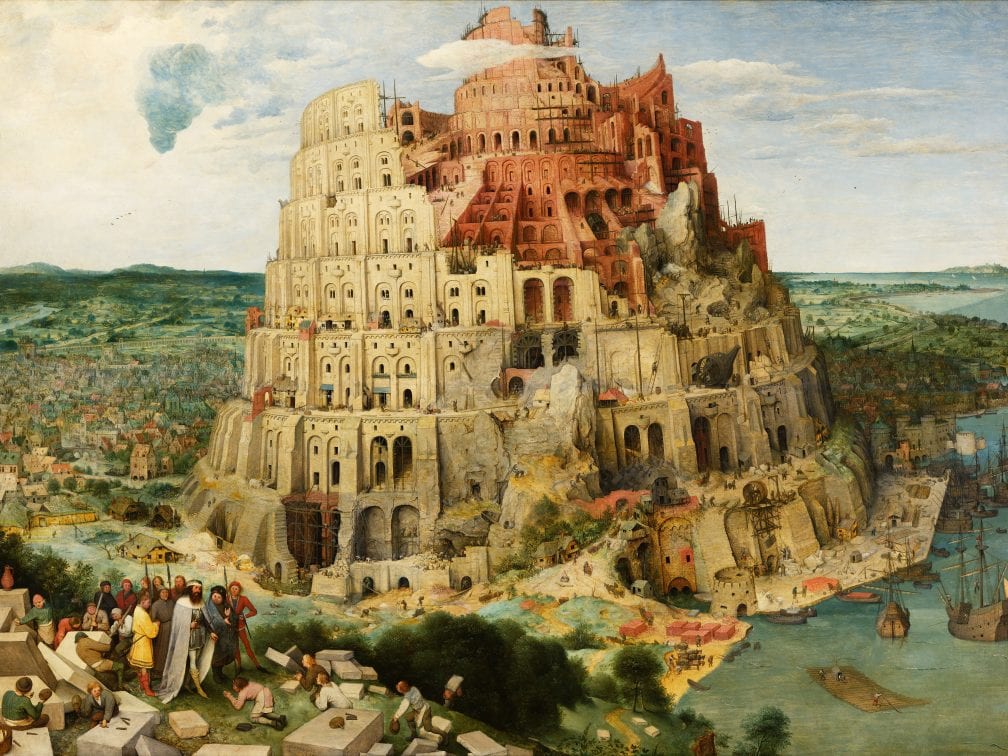

Friday – 7:00pm
Saturday – 2:00pm & 7:00pm
Sunday – 2:00pm#Lifeatmary pic.twitter.com/5w5MnEWk4K
We observe National Poetry Month (April) in the United States and Canada every year with an inquiry into changes in the (meaning of) definitions at the foundation of best practice literature; frequently the subject of sporty debate among experts writing codes and standards for the built environment of education communities.




Mass Challenge: The Socioeconomic Impact of Migration to a Scandinavian Welfare State by Tino Sanandaji** (Palgrave Macmillan, 2020): In this book chapter, Sanandaji discusses Sweden’s “unique” experiment with large-scale third-world immigration, which has shifted its image from a model society to one facing exaggerated but real challenges like social issues and exclusion. As a Swedish author, he provides a data-driven critique without explicit policy calls in the intro, but the broader work argues for controls on low-skilled migration to mitigate economic and integration failures.
And I’m tired and I don’t wanna sleep
I wanna have fun
It’s time for a good time 🎶🎶 pic.twitter.com/ZpcApYdpGn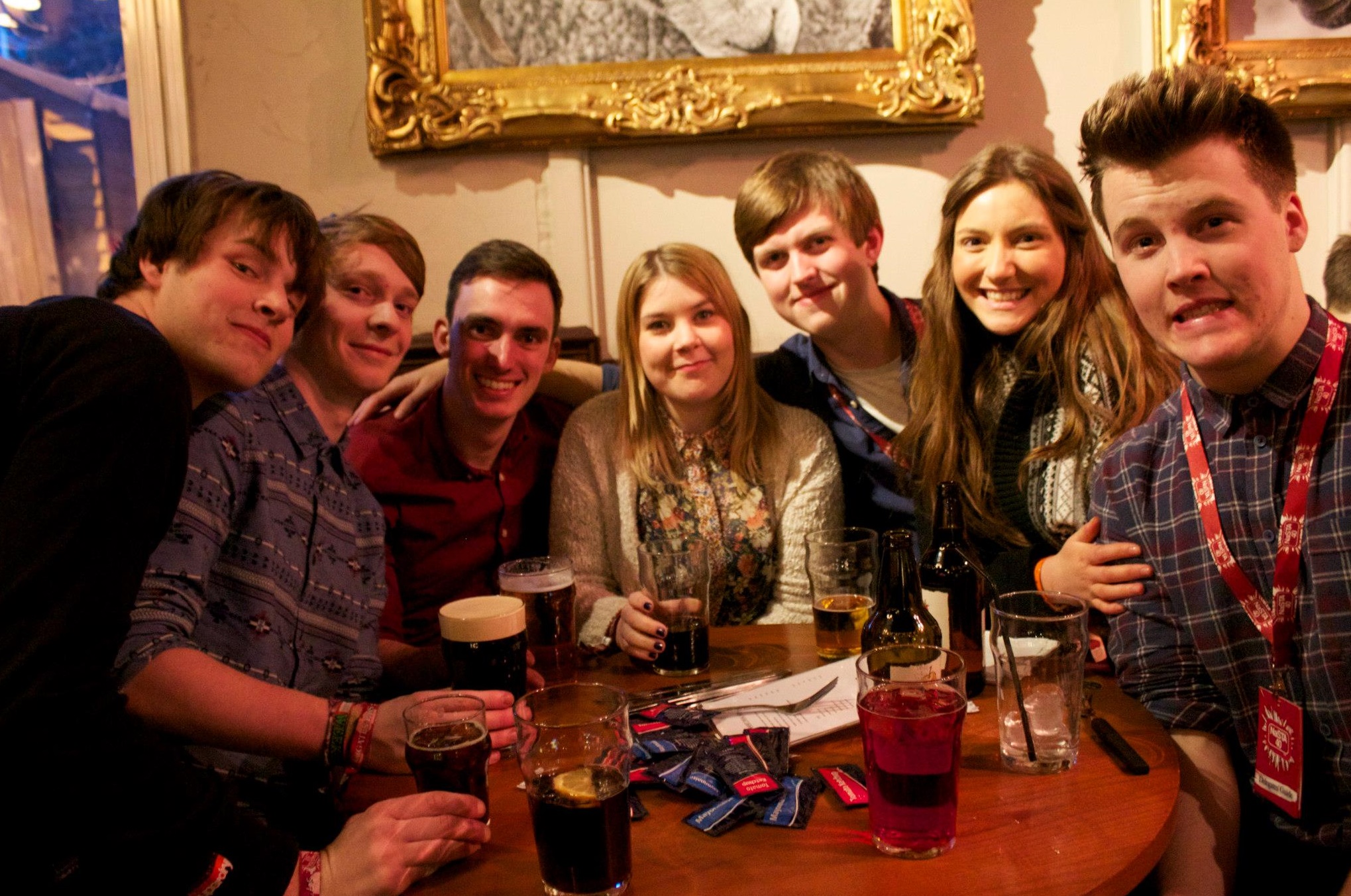
@DRKoncerthuset@uni_copenhagen pic.twitter.com/2tQqnNWVs7
#Veo2 pic.twitter.com/fyznNWl3Mt
THE GAME
LFGOOOOOOOOO
BLUE!!!!
💙💛〽️💛💙
The Team, The Team, The Team
Ride or die, until the wheels fall off!! #team145 #goblue #michigannation #thegame24 #beatosu #thosethatstay #smashball pic.twitter.com/rEpdJxL5pM
And I’m tired and I don’t wanna sleep
I wanna have fun
It’s time for a good time 🎶🎶 pic.twitter.com/ZpcApYdpGn
@DRKoncerthuset@uni_copenhagen pic.twitter.com/2tQqnNWVs7
#Veo2 pic.twitter.com/fyznNWl3Mt
THE GAME
LFGOOOOOOOOO
BLUE!!!!
💙💛〽️💛💙
The Team, The Team, The Team
Ride or die, until the wheels fall off!! #team145 #goblue #michigannation #thegame24 #beatosu #thosethatstay #smashball pic.twitter.com/rEpdJxL5pM





Featured in my Talking Pictures TV series, once arranged by composer Edward German in his ‘Old English Melody’ series and my regular vocal warm up song before a gig! Here’s Early One Morning’ #StGeorgesDay pic.twitter.com/WT0BK50bBD














On 9/11 the FDNY lost 343 of their own.
Not statistics. Sons, fathers, husbands from 75 firehouses across the five boroughs.
121 engine companies and 62 ladder companies answered the call. Every Rescue company in New York went in.
They knew the buildings were coming down and… pic.twitter.com/e4ArBUmfLq— Sassafrass84 (@Sassafrass_84) September 7, 2026

Scales Mound School District | Jo Daviess County Illinois 815
Oxford students after exams, 1989. pic.twitter.com/HQbO4r6dUE
— M (@0detobeauty) May 27, 2026
The calendar of Anglosphere educational settlements subtly shapes life of the mind, generally; and family and community life, specifically. Its cadence has roots in the cathedral schools and monastic learning communities of medieval Europe. Universities were not originally organized around modern “semesters.” Instead, the year followed the Christian liturgical calendar, agricultural seasons, food paths, daylight availability, and travel conditions.
In America educational calendars were nudged along by agricultural cycles. In the United Kingdom university calendars evolved into three major terms: Michaelmas in autumn, associated with arrival and beginnings; Hilary or Lent in winter, associated with discipline and study; and Trinity or Easter in spring, associated with examinations, outdoor rituals, music, rowing, gardens, and celebration.
Modern commencement traditions across the Anglosphere are descendants of medieval spring degree ceremonies. Academic gowns, hoods, processions, Latin phrases, formal dining, chapel music, and public recognition all preserve traces of the university as a scholarly guild and religious-civic community.
Before railways, electric lighting, and central heating, universities had to adapt to muddy roads, short winter days, limited candles, cold buildings, and agricultural obligations. Spring therefore became the natural season of culmination, reunion, athletic competition, courtship, and ceremony.
The medieval university was not merely a school but an educational settlement — a self-governing town of scholars, libraries, chapels, kitchens, workshops, residences, and dining halls. That settlement pattern survives in residential colleges, quadrangles, tutorial systems, common rooms, chapel choirs, and formal meals.
Anglosphere campuses retain this ancient emotional rhythm: autumn seriousness, winter inwardness, and spring release. That continuity helps explain why colleges and universities still feel culturally distinct from ordinary commercial society. (Relata: Gulliver Visits the Great Academy of Lagado)

We’re “organized” but not too organized; like the bookseller who knows where every book can be found.
at a conference where you don’t have to present
— Peyman Milanfar (@docmilanfar) April 4, 2025
#AcademicChatter #AcademicTwitter
Academics be like 👇 pic.twitter.com/6cpVEw3PVS
— Reviewer 2 (@GrumpyReviewer2) April 2, 2024





