This content is accessible to paid subscribers. To view it please enter your password below or send mike@standardsmichigan.com a request for subscription details.
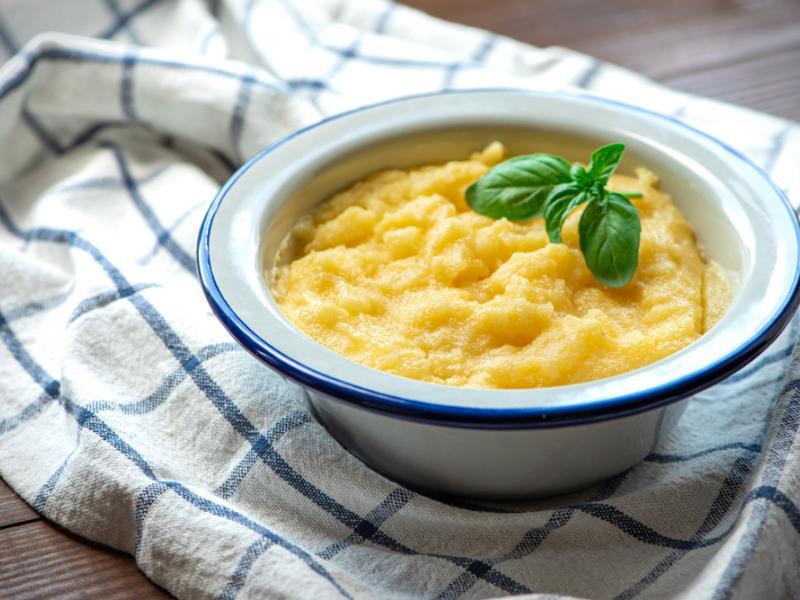
A classic side dish in northern and central Italy; not unlike mashed potatoes in America. Made from coarsely ground cornmeal slowly boiled in water or broth until it thickens into a creamy porridge. Historically a peasant food (originally made from grains like farro or chestnut before corn arrived from the Americas in the 16th century). It can be served soft and creamy—often enriched with butter, cheese like fontina, or topped with ragù, mushrooms, or sausages thereby making it a main course.
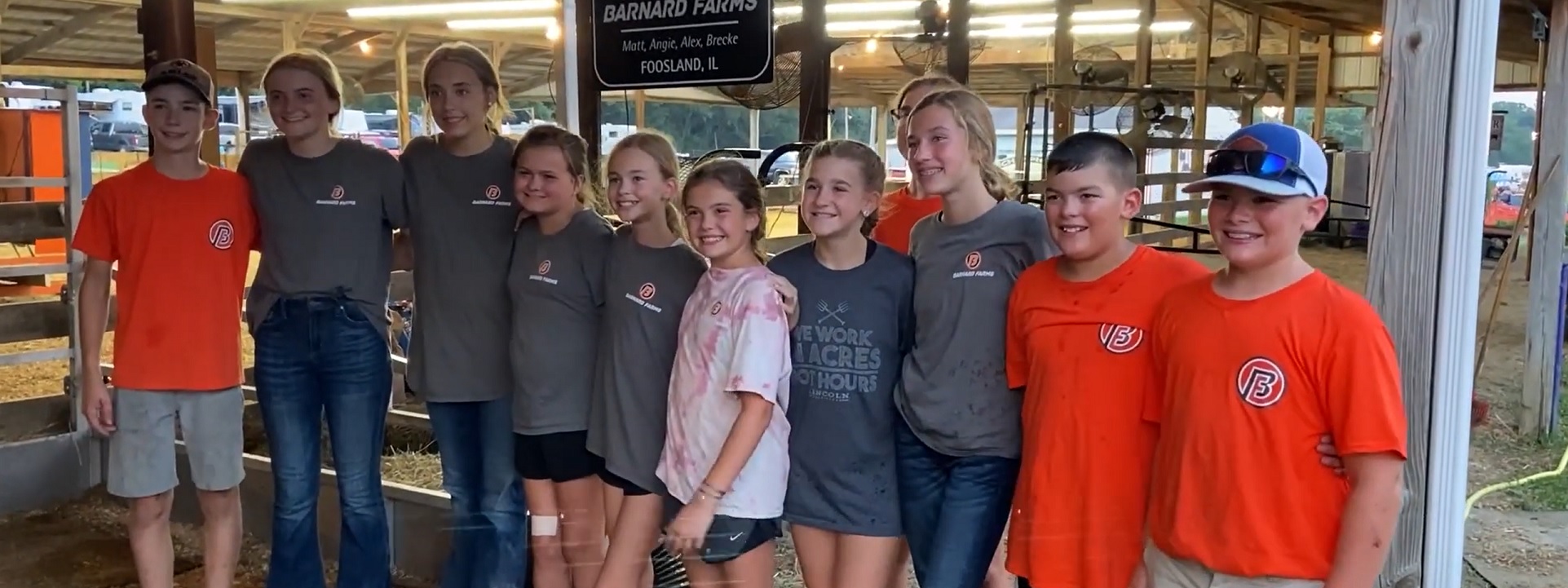
Happy #NationalFarmersDay! Thank you to the hard working Illinois farmers and ranchers who work to feed a hungry world.
Extension connects with ag workers every day to help solve problems by talking through options, collaborating on research, and exploring new technologies. pic.twitter.com/UiBAu9bD9a
There is no formal legal, academic, or regulatory criteria that permits an entity to officially call itself a “Latte University.”
The term is not a protected designation like “university” in many jurisdictions (where using “university” in a name often requires government accreditation, charter, or licensing to offer degrees and avoid misleading the public).
In practice, anyone can self-apply the ironic or humorous label “Latte University” because:
It is obviously not a genuine accredited higher-education institution with all the bells and whistles we cover at @StandardsMich.
It parodies elite or pretentious colleges by associating them with upscale coffee culture (e.g., pumpkin spice lattes, study-in-Starbucks vibes, or “basic” collegiate aesthetics).
The name appears jokingly in merchandise (e.g., “Pumpkin Spice Latte University” hoodies), social media bios, memes, or casual self-descriptions for coffee enthusiasts, remote workers, or satire.
No trademark, law, or accrediting body enforces restrictions on such whimsical usage, as long as it doesn’t falsely claim official degree-granting status or confuse consumers in commerce. It’s free speech + branding playfulness.
Switzerland has some unique ways of making and serving coffee. One notable tradition is the “Schümli-Pflümli,” a Swiss coffee drink that combines coffee with plum schnapps and whipped cream.
Here are a few other Swiss coffee specialties:
Café Crème: A popular Swiss coffee, it’s a large coffee similar to an Americano but typically served with a layer of crema on top.
Kaffee fertig: This is a coffee with added Schnaps or Kirsch (a type of cherry brandy), served hot and often enjoyed in the winter.
Luzerner Kafi: A regional specialty from Lucerne, this is a coffee with Schnaps and sugar, sometimes with a bit of whipped cream.
Zuger Kirschtorte Coffee: Inspired by the famous cherry cake from Zug, this coffee includes cherry liqueur and is often served with a small piece of the cake or similar dessert.
These coffee traditions highlight Switzerland’s blend of coffee culture with local flavors and ingredients.
— John Cabot University (@JohnCabotRome) June 12, 2024
🐰 🐰 Hey friends! Don’t forget to shout “Rabbit, rabbit!” today for a month of good vibes. But have you ever wondered where this bouncy tradition came from? https://t.co/8PGn9Qhdyopic.twitter.com/adAGShnwk7
— The Farmers’ Almanac (@FarmersAlmanac) July 31, 2024
Abstract: The amount of the electrical energy used for the interior lighting of medium and large buildings is generally considerable. The European Standard EN15193 was devised to establish conventions and procedures for the estimation of energy requirements of lighting in buildings by an energy performance numeric indicator. This methodology is based on the three derating factors that consider the influence of the daylight exploitation, the occupancy behavior and, if present, of a constant illuminance sensor. The factors are evaluated by a statistical approach on the basis of general reference data tabulated by the same Standard, not considering more detailed parameters of the control system that can impact severely in the effective energy savings. The Standard methodology appears extremely useful for a preliminary evaluation. For a more accurate evaluation, this paper suggests an improvement of the procedure that considers the effective operation time and occupancy behavior, the type of control and lamps, the number of control groups, the technique of modulation (dimming or switching), and the delay in turning off. The suggested procedure is compared with the Standard one to highlight the improvements.
Abstract: An advanced guideline is required to support the design of power supply systems for the performances of service continuity and power outage resilience, which are vital for hospital power systems and strategic operational structures (SOSs). The supply sources, the power system topology, and its management are fundamental in guaranteeing the electrical resilience of the power system. There is still no standard to evaluate the adequacy of hospital power systems for natural calamities and human-made disasters and, subsequently, for the ordinary operation. The World Health Organization recognizes it as a basic problem and at this aim has to claim clearly the status of SOSs for the hospitals, recommending to safeguard and plan the full operability. The hospital power systems need a local fortified electrical structure, designed for service continuity during fault events and managed to ensure an adequate dynamic response to any emergency and maintenance needs. The importance of the business continuity management is highlighted; it has to be qualified for a permanent design with both the in-op approaches for the initial installation of the system and its life cycle operation.
New update alert! The 2022 update to the Trademark Assignment Dataset is now available online. Find 1.29 million trademark assignments, involving 2.28 million unique trademark properties issued by the USPTO between March 1952 and January 2023: https://t.co/njrDAbSpwBpic.twitter.com/GkAXrHoQ9T