“There’s a new coffee shop in Cleveland, and it’s in John Marshall High School. The “Lawyers Café” serves lattes, healthy fruit smoothies, and Rising Star coffee, and it’s completely student-run. While they brew up the drinks as baristas and handle the budgets on the finance team, all of the scholars are getting hands-on job skills and learning what it takes to run their own small business.”
“In those vernal seasons of the year, when the air is calm and pleasant, it were an injury and sullenness against Nature not to go out, and see her riches, and partake in her rejoicing with heaven and earth.”
— John Milton, Tractate of Education
President George H. Bush’s prescient warning to graduates about the destabilizing dangers of “political correctness” to the American experiment in a constitutional republic. Escalated by the presidencies of Barack Obama and Joseph Biden; accelerated by multinational social media conglomerates, free speech — globally — remains challenged and threatens the return to the tribalism that doomed ancient civilizations. Higher education in America will have the heaviest hand in this transformation.
“Ironically, on the 200th anniversary of our Bill of Rights, we find free speech under assault throughout the United States, including on some college campuses. The notion of political correctness has ignited controversy across the land. And although the movement arises from the laudable desire to sweep away the debris of racism and sexism and hatred, it replaces old prejudice with new ones. It declares certain topics off-limits, certain expression off-limits, even certain gestures off-limits.”
Open every day since 2007: offering locally sourced coffee, teas, baked goods, and a welcoming space for studying or events. Across Linden Street from First Presbyterian Church of Ann Arbor, Angell Elementary School and footsteps away from Chi Omega and seven other sororities and fraternity houses on the oddly-shaped lot bounded by South University. Washtenaw and Hill Streets.
The University Lutheran Chapel in Ann Arbor, Michigan was designed by architect Glen Paulsen in 1959; a local Ann Arbor architect known for his modernist work and close ties to the University of Michigan community. The chapel is one of his most celebrated designs and is widely regarded as an outstanding example of mid-20th-century ecclesiastical architecture in the Midwest. The dramatic hyperbolic-paraboloid roof and the integration of natural light through colored glass strips are signature elements of the building.
His work often emphasized clean lines, structural expression (e.g., exposed concrete and steel), and integration with natural surroundings, influenced by his time with Eero Saarinen and his teaching roles at the University of Michigan and Cranbrook Academy of Art. While the University Lutheran Chapel (1959) in Ann Arbor exemplifies his ecclesiastical modernism with its hyperbolic-paraboloid roof, below is a curated list of his other key projects, drawn from biographical records, architectural archives, and historical surveys. In the fullness of time his private practice from 1958 to 1969 morphed into TMP (Tarapata-MacMahon-Paulsen, 1969–1977).
The University Lutheran Chapel in Ann Arbor, Michigan was designed by architect Glen Paulsen in 1959; a local Ann Arbor architect known for his modernist work and close ties to the University of Michigan community. The chapel is one of his most celebrated designs and is widely regarded as an outstanding example of mid-20th-century ecclesiastical architecture in the Midwest. The dramatic hyperbolic-paraboloid roof and the integration of natural light through colored glass strips are signature elements of the building.
His work often emphasized clean lines, structural expression (e.g., exposed concrete and steel), and integration with natural surroundings, influenced by his time with Eero Saarinen and his teaching roles at the University of Michigan and Cranbrook Academy of Art. While the University Lutheran Chapel (1959) in Ann Arbor exemplifies his ecclesiastical modernism with its hyperbolic-paraboloid roof, below is a curated list of his other key projects, drawn from biographical records, architectural archives, and historical surveys. In the fullness of time his private practice from 1958 to 1969 morphed into TMP (Tarapata-MacMahon-Paulsen, 1969–1977).
Saxbys Coffee at Montclair State University is a fully student-run experiential learning cafe located on the first floor of the Feliciano School of Business. Launched in April 2024 as part of Saxbys’ Experiential Learning Platform (ELP), it is designed for students, by students.Students handle every aspect of operations: baristas, food service, inventory, marketing, and daily management.
Each semester, a student serves as the Student Cafe Executive Officer (SCEO), gaining real-world entrepreneurial experience while earning academic credit and wages. This hands-on model supplements classroom learning, builds leadership skills, and boosts post-graduation success rates.
The cafe creates a vibrant campus hub with student-friendly pricing, all-day breakfast, and specialty drinks. It fosters community and practical business training in a supportive environment.
A delicate, floral spring drink featuring the subtle cherry-like aroma and slight saltiness of sakura (cherry blossoms). Made with steeped sakura tea or a flavored base, combined with steamed or frothed milk, and often sweetened or enhanced with syrup or powder for color and flavor. It’s lighter and more tea-forward than a coffee-based latte. Available hot or with ice at the UnCommon Grounds Cafe in the Neuberger Centennial Campus Center
The command issued by the character Captain Jean-Luc Picard in the television series “Star Trek: The Next Generation” finds its way into the archive of photographs of Nobel Laureates consorting with politicians at the University of Michigan and elsewhere.
Attendees of the Theoretical Physics Colloquium at the University of Michigan in 1929.
…”There’s not good math explaining forget the physics of it. Math explaining the behavior of complex systems yeah and that to me is both exciting and paralyzing like we’re at very early days of understanding you know how complicated and fascinating things emerge from simple rules…” — Peter Woit [1:16:00]
Since 1936 the Brown Jug has been the ancestral trough of generations of University of Michigan students and faculty — notably. Donald Glaser (inventor of the bubble chamber) and Samuel C. C. Ting (Nobel Laureate) whose offices at Randall Laboratory were a 2-minute walk around the corner from The Brown Jug. As the lore goes, the inspiration happened whilst watching beer bubbles one ordinary TGIF Friday.
I’m so excited to share that I will be joining the University of Wisconsin-Madison Department of Neurology as a Neuropsychologist this fall, with a special focus on neuro-oncology and epilepsy! #OnWisconsinpic.twitter.com/JuS1Von6AB
Located 15 minutes from Traverse City, this Laker alum and his family are celebrating their 10th season at Rove Winery this summer! 🍷🍇 Read about Creighton Gallagher ’06 and his journey to the vineyard here: https://t.co/lJ0eYlL7z7pic.twitter.com/iAXWXRuglO
Each semester, Trinity’s Education Department hosts the Educational Commissioning and Celebration. This special event recognizes the accomplishments of program completers. While surrounded by their family and friends, program completers are honored for their hard work,… pic.twitter.com/FBq0NCxSPe
— Trinity Christian College (@TrinityTroll) July 26, 2025
Participating in Christian customs—attending services, joining youth groups, observing holidays like Christmas and Easter, praying together, volunteering, or following familiar rituals—offers young people meaningful emotional support, even when they question or reject the supernatural elements of the Bible.
These practices create a powerful sense of belonging. Youth groups offer safe spaces to build friendships, receive mentorship from caring adults, and feel genuinely valued during the stresses of adolescence—identity questions, academic pressure, social anxiety, or loneliness.
Rituals and seasonal traditions bring comfort through predictability. Familiar patterns—group singing, shared meals, candle lighting, or annual celebrations—provide structure and a feeling of continuity in an uncertain world, helping reduce anxiety.
They also encourage reflection on values, a sense of purpose, and acts of kindness toward others. Helping in community service or supporting peers boosts self-esteem, resilience, and connection.
Research consistently shows that such involvement is linked to lower rates of depression, better coping skills, and higher life satisfaction—largely because of the social bonds, routines, and meaning these customs provide, regardless of literal belief in the miraculous.
Artisanal coffee departs from mass-market approaches and replaces it with emphasis on craftsmanship, quality, and attention to detail throughout the entire process—from cultivation to brewing. Key aspects:
» Artisanal coffee producers often prioritize high-quality beans. They might focus on specific varieties, regions, or even single-origin beans, showcasing unique flavors and characteristics.
» The roasting process is considered an art in itself. Artisanal coffee roasters carefully roast the beans to bring out the best flavors. They may experiment with different roasting profiles to achieve specific taste profiles.
» Unlike mass-produced coffee, artisanal coffee is often roasted in smaller batches. This allows for better quality control and the ability to pay closer attention to the nuances of each batch.
» Artisanal coffee is appreciated for its distinct flavor profile. Roasters and baristas might highlight tasting notes, aromas, and other characteristics that make each cup unique.
» Artisanal coffee shops or enthusiasts often explore various brewing methods, such as pour-over, AeroPress, or siphon brewing. These methods can be more time-consuming but are believed to extract the best flavors from the beans.
From the way the beans are ground to the water temperature during brewing, artisanal coffee enthusiasts pay attention to every detail to ensure a superior cup of coffee.
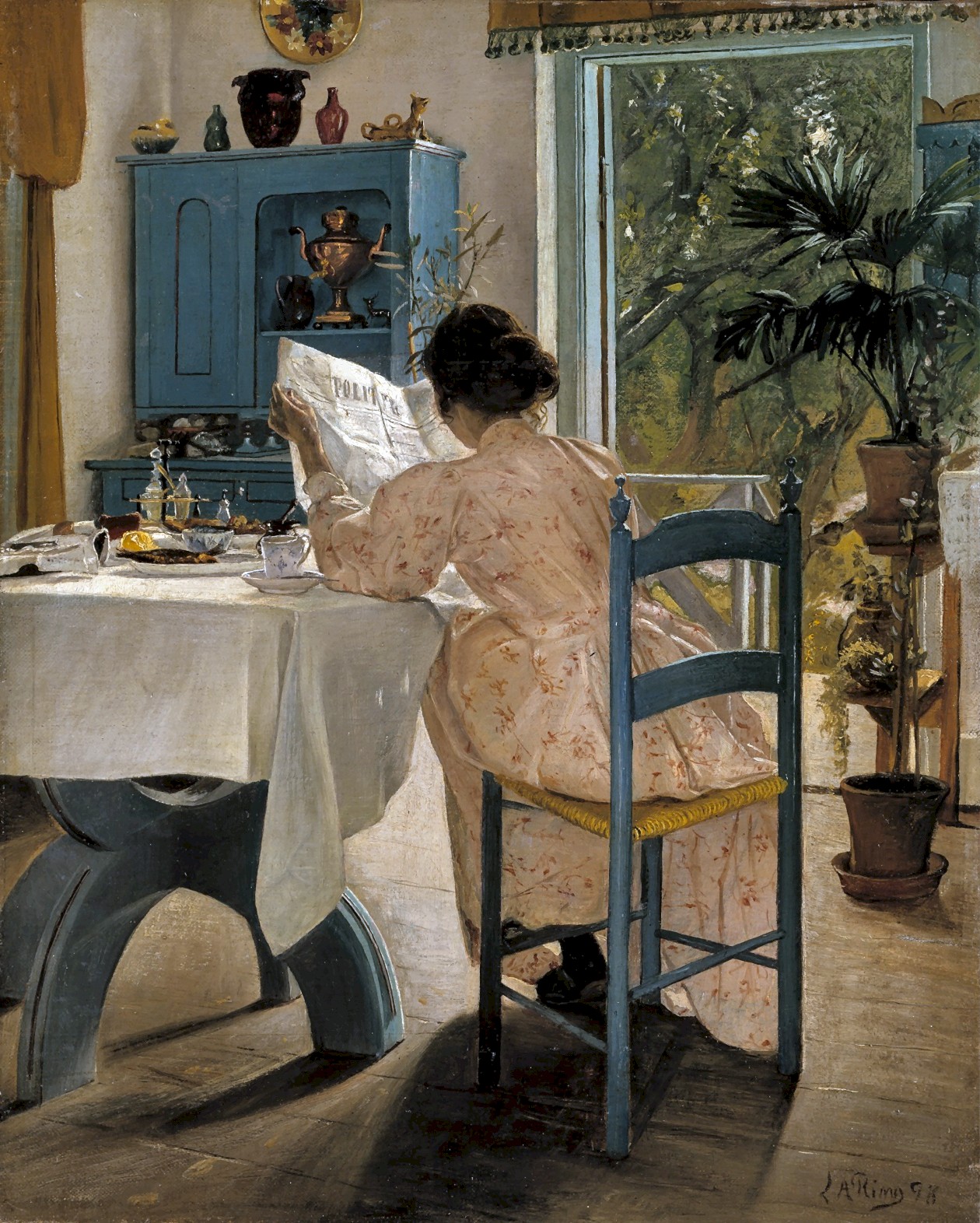
“I have often pleased myself with considering the two different scenes of life which are carried on at the same time in those different places of rendezvous, and putting those of the playhouse and the coffee-house together.”
“For decades, left-wing radicals patiently built a revolution in the shadows. Then suddenly, after the death of George Floyd, their ideas exploded into American life.
Corporations denounced the United States as a “system of white supremacy.” Universities pushed racially segregated programs that forced students to address their racial and sexual “privilege.” And schools injected critical race theory in the classroom, dividing children into “oppressor” and “oppressed.”
In this New York Times bestseller, Christopher F. Rufo exposes the inner history of the left-wing intellectuals and militants who slowly and methodically captured America’s institutions, with the goal of subverting them from within. With profiles of Herbert Marcuse, Angela Davis, Paulo Freire, and Derrick Bell, Rufo shows how activists have profoundly influenced American culture with an insidious mix of Marxism and racialist ideology. They’ve replaced “equality” with “equity,” subverted individual rights in favor of group identity, and convinced millions of Americans that racism is endemic in all of society. Their ultimate goal? To replace the constitution with a race-based redistribution regime, administered by “diversity and inclusion” commissars within the bureaucracy.
America’s Cultural Revolution is the definitive account of the radical Left’s long march through the institutions. Through deep historical research, Rufo shows how the ideas first formulated in the pamphlets of the Weather Underground, Black Panther Party, and Black Liberation Army have been sanitized and adopted as the official ideology of America’s prestige institutions, from the Ivy League universities to the boardrooms of Wal-Mart, Disney, and Bank of America. But his book is not just an exposé. It is a meticulously-researched and passionate refutation of the arguments of CRT—and a roadmap for the counter-revolution to come.”
“To be at home is to have a place in the world which is yours, where you are not a stranger and where you find the outlines of your identity. In the modern world, however, where the sense of home has been eroded by technology and bureaucracy, architecture can create a substitute for this sense, by defining spaces which answer to the dreams and memories of the people who live in them.” — Roger Scruton
New update alert! The 2022 update to the Trademark Assignment Dataset is now available online. Find 1.29 million trademark assignments, involving 2.28 million unique trademark properties issued by the USPTO between March 1952 and January 2023: https://t.co/njrDAbSpwBpic.twitter.com/GkAXrHoQ9T