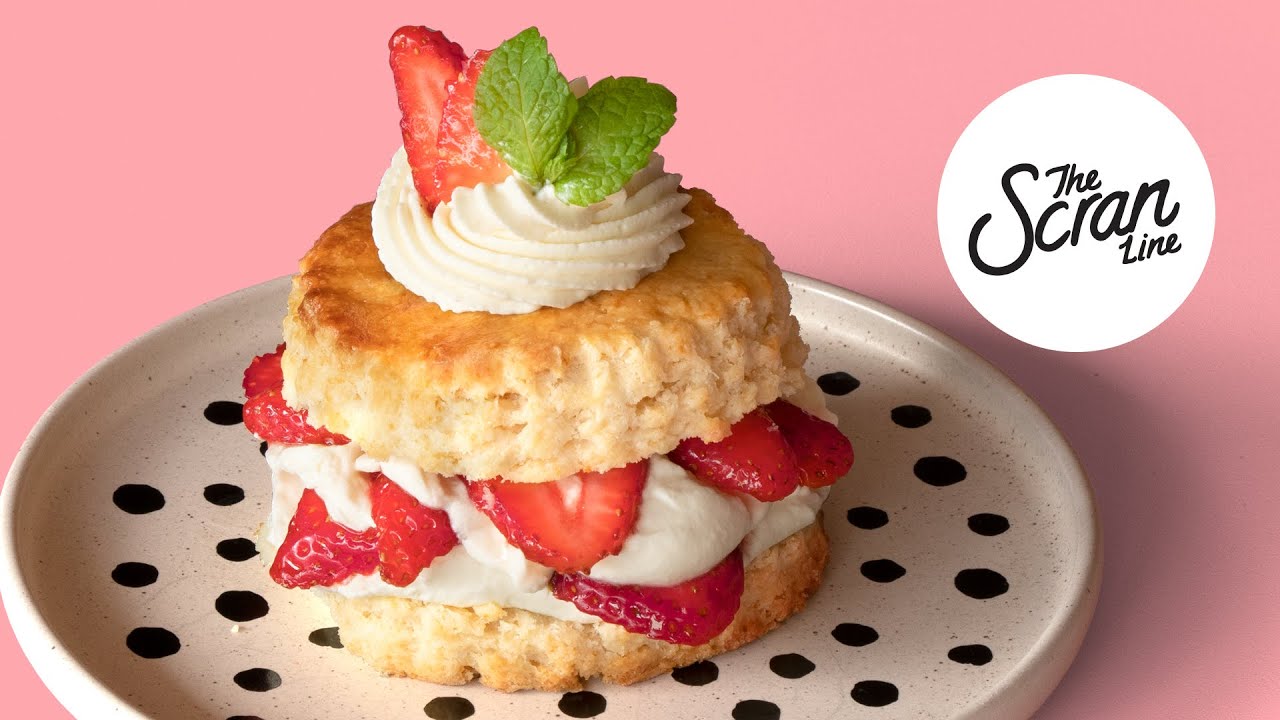
The Strawberry Shortcake Luncheon is an IU tradition that dates to 1947 when doctors & nurses would gather to enjoy a sweet treat + celebrate our health care professionals. 🍓🏥
In 2005 in Louisville, Kentucky, a volunteer discovered that many elementary school children relied on school meals and faced hunger over the weekend. While the organization serves children of every background and partners with public schools nationwide, its name reflects a simple faith-inspired conviction: caring for one’s neighbor through practical acts of compassion.
Local volunteers, congregations, civic groups and businesses work together to place child-friendly food into students’ backpacks each Friday, helping ensure they return to school on Monday nourished, ready to learn and reminded that their community has not forgotten them.
In 2012 the Royal Oak Rotary Club launched a branch in Michigan Oakland County Michigan.
US Department of Agriculture | § 58.2825 United States Standard for ice cream.
Southern ice cream often differs from ice cream in other regions of the U.S. in several ways, reflecting regional tastes, ingredients, and traditions:
Flavors and Ingredients:
Pecans and Pralines: Southern ice cream frequently incorporates pecans and pralines, which are popular in the region.
Peaches: Georgia is known for its peaches, so peach-flavored ice cream is a Southern staple.
Sweet Tea and Bourbon: These flavors are inspired by Southern beverages and can be found in ice creams.
Buttermilk: Buttermilk ice cream has a tangy flavor and is a nod to traditional Southern cooking.
Style and Texture:
Custard Base: Southern ice cream often uses a custard base, which includes egg yolks, giving it a richer and creamier texture compared to the typical Philadelphia-style ice cream that uses a simpler cream and sugar base.
Churned at Home: Traditional Southern ice cream is often made using hand-cranked ice cream makers, producing a different texture and incorporating more air, which can make it lighter and fluffier.
Historical Influence:
Cultural Heritage: The South’s diverse cultural heritage influences its ice cream, with recipes passed down through generations and reflecting African American, Native American, and European influences.
Popular Brands and Shops:
Regional Brands: Brands like Blue Bell, which originated in Texas, are particularly popular in the South and known for their classic Southern flavors.
Local Shops: Small, local ice cream parlors in the South often offer unique, homemade flavors that highlight regional ingredients and traditions.
These differences highlight the South’s rich culinary traditions and how they extend even to sweet treats like ice cream.
The choice of red, white, and blue in national flags often carries historical, cultural, and political significance. Here are some reasons why various nations have chosen these colors:
Historical Connections:
United States: The colors were chosen for their flag in 1777 and have been interpreted to symbolize valor (red), purity (white), and justice (blue). The colors were influenced by the British Union Jack.
France: The Tricolour flag adopted during the French Revolution represents liberty (blue), equality (white), and fraternity (red).
United Kingdom: The Union Jack combines elements from the flags of England (red and white), Scotland (blue and white), and Ireland (red and white).
Cultural and Political Significance:
Russia: The flag’s colors were adopted from the Dutch flag, symbolizing pan-Slavism (red for bravery, blue for faithfulness, and white for honesty).
Netherlands: The Dutch flag’s colors (originally derived from the Prince’s Flag) have historical roots, symbolizing the struggle for independence and liberty.
Czech Republic and Slovakia: Both countries use red, white, and blue to represent their Slavic heritage.
Influence and Inspiration:
Chile, Costa Rica, and Panama: These countries were influenced by the colors and symbolism of other flags (e.g., the French and American flags) during their independence movements.
Australia and New Zealand: Both countries incorporate the Union Jack in their flags, reflecting their colonial history with the United Kingdom.
Symbolism:
Croatia, Serbia, and Slovenia: The colors are traditional pan-Slavic colors, representing freedom and national unity.
Iceland and Norway: The colors reflect their historical and cultural ties to other Scandinavian countries.
The exact reasons can vary, but often the colors reflect a mix of historical alliances, cultural heritage, and political ideals.
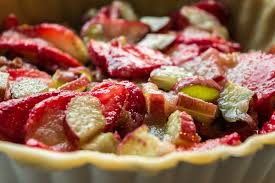
A dessert popular in the United Kingdom, where rhubarb has been cultivated since the 1600s, and the leaf stalks eaten since the 1700s. Besides diced rhubarb, it almost always contains a large amount of sugar to balance the intense tartness of the plant. The pie is usually prepared with a bottom pie crust and a variety of styles of upper crust.
In the United States, often a lattice-style upper crust is used. This pie is a traditional dessert in the United States. It is part of New England cuisine. Rhubarb has long been a popular choice for pies in the Great Plains region and the Michigan Great Lakes Region, where fruits were not always readily available in the spring
Beer was discovered accidentally as a result of grains being left in water and undergoing fermentation. The process of making beer involves converting the starches in grains (such as barley or wheat) into sugars, which are then fermented by yeast to produce alcohol. It was often consumed as a safer alternative to water, which could be contaminated with disease-causing pathogens.
Beer was also used in religious ceremonies and was considered a valuable commodity for trade. Over time, beer-making techniques spread throughout the world, and different regions developed their own unique styles of beer; now supported by artificial intelligence algorithms that analyze chemical compounds to identify specific flavor and aroma profiles for more nuanced flavors.
Abstract: The art of brewing beer has a long tradition that dates back to the very dawn of civilization. While the brewing process has been automated to a great extent, the creation of new beer recipes remains the result of creativity and human expertise with only minor support from software to validate chemical constraints. We collected a dataset of 157,000 publicly available recipes from all over the world and created a transformer-based model to support the creative process in brewing by suggesting new beer recipe templates. As a proof of concept, we crafted the IPA “Deeper” along a recipe generated by our model. Over 100 international newspapers and radio stations have reported on the first AI-crafted beer from Switzerland over the past few months. For the first time, this paper reveals the underlying pipeline architecture of eight transformer networks trained end-to-end that made this remarkable success possible.
FEECS, VSB-Technical University of Ostrava, Ostrava, Czech Republic
Abstract: In recent times, several metaheuristic algorithms have been proposed for solving real world optimization problems. In this paper, a new metaheuristic algorithm, called the Border Collie Optimization is introduced. The algorithm is developed by mimicking the sheep herding styles of Border Collie dogs. The Border Collie’s unique herding style from the front as well as from the sides is adopted successfully in this paper. In this algorithm, the entire population is divided into two parts viz., dogs and sheep. This is done to equally focus on both exploration and exploitation of the search space. The Border Collie utilizes a predatory move called eyeing.
This technique of the dogs is utilized to prevent the algorithm from getting stuck into local optima. A sensitivity analysis of the proposed algorithm has been carried out using the Sobol’s sensitivity indices with the Sobol g-function for tuning of parameters. The proposed algorithm is applied on thirty-five benchmark functions. The proposed algorithm provides very competitive results, when compared with seven state-of-the-art algorithms like Ant Colony optimization, Differential algorithm, Genetic algorithm, Grey-wolf optimizer, Harris Hawk optimization, Particle Swarm optimization and Whale optimization algorithm. The performance of the proposed algorithm is analytically and visually tested by different methods to judge its supremacy. Finally, the statistical significance of the proposed algorithm is established by comparing it with other algorithms by employing Kruskal-Wallis test and Friedman test.
CLICK HERE to order the complete article (Free public access)
…”Your children are not your children. They are the sons and daughters of Life’s longing for itself. They come through you but not from you, And though they are with you yet they belong not to you.
You may give them your love but not your thoughts, For they have their own thoughts. You may house their bodies but not their souls, For their souls dwell in the house of tomorrow,
The Great Lakes contain enough fresh water to cover the land area of the entire United States under 3 meters of water.
We collect 15 video presentations about Great Lake water safety and sustainability prepared by the 8 Great Lake border state colleges and universities and their national and international partners in Canada.
In a state whose land mass was formed by glaciers, has there been climate change in its 10,000 – 15,000 year past? Did the glaciers melt because of sport utility vehicles made in Detroit? We refer you to the Academy of Projectors described in Book Three of Jonathan Swift’s 1726 satire on academia in “Gulliver’s Travels”
When the wicked problems of peace and economic inequality cannot be solved, political leaders, and the battalions of servile administrative muckety-mucks who report to them, resort to fear-mongering about an imagined problem to be solved centuries hence assuming every other nation agrees on remedies of its anthropogenic origin. We would not draw attention to it were it not that large tranches of the global academic community are in on the grift costing hundreds of billions in square-footage for research and teaching hopelessness to our children and hatred of climate change deniers.
Before the internet is scrubbed of information contrary to climate change mania, we recommend a few titles:
New update alert! The 2022 update to the Trademark Assignment Dataset is now available online. Find 1.29 million trademark assignments, involving 2.28 million unique trademark properties issued by the USPTO between March 1952 and January 2023: https://t.co/njrDAbSpwBpic.twitter.com/GkAXrHoQ9T