




This content is accessible to paid subscribers. To view it please enter your password below or send mike@standardsmichigan.com a request for subscription details.
This content is accessible to paid subscribers. To view it please enter your password below or send mike@standardsmichigan.com a request for subscription details.

Central Dome of the Gallery des Machines Exposition Universelle de Paris | Louis Beroud (1889)
We find the United States education industry strengthening its voice in the global standards system with leadership provided by the International Association of Innovation Professionals (IAOIP); the US Technical Advisory Group Administrator for the French-inspired ISO TC 279 Innovation management covered here in the posts below. Of the 5300 colleges and universities in the US the seven that are members of the TAG at the moment are:
University of Minnesota
Arizona State University
Lone Star College
Nova Southeastern
Oral Roberts University
Texas A&M University
Florida Institute of Technology
CLICK HERE for the complete list.

We do not advocate in this standard but we track it along with about 20 of the 21,000 ISO standards. We mention it now because in tracking live public consultation notices we see opportunities that may interest other parts of the education industry — notably academic units and business schools; as well as the many technology transfer units in many research universities charged with generating licensing revenue. The landing page for the US TAG is linked below:
IAOIP and ISO TC279 – Innovation Management Technical Advisory Group
You are encouraged to communicate directly with Dr. Brett Trusko, President and CEO, International Association of Innovation Professionals, 4422 Castlewood Street, Suite 200, Sugar Land, TX 77479; phone: 925.858.0905; e-mail: brett@iaoip.org. We also refer this standard to the standing agenda of our Global and Human Resource teleconferences. See our CALENDAR for the next online meeting; open to everyone.
Issue: [17-303]
Category: Academics, International
Contact: Mike Anthony (mike@standardsmichigan.com), Christine Fischer (chrisfis@umich.edu)
*See “Education Enterprise” ISO Focus, January 2015, pp 33-37
LEARN MORE:
Breaking new ground with better innovation management https://t.co/wjjbJzx5dD
— Jose Alcorta (@AlcortaJose) February 22, 2019
Posted September 25, 2018
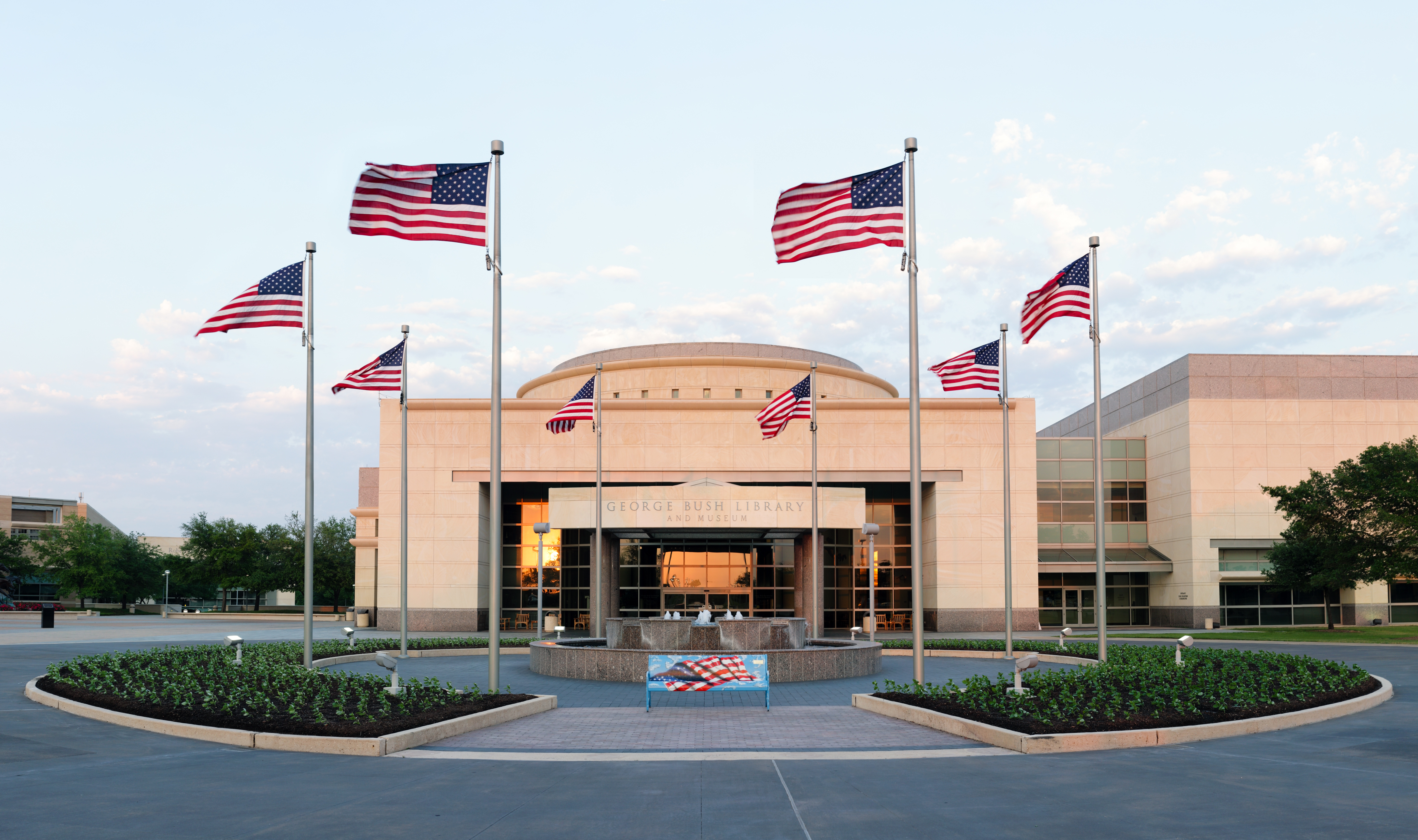
Texas A&M University
Recent communication from International Association of Innovation Professionals (IAOIP) indicates that it continues to welcome participation from the US education industry. There are many academic programs and faculty devoted to international studies and innovation that could offer students a front-row seat for the development of international technology policy.
We are happy to explain the opportunity to faculty and staff any day during our daily 11 AM online meetings. You may also communicate directly with Dr. Brett Trusko, President and CEO, International Association of Innovation Professionals, 4422 Castlewood Street, Suite 200, Sugar Land, TX 77479; phone: 925.858.0905; e-mail: brett@iaoip.org
Posted April 26, 2018
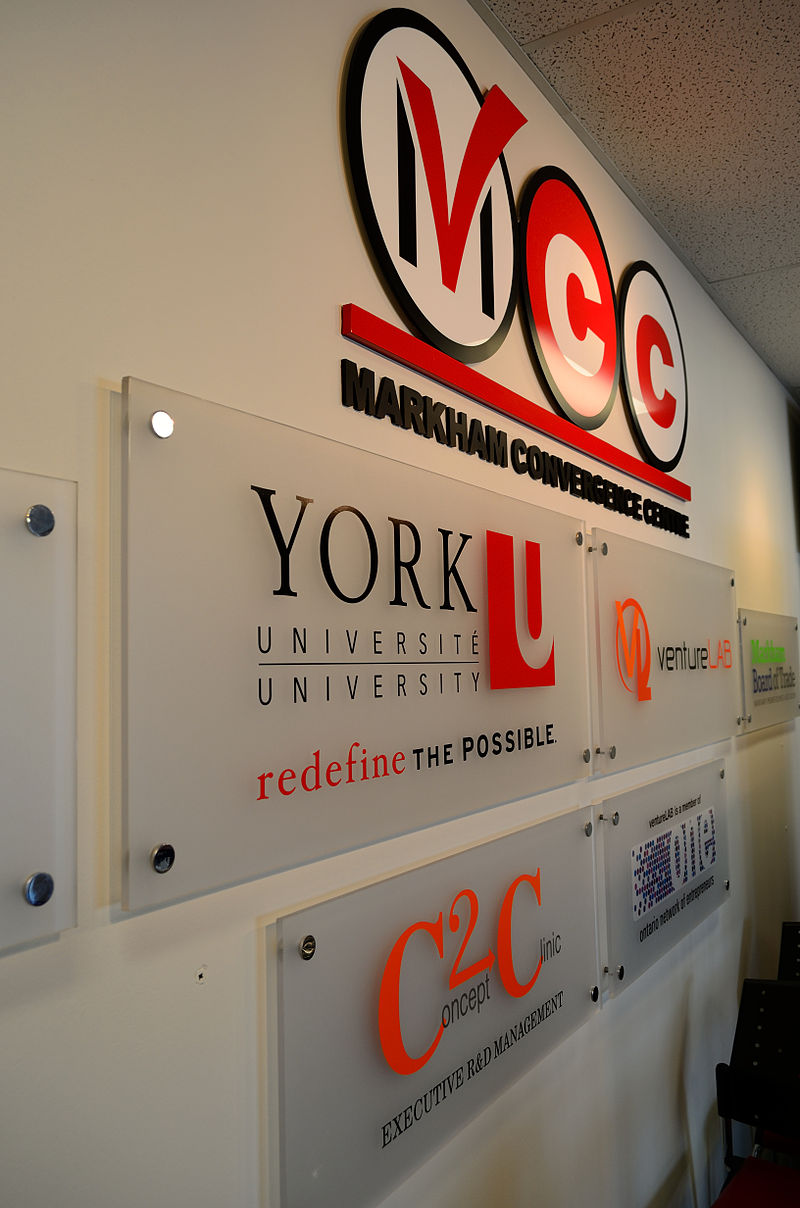
York University Markham Campus | Ontario, Canada
The International Association of Innovation Professionals (IAOIP) has submitted an Application for Accreditation for a new proposed U.S. Technical Advisory Group (TAG) to ISO TC 279 Innovation management and a request for approval as TAG Administrator. The proposed TAG intends to operate using the Model Operating Procedures for U.S. Technical Advisory Groups to ANSI for ISO Activities as contained in Annex A of the ANSI International Procedures.
Standards Michigan applauds any organization that assumes leadership in developing the US position on any international standard promulgated by Geneva Secretariats — the International Organization for Standardization, the International Telecommunications Union and the International Electrotechnical Commission. Few activities offer such an ideal front row seat at the world speeding toward us.
The education industry — notably the academic segment of the higher education industry — is notably absent in US leadership positions in international standards. We have been in this space as a user interest for a long time (See ABOUT) and the shortage of education industry engagement (especially the user-interest) has not gone is unnoticed or written about.* While the majority of the 1800-odd colleges and universities have academic programs that claim leadership in international and/or innovation studies, only Georgia Tech and the University of Texas Medical Branch are US TAG administrators for the American National Standards Institute; the US member body to the Geneva Secretariats.

Université de Genève
Comments are due May 14th. To obtain a copy of the TAG application or to offer comments, please contact: Dr. Brett Trusko, President and CEO, International Association of Innovation Professionals, 4422 Castlewood Street, Suite 200, Sugar Land, TX 77479; phone: 925.858.0905; e-mail: brett@iaoip.org by May 14, 2018 (please copy jthompso@ansi.org).
Issue: [17-303]
Category: Academics, International
Contact: Mike Anthony (mike@standardsmichigan.com), Christine Fischer (chrisfis@umich.edu)
*See “Education Enterprise” ISO Focus, January 2015, pp 33-37
December 17, 2017

Oral Roberts University
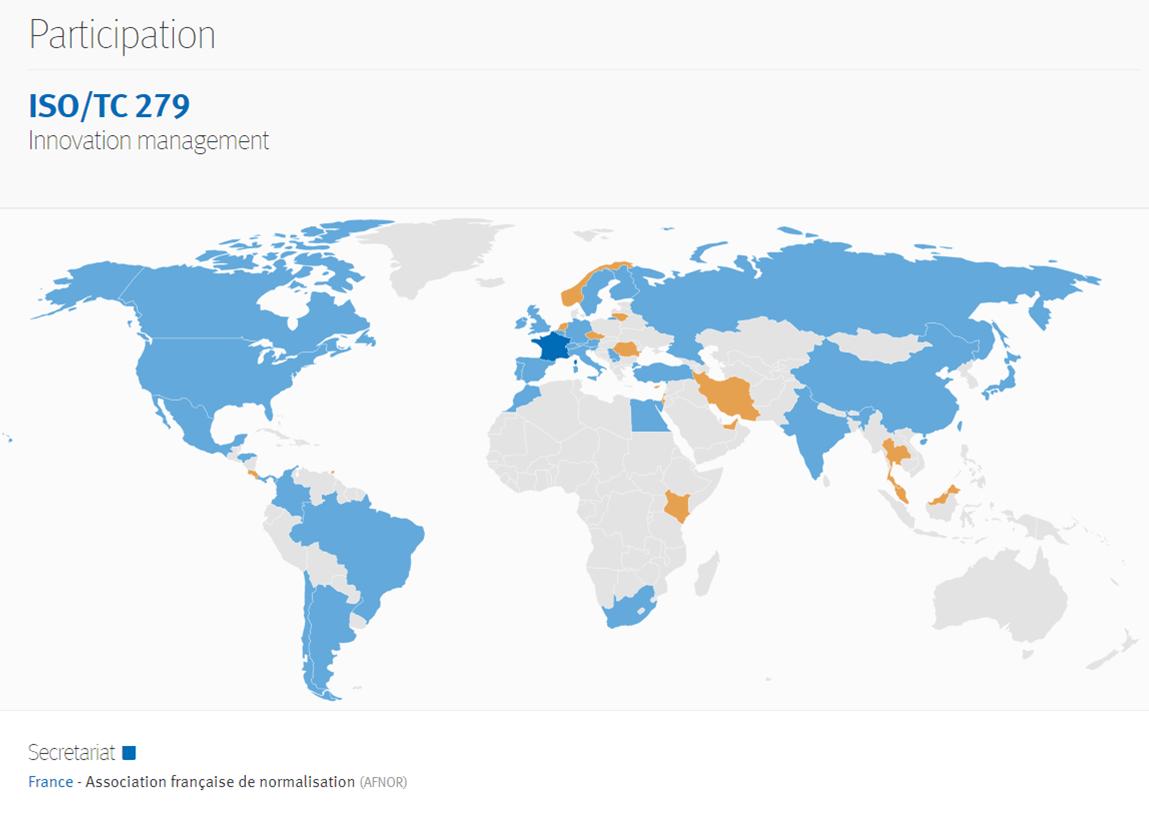
The American National Standards Institute (ANSI) has been informed that the American Society for Quality (ASQ), the current ANSI-accredited U.S. Technical Advisory Group Administrator (U.S. TAG) for the work of Technical Committee 279 of the International Organization for Standardization wishes to relinquish their role as U.S. TAG Administrator. The global Secretariat for TC 279 is the AFNOR Group — the national standardization body for France. The participating nations are shown in the map below:
(Click on Image for more information)
ISO/TC 279 operates under the following scope: Standardization of terminology tools and methods and interactions between relevant parties to enable innovation. From its Executive Summary:
“Yes we can innovate through standardisation. Standardization does not mean cloning. Standards on innovation management will allow organisations to share their best practices in innovation management. This will facilitate collaboration and also develop the capability to innovate and to bring innovations successfully to market. Today we face new challenges never met before by mankind: guaranteeing the sustainability of our activities in keeping our Earth habitable. Sustainable development (economic, ecologic, social sustainability) cannot be considered as ‘nice to have’, it is essential. It has to be viewed as a source of innovations, economic development and competiveness. It impacts innovation management and has to be taken into account at an early stage. Innovation is a key to global competitiveness and human or technological progress over the coming decades. Management Standards on innovation will break down the existing cultural, structural or organisational obstacles among/between organisations. These standards will provide best practices to support implementation of innovation policies as well in Small to Medium Enterprises (SMEs) as in worldwide groups including public institutions, universities, research centres or non-profit organisations. (Note in ISO, SME can mean Subject Matter Expert)
To achieve this goal the work will focus on a management system for innovation. To define this management system, experts will address: terminology, tools and methods such as but not limited to open innovation, design innovation, strategic intelligence, creativity management and also self-assessment of innovation management. Expectations for these standards are so high that there is no time to reinvent the wheel. TC 279 has to benefit from the previous work, including existing innovation literature, existing innovation standards, case studies, academic works, reports…) Summoning up the innovation community is a key factor. To make more and more stakeholders aware of this initiative communications action (communication kits, presence on social networks, press releases, events…) needs a special care.”
Organizations interested in serving as the U.S. TAG Administrator or participating on a U.S. TAG should contact ANSI’s ISO Team (isot@ansi.org)
Issue: [17-303]
Category: Academics, International
Contact: Mike Anthony (mike@standardsmichigan.com), Christine Fischer (chrisfis@umich.edu)

Monday | 16 June | Colloquium 15:00 UTC
Tuesday | 17 June | Colloquium 15:00 UTC
Wednesday | 19 June | Colloquium 15:00 UTC
Thursday | 20 June | Colloquium 15:00 UTC
Friday | 21 June | Colloquium 15:00 UTC
Saturday | 22 June
Sunday | 23 June
This content is accessible to paid subscribers. To view it please enter your password below or send mike@standardsmichigan.com a request for subscription details.
Is it a fact—or have I dreamed it—that, by means of electricity,
the world of matter has become a great nerve,
vibrating thousands of miles in a breathless point of time?
—Nathaniel Hawthorne, 1851 | The House of Seven Gables
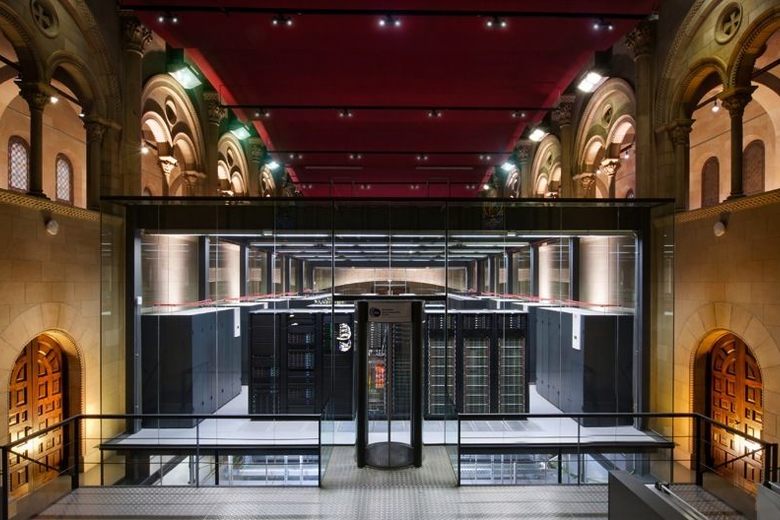
Universitat de Barcelona
Today we break form from our normal custom of assessing conceptual movement in stabilized safety and sustainability standards for education settlements and, instead, venture into a domain that will inform nearly everything we do; and with gathering pace.
We begin with the action among the experts in the organizations listed below:
Overall, the U.S. approach to quantum computing standards is multifaceted, involving federal agencies, industry consortia, academic research, and participation in international standard-setting bodies.

Andrej Karpathy (Stanford, OpenAI): Introduction to Large Language Models
Evensong is a traditional Anglican choral service that takes place in the late afternoon or early evening, typically around sunset. It is also known as Evening Prayer or Vespers.
The service consists of a series of prayers, psalms, canticles, and readings from the Bible, which are sung or chanted by a choir in four-part harmony. The choral music often features elaborate harmonies and complex counterpoint, and is usually accompanied by an organ or other instruments.
Evensong has been an important part of the British choral tradition for centuries, and is still performed in many Anglican churches throughout the UK and beyond. The tradition is particularly strong in Oxford and Cambridge, where the famous college choirs perform regular Evensong services that are open to the public.
The origins of Evensong can be traced back to the monastic offices of the Middle Ages, when monks would gather in the evening to sing the psalms and other prayers. Over time, these services evolved into more elaborate and musically sophisticated forms, which were eventually adopted by the Anglican Church and other Protestant denominations.
Today, Evensong is appreciated for its beauty and spiritual depth, as well as its contribution to the rich heritage of British choral music.
A message from Stritch President Dr. Dan Scholz
,_Willem_van_Herp_(I)_-_Saint_Francis_with_the_Animals.jpg)
“Saint Francis with the Animals” 17th Century / Lambert de Hondt
A Mass of Thanksgiving will be celebrated Friday, June 2, at 1 p.m. in the Kliebhan Conference Center. Following the Mass, select campus spaces will be open for people to visit from 2-5 p.m.
Please RSVP to communications@stritch.edu if you are planning to join us. pic.twitter.com/IQWmSZ2PGH— Cardinal Stritch University (@stritchu) May 30, 2023
This content is accessible to paid subscribers. To view it please enter your password below or send mike@standardsmichigan.com a request for subscription details.
New update alert! The 2022 update to the Trademark Assignment Dataset is now available online. Find 1.29 million trademark assignments, involving 2.28 million unique trademark properties issued by the USPTO between March 1952 and January 2023: https://t.co/njrDAbSpwB pic.twitter.com/GkAXrHoQ9T
— USPTO (@uspto) July 13, 2023
Standards Michigan Group, LLC
2723 South State Street | Suite 150
Ann Arbor, MI 48104 USA
888-746-3670
 |
 |
|
 |
 |
|
 |
 |