
Author Archives: mike@standardsmichigan.com
- Home
- Articles posted by mike@standardsmichigan.com (Page 203)

Green Smoothie
This content is accessible to paid subscribers. To view it please enter your password below or send mike@standardsmichigan.com a request for subscription details.

Spring Week 18 | April 28 – May 4

Monday | April 28 | Colloquium 15:00 UTC
Tuesday | April 29 | Colloquium 15:00 UTC
Wednesday | April 30| Colloquium 15:00 UTC
Thursday | May 1 | Colloquium 15:00 UTC
Friday | May 2 | Colloquium 15:00 UTC
Sammie Purcell (Vanderbilt University) & Maggie Adams (Belmont University)
Saturday | May 3
Sunday | May 4

Spring Week 12 | March 17 – 23
News:
AS&U March 13: $37.5 million renovation completed at San Diego elementary
Readings: US Law Schools Consider Eliminating US Constitution Law Class Requirement

Monday | March 17 | Colloquium 15:00 UTC
Tuesday | March 18 | Colloquium 15:00 UTC
Wednesday | March 19 | Colloquium 15:00 UTC
Thursday | March 20 | Colloquium 15:00 UTC
Friday | March 21 | Colloquium 15:00 UTC
Saturday | March 22
Sunday | March 23

King’s College Cambridge

Morning Has Broken
This content is accessible to paid subscribers. To view it please enter your password below or send mike@standardsmichigan.com a request for subscription details.

Leap Year

Click Image
The earth makes “one” trip around the Sun in approximately 365.2425 days. An additional day every four years helps synchronizes the calendar year with the solar year — assuming a perfect circle. Alas, the orbit is far from circular — it is elliptical and eccentric — thus confounding assumptions about climate change.
Today we revisit our earlier inquiries, readings and research with some consideration to how computer software deals with a leap year. Use the login credentials at the upper right of our home page.

Click Image

Edge Case: Leap Year
Programming languages face several challenges when dealing with leap years, primarily because leap years don’t follow a simple pattern and can vary depending on the calendar system being used. Some of the challenges include:
Algorithm Complexity: Writing algorithms to accurately determine leap years can be complex due to the various rules governing leap years in different calendar systems. For instance, the Gregorian calendar, which is the most widely used calendar system, has different rules than other systems like the Julian calendar.
Handling Calendar Systems: Some programming languages have built-in libraries or functions to handle leap years, but they may not support all calendar systems. Developers need to ensure that the language’s built-in functions or libraries accurately handle leap years according to the desired calendar system.
Cross-Platform Consistency: Different platforms and programming languages may implement leap year calculations differently, leading to inconsistencies when working with date and time data across different systems.
Localization: Some calendar systems used in various regions have different rules for leap years. Programming languages may need to support localization to handle these differences accurately.
Performance: Implementing leap year calculations efficiently can be challenging, especially when dealing with large datasets or frequent date/time manipulations. Optimizing leap year calculations for performance without sacrificing accuracy is important in high-performance applications.
To address these challenges, programmers often rely on built-in date and time libraries provided by programming languages or use third-party libraries specifically designed to handle calendar-related calculations accurately and efficiently. Additionally, thorough testing and validation of date-related logic are essential to ensure correctness, especially in critical applications.

In Python, leap years can be accounted for using the calendar module or by writing custom logic. The calendar module provides a function called isleap() to check if a given year is a leap year.
Here’s an example of how you can use the calendar module to check if a year is a leap year:
import calendar
year = 2024
if calendar.isleap(year):
print(f”{year} is a leap year.”)
else:
print(f”{year} is not a leap year.”)
Alternatively, you can write custom logic to determine if a year is a leap year. The logic for determining leap years is as follows:
-
- If a year is evenly divisible by 4, it is a leap year.
- However, if the year is evenly divisible by 100, it is not a leap year, unless:
- The year is also evenly divisible by 400, in which case it is a leap year.
Here’s an example of how you can implement this logic in Python without using the calendar module:
def is_leap_year(year):

if year % 4 == 0:

if year % 100 == 0:

if year % 400 == 0:

return True

else:

return False

else:

return True

else:

return Falseprint(f”{year} is a leap year.”)
else:
print(f”{year} is not a leap year.”)
Looking back at 2023 @mikefiedler discovered some impressive metrics that we want to share! @fastly #PyPI #pytho pic.twitter.com/EXfWwduWA9
— Python Package Index (@pypi) February 14, 2024

Ingress
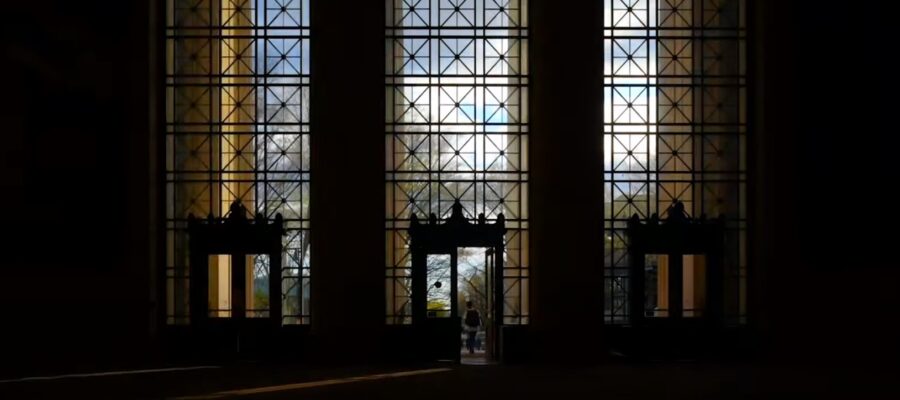
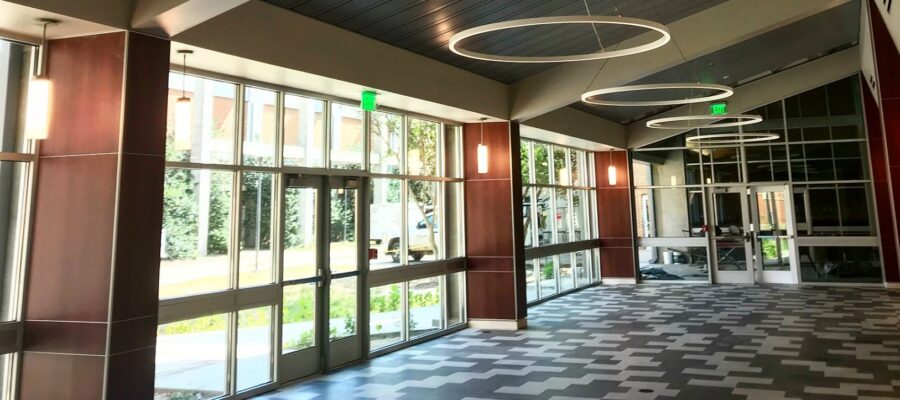

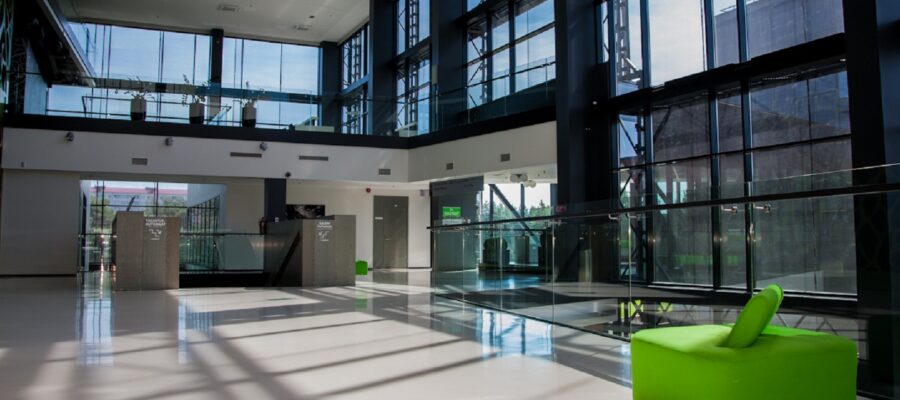

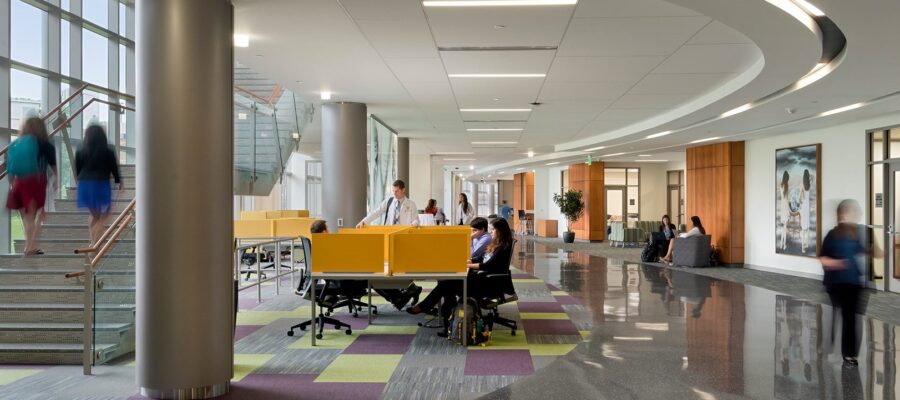
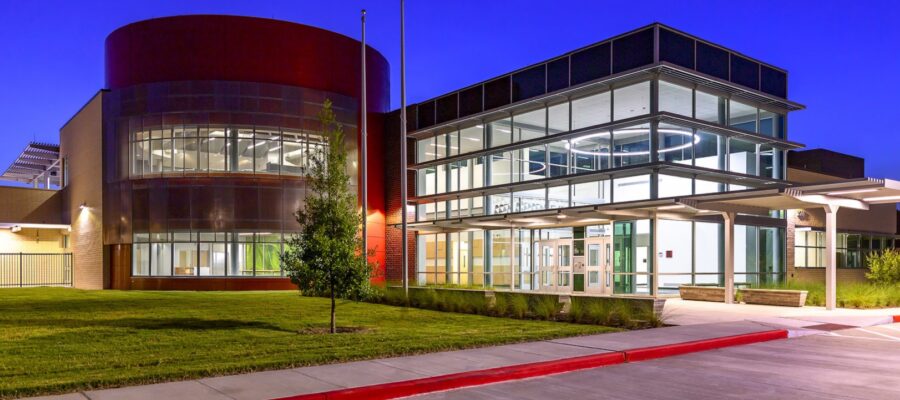

We have shouted from the mountaintops — beginning in the 2002 National Electrical Code and later in the International Building Code — that “ingress” concepts (the opposite of the canonical term “egress”; meaning the way INTO a building during an emergency) should become part of the vocabulary when exploring best practice concepts for security in education settlements.
Alas, so far without success. Evidently, the term “ingress” has been appropriated by a variant — accessibility — which re-directs the discussion toward the American with Disabilities Act?
What about people who are not disabled who seek to enter a building?
We cite a 1981 study, sponsored by what is now the National Institute of Standards and Technology — Crowd ingress to Places of Assembly: Summary and Proceedings of an Experts’ Workshop –– to enlighten understanding how ingress is different from the term access.
We maintain this topic on all of our Security related colloquia; hosted on days that appear on our CALENDAR. Use the login credentials at the upper right of our home page.
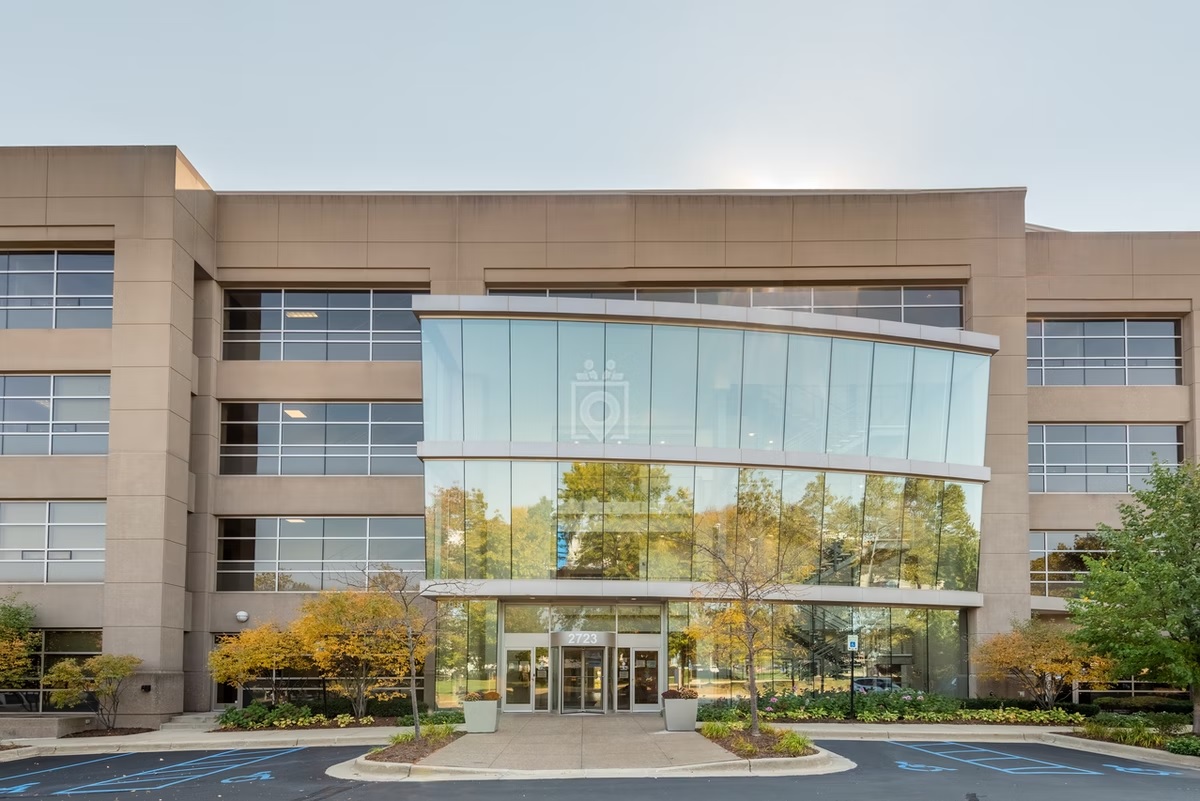
Entrance door to Standards Michigan Ann Arbor office




Chicken and Dumplings


“The Liberals are Coming, and They’re Bringing Fancy Coffee” https://t.co/XykfCFYZgVhttps://t.co/exHU6TR2h9
America is changed by flight from miserable Blue States to better Red States—only to import the policies that created the misery they fled from in the first place. pic.twitter.com/OaVVgrTxJr— Standards Michigan (@StandardsMich) October 31, 2022
New update alert! The 2022 update to the Trademark Assignment Dataset is now available online. Find 1.29 million trademark assignments, involving 2.28 million unique trademark properties issued by the USPTO between March 1952 and January 2023: https://t.co/njrDAbSpwB pic.twitter.com/GkAXrHoQ9T
— USPTO (@uspto) July 13, 2023
Standards Michigan Group, LLC
2723 South State Street | Suite 150
Ann Arbor, MI 48104 USA
888-746-3670
DIRECTIONS
 |
 |
|
 |
 |
|
 |
 |