
This content is accessible to paid subscribers. To view it please enter your password below or send mike@standardsmichigan.com a request for subscription details.
University of California System Net Position 2025: $11.06B
Retirement System Financial Report 2024-2025
Annenberg School for Communication Building
The Annenberg family fortune, rooted in the gritty world of early 20th-century publishing, was transformed from controversial origins into a respected legacy through strategic and generous philanthropy, particularly at the University of Southern California.
Moses Annenberg built his wealth in the 1920s and 1930s through horse-racing publications like the Daily Racing Form, which served the gambling industry, and newspapers such as The Philadelphia Inquirer. His 1939 tax evasion conviction cast a long shadow. Walter Annenberg inherited and expanded this empire, launching TV Guide and Seventeen magazine before selling his holdings for billions in 1988.
Walter began “cleaning” the family name decades earlier. In 1971–1972, he donated $8 million to establish the Annenberg School for Communication at USC. Subsequent gifts, including over $100 million from the Annenberg Foundation and Wallis Annenberg’s $50 million lead gift for Wallis Annenberg Hall in 2014, brought the family’s total contributions to USC above $350 million.

These investments in education, communication, and public service reframed the Annenbergs as visionary benefactors. By attaching their name to gleaming campus buildings and cutting-edge programs, they distanced the fortune from its racing-and-tabloid roots and aligned it with knowledge, ethics, and civic good. In this way, philanthropy did not merely spend wealth—it laundered and elevated it into enduring institutional prestige.
“University of California System makes bold commitment to 100 percent clean electricity”
USC Facilities Planning & Management
“University of Southern California – Jumping off the High Dive!”@USC_Athletics @USCswim
print(“Water”)https://t.co/xVyyOlBmTP pic.twitter.com/C63PG9GQKQ— Standards Michigan (@StandardsMich) September 3, 2022
This content is accessible to paid subscribers. To view it please enter your password below or send mike@standardsmichigan.com a request for subscription details.
Technical committees of the International Code Council synchronize best practice discovery processes with the Centers for Medicare & Medicaid Services using this matrix, linked here without comment. For more information contact Kimberly Paarlberg (kpaarlberg@iccsafe.org).
ICC KTAGS Group B Existing Hospitals
LEARN MORE:
Ensuring compliance with Life Safety and Health Care Facilities codes
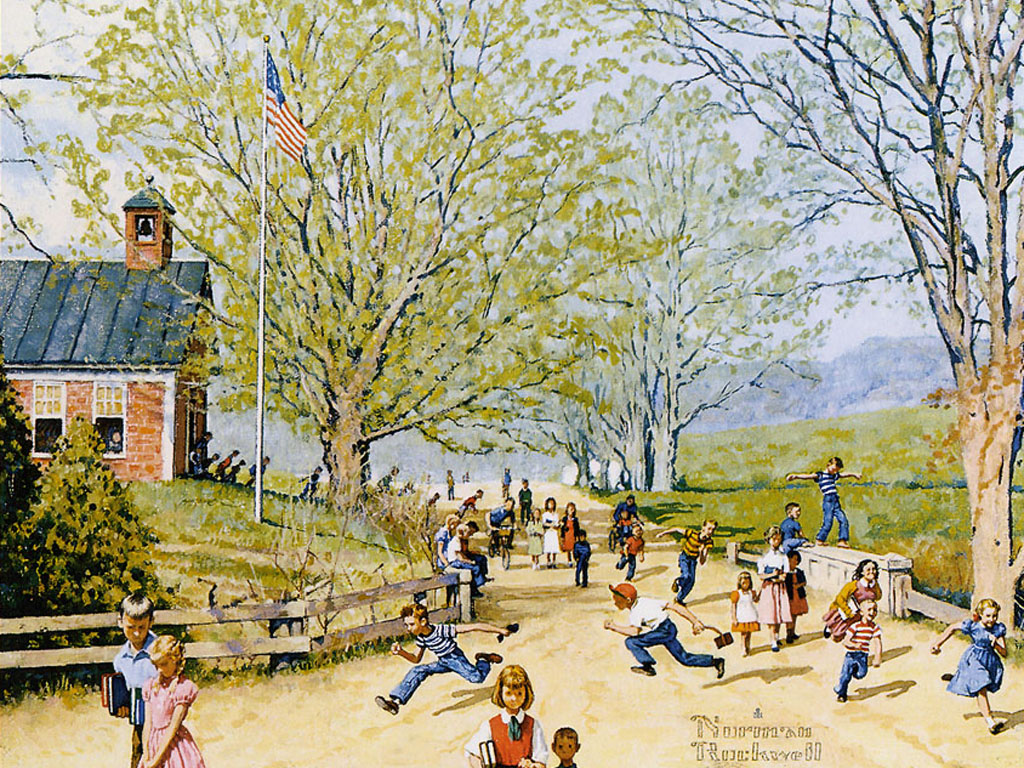
Indiana girls like this are the backbone of America pic.twitter.com/FCJu7IzcL5
— TastefulLindy (@LindyTasteful) January 1, 2026
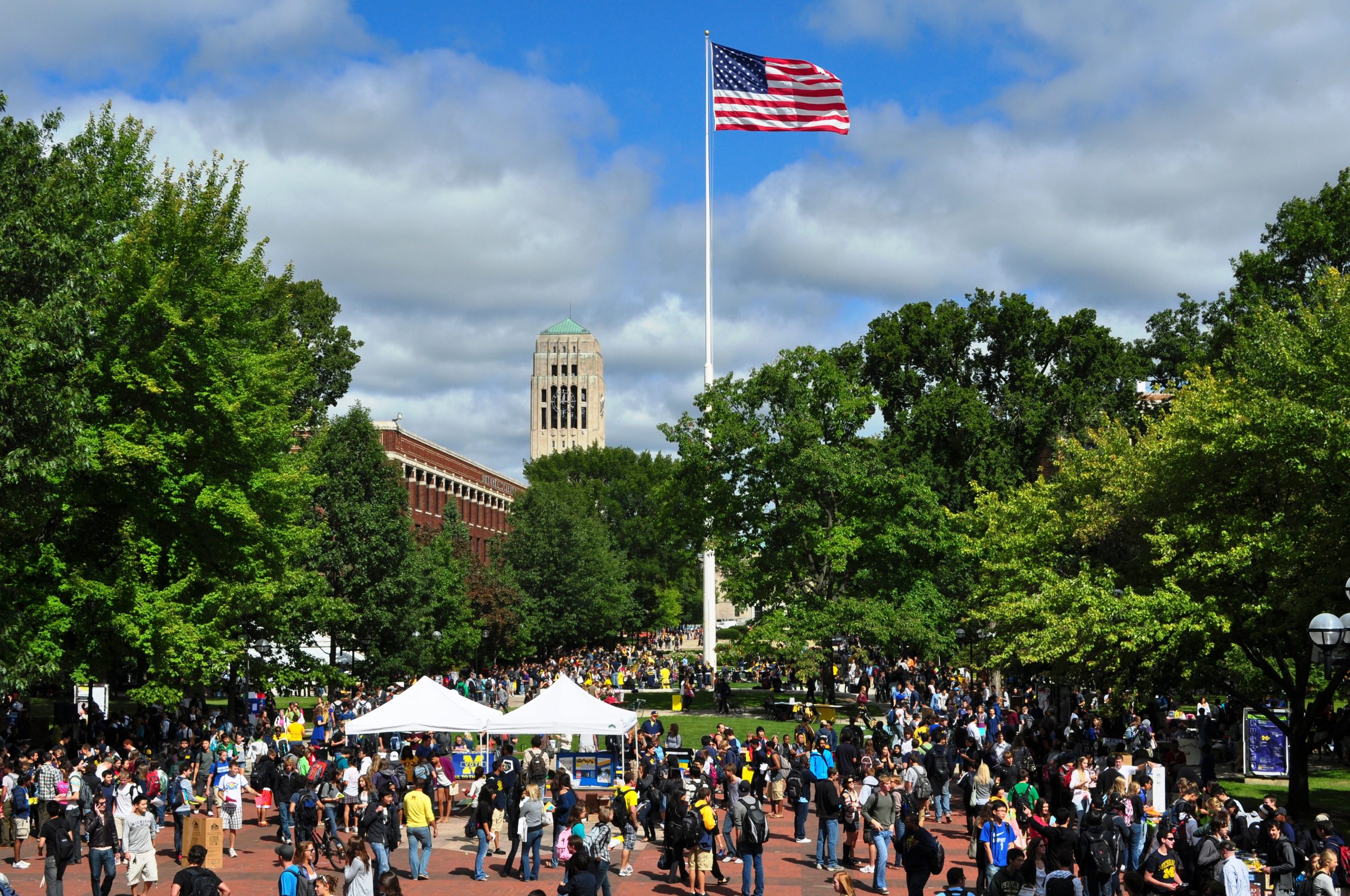
Hard to beat Michigan summers
Look at all that asparagus 🫠 pic.twitter.com/8YUCudd6XB
— Chelsea (@ChelsElaina) May 31, 2026
This content is accessible to paid subscribers. To view it please enter your password below or send mike@standardsmichigan.com a request for subscription details.
| This hymn is a celebration of God’s creation and the beauty of nature, and it has become a popular choice for services that focus on gratitude and thanksgiving. |
Hymn written by Folliott S. Pierpoint, an English poet and hymnist; published in 1864 and sung to the tune “Dix”, which was composed by Conrad Kocher in 1838.
For the beauty of the earth, For the beauty of the skies, For the love which from our birth Over and around us lies,
Refrain: Lord of all, to thee we raise This our joyful hymn of praise.
For the beauty of each hour Of the day and of the night, Hill and vale, and tree and flower, Sun and moon, and stars of light,
(Refrain)
For the joy of human love, Brother, sister, parent, child, Friends on earth and friends above, For all gentle thoughts and mild,
(Refrain)
For thy church that evermore Lifteth holy hands above, Offering up on every shore Her pure sacrifice of love,
(Refrain)
For thyself, best Gift Divine, To the world so freely given, For that great, great love of thine, Peace on earth, and joy in heaven. (Refrain)
Financial Statement: An apparent CA$40.193 shortfall | National Building Code of Canada
Dal Student Life: Our Favorite Coffee Shops
Sam Harris: Take Back Control Of Your Mind
This is what Canadians built before the country went insane pic.twitter.com/iZ5xZiMJxH
— Jeremy Wayne Tate (@JeremyTate41) February 2, 2024
David M. Buss
1991: University of Michigan, Ann Arbor, Michigan
Research by more than 50 scientists studying more than 10,000 individuals inhabiting 33 countries, six continents, and five islands supports the hypothesis that women have evolved mate preferences for men who show cues of resource possession or resource acquisition potential. Smuts’ (1991) apparent view that these species-typical preferences do not exist is contravened by the scientific evidence. Repeated assertions that “behaviors depends on context” do not illuminate our understanding in the absence of specifying which behaviors, which contexts, and which evolved mechanisms are activated by the relevant contextual input. Progress in the study of evolution and human behavior depends on using key terms in consensually defined rather than idiosyncratic ways, on distinguishing evolved psychological mechanisms from manifest behavior, and on giving greater weight to cumulative scientific evidence than to subjective impressions.
Robert W. Smuts (often cited as R.W. Smuts), a researcher affiliated with the Evolution and Human Behavior Program at the University of Michigan at the time.In 1991, David M. Buss published a paper titled “Do women have evolved mate preferences for men with resources? A reply to Smuts” in Ethology and Sociobiology (Vol. 12, Issue 5, pp. 401–408). Context of the Exchange:
Note: This is not Barbara B. Smuts (the prominent primatologist), who is a different person. This exchange is a classic example of early 1990s debates in evolutionary psychology about mate preferences.
New update alert! The 2022 update to the Trademark Assignment Dataset is now available online. Find 1.29 million trademark assignments, involving 2.28 million unique trademark properties issued by the USPTO between March 1952 and January 2023: https://t.co/njrDAbSpwB pic.twitter.com/GkAXrHoQ9T
— USPTO (@uspto) July 13, 2023
Standards Michigan Group, LLC
455 East Eisenhower Parkway, Suite 300
Ann Arbor, MI 48108 USA
888-748-3670