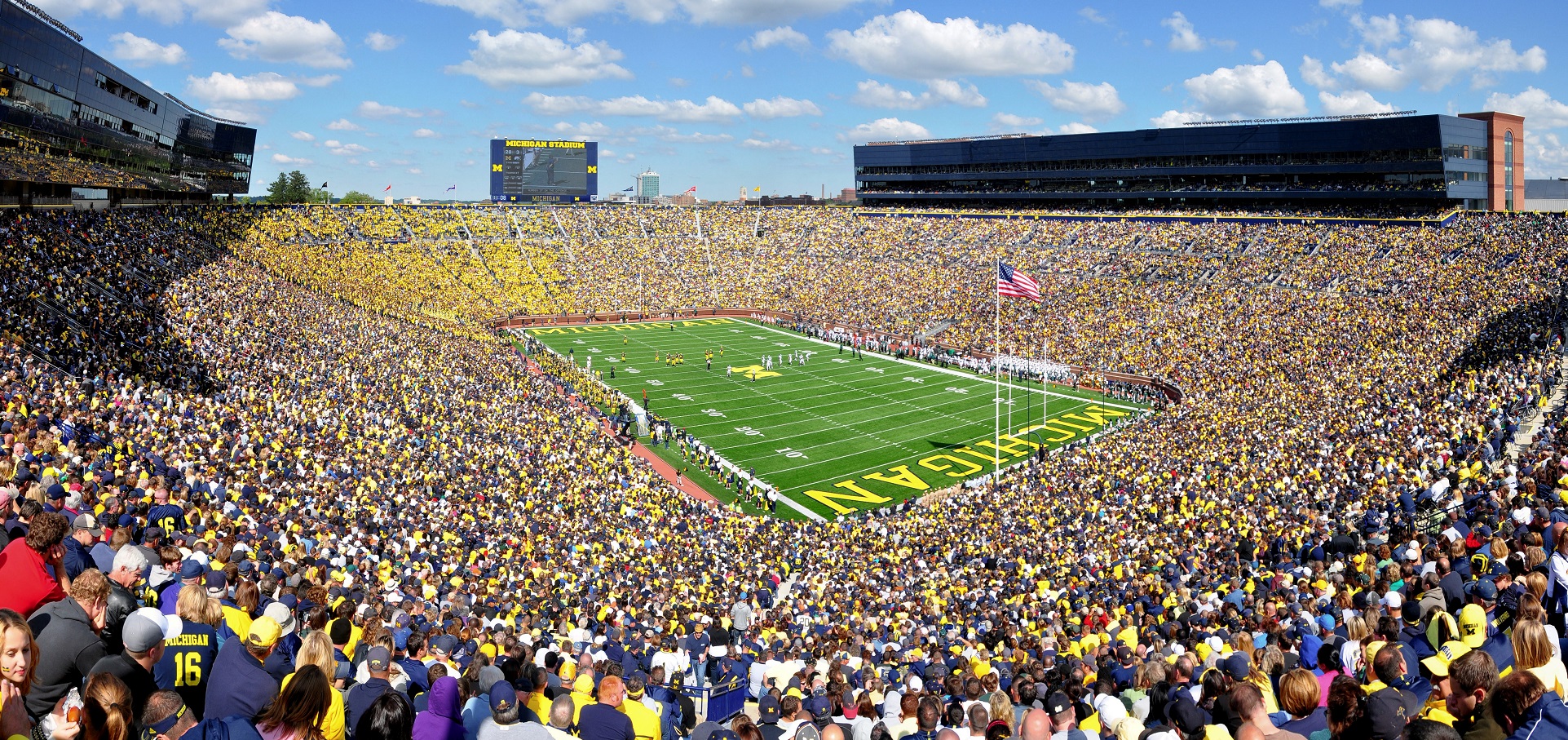
Playing field turf (natural or artificial) for a regulation U.S. football field, including the end zones, measures 360 feet long and 160 feet wide is 6,400 square feet (5,350 square meters)
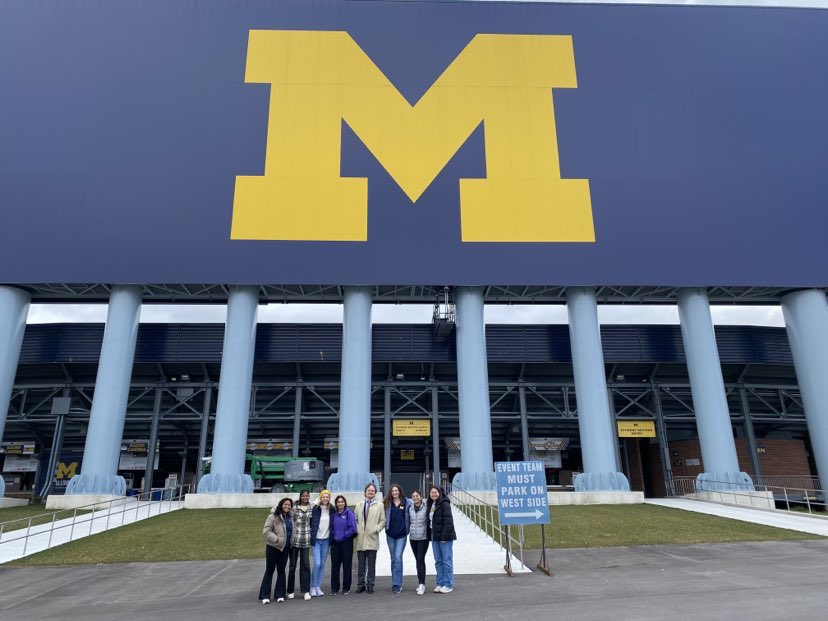
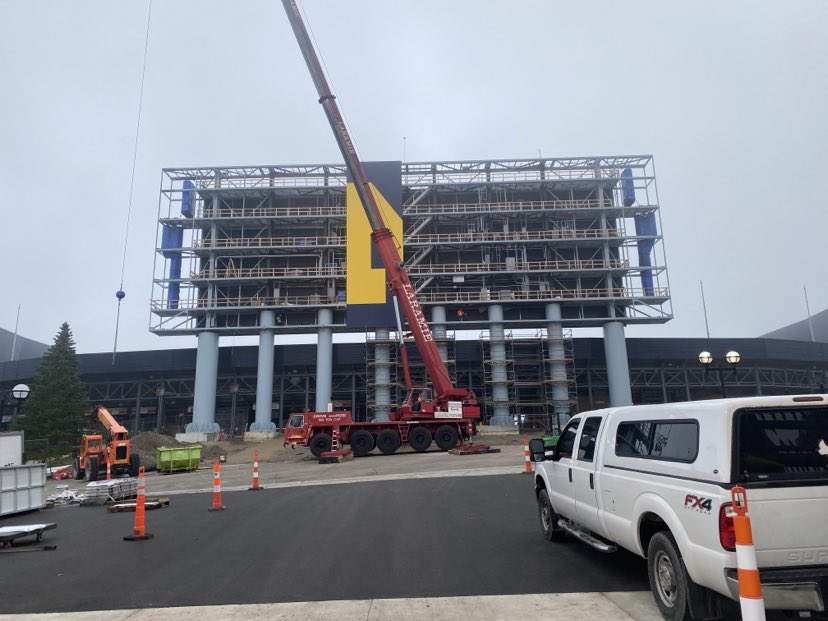
Mike Anthony with Engineering Students | April 2024
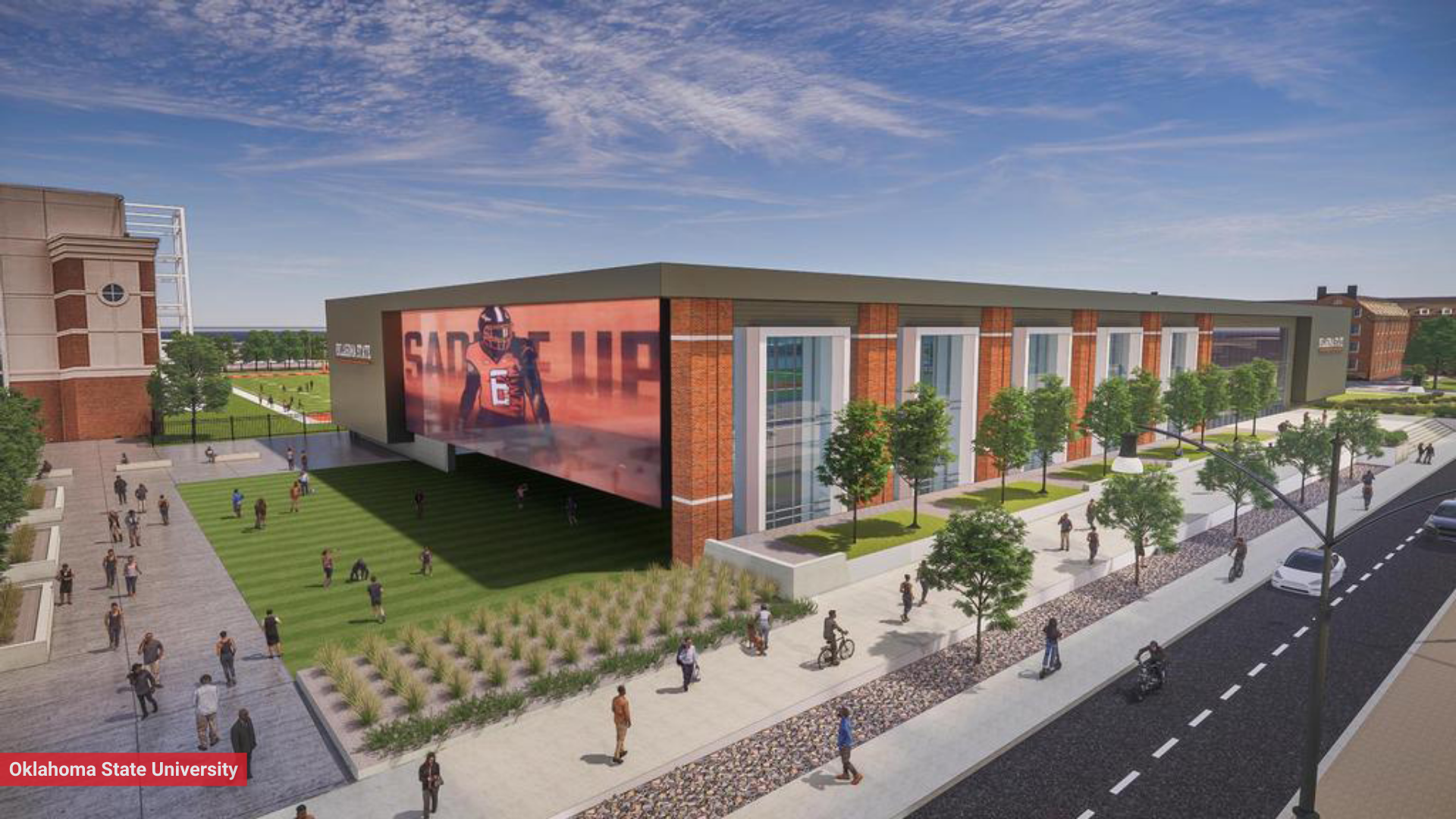
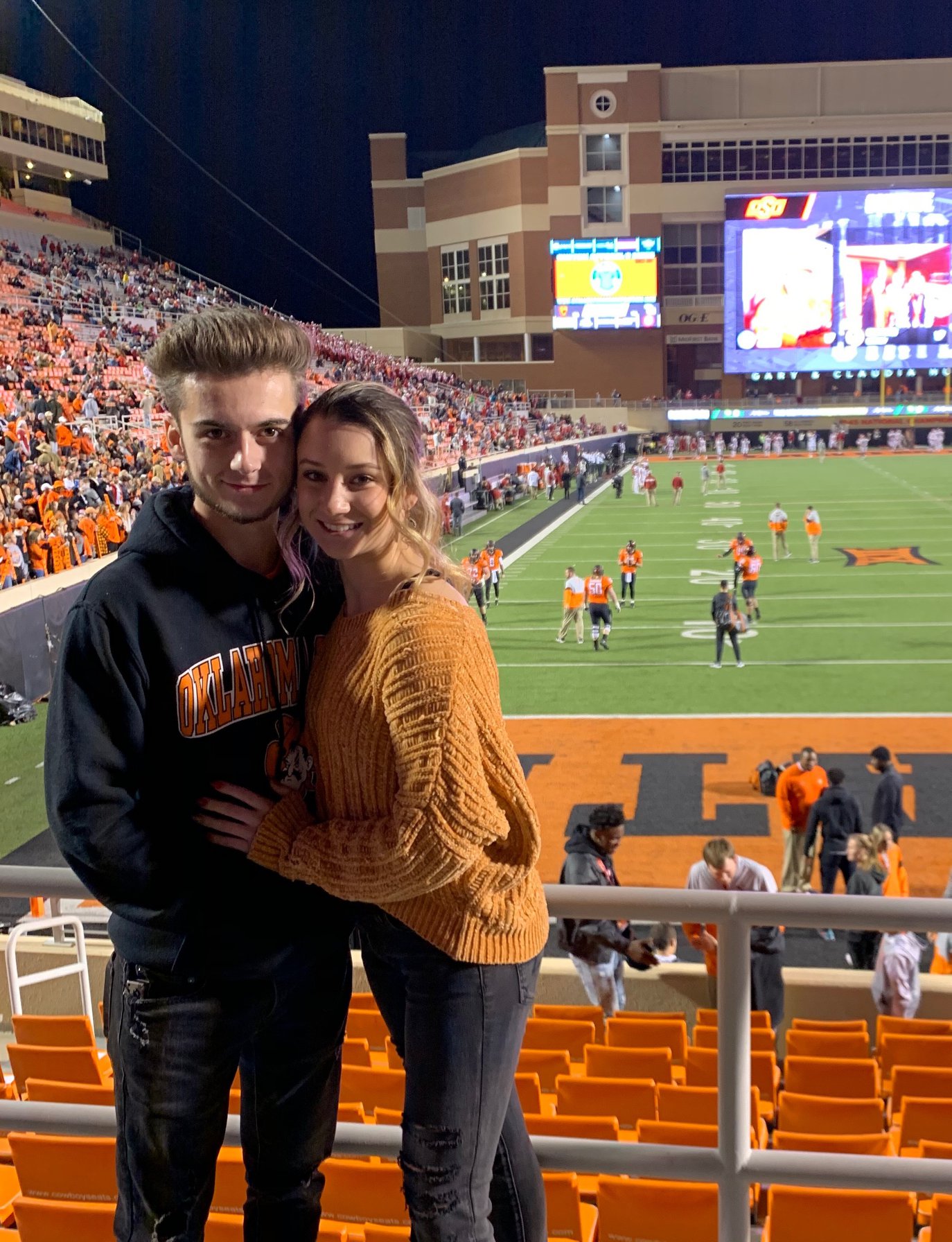
OSU was founded in 1890 as Oklahoma Agricultural and Mechanical College under the Morrill Land Grant Act of 1862 set in motion by President Abraham Lincoln. It has approximately 30,000 students across 1500 acres with 400 buildings. Its athletic department runs an operating budget of about $100 million.
This content is accessible to paid subscribers. To view it please enter your password below or send mike@standardsmichigan.com a request for subscription details.


The Civil 20's Technology and Security for One World Summit began today. Honourable Governor of Tamil Nadu, Shri. R.N. Ravi, and Swami Amritaswarupananda Puri as a Civil 20 Troika member were at the event. #YouAreTheLight #Civil20India #Civil20 #C20 #G20India #G20 #TST #Amrita pic.twitter.com/4KsIAoSmoj
— Amrita Vishwa Vidyapeetham (@AMRITAedu) May 13, 2023
Arduino based Automated Sports Court Drawing Bot
Rajesh Kannan Megalingam, et. al
Stadium maintenance staff are one of those people who work hard to maintain the court correctly. One of the items that often require rework is the lines drawn on the court for maintenance of track or boundaries or even the entire court when it is football stadium etc. Besides, for indoor stadiums that host volleyball, basketball, tennis, etc., lines need to be drawn. Redrawing the court after each match is one of the major problems of concern. In such a scenario, a system is proposed that can draw the court lines autonomously. The objective of this research work is to present a design of an autonomous sports court drawing bot that can draw the linear lines automatically which can aid in the maintenance work of the sports stadium.
CLICK HERE to order complete paper.
Today we review the literature informing the safety and sustainability agenda of sport enterprises in education communities; in the United States at least — one of the last, if not the last, meritocracies in academia at large. School districts have hundreds of playgrounds, gymnasiums and playgrounds. Athletic departments are very visible enterprises; particularly at large colleges and universities with varsity teams that have long been “farm clubs” for professional sport companies.
This facility class is far more complicated (technically) than classroom facilities; closer to research and healthcare delivery enterprises in risk aggregation when you consider how many people are involved as spectators. This facility class resides proximate to the actuality of rehabilitated or additional sanitary facilities which we cover in our periodic Water 200 colloquia.
Throughout 2024 we will break down our coverage thus:
Field sport
Court sport
Water sport
We will also explore best practice codes and standards for recreational activity:
Rock Climbing: In the sport of rock climbing, technical skills, grip strength, and body positioning are crucial for both indoor and outdoor climbing. Climbers must navigate a variety of challenging terrains and routes.
Fencing: Fencing requires quick thinking, precise footwork, and precise blade work. Fencers need to anticipate their opponent’s moves and respond with well-timed and accurate attacks and parries.
Quidditch: Once a fictional sport; now widely played as “Quadball”.
Internal Revenue Service Non-Profit Tax Filing 990: National Collegiate Athletic Association
There are no fewer than 25 ANSI-accredited standards-setting organizations with a catalog of titles in this domain. We expanded the detail to some of the titles to enlighten understanding the complexity of these spaces:
Acoustical Society of America
American Institute of Steel Construction
Structural Steel Cantilivers for Sport Facilities
American Iron and Steel Institute
American Society of Civil Engineers
Athletic Field Lighting Standards Committee
American Society of Mechanical Engineers
American Society of Heating, Refrigerating and Air-Conditioning Engineers, Inc.
Standard 90.1-2019, Energy Standard for Buildings Except Low-Rise Residential Buildings
Annex G
Standard 189.1-2020, Standard for the Design of High-Performance Green Buildings
ASTM International (ANSI’s US TAG to ISO/TC 83)*
Committee F08 on Sports Equipment, Playing Surfaces, and Facilities
American Society of Safety Engineers
American Water Works Association
Swimming advisories for Microcystins and Cylindrospermopsin
Association for Challenge Course Technology
Association of Public-Safety Communications Officials-International
Audiovisual and Integrated Experience Association


Building Industry Consulting Service International
Building Performance Institute
IAPMO Group
2021 IAPMO Solar, Hydronics and Geothermal, Swimming Pool, Spa and Hot Tub Codes
Illumination Engineering Society
RP-6-20: Sports and Recreational Area Lighting
Institut für Sportbodentechnik
Criteria for the Development of Guidelines/Standards for Sports Surfaces
International Code Council
International Building Code
§ Section 302 Occupancy Classification and Use Designation
§ Section 303 Assembly Group A
§ Section 305 Educational Group E
International Energy Conservation Code
Class IV facilities consisting of elementary school and recreational facilities; and amateur league and high school facilities without provisions for spectators
§ 301 Climate Zones
§ C405 Electrical Power and Lighting Requirements
§ 405.3 Interior lighting power requirements
ICC 300-2017: Standard for Bleachers, Folding and Telescopic Seating, and Grandstands
Institute of Electrical and Electronic Engineers
National Center for Biotechnology Information
National Fire Protection Association
National Electrical Code
Article 518 Assembly Occupancies
Chapter 7 Special Conditions
Chapter 8 Communications Systems
National Operating Committee on Standards for Athletic Equipment
NSF International
Recreational Water / Pools / Spas
Synthetic Turf Council
….And so on. We approach federal regulations during a separate colloquium.
Facilities of this type are among the most visible physical assets of any school district, college or university.
Our daily colloquia are open to everyone. Use the login credentials at the upper right of our home page.


*ASTM activity in this domain involves more product conformance and less facility integrated systems (our primary interest)
* Eugen Rosenstock-Huessy (1888-1973) was a German-American philosopher, social thinker, and linguist. He was born in Berlin, Germany, and was raised in a Jewish family. Rosenstock-Huessy studied law, theology, and philosophy in Berlin, but his studies were interrupted by World War I. During the war, he served as a lieutenant in the German army and was taken prisoner by the Russian army.
After the war, Rosenstock-Huessy continued his studies and became a professor of law and sociology at the University of Breslau. He was forced to leave Germany in 1933 because of his opposition to the Nazi regime, and he emigrated to the United States. In the United States, Rosenstock-Huessy continued his academic work and became a professor of social philosophy at Dartmouth College in New Hampshire.
Rosenstock-Huessy’s work focused on the role of language in shaping human culture and social institutions. He believed that language was not just a means of communication but was also a way of creating and organizing social relations. His ideas had a significant influence on the development of linguistic phenomenology and hermeneutics.
Some of his notable works include “Out of Revolution: Autobiography of Western Man”, “Speech and Reality”, and “The Christian Future, or the Modern Mind Outrun”.
Related:
New update alert! The 2022 update to the Trademark Assignment Dataset is now available online. Find 1.29 million trademark assignments, involving 2.28 million unique trademark properties issued by the USPTO between March 1952 and January 2023: https://t.co/njrDAbSpwB pic.twitter.com/GkAXrHoQ9T
— USPTO (@uspto) July 13, 2023
Standards Michigan Group, LLC
2723 South State Street | Suite 150
Ann Arbor, MI 48104 USA
888-746-3670