
Dive Into an Open-Water Workout. 🏊♂️
Getting comfortable swimming in oceans and lakes often means overcoming fear, said @DanSimonelli, a marathon swimmer based in La Jolla, Calif., and the founder of the Open Water Swim Academy.https://t.co/FzLV02Cum3 via @NYtimes pic.twitter.com/IWNdfgQTsT
— Water Mark 🚰 (@OtayMark) August 4, 2023

Category Archives: Water
- Home
- Archive by category "Water"

loading...
All Season Outdoor Swim & Dive

Reliability Analysis for Power to Fire Pumps
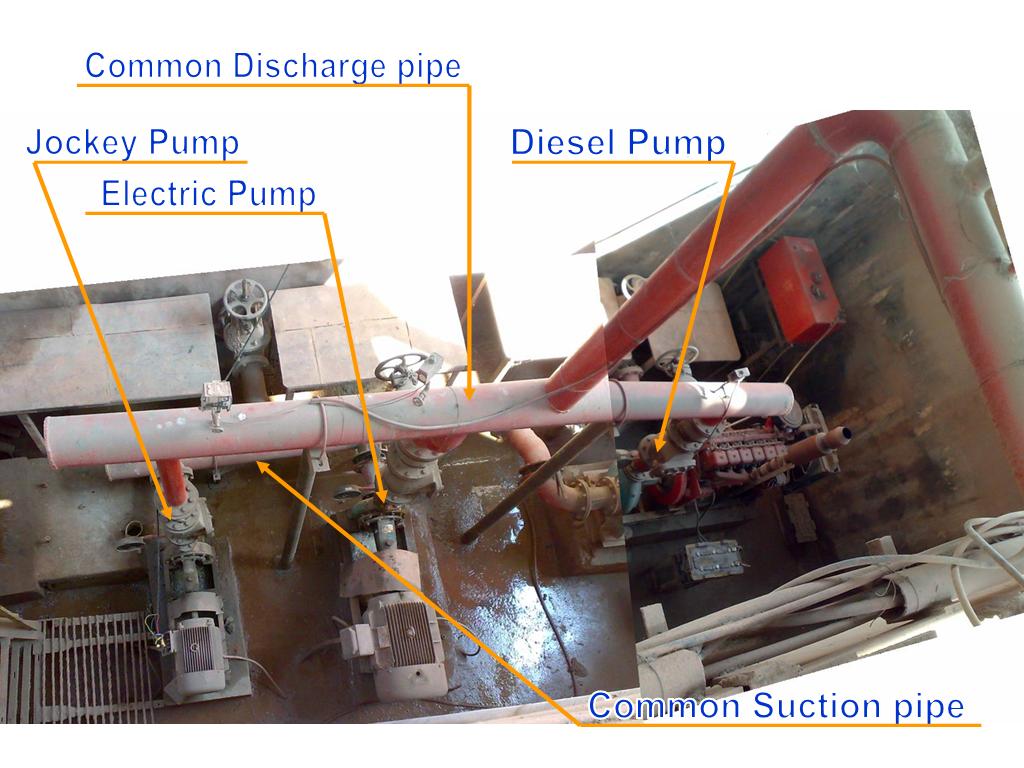

Reliability Analysis for Power to Fire Pump Using Fault Tree and RBD
Robert Schuerger | HP Critical Facilities (Project Lead, Corresponding Author)
Robert Arno | ITT Excelis Information Systems
Neal Dowling | MTechnology
Michael A. Anthony | University of Michigan
Abstract: One of the most common questions in the early stages of designing a new facility is whether the normal utility supply to a fire pump is reliable enough to “tap ahead of the main” or whether the fire pump supply is so unreliable that it must have an emergency power source, typically an on-site generator. Apart from the obligation to meet life safety objectives, it is not uncommon that capital on the order of 100000to1 million is at stake for a fire pump backup source. Until now, that decision has only been answered with intuition – using a combination of utility outage history and anecdotes about what has worked before. There are processes for making the decision about whether a facility needs a second source of power using quantitative analysis. Fault tree analysis and reliability block diagram are two quantitative methods used in reliability engineering for assessing risk. This paper will use a simple one line for the power to a fire pump to show how each of these techniques can be used to calculate the reliability of electric power to a fire pump. This paper will also discuss the strengths and weakness of the two methods. The hope is that these methods will begin tracking in the National Fire Protection Association documents that deal with fire pump power sources and can be used as another tool to inform design engineers and authorities having jurisdiction about public safety and property protection. These methods will enlighten decisions about the relative cost of risk control with quantitative information about the incremental cost of additional 9’s of operational availability.

CLICK HERE to order complete paper

Fall Watersport
Athletic Competition Timing Standards
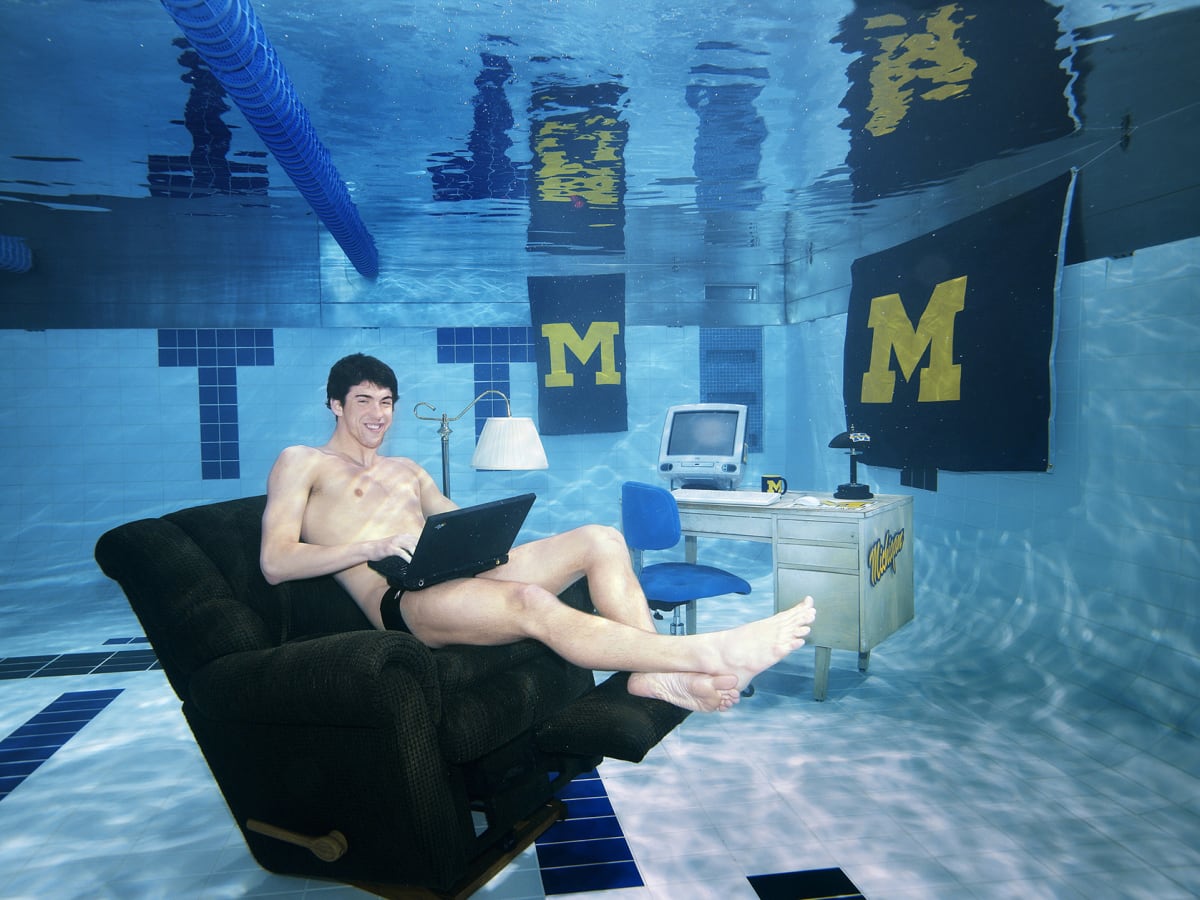
Today we update our understanding of best practice catalogs for outdoor and indoor watersport; primarily swimming and rowing. Use the login credentials at the upper right of our home page.
Michael Phelps Named No. 1 Athlete of Century By ESPN – https://t.co/ABuAyuQJBy pic.twitter.com/0swFlxT6ei
— Swimming World (@SwimmingWorld) July 18, 2024
Swimming like a poem …pic.twitter.com/zT2YUVEzoP
— Figen (@TheFigen_) September 21, 2024
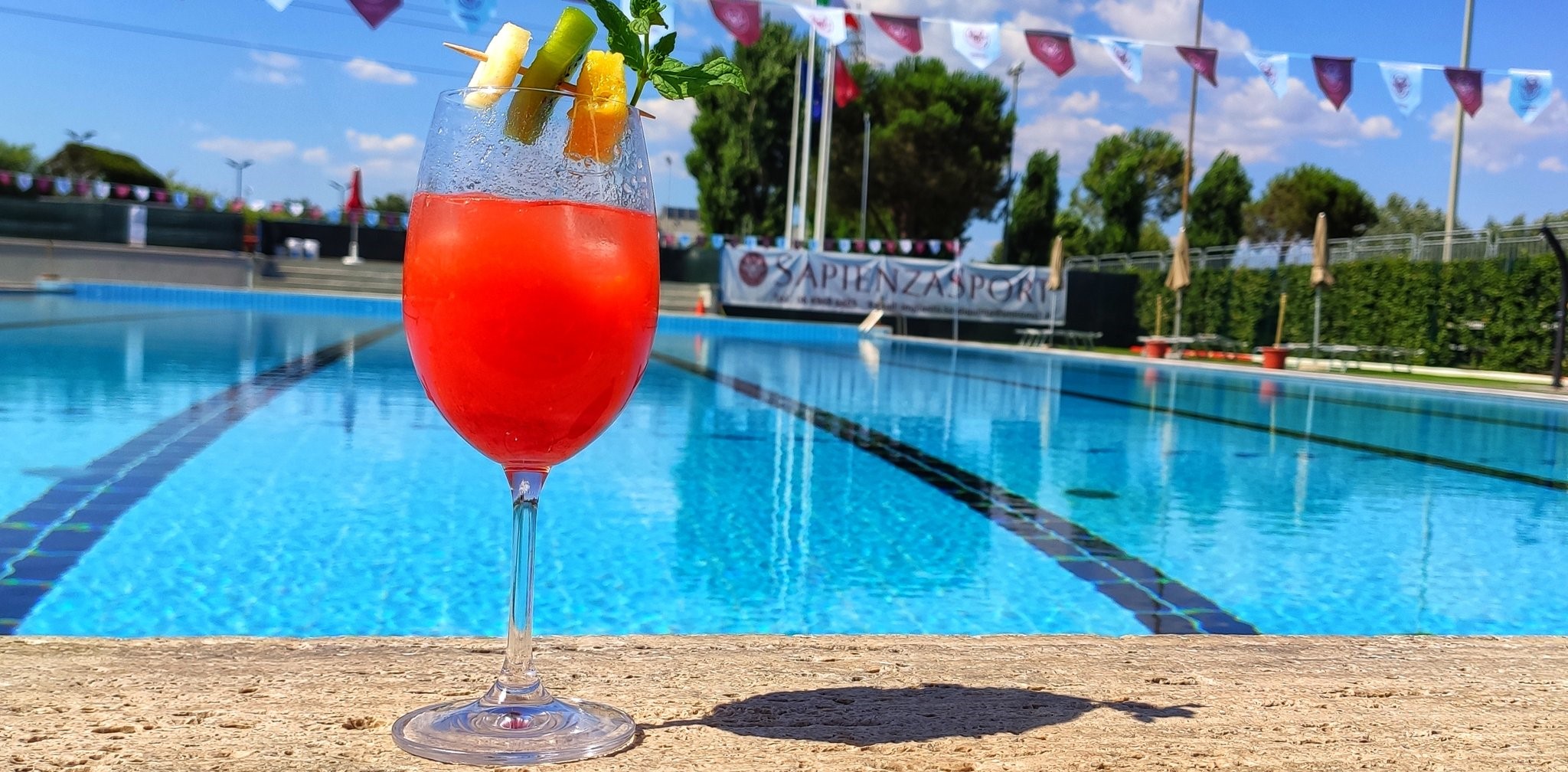
Sapienza – Università di Roma

USA Swimming and the National Collegiate Athletic Association Swimming are two distinct organizations that oversee different aspects of competitive swimming in the United States. USA Swimming governs competitive swimming in the United States across all age groups and skill levels, while NCAA Swimming specifically focuses on collegiate-level swimming and diving competitions within the NCAA framework. Both organizations play crucial roles in the development and promotion of swimming in the United States.
Governing Body:
USA Swimming is the national governing body for the sport of swimming in the United States. It is responsible for overseeing competitive swimming at all levels, from grassroots programs to elite national and international competitions.
NCAA Swimming: NCAA Swimming is part of the National Collegiate Athletic Association (NCAA), which governs intercollegiate sports in the United States. NCAA Swimming specifically deals with collegiate-level swimming competitions among universities and colleges.
Scope:
USA Swimming is responsible for organizing and regulating competitive swimming for all age groups and skill levels, from youth swimmers to Masters swimmers (adults). It oversees swim clubs, hosts competitions, and develops national teams for international events.
NCAA Swimming: NCAA Swimming focuses exclusively on college-level swimming and diving competitions. It sets the rules and guidelines for swimming and diving programs at NCAA member institutions.
Membership:
Individuals, swim clubs, and teams can become members of USA Swimming, allowing them to participate in USA Swimming-sanctioned events, access coaching resources, and benefit from the organization’s development programs.
NCAA Swimming: NCAA Swimming is composed of collegiate athletes who compete for their respective universities and colleges. Athletes are typically student-athletes who represent their schools in NCAA-sanctioned competitions.
Competition Format:
USA Swimming hosts a wide range of competitions, including local, regional, and national meets, as well as Olympic Trials and international events. Swimmers compete as individuals, representing their swim clubs or teams.
NCAA Swimming: NCAA Swimming primarily consists of dual meets, invitational meets, and conference championships at the collegiate level. Swimmers represent their respective universities or colleges, earning points for their teams in dual meets and competing for conference and national titles.
Scholarships:
USA Swimming itself does not offer scholarships. Scholarships for competitive swimmers are typically awarded by colleges and universities based on an athlete’s performance and potential.
NCAA Swimming: NCAA member institutions offer scholarships to talented student-athletes in various sports, including swimming. These scholarships can cover tuition, room, board, and other expenses, making NCAA swimming an avenue for athletes to receive financial support for their education.
Turning our pool deck into a GYM 🤙🏋️♀️ pic.twitter.com/vfilShA8Ef
— Bobby Guntoro (@bobbygunt) September 25, 2023
Your call 📱 pic.twitter.com/4ubIUklHCi
— uncwswimdive (@uncwswimdive) July 9, 2024
The moment a father consoles daughter after missing out on olympics medal
pic.twitter.com/kSHd4AIH4Z— Science girl (@gunsnrosesgirl3) August 8, 2024

Swimming Pool Dimensions and Construction
He swims like the art of poetry. pic.twitter.com/rrhMP83DQD
— The Figen (@TheFigen_) July 12, 2025
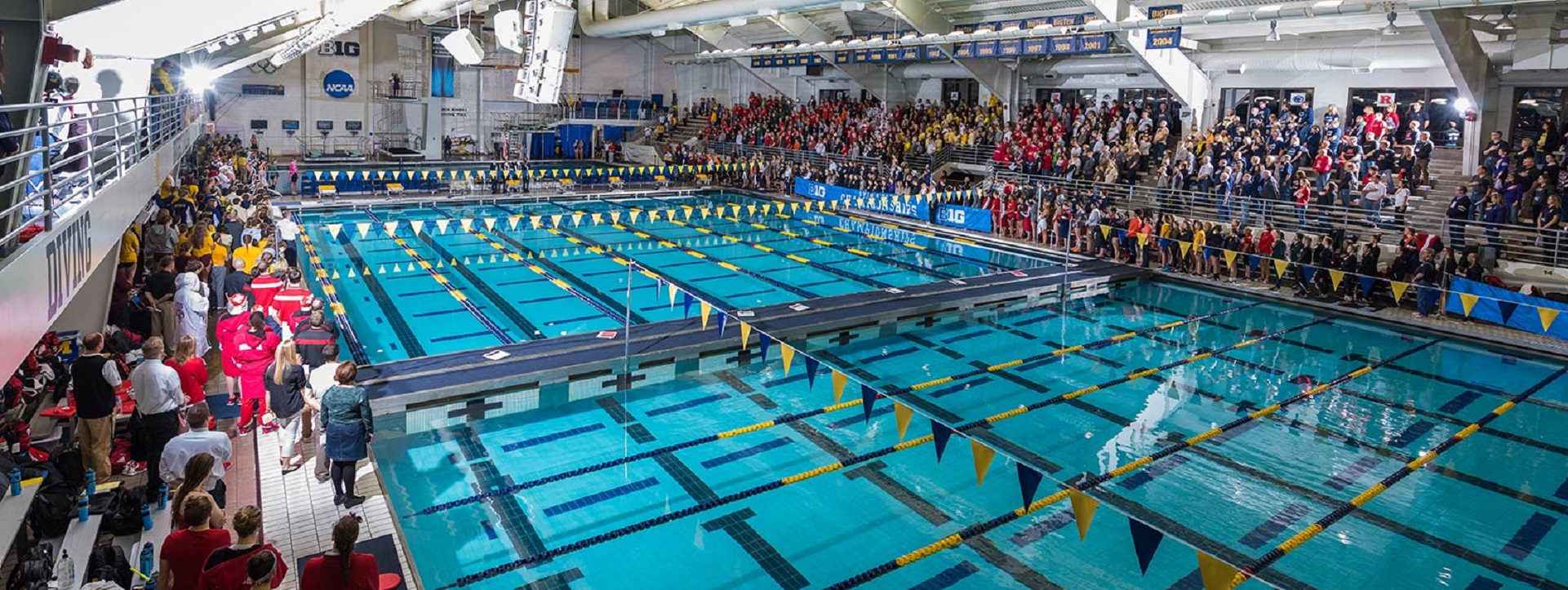
University of Michigan | Washtenaw County
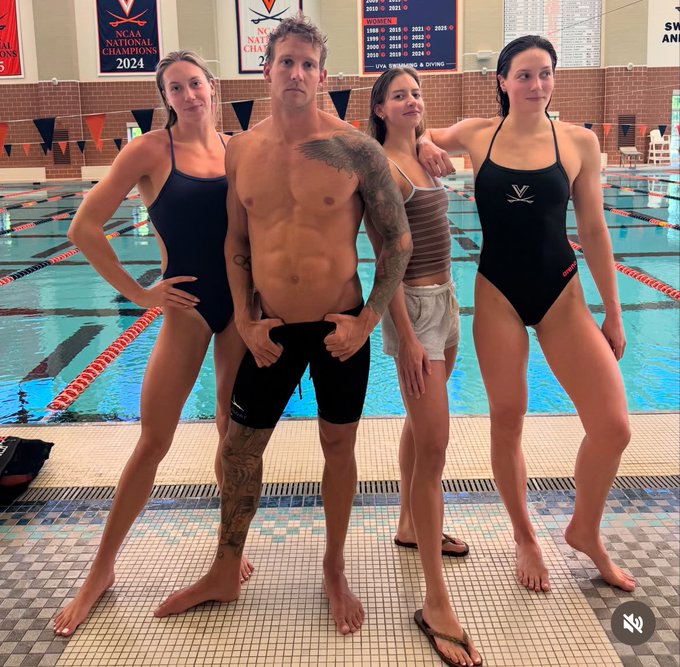
A standard Olympic-sized swimming pool is defined by the following dimensions:
- Length: 50 meters
- Width: 25 meters
- Depth: A minimum of 2 meters
- Lanes: 10 lanes, each 2.5 meters wide
The total area of the pool is therefore 1,250 square meters, and it holds approximately 2,500 cubic meters (or 2.5 million liters) of water.
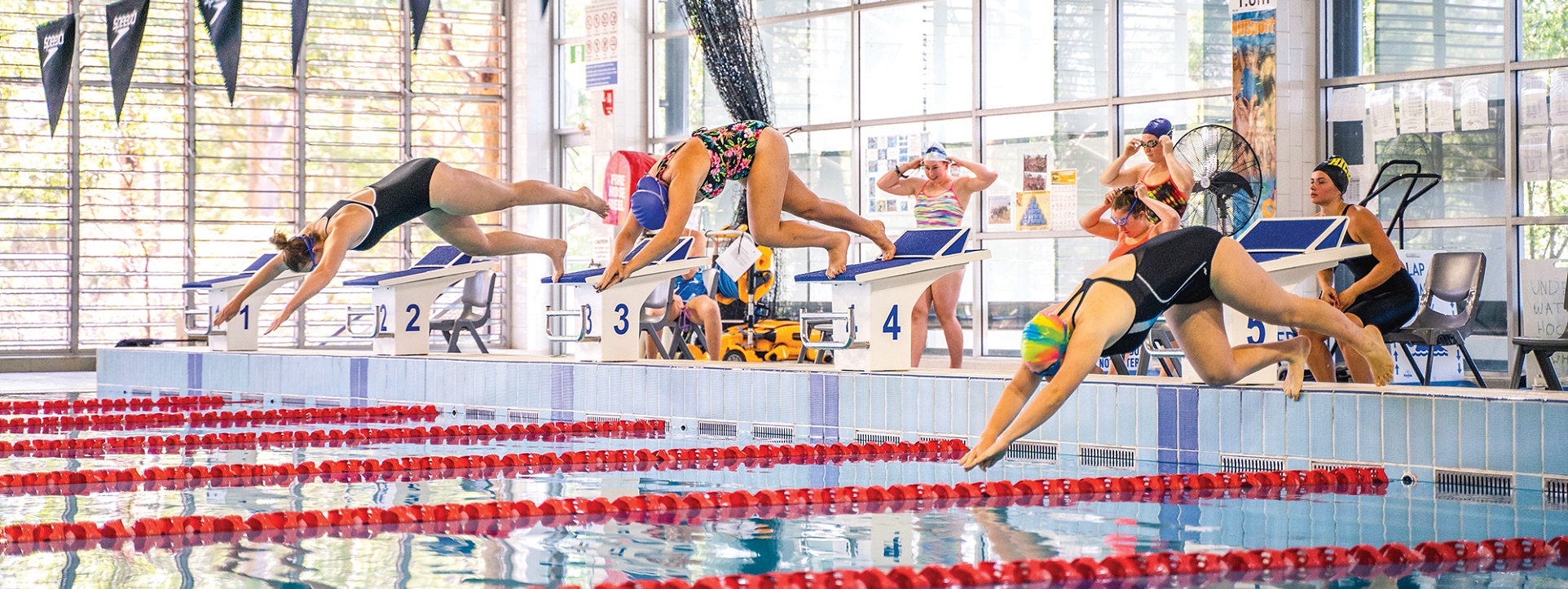
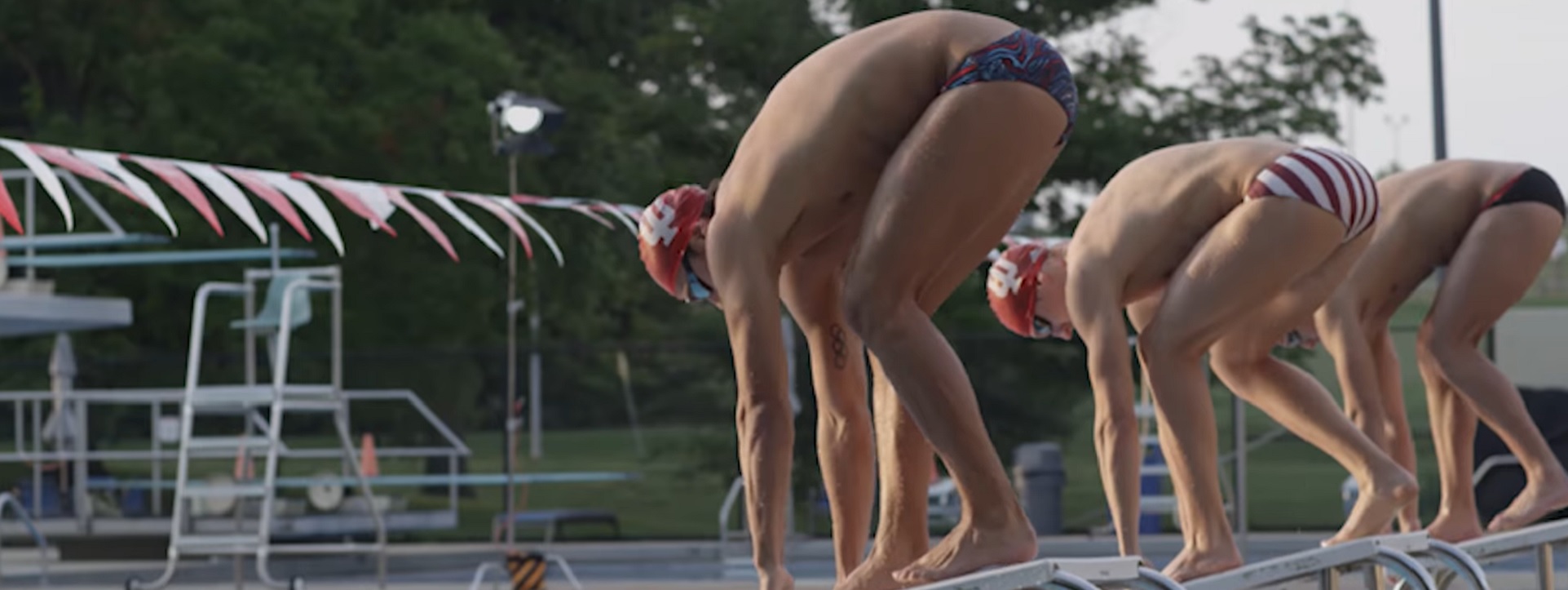
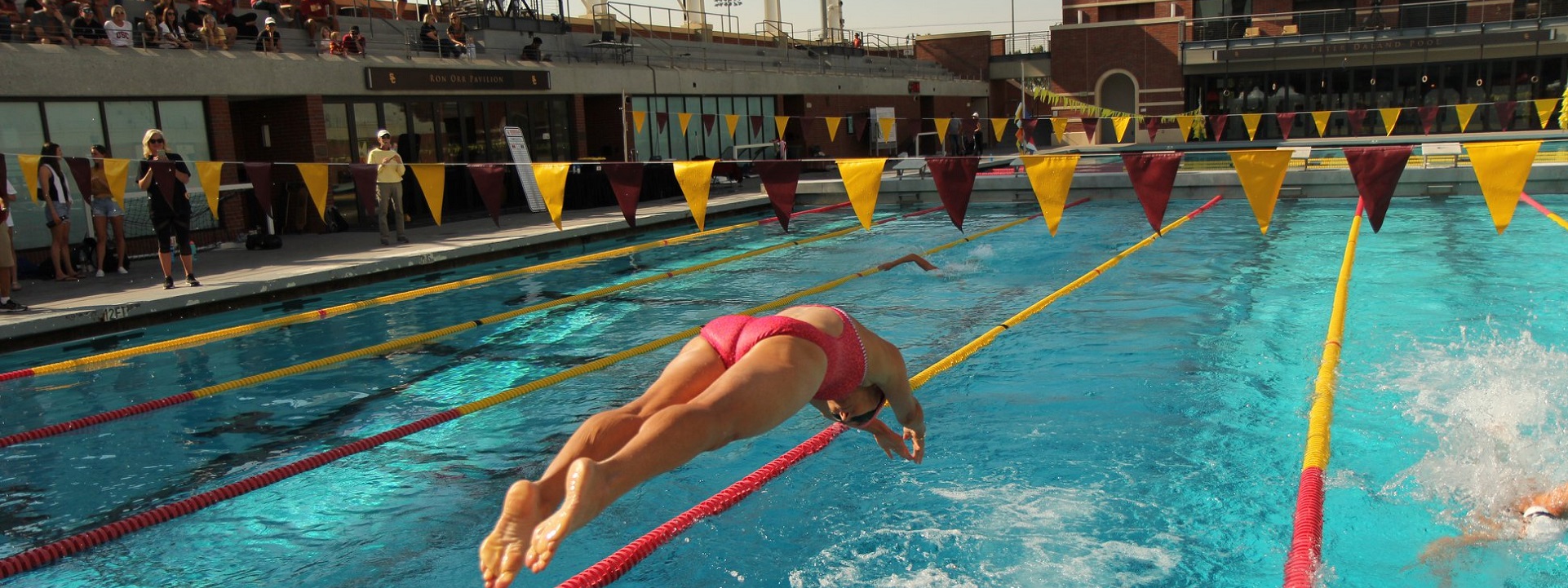
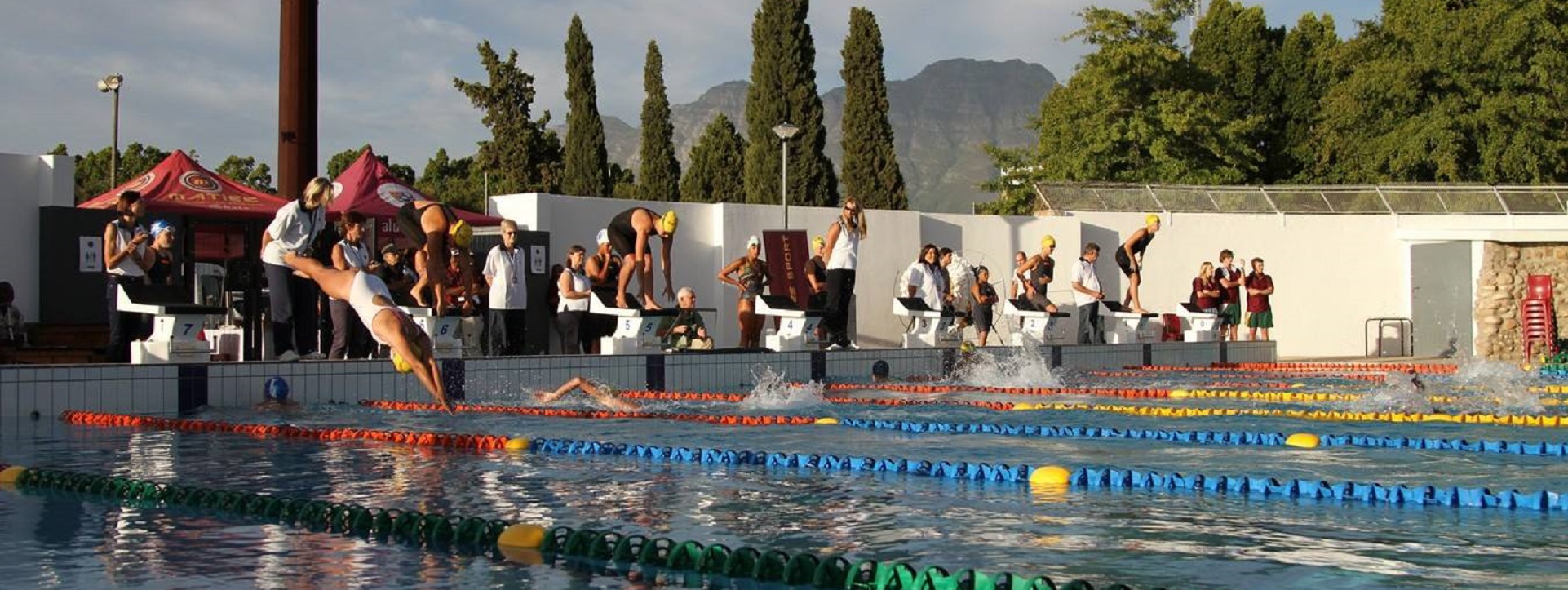
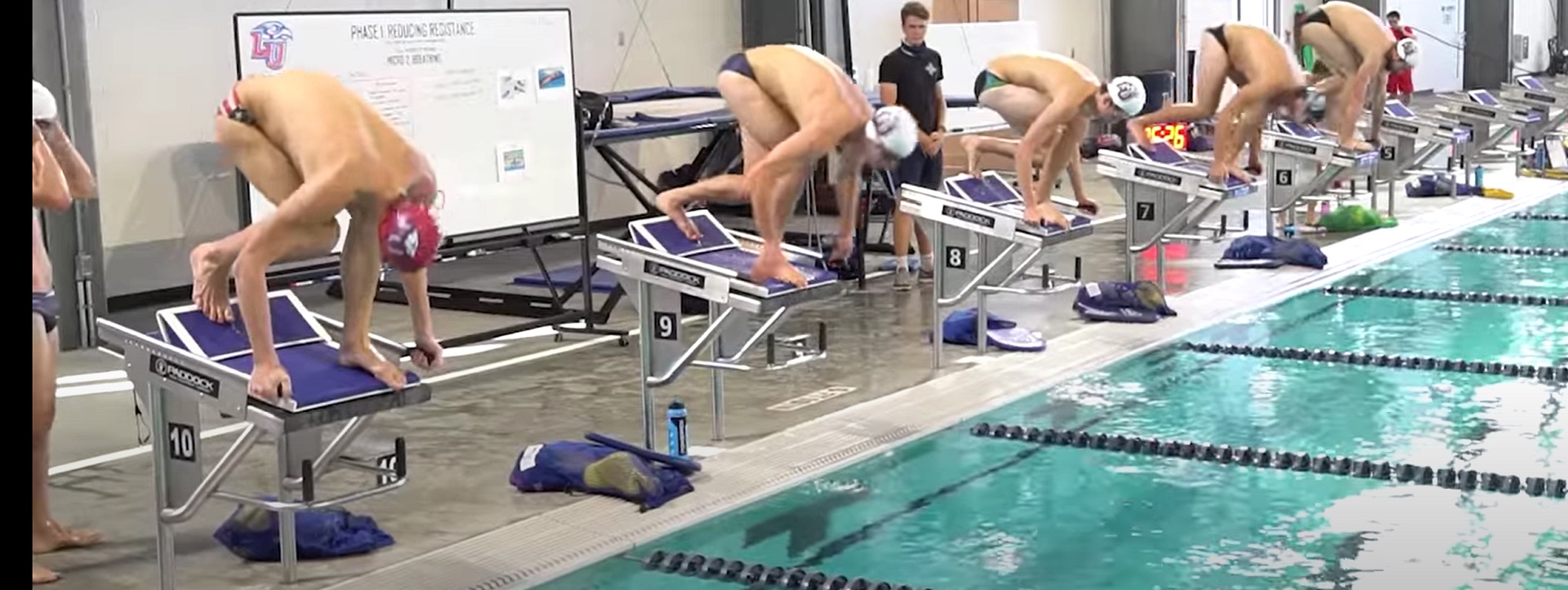
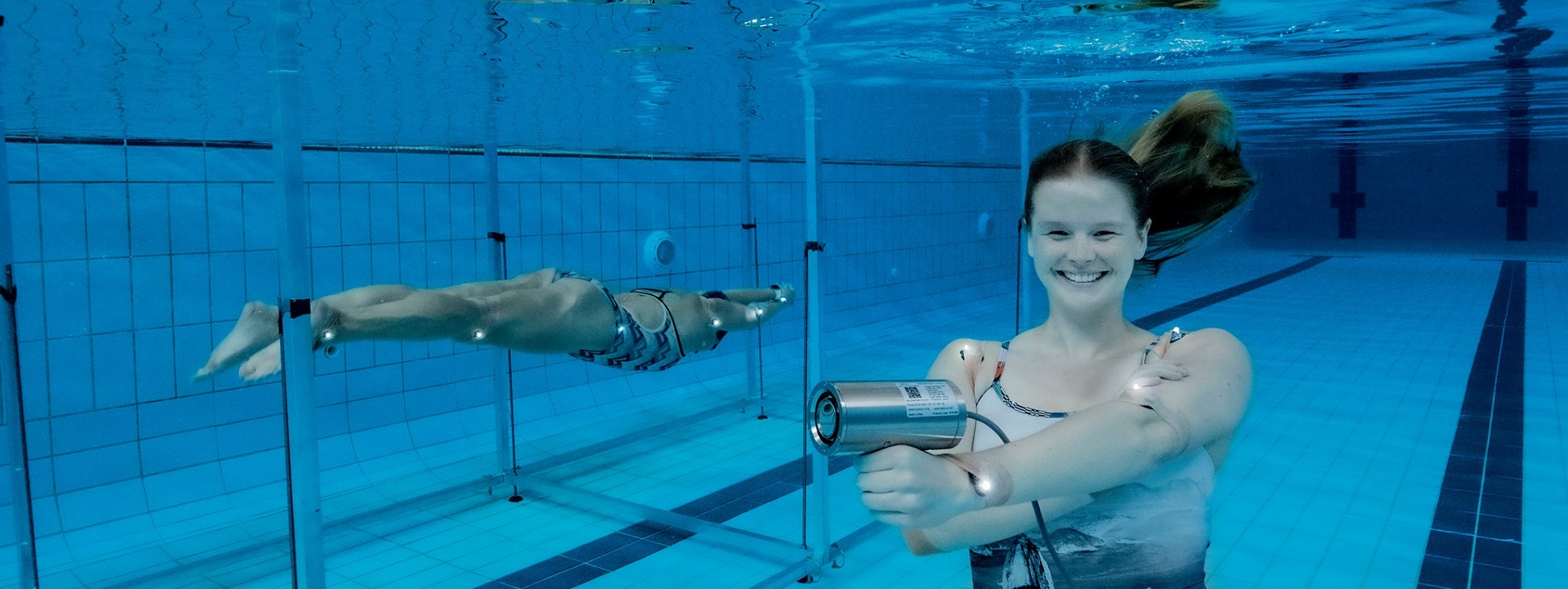
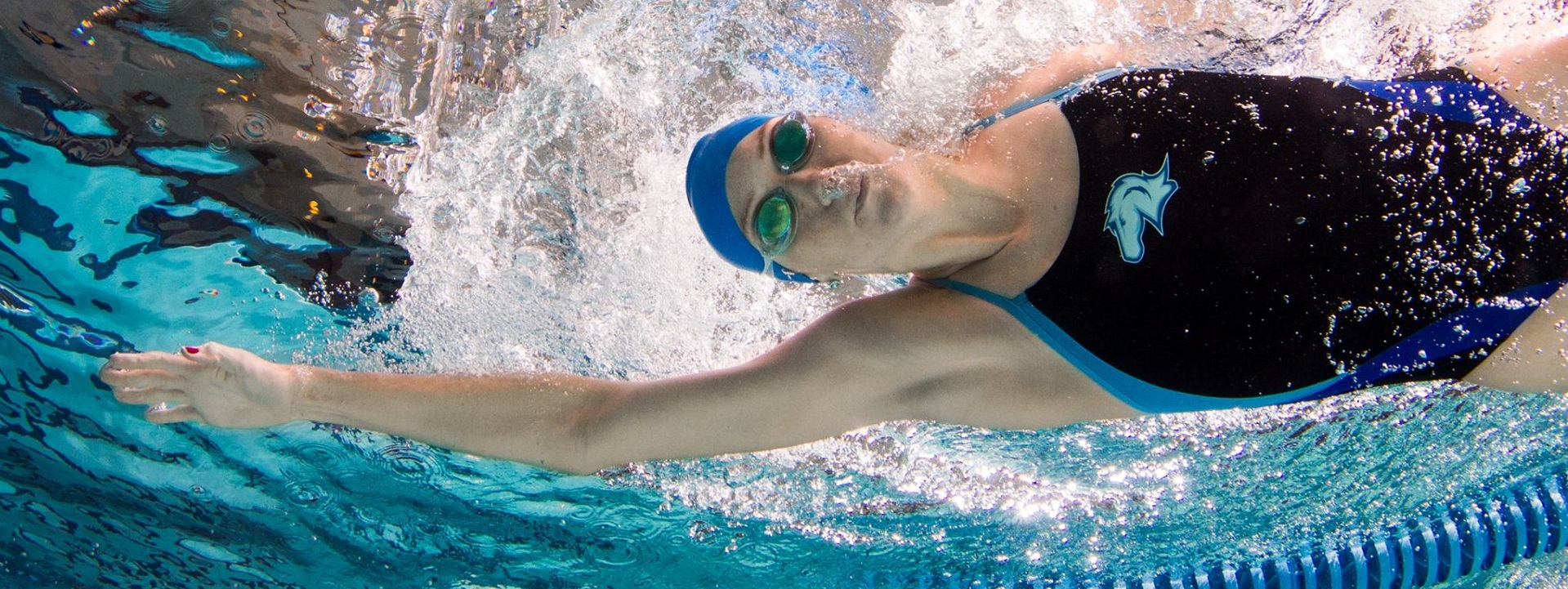
The organization that sets the standards for Olympic-sized pools is the Fédération Internationale de Natation (FINA) — now World Aquatics — the governing body for swimming, diving, water polo, synchronized swimming, and open water swimming. FINA establishes the regulations for the dimensions and equipment of competition pools used in international events, including the Olympic Games.
The top ten universities that have produced Olympic champion:
- University of Southern California (USC)
- Stanford University
- University of California, Berkeley (UC Berkeley)
- University of Florida
- University of Texas at Austin
- University of Michigan – Michael Phelps, the most decorated Olympian of all time.
- Indiana University
- Auburn University
- University of Georgia
- University of Arizona
News:
Swimming like a poem …pic.twitter.com/zT2YUVEzoP
— Figen (@TheFigen_) September 21, 2024
Swim Swam: 2024 Pool “Slow” and not setting records
Paris Olympics swimmers noticing pool is ‘slow’
Make architecture powerful again pic.twitter.com/vQCrbT0TLE
— Pepijn Leonard Demortier (@PepijnDemortier) November 24, 2024

Jacob’s Well
Standards Pennsylvania | Standards Michigan Water
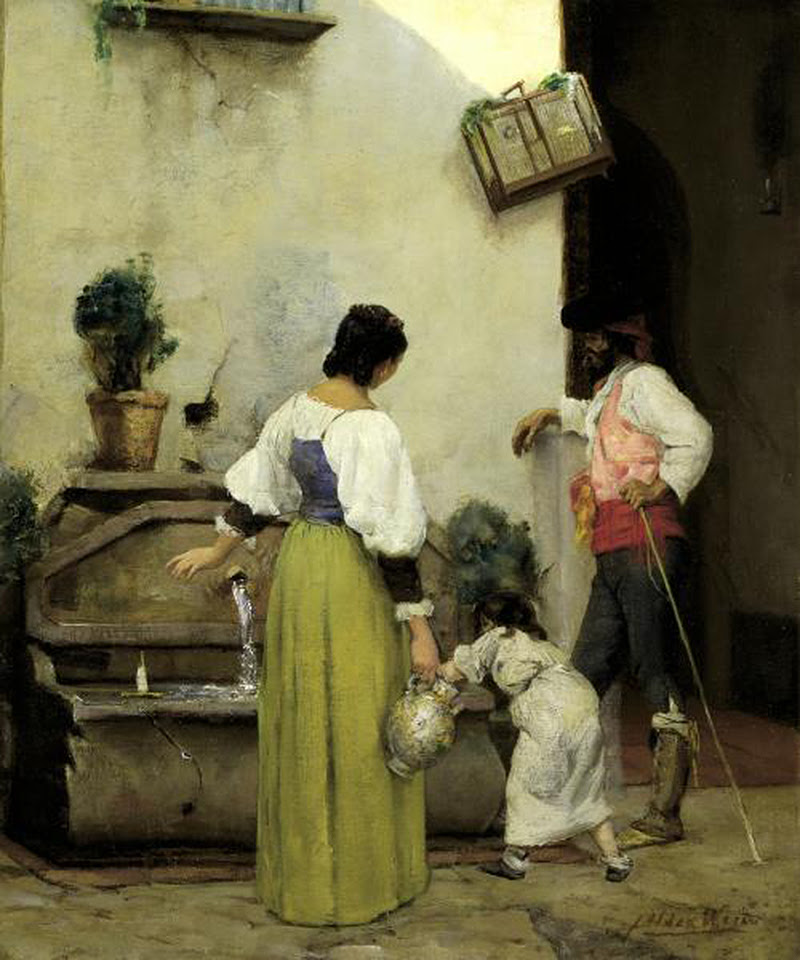
“At the Water Trough” 1876 J. Alden Weir
‘Forever chemicals’ detected in 65% of sampled private wells in Pennsylvania
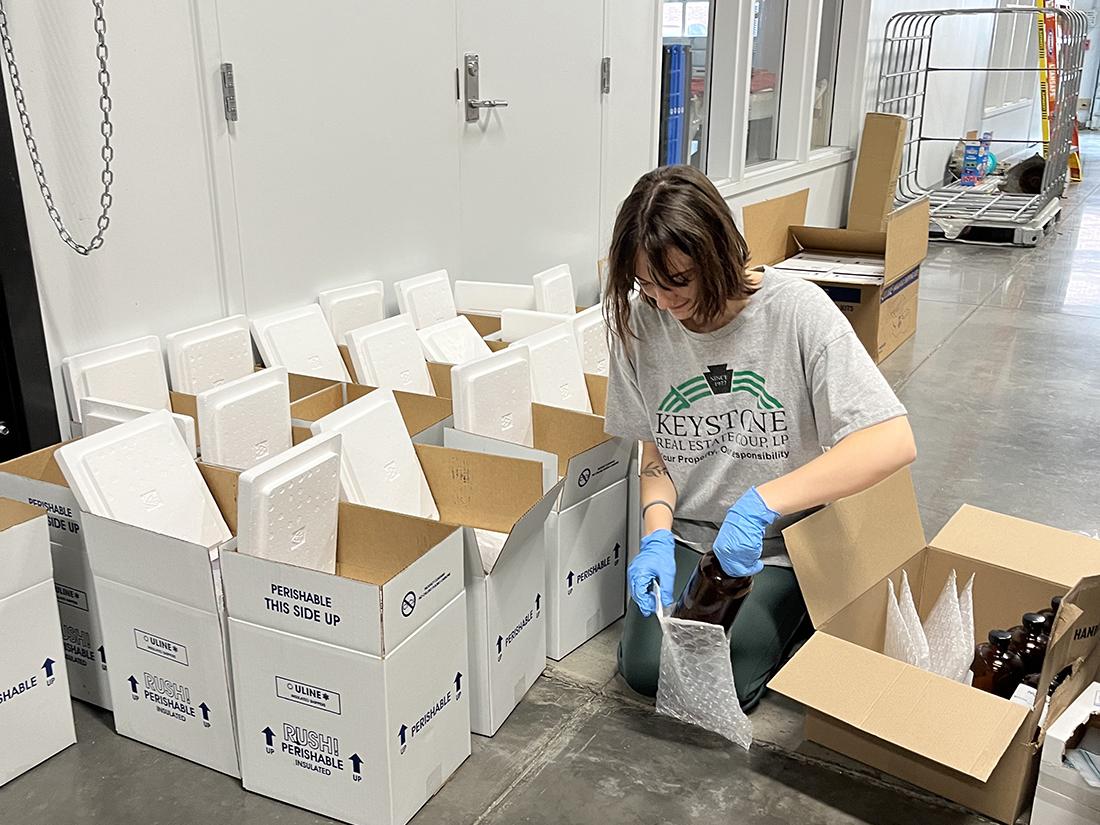
Many settlements use well water as their primary or supplemental source for potable water, irrigation, or campus operations. This is common in regions where municipal water infrastructure is limited or costly, and groundwater from private or on-site wells provides a reliable alternative. For context, about 13 million U.S. households rely on private wells for drinking water, and many educational institutions follow suit due to similar geographic and economic factors.
Examples of Colleges and Universities Using Well Water:
- Rural Campuses in General: Numerous small liberal arts colleges and community colleges in rural settings (e.g., in the Midwest, Northeast, or Pacific Northwest) draw from on-site wells. For instance, a 2025 analysis of campus water systems notes that rural colleges often contend with well water challenges like high total dissolved solids (TDS) or iron content, requiring specialized treatment such as reverse osmosis purifiers.
- Oregon Institutions: Approximately 23% of Oregon households use domestic wells, and this extends to educational facilities. Oregon State University’s Well Water Program actively educates on groundwater protection for well-dependent users, implying local campuses (including community colleges in areas like Jackson County) rely on wells for potable supply.
- Utah System of Higher Education Campuses: Public colleges like Snow College (in Ephraim, UT) and Dixie State University invest in filtration systems specifically for processing secondary or well water used in irrigation and operations. Snow College’s upgrades target well-sourced water to cut usage by 30%, while DSU filters secondary water (often well-derived) for campus landscaping.
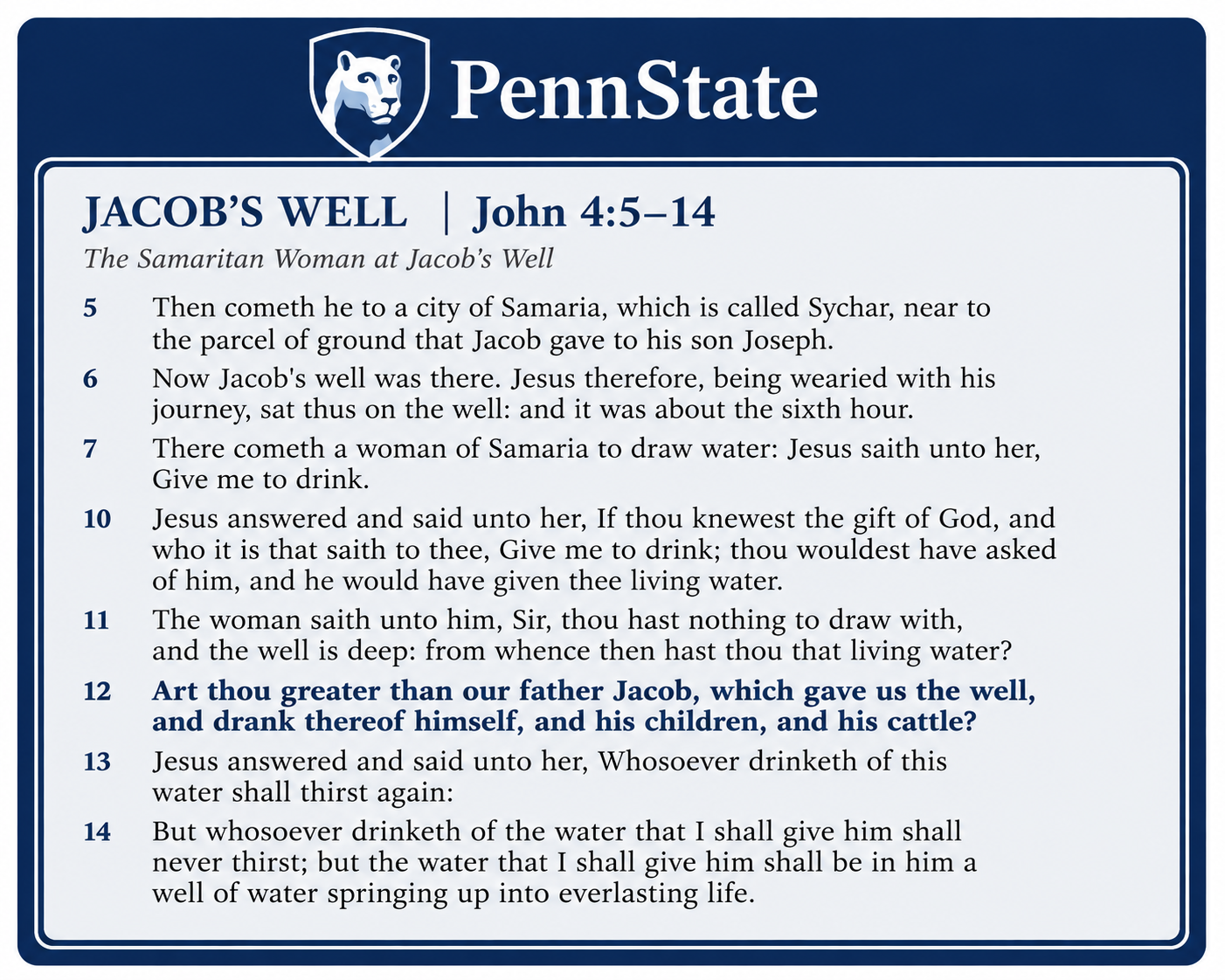
Why Well Water is Used
- Location-Driven: Campuses far from urban centers (e.g., in agricultural states like Iowa, Kansas, or Vermont) opt for wells to avoid high municipal hookup costs.
- Sustainability and Cost: Wells support self-sufficiency, especially for non-potable needs like cooling towers or grounds maintenance, aligning with green initiatives on many campuses.
- Treatment Needs: Institutions often add purification (e.g., UV systems for bacteria or softeners for hard water) to meet safety standards, as wells can introduce contaminants like arsenic or nitrates.

🍂 A little fall breather for your Wednesday afternoon 😌🍁 pic.twitter.com/gfyTV0p1mf
— Penn State (@penn_state) October 25, 2023
Relata:
Exploring Well Water Testing Behaviour Through the Health Belief Model
Water 100
“At the Water Trough” 1876 J. Alden Weir
“A flood is nature’s way of telling you
that you live in the wrong place.”
— Some guy
Water standards make up a large catalog and it will take most of 2023 to untangle the titles, the topics, proposals, rebuttals and resolutions. When you read our claim that since 1993 we have created a new academic discipline we would present the best practice literature of the world’s water standards as just one example.
The Water 100 session takes an aerial view of relevant standards developers, their catalogs and revision schedules.
The Water 200 session we examine the literature for best practice inside buildings; premise water supply for food preparation, sanitation and energy systems.
The Water 300 session reviews standards covering athletic facilities such as swimming pools, therapeutic tubs, ice rinks and the like.
The Water 400 session will run through best practice catalogs of water management outside buildings, including interaction with regional water management systems.
The Water 500 session is a study of case histories, disasters, legal action related to non-conformance. Innovation.

— Coffee Anytime (@coffee_anytime) September 18, 2023
Water safety and sustainability standards have been on the Standards Michigan agenda since the early 2000’s. Some of the concepts we have tracked over the years; and contributed data, comments and proposals to technical committees, are listed below:
- Legionella mitigation
- Swimming pool water quality
- Fire protection sprinkler water availability and safety
– NFPA 70 Article 695 Fire Pumps - Backflow prevention/Cross-connect systems
- Security of district energy power plant and hospital water supply
- Electrical shock protection in pools, fountains, spas and waterfront recreational docking facilities
- Rainwater catchment
- Water in extreme weather events
- Flood abatement systems
- Building plumbing codes (ICC and IAPMO)
- Water Re-use
- Water heaters
- District energy water treatment
- Food service steam tables
- Greywater
- Residence hall potable water systems
- Water use in emergency shower and eyewash installations
- Decorative fountains.
- Standard for the Inspection, Testing, and Maintenance of Water-Based Fire Protection Systems
|
40 CFR § 141.92 – Monitoring for lead in schools and child care facilities |
Since 2016 we have tracked other water-related issues:
- Safe water in playgrounds
- National Seagrant College programs
- Guide to Infection Control in the Healthcare Setting
- Electrical safety around water (cooling towers, swimming pools, spas)
- ASTM Water Testing Standards
- ASTM Standard for Water Distribution
- Electricity and Water Conservation on College and University Campuses in Response to National Competitions among Dormitories: Quantifying Relationships between Behavior, Conservation Strategies and Psychological Metrics
Relevant federal legislation:
- Clean Water Act
- Drinking Water Requirements for States and Public Water Systems
- Resource Conservation and Recovery Act
- Safe Drinking Water Act
Relevant Research:
Real Time Monitoring System of Drinking Water Quality Using Internet of Things
IoT based Domestic Water Recharge System
Send bella@standardsmichigan.com an email to request a more detailed advance agenda. To join the conversation use the login credentials at the upper right of our home page.
More
IAPMO Publishes U.S., Canadian Standard for Detection, Monitoring, Control of Plumbing Systems
"The Great Archimedes"
Baylor University Presshttps://t.co/jbaGIt5tqW@Baylor_Press@BaylorECS pic.twitter.com/4FbcZqLPrQ— Standards Michigan (@StandardsMich) August 4, 2020
Which Australian beaches are microplastic hot-spots? Research from Macquarie University’s AUSMAP project can help you to find low pollution beaches: https://t.co/JK43XMuAIL #microplastics #AustralianBeaches #plasticpollution @AUSMAP_AU pic.twitter.com/FZDgsAZ0Gz
— Macquarie University (@Macquarie_Uni) January 21, 2022
More
Solitude Lake Management for Universities and Colleges

Fontaines
Water fountains enhance campus outdoor settings by creating serene, inviting spaces that promote relaxation and social interaction. Their gentle sounds of flowing water reduce stress, mask noise, and foster a calming atmosphere conducive to study or reflection.
Aesthetically, fountains serve as focal points, adding elegance and visual appeal to courtyards or green spaces. They attract students, faculty, and visitors, encouraging gatherings and community engagement. Environmentally, fountains can support local ecosystems by providing water for birds or plants.
Well-maintained, they symbolize a campus’s commitment to beauty and sustainability, enriching the outdoor experience and enhancing the overall campus ambiance.
“At the Water Trough” 1876 J. Alden Weir
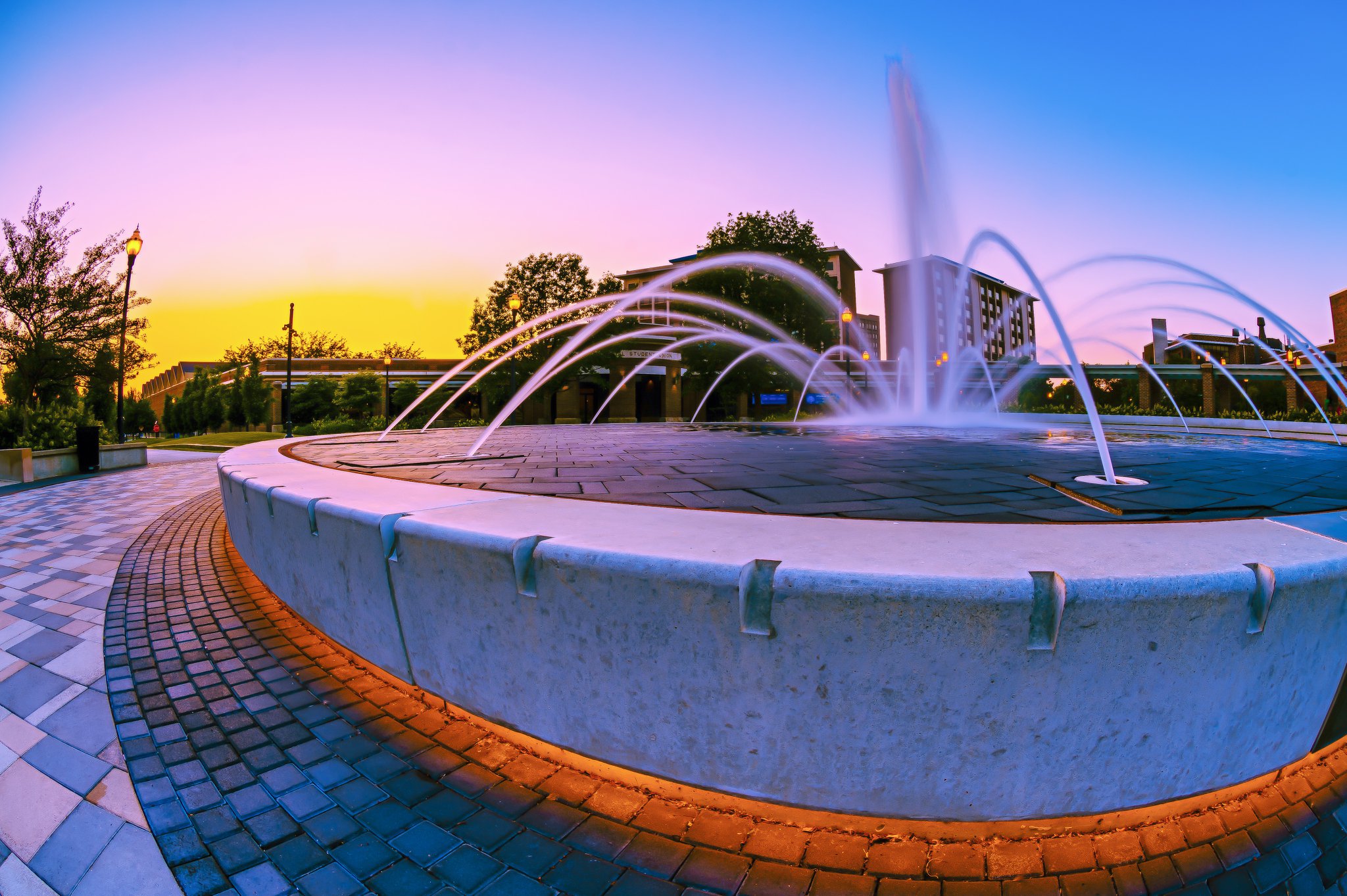
Indiana State University
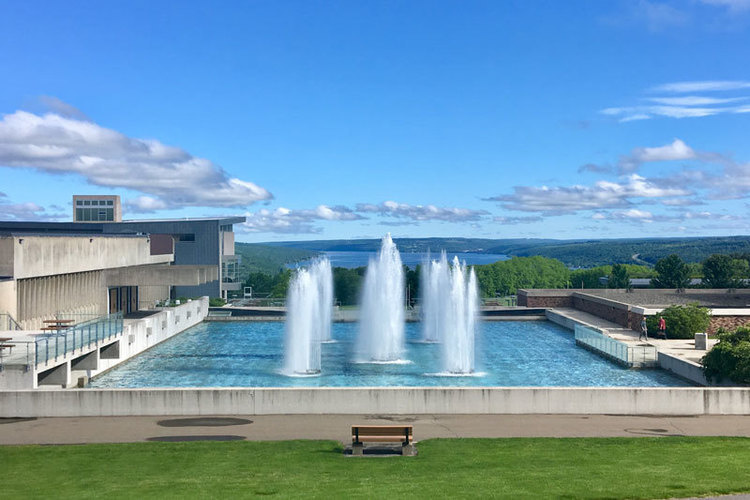
Ithaca College
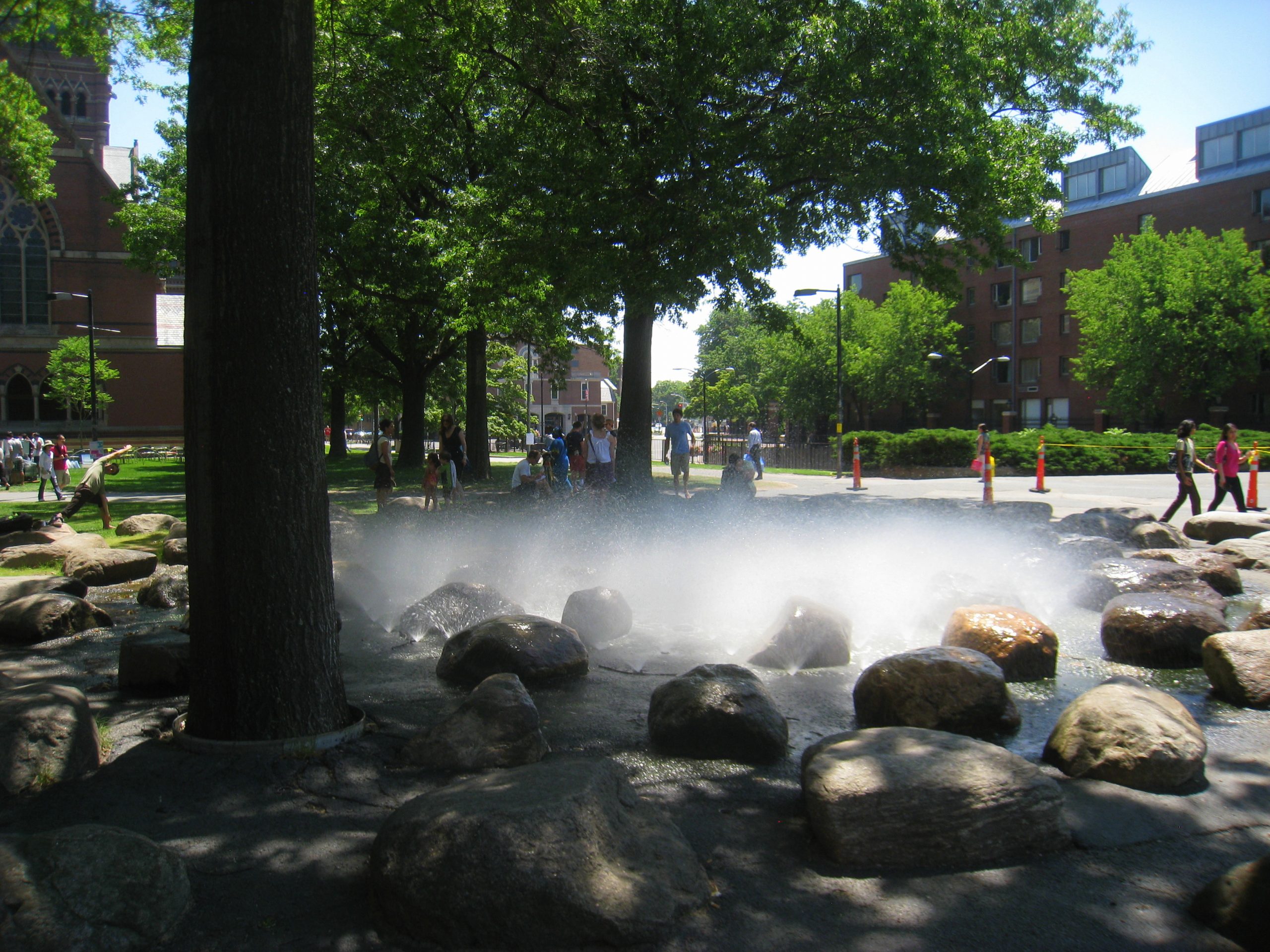
Harvard University
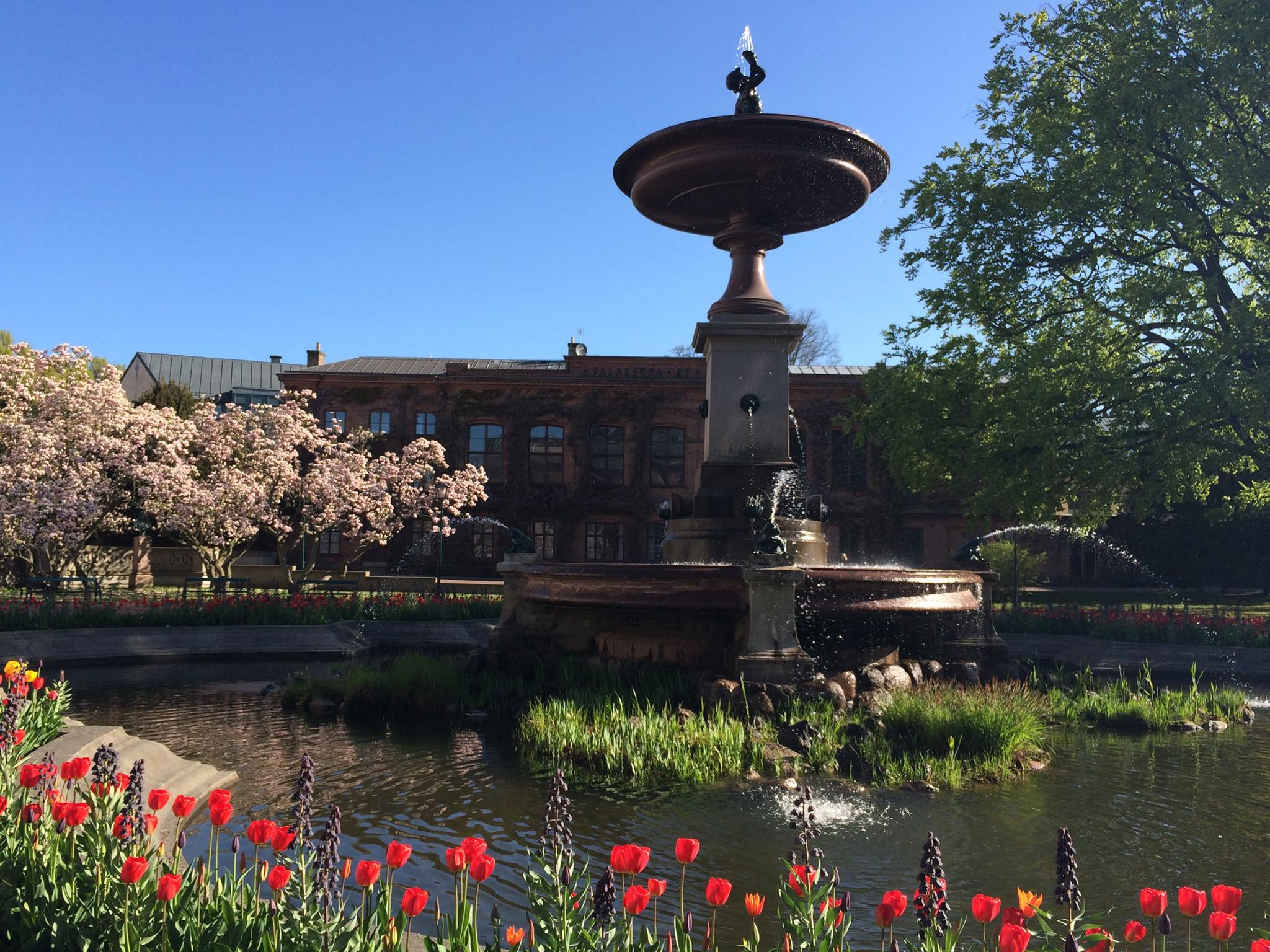
Lunds Universitet
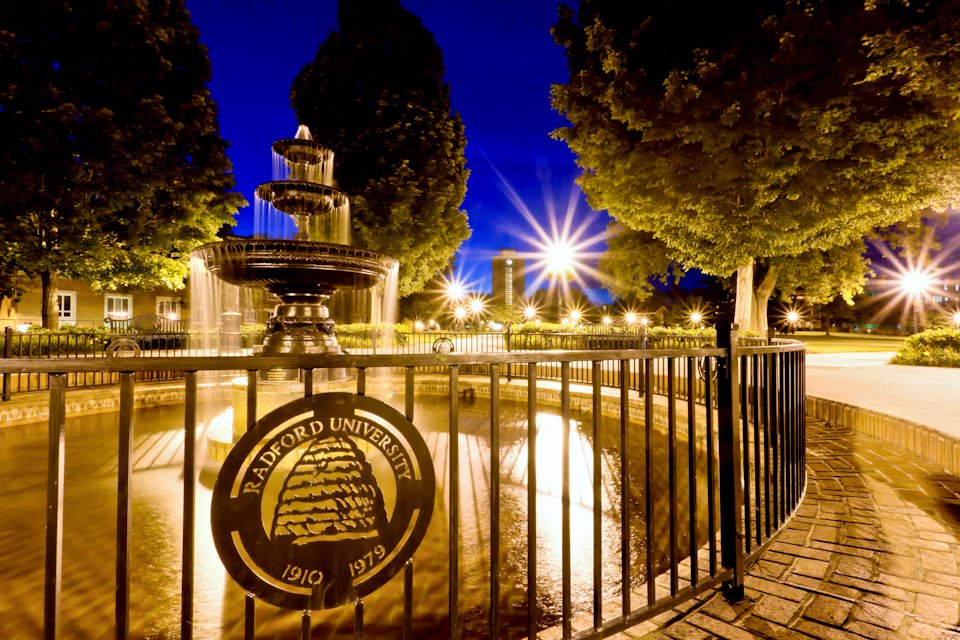

University of Louisville Kentucky
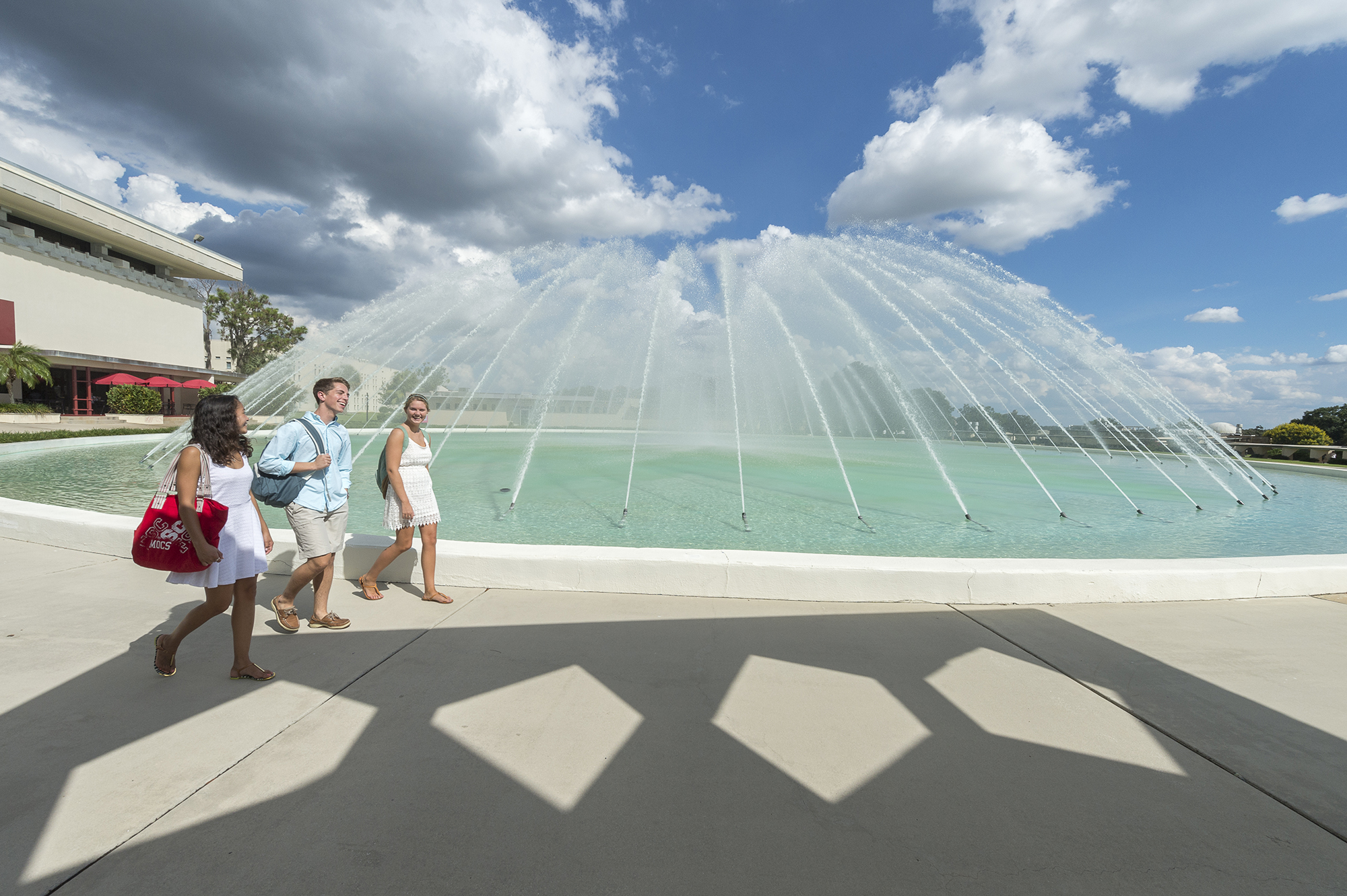
Florida Southern College
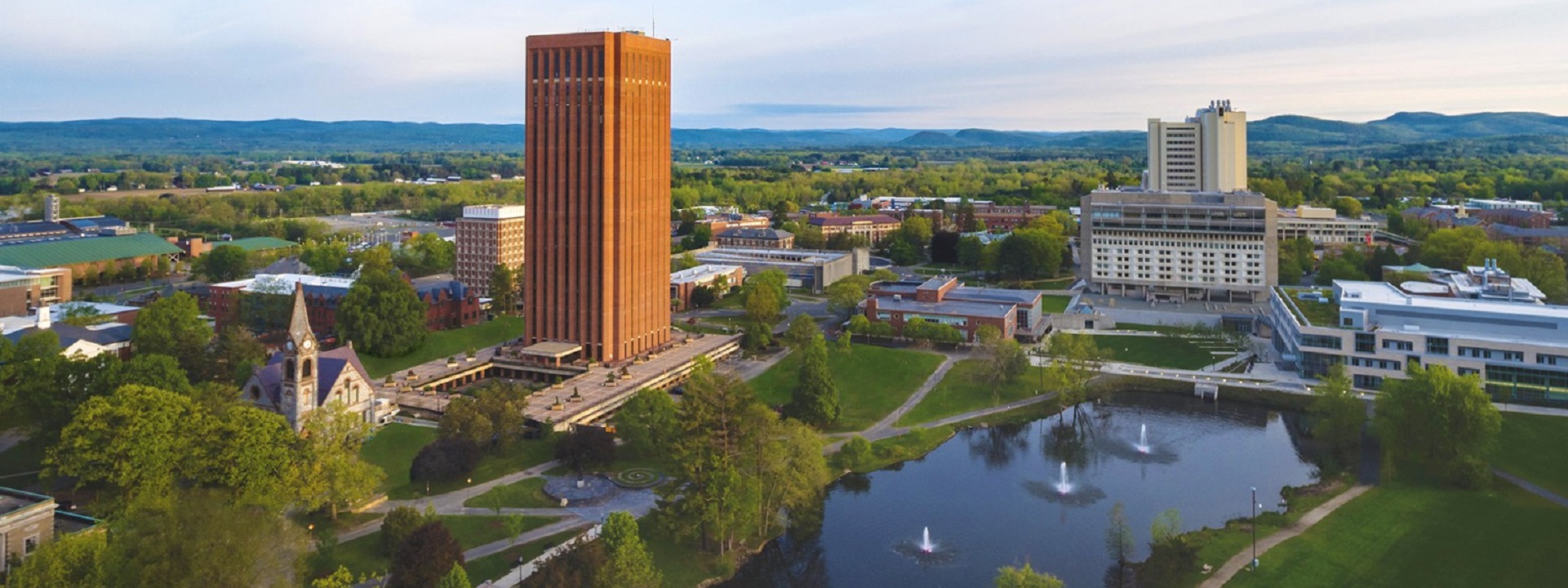
University of Massachusetts Amherst
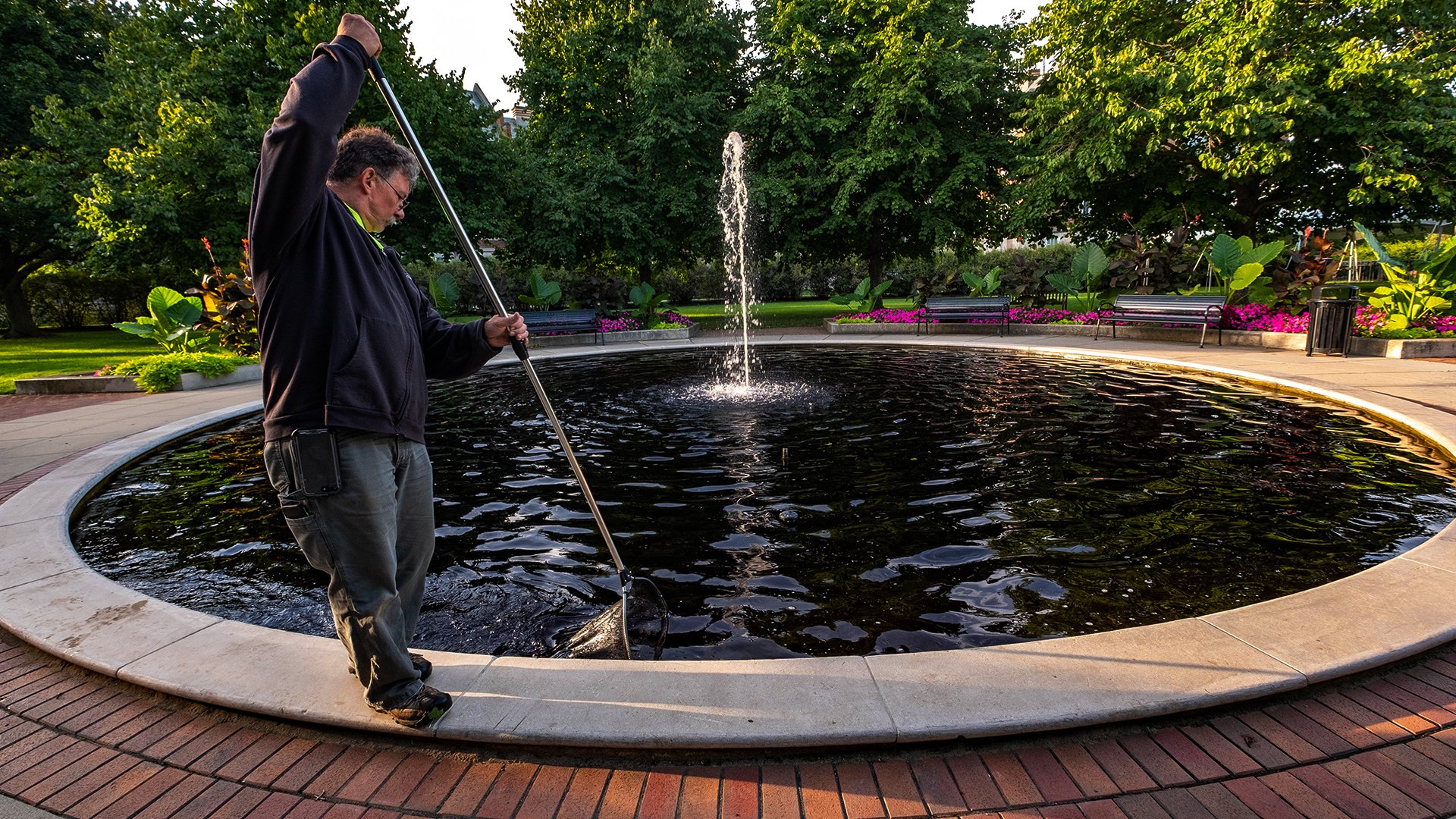
Michigan State University
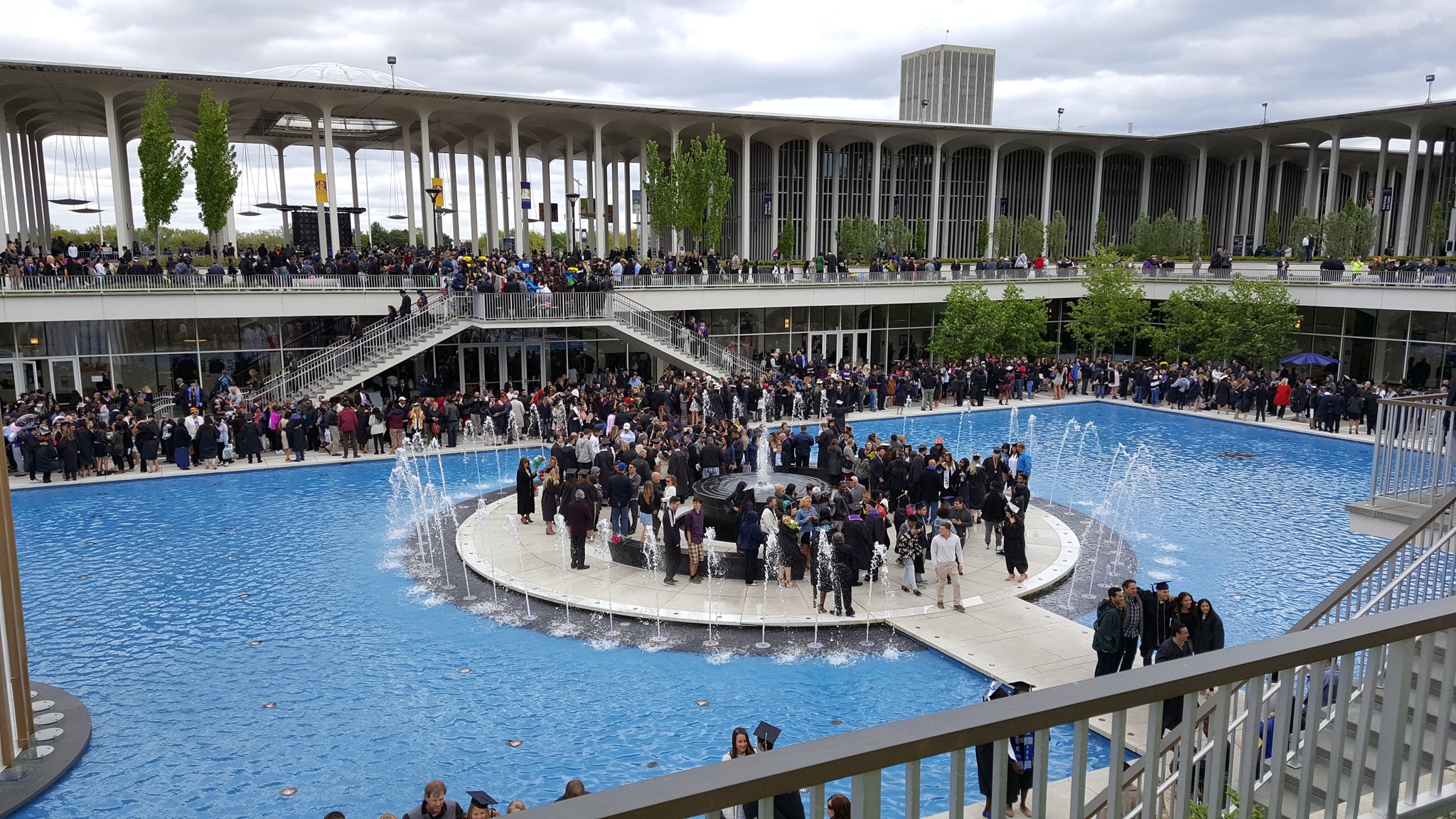
University of Albany
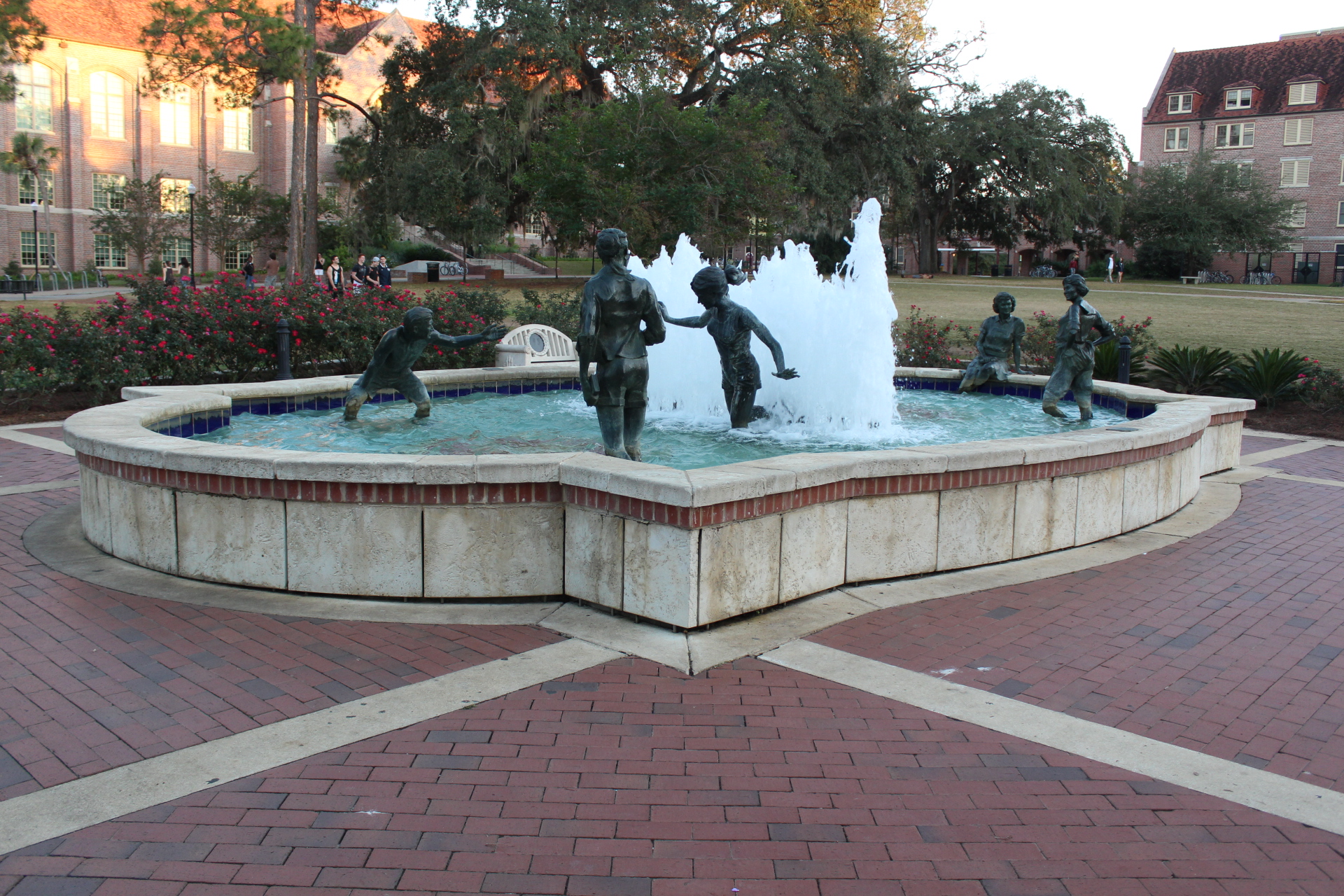
Florida State University
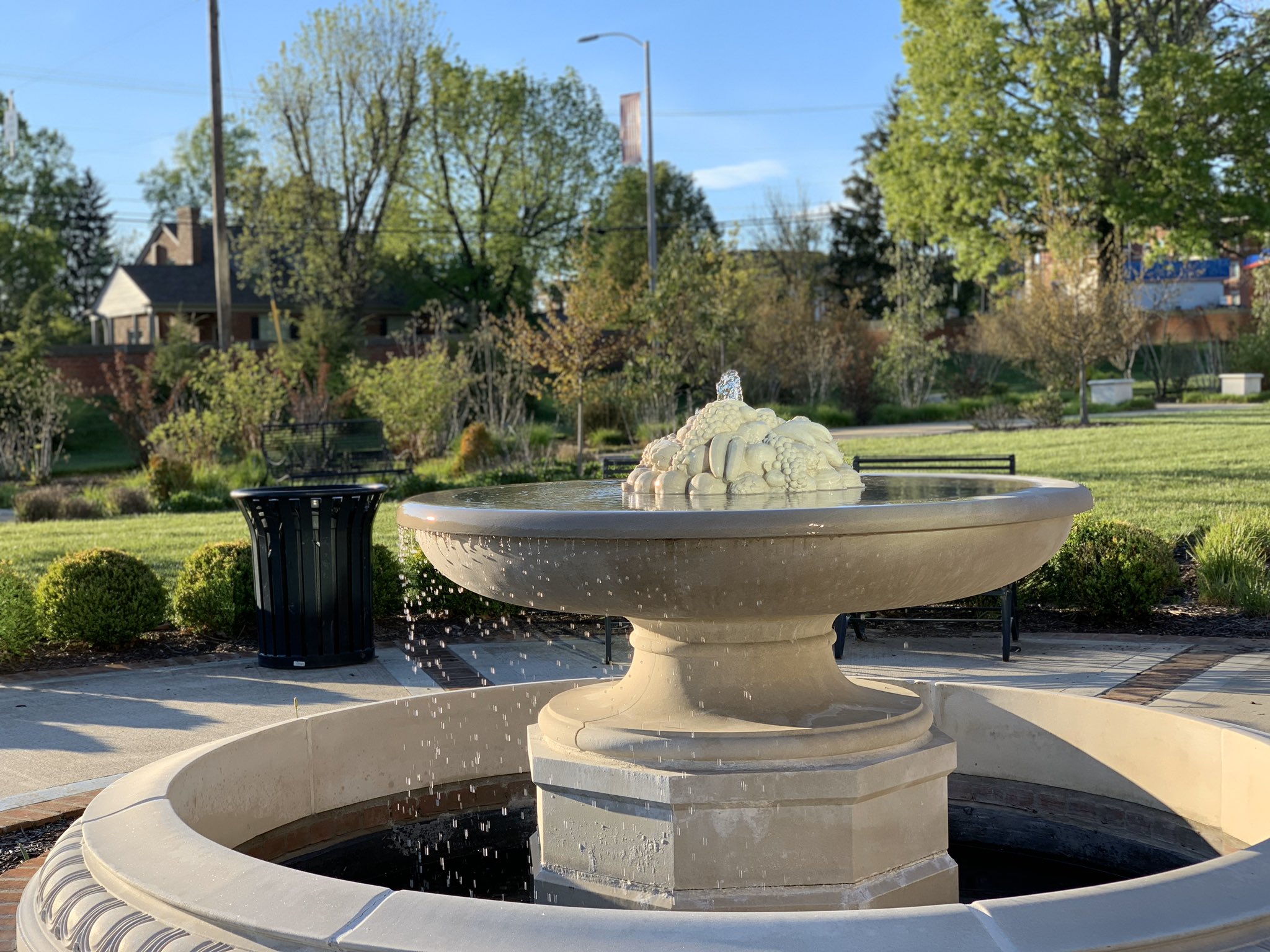
Eastern Kentucky University
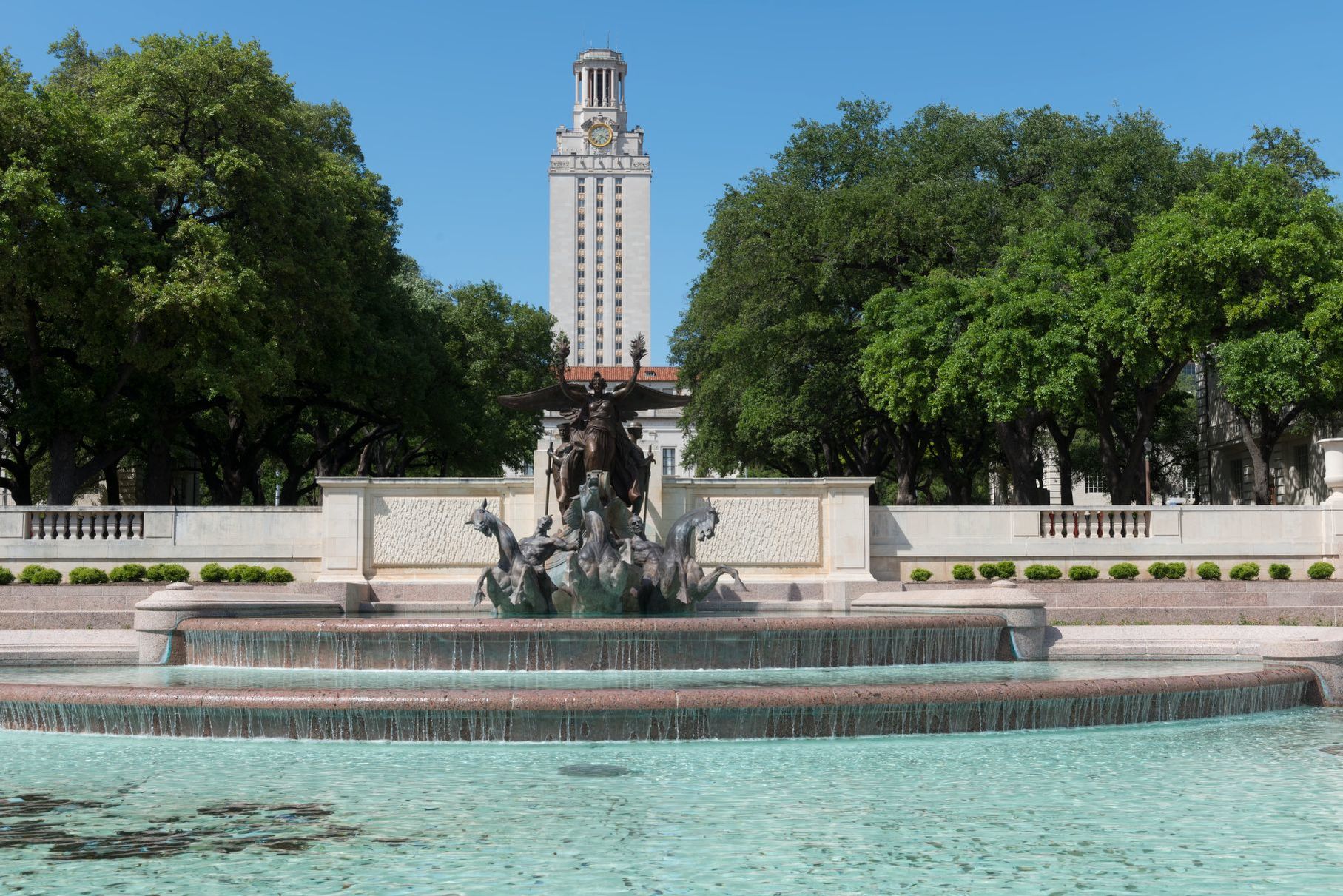
University of Texas Austin
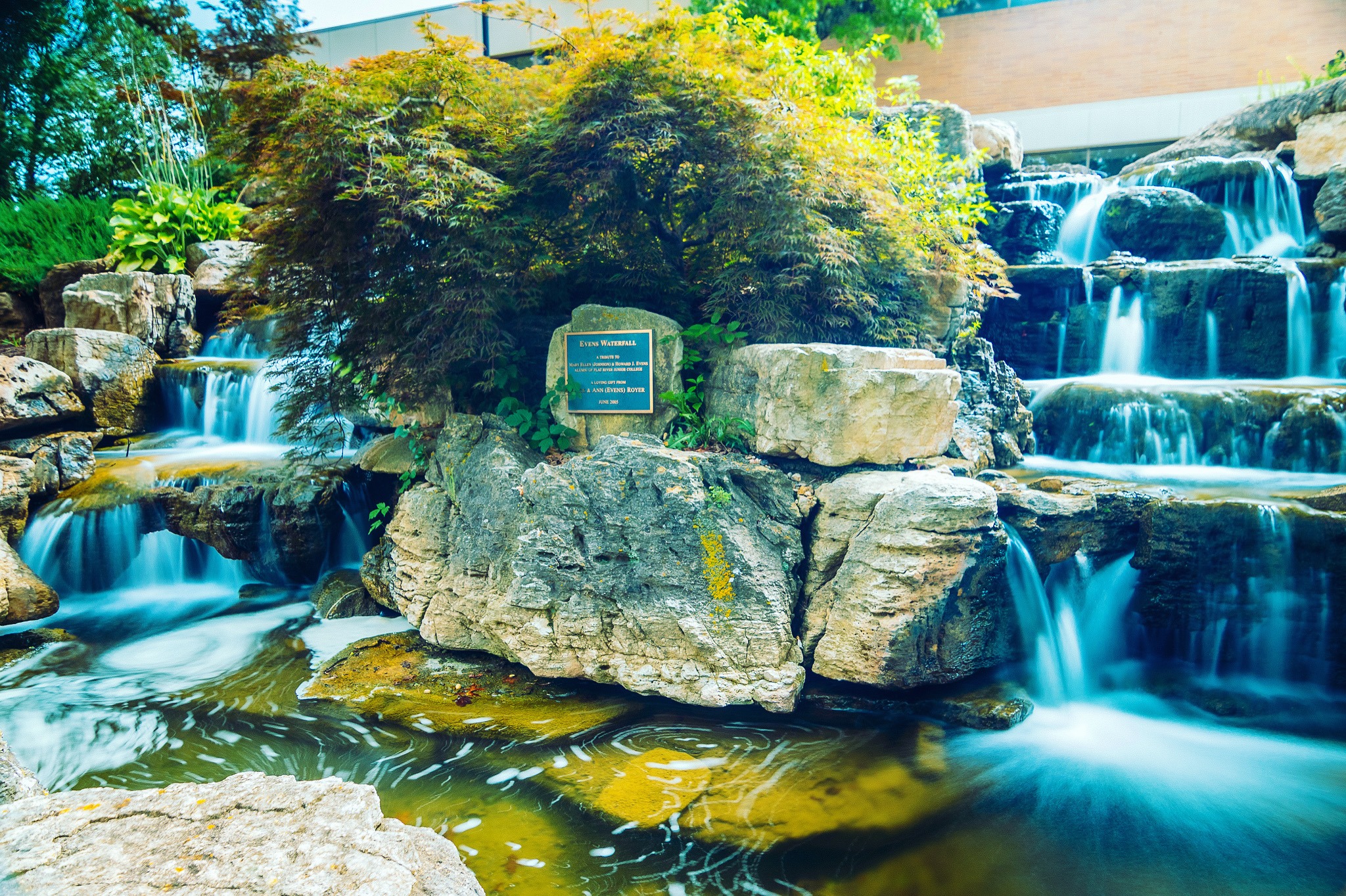
Mineral Area College Missouri

Henry Ford College
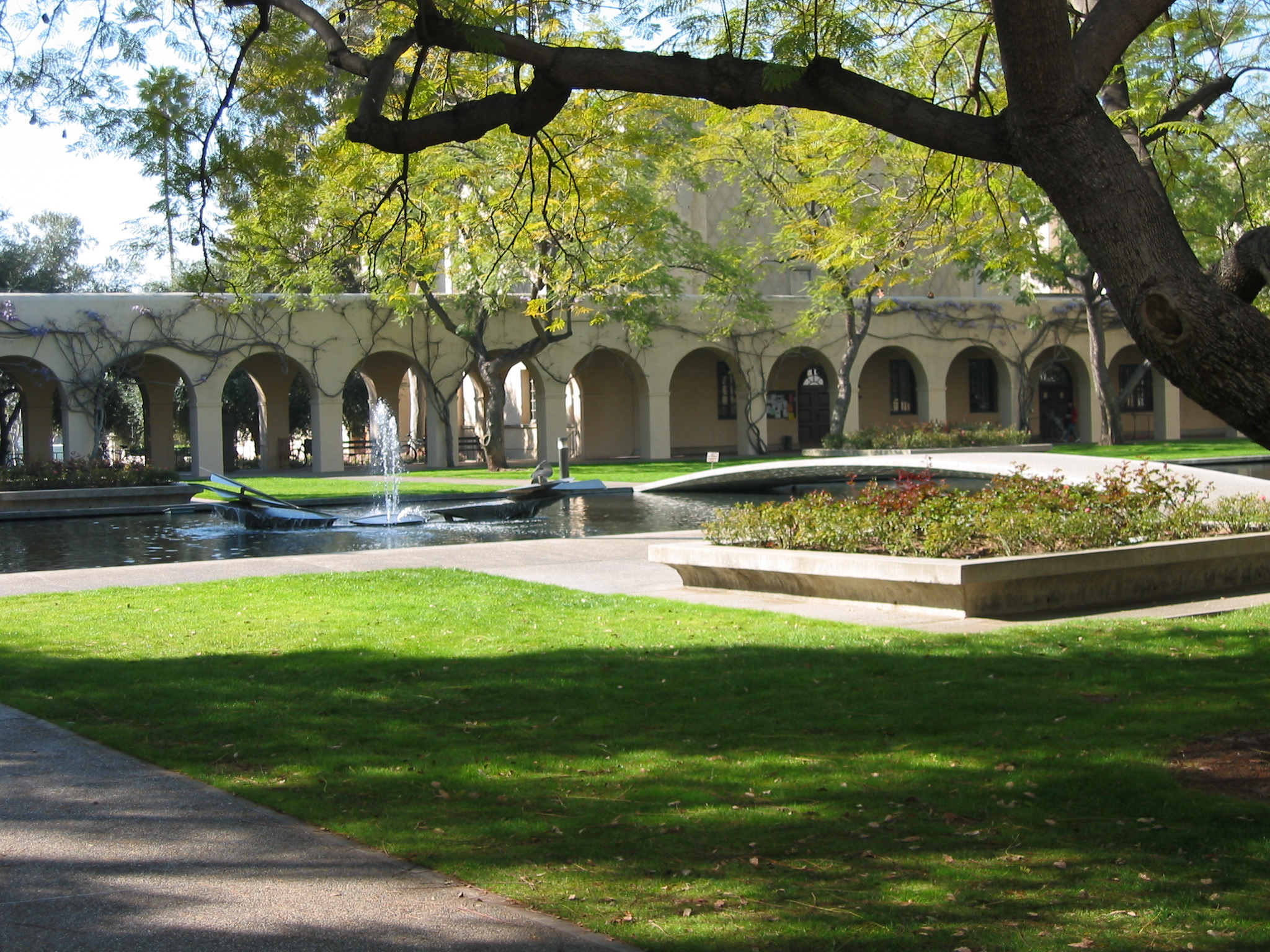
California Institute of Technology
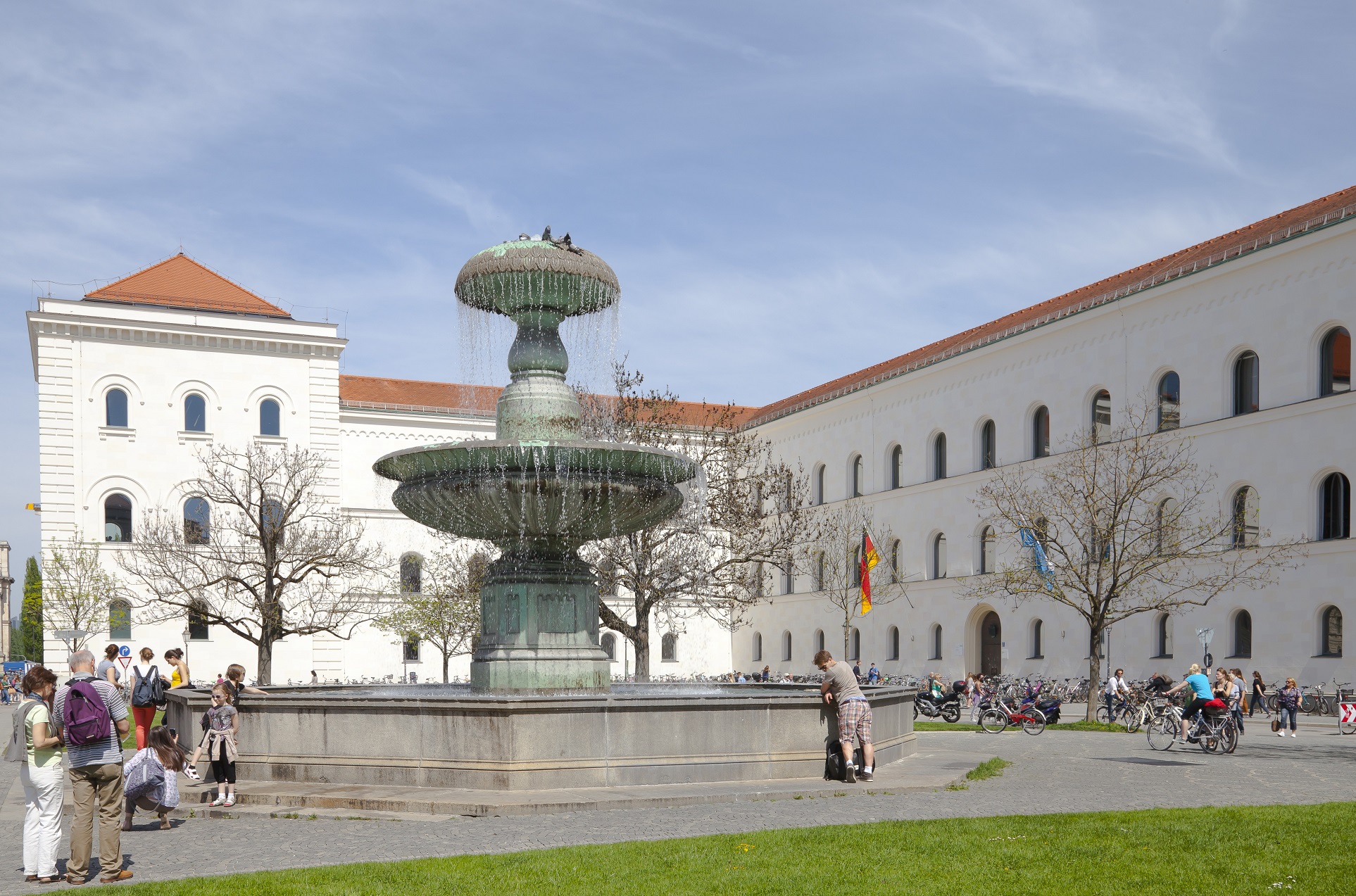
Ludwig-Maximilians-Universität München
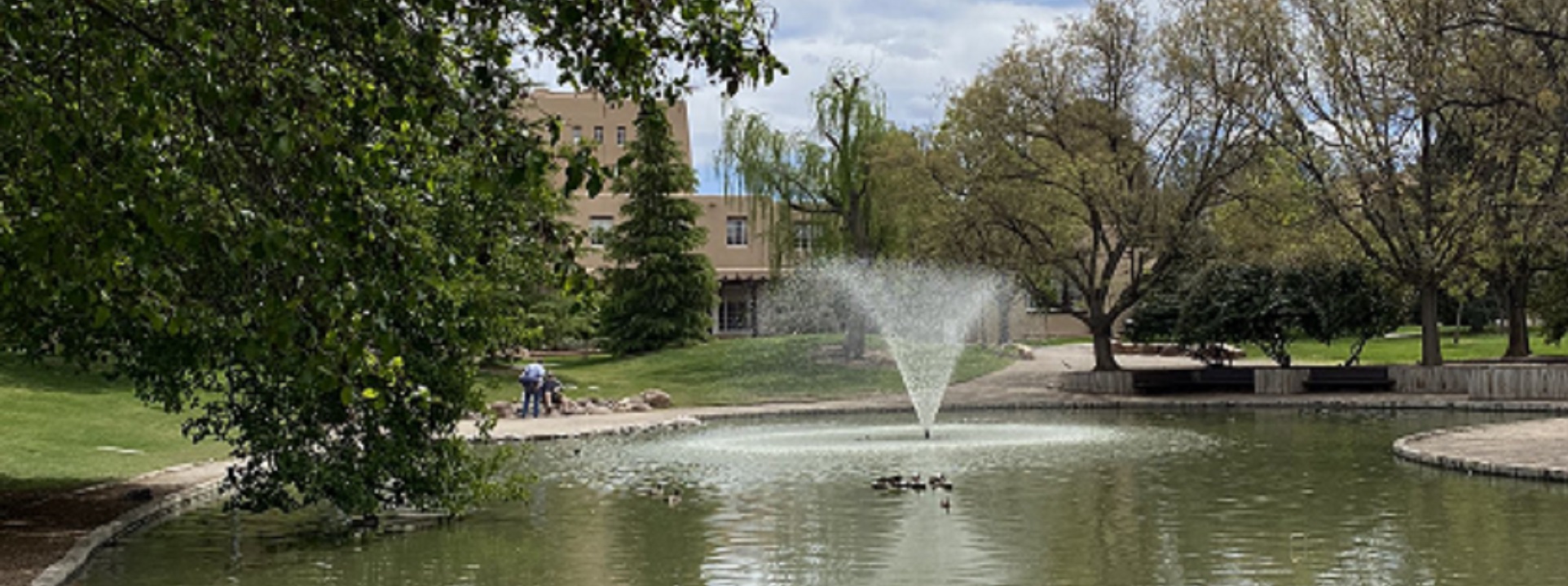
University of New Mexico
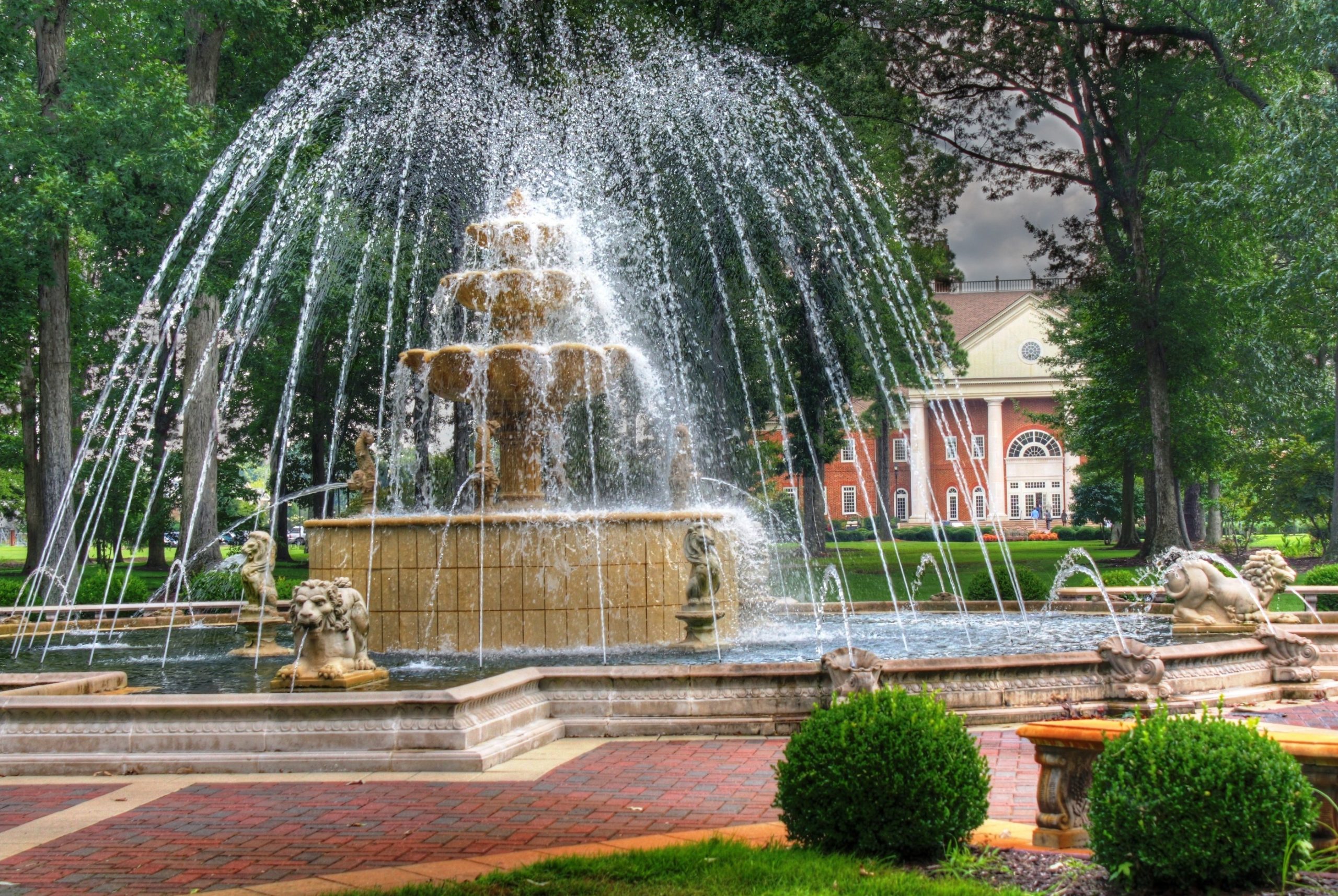
Regent University
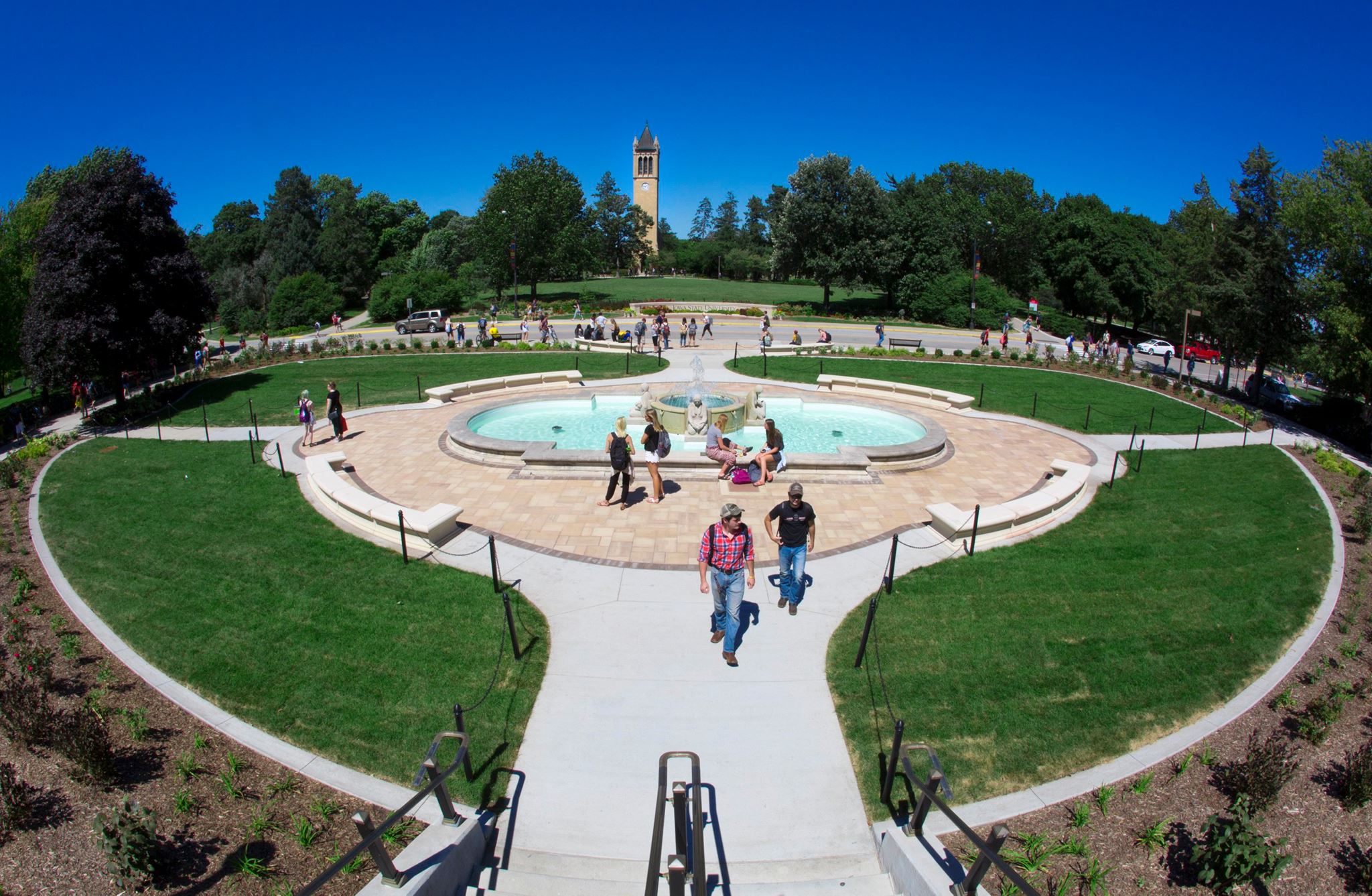
Iowa State University
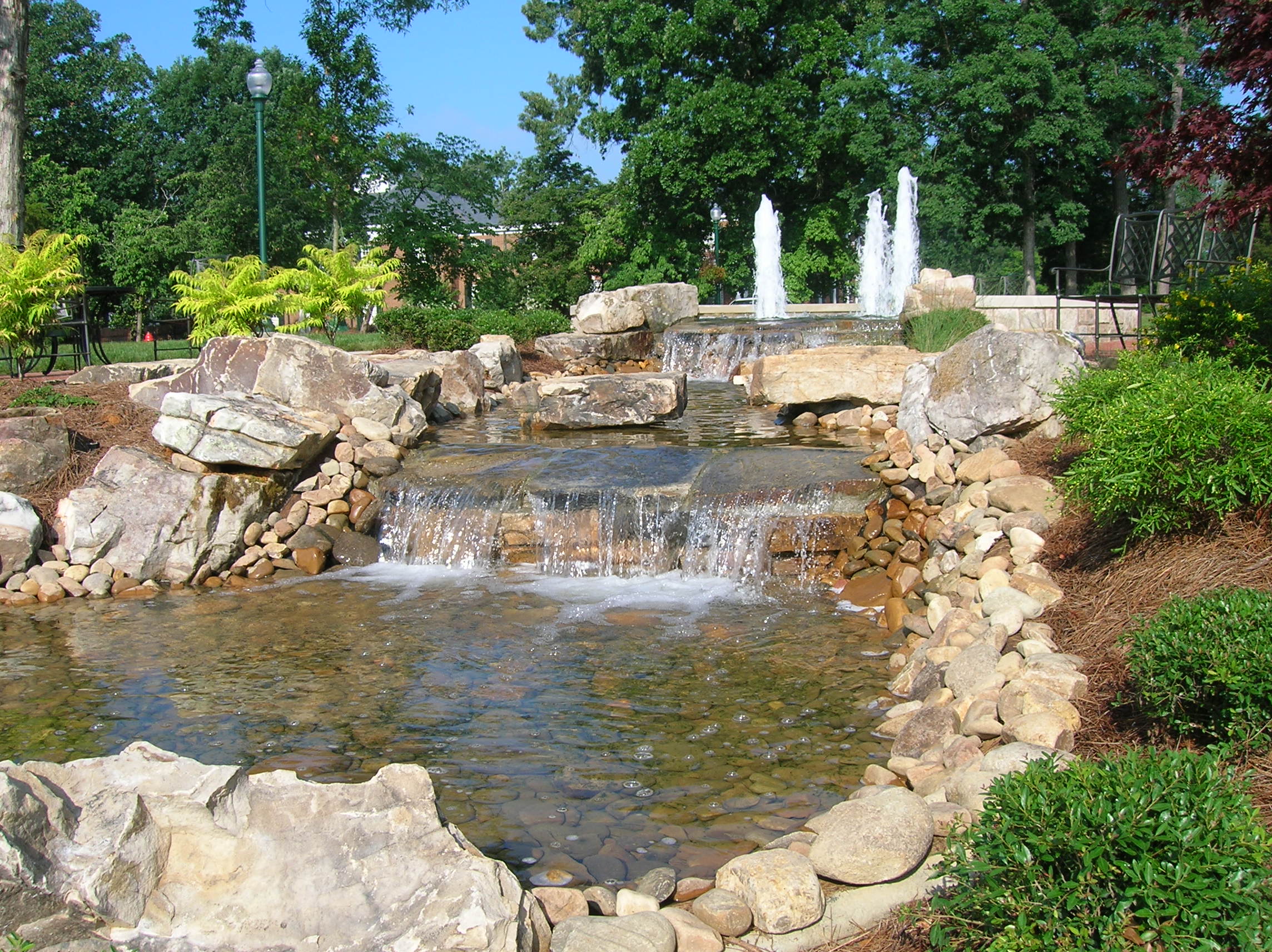
Berry College
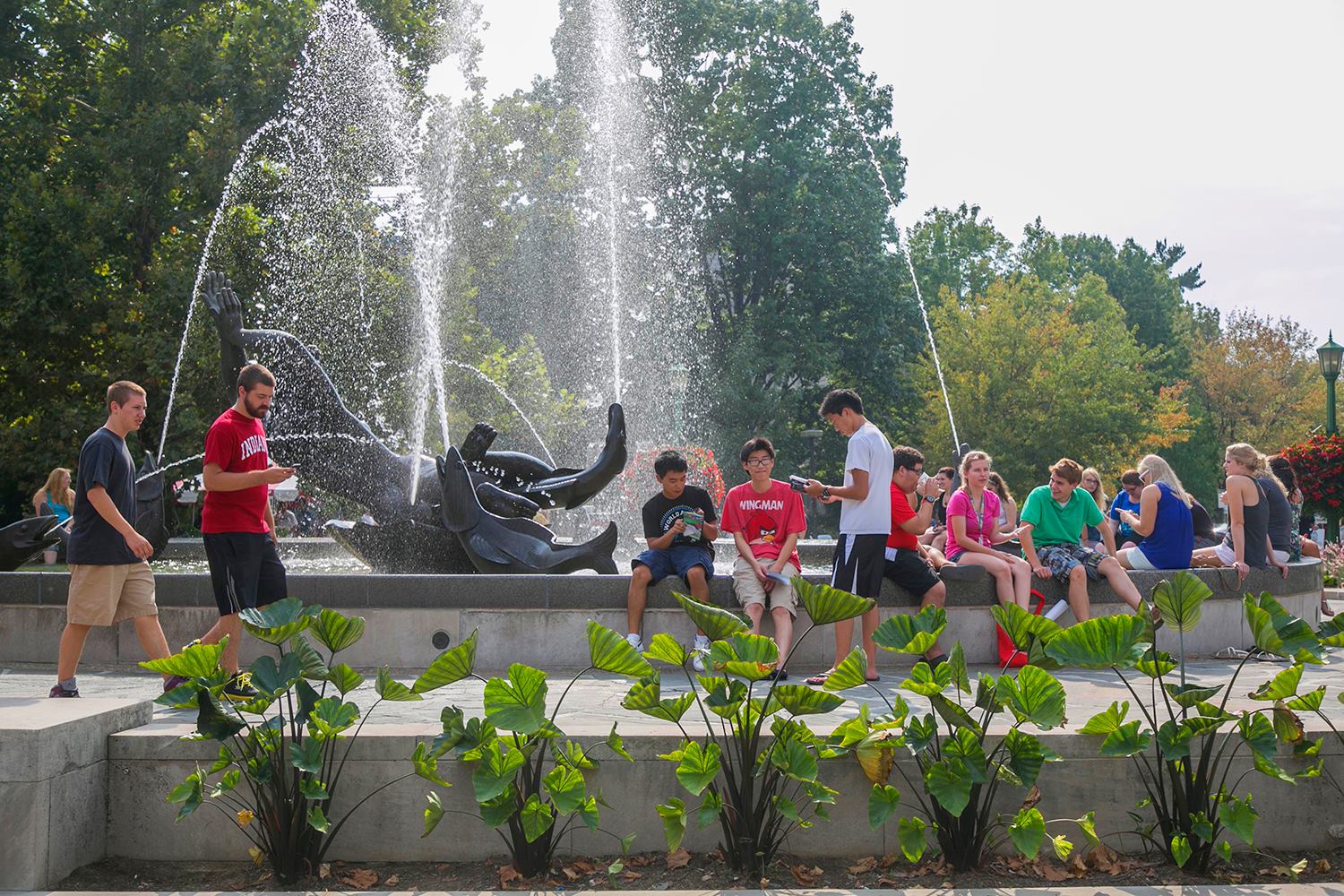
Indiana University
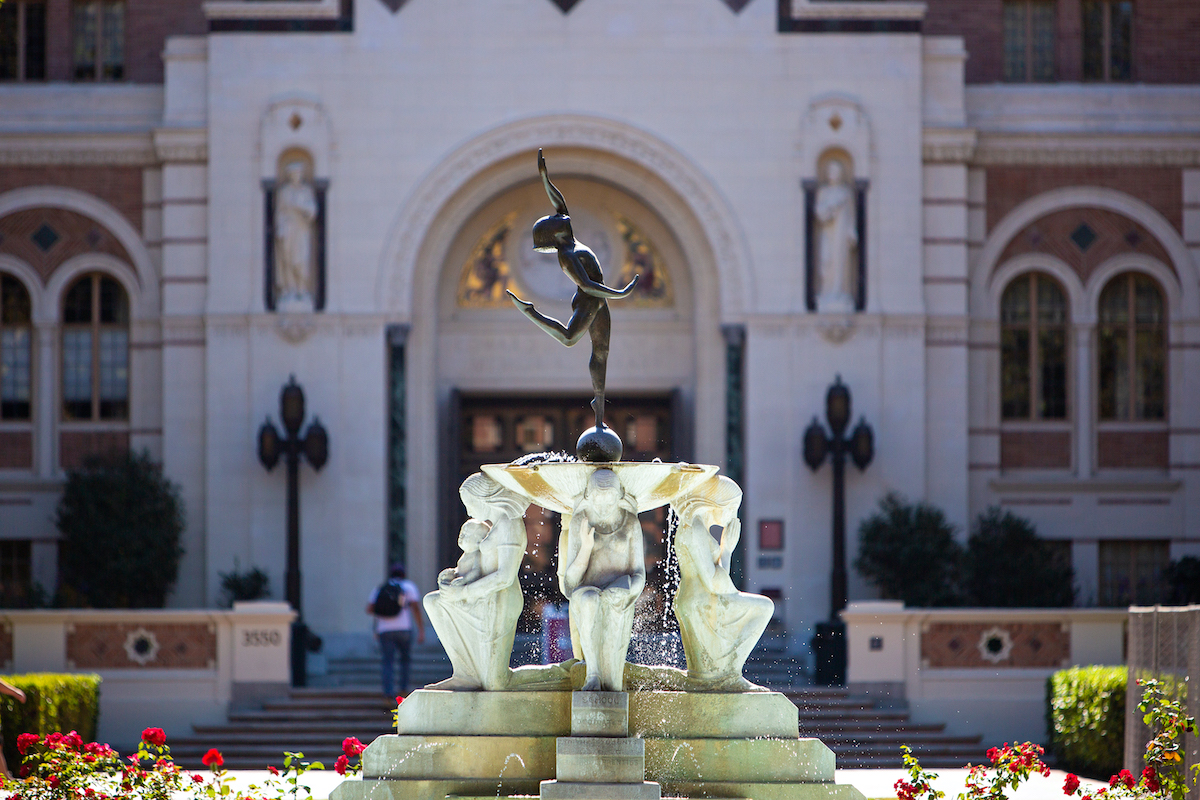
University of Southern California
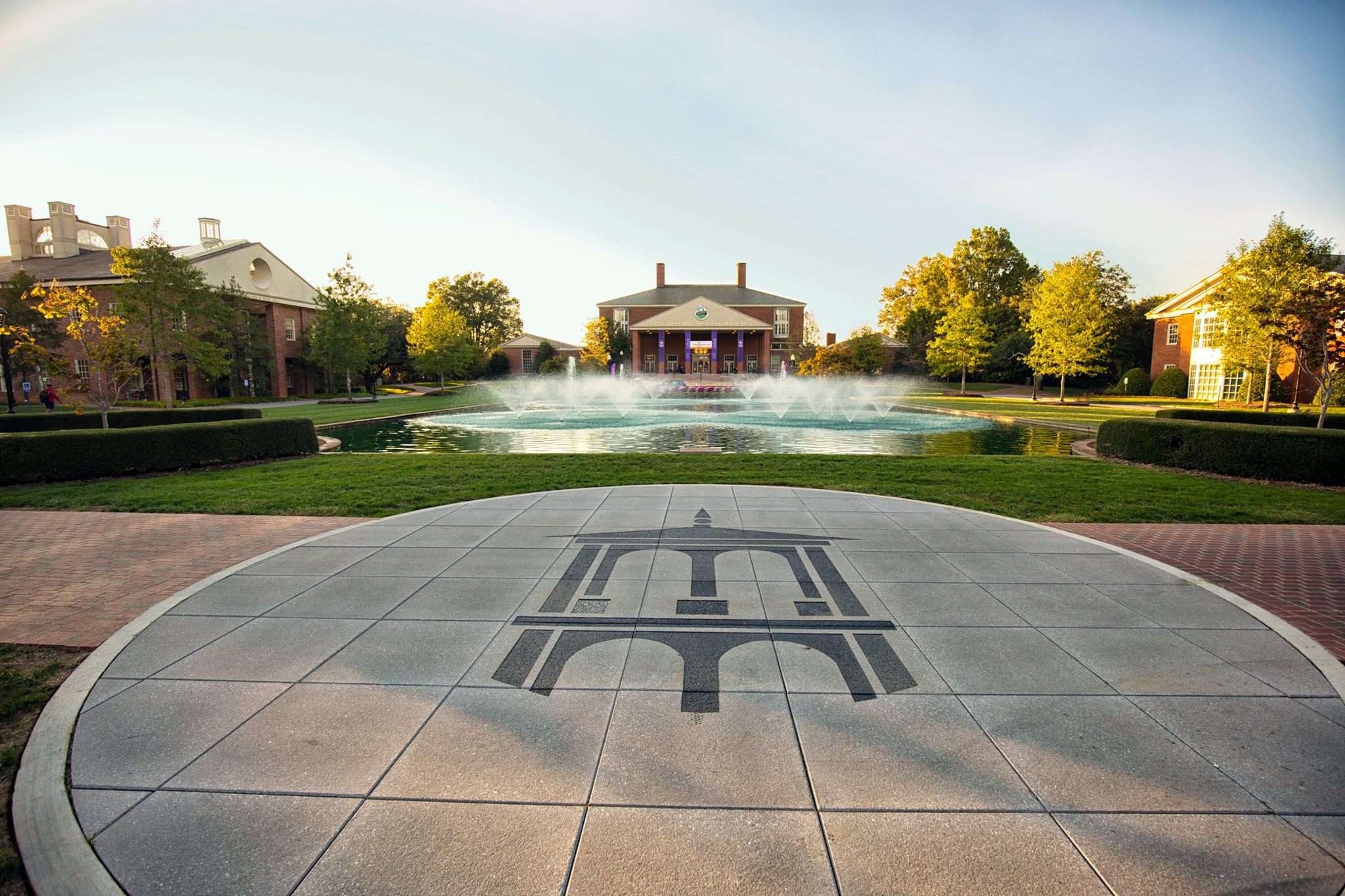
Furman University
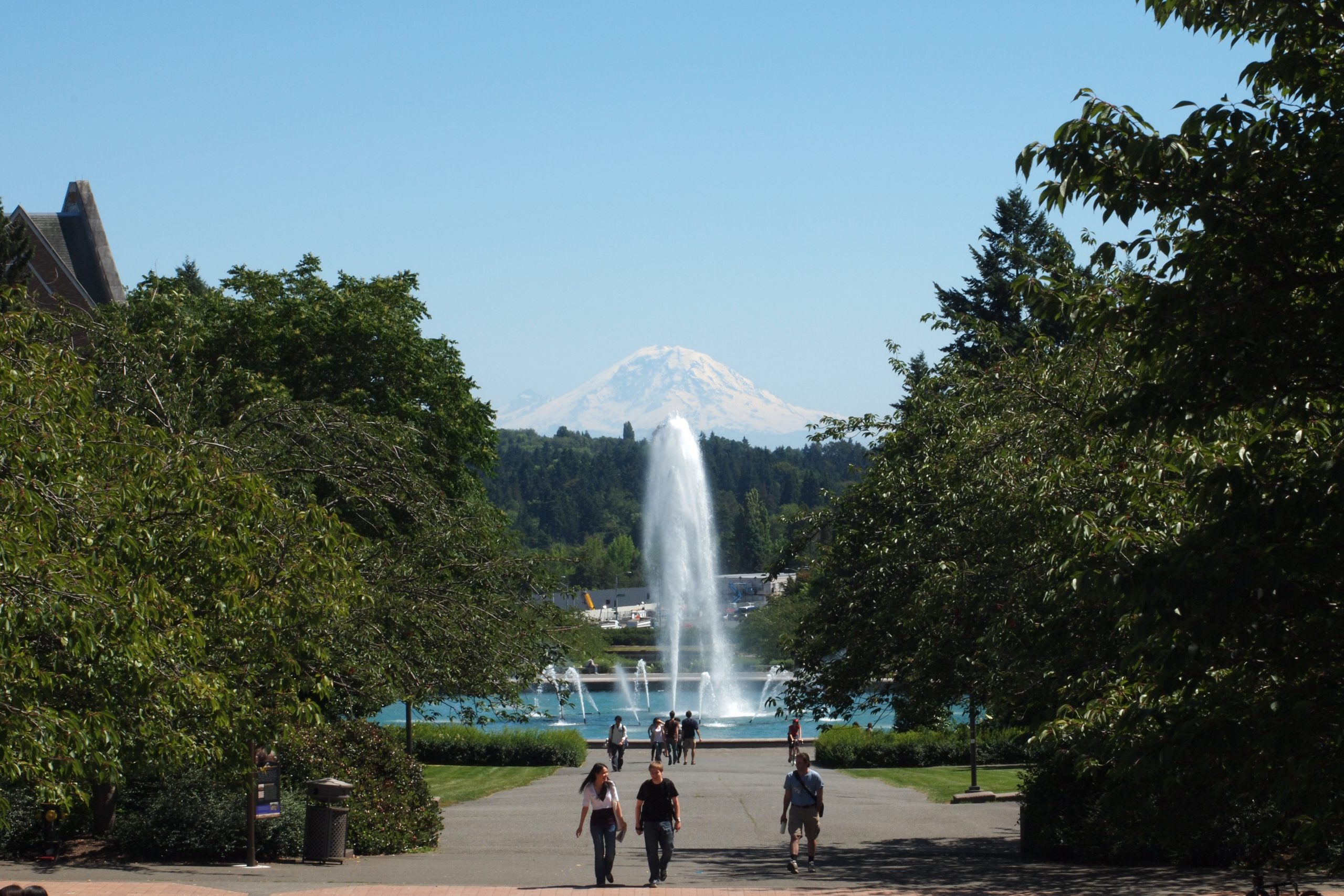
University of Washington
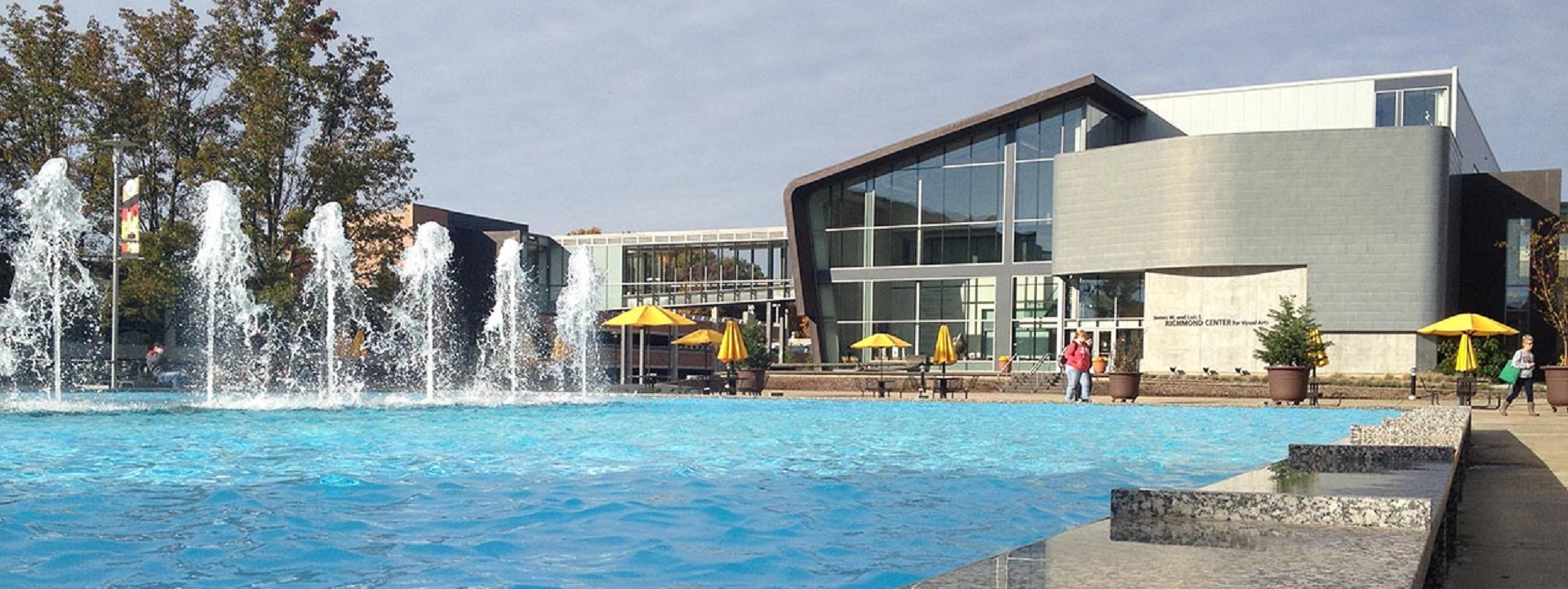
Western Michigan University
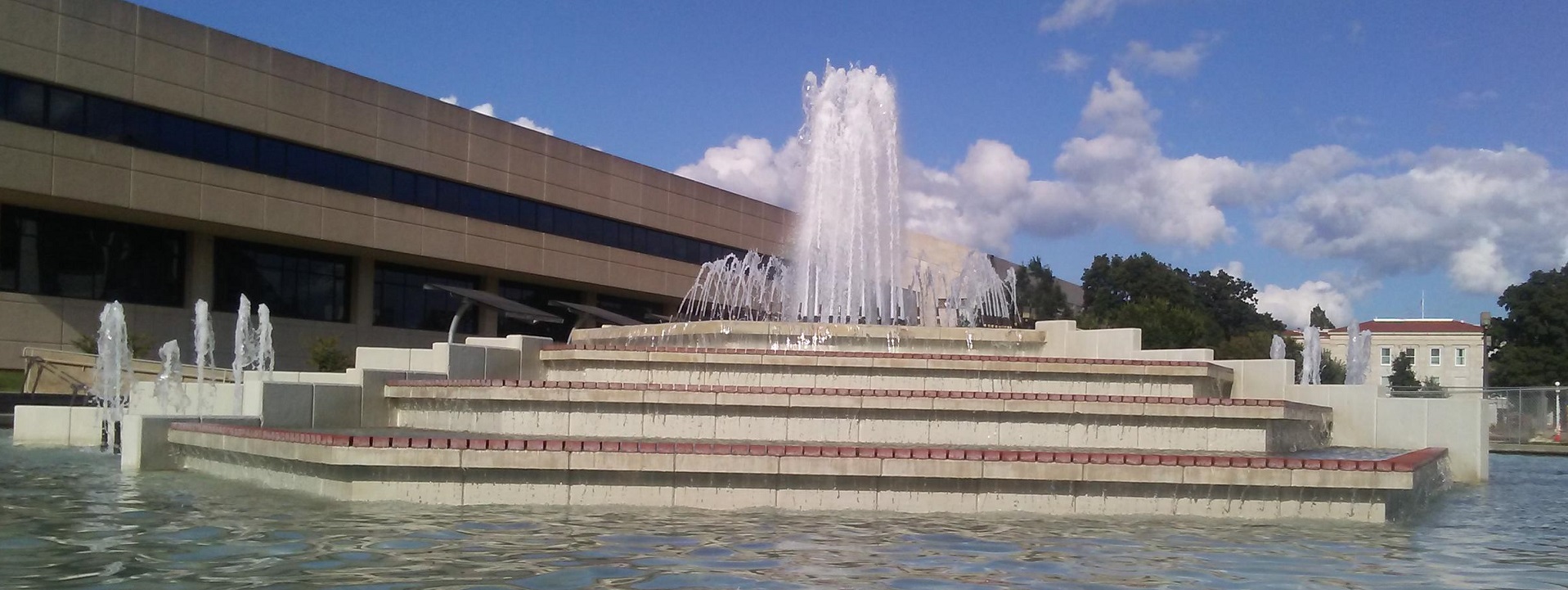
Missouri State University
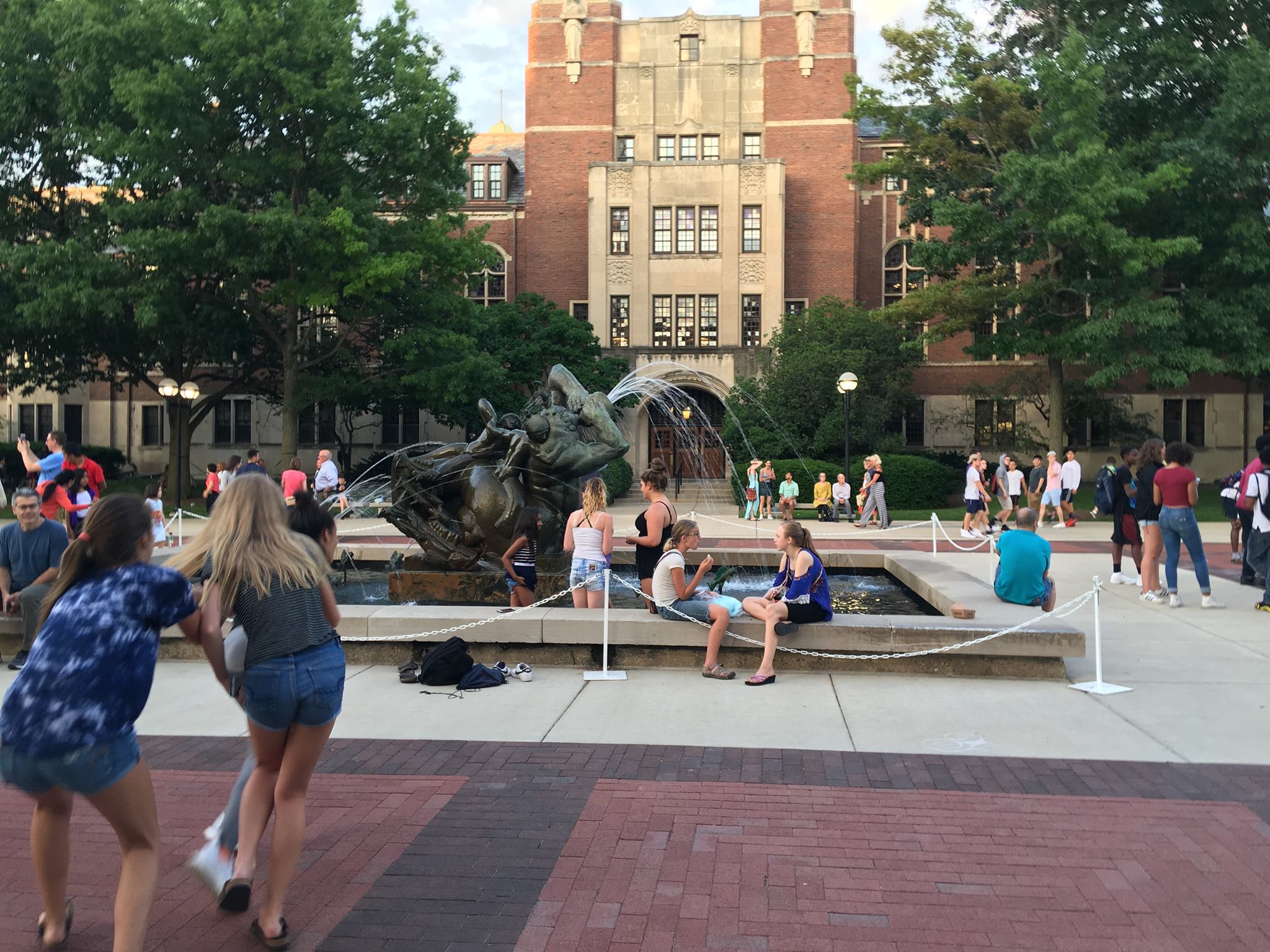
University of Michigan
Rural Well Water
Standards Iowa | Iowa Plumbing Code

Is it a campus or a park?
Trick question … it’s both. 😍 pic.twitter.com/jDFs0xNR8K— Iowa State University (@IowaStateU) August 6, 2025
Watersport
Athletic Competition Timing Standards
Today we update our understanding of best practice catalogs for outdoor and indoor watersport; primarily swimming and rowing. Use the login credentials at the upper right of our home page.
Michael Phelps Named No. 1 Athlete of Century By ESPN – https://t.co/ABuAyuQJBy pic.twitter.com/0swFlxT6ei
— Swimming World (@SwimmingWorld) July 18, 2024
Sapienza – Università di Roma
USA Swimming and the National Collegiate Athletic Association Swimming are two distinct organizations that oversee different aspects of competitive swimming in the United States. USA Swimming governs competitive swimming in the United States across all age groups and skill levels, while NCAA Swimming specifically focuses on collegiate-level swimming and diving competitions within the NCAA framework. Both organizations play crucial roles in the development and promotion of swimming in the United States.
Governing Body:
USA Swimming is the national governing body for the sport of swimming in the United States. It is responsible for overseeing competitive swimming at all levels, from grassroots programs to elite national and international competitions.
NCAA Swimming: NCAA Swimming is part of the National Collegiate Athletic Association (NCAA), which governs intercollegiate sports in the United States. NCAA Swimming specifically deals with collegiate-level swimming competitions among universities and colleges.
Scope:
USA Swimming is responsible for organizing and regulating competitive swimming for all age groups and skill levels, from youth swimmers to Masters swimmers (adults). It oversees swim clubs, hosts competitions, and develops national teams for international events.
NCAA Swimming: NCAA Swimming focuses exclusively on college-level swimming and diving competitions. It sets the rules and guidelines for swimming and diving programs at NCAA member institutions.
Membership:
Individuals, swim clubs, and teams can become members of USA Swimming, allowing them to participate in USA Swimming-sanctioned events, access coaching resources, and benefit from the organization’s development programs.
NCAA Swimming: NCAA Swimming is composed of collegiate athletes who compete for their respective universities and colleges. Athletes are typically student-athletes who represent their schools in NCAA-sanctioned competitions.
Competition Format:
USA Swimming hosts a wide range of competitions, including local, regional, and national meets, as well as Olympic Trials and international events. Swimmers compete as individuals, representing their swim clubs or teams.
NCAA Swimming: NCAA Swimming primarily consists of dual meets, invitational meets, and conference championships at the collegiate level. Swimmers represent their respective universities or colleges, earning points for their teams in dual meets and competing for conference and national titles.
Scholarships:
USA Swimming itself does not offer scholarships. Scholarships for competitive swimmers are typically awarded by colleges and universities based on an athlete’s performance and potential.
NCAA Swimming: NCAA member institutions offer scholarships to talented student-athletes in various sports, including swimming. These scholarships can cover tuition, room, board, and other expenses, making NCAA swimming an avenue for athletes to receive financial support for their education.
Turning our pool deck into a GYM 🤙🏋️♀️ pic.twitter.com/vfilShA8Ef
— Bobby Guntoro (@bobbygunt) September 25, 2023
Your call 📱 pic.twitter.com/4ubIUklHCi
— uncwswimdive (@uncwswimdive) July 9, 2024
The moment a father consoles daughter after missing out on olympics medal
pic.twitter.com/kSHd4AIH4Z— Science girl (@gunsnrosesgirl3) August 8, 2024

Uniform Swimming Pool, Spa & Hot Tub Code
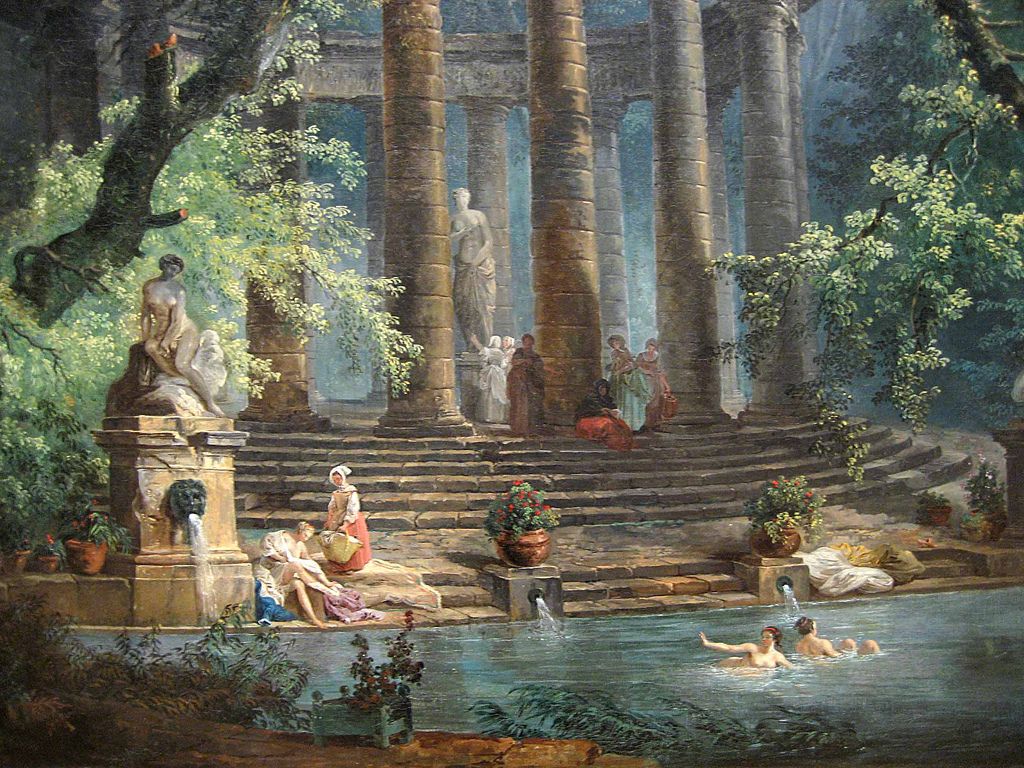
“The Bathing Pool” / Hubert Robert (French, 1733–1808) / Gift of J.P. Morgan
2024 Uniform Swimming Pool, Spa and Hot Tub Code
The IAPMO code development process is one of the best in the land. Its Read-Only Access — needed for light research — is also the best in the land; unlike other ANSI accredited standards developers (who shall be un-named). The current edition is dated 2024, with the 2027 revision accepted public input until March 3, 2025 according the schedule linked below:
2027 USPSHTC Code Development Calendar
Related:
New update alert! The 2022 update to the Trademark Assignment Dataset is now available online. Find 1.29 million trademark assignments, involving 2.28 million unique trademark properties issued by the USPTO between March 1952 and January 2023: https://t.co/njrDAbSpwB pic.twitter.com/GkAXrHoQ9T
— USPTO (@uspto) July 13, 2023
Welcome
Standards Michigan Group, LLC
455 East Eisenhower Parkway, Suite 300
Ann Arbor, MI 48108 USA
888-748-3670
DIRECTIONS
 |
 |
|
 |
 |
|
 |
 |
Layout mode
Predefined Skins
Custom Colors
Choose your skin color
Patterns Background
Images Background
error: Content is protected !!
Skip to content