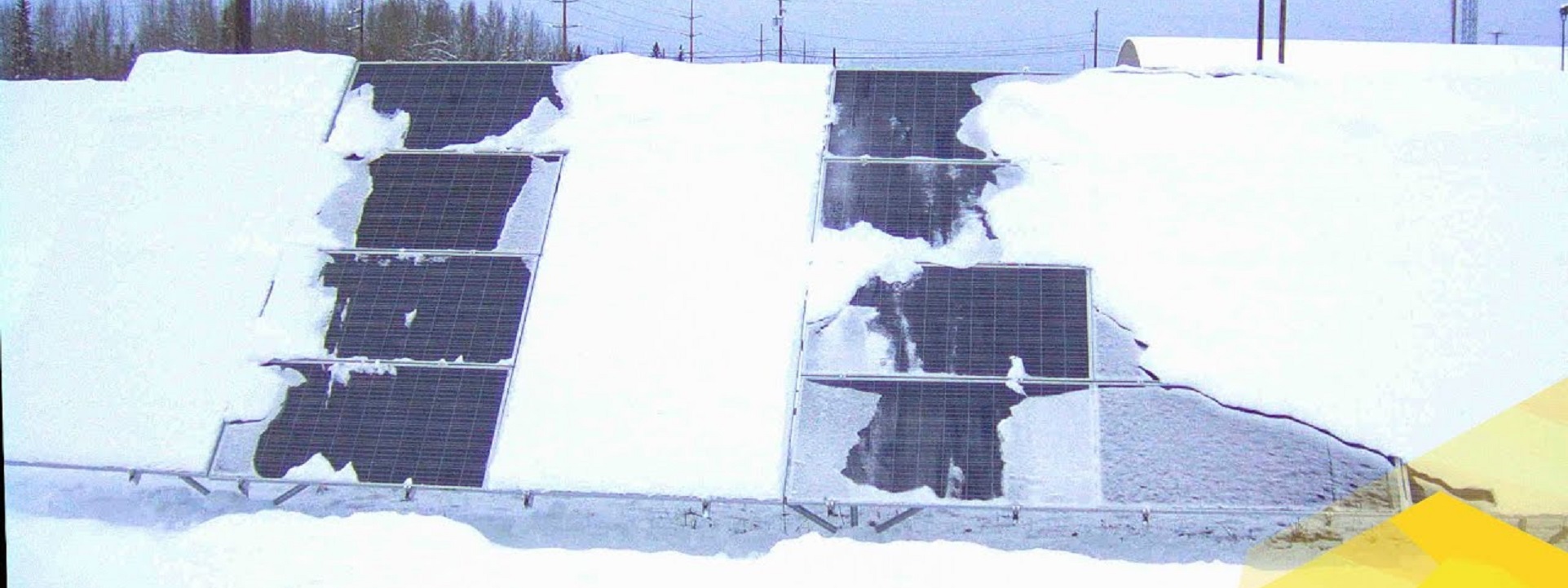
Today our focus turns to outdoor electric deicing and snow melting wiring systems identified as suitable for the environment and installed in accordance with the manufacturer’s instructions. They work silently to keep snow load from caving in roofs and icicles falling from gutters onto pedestrian pathways.
While the voltage and ampere requirement of the product itself is a known characteristic, the characteristic 0f the wiring pathway — voltage, ampere, grounding, short circuit, disconnect and control — is relatively more complicated and worthy of our attention. Articles 426-427 of the National Electrical Code is the relevant part of the NEC
We hold Articles 427 in the middle of our priority ranking for the 2023 NEC. We find that the more difficult issues for this technology is the determination of which trade specifies these systems — architectural, electrical, or mechanical; covered in previous posts. Instead, most of our time will be spent getting IEEE consensus products in step with it, specifically ANSI/IEEE 515 and IEEE 844/CSA 293.
Comments on the Second Draft of the 2026 NEC will be received until April 18th.
We collaborate with the IEEE Education & Healthcare Facility Committee which meets online 4 times per month in European and American time zones. Since a great deal of the technical basis for the NEC originates with the IEEE we will also collaborate with IEEE Standards Coordinating Committee 18 whose members are charged by the IEEE Standards Association to coordinate NFPA and IEEE consensus products.
Issue: [19-151]
Category: Electrical, Energy
Colleagues: Mike Anthony, Jim Harvey, Kane Howard, Jose Meijer
We were doing microgrids before microgrids were cool. We did not call our school boiler plants or campus district energy systems “microgrids” until the EPACT flooded the electrical power industry with a new cadre of policy makers, regulators and litigators and we were forced into a vocabulary upgrade.
We resume our engagement (and advocacy) for a few concepts which have tracked in the NFPA and IEEE standards development catalogs since the early 1990’s:
Nudge development of the National Electrical Code to recognize that loss of electrical power presents (i.e. reliability, availability) a greater hazard, and more frequent hazard, than wiring fire hazard.
The application of stand-alone AC to DC inverters in the 100 – 1000 watt range to convert DC power from an automobile to households. A portable vehicle to home 120 VAC outlet strip is effectively a “microgrid” and costs less than $100 not including the extension cords.
Expansion of the hybrid vehicle fittings with a built-in inverter to provide power to households in the 1000-2000 watt range. In contemporary parlance this arrangement is now referred to as “vehicle to home” (different than vehicle to grid)
Relaxation of NEC prohibitions against the sharing of residential backup generators and electric storage equipment between two or more separate houses. This can reduce cost significantly. Earthing, ground fault, disconnect, overcurrent protection can easily be solved if the vertical incumbents we describe in our ABOUT stop voting against us in the National Electrical Code
Stepping up the backup power systems that maintain the needed power for neighborhood internet access. Not all students and faculty live on campus.
Policy makers and regulators should think in terms of setting standards for 10-day, 30-day and 90-day survivability contingencies to limit civil unrest.
Preservation of contingencies with a judicious combination of absorption and electric chillers no matter what the electric rate. During a major regional contingency power is priceless.
Promote a “cultural change” among specifiers and university design guideline writers to permit use of aluminum wiring which cost 1/3 less than copper wiring. Use of aluminum wiring for backup “swing feeders” at medium voltage reduces the cost of an additional contingency by 2/3rds.
Reduce National Electrical Code circuit sizing rules so that distribution transformers within buildings can be reduced, thereby reducing material, heat waste and the reduction of wet-stacking in backup generators which reduces reliability.
This should be enough for an hour. We continue the conversation 4 times monthly with the IEEE Education & Healthcare Facilities Committee. Feel free to join us today with the login credentials at the upper right of our home page.
Mark your calendar for the Microgrid Knowledge Conference session, “Benefits of an Off-grid Microgrid-enabled Community”. This panel will describe the residential site, microgrid, fit to the city’s sustainability goals, and benefits & challenges of going off-grid. Register now! pic.twitter.com/hsAKrERIkj
Abstract: Increasing distributed topology design implementations, uncertainties due to solar photovoltaic systems generation intermittencies, and decreasing battery costs, have shifted the direction towards integration of battery energy storage systems (BESSs) with photovoltaic systems to form renewable microgrids (MGs). Specific benefits include, but are not limited to, seamless switching and islanding operations during outages and ancillary grid services. The evolution of battery chemistries and other components has also further enhanced practicality; however, developing these multifaceted MGs involves complexity in the design process. Consequently, stakeholders rely on connection standards and operational requirements to guarantee reliable and safe grid-connected operations.
This paper presents a technical overview of battery system architecture variations, benchmark requirements, integration challenges, guidelines for BESS design and interconnection, grid codes and standards, power conversion topologies, and operational grid services. In addition, a comprehensive review of the control strategies for battery equalization, energy management systems, communication, control of multiple BESSs, as well as a discussion on protection blinding and intentional islanding using BESSs is also provided. Finally, a discussion of the islanded and black start operation results for time-based analysis and standard validation of a 3MW/9MWh BESS in a grid-connected MG at the Florida International University (FIU) Engineering Campus is presented.
Today we break down the literature for exterior and interior pathways in education communities. We limit the term “pathway” to refer to human pathways (as in egress and ingress paths); not wiring or piping pathways. Maximum distance of travel from within a building and along an egress path toward safety is a core topic in building safety literature. Starting 2023 we will break down coverage of subject catalogs and bibliographies:
Pathways 100: Survey of all titles for both the exterior and interior environments
Pathways 200: Review of codes, standards and guidelines for building interiors
Pathways 300: Review of codes, standards and guidelines campus environment outside the buildings; all seasons
Pathways 500: Review of noteworthy litigation. Campus pathways are rich in possibilities for legal actions so we will refresh our understanding of the landmark decisions.
IFC §909.21.6 Proposal FS118-21 Pressurization systems for elevator pathways (now being discussed during the ICC Group A Committee Action Hearings in September)
American Society of Civil Engineers (roads, sidewalks)
We might venture onto the minefield of sensitivities about signage: too much, too many, too big, too small? There are signs everywhere in academia.
Many titles in the foregoing list are inspired by legal requirements of the Americans with Disabilities Act administered by the US Department of Justice
As usual, we’ll only have time to identify the titles and concepts in motion and set up a separate markup session. Open to everyone; use the login credentials at the upper right of our home page.
“The Via Appia: A Case Study in the Political Geography of Imperialism” Hannah Friedman. This article, published in the Journal of Historical Geography in 2011, examines the Appian Way as a product of Roman imperialism and a reflection of Roman attitudes toward the landscape and its inhabitants. The author draws on both textual and archaeological evidence to explore the road’s impact on the regions it passed through.
“The Appian Way: The Road that Built the Roman Empire” by Richard Talbert – Cambridge University Press 2012. A a comprehensive study of the Appian Way and its significance to the Roman Empire. The author draws on a wide range of archaeological and historical evidence to explore the road’s construction, use, and legacy.
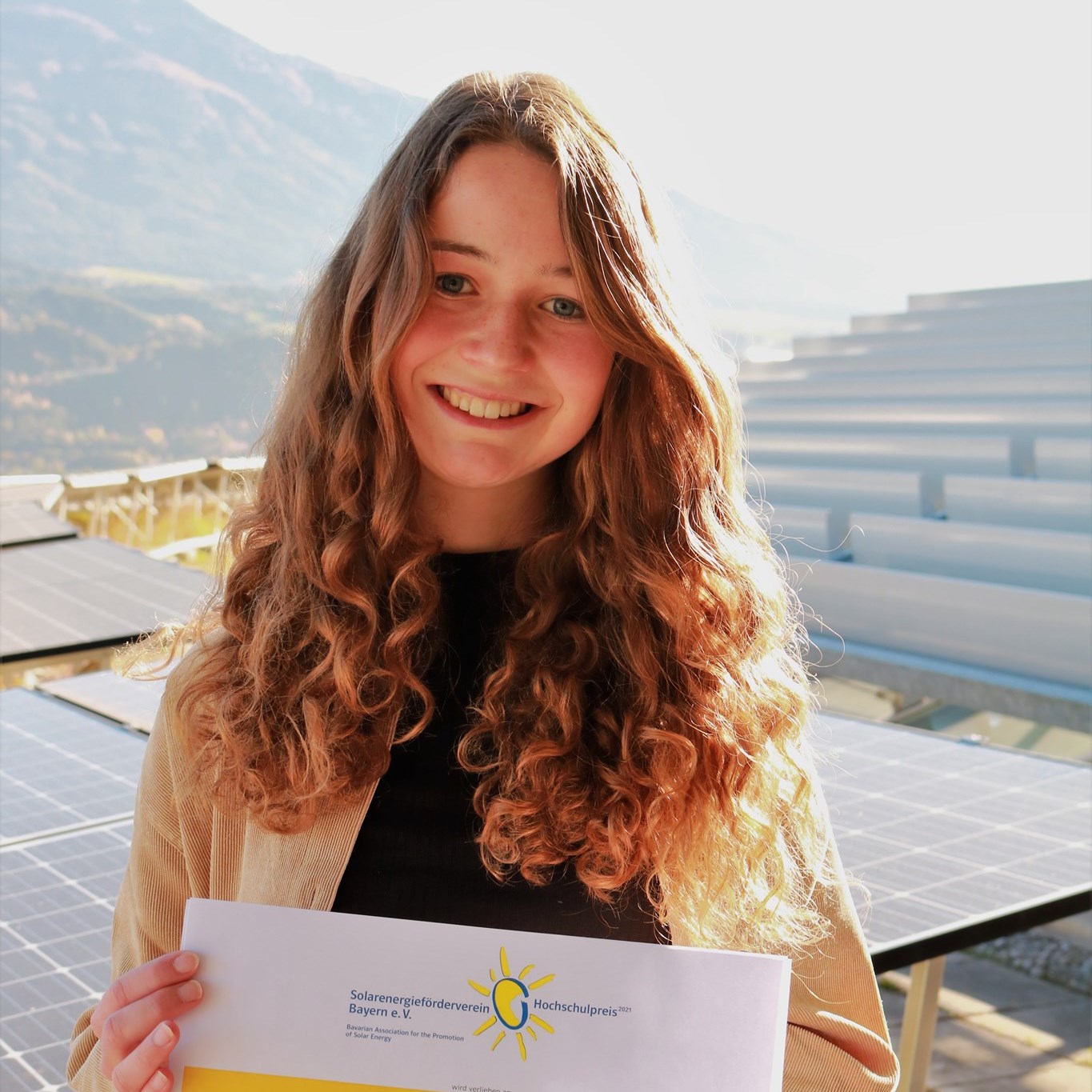
Sie strahlt vor Freude über ihre Auszeichnung – TH-Alumna Melanie Klaus. Für ihre Bachelorarbeit im Bereich Erneuerbare Energien wurde sie vom Solarenergieförderverein Bayern geehrt. In ihrer Bachelorarbeit im Studiengang Elektro- und Informationstechnik untersuchte sie das Zusammenspiel von Wind- und Solarenergie und den Nutzen, der sich hieraus für die regenerative Energieerzeugung erzielen lässt. Untersucht wurde also die Nutzung der natürlichen Kombination von Wind und Sonne für die Energieerzeugung. Um die Rentabilität dieser Einspeisekombination zu ermitteln, hat Melanie Klaus ein Software-Tool entwickelt, welches zur Planung und Simulation abgestimmter Photovoltaik-Wind-Kombinationen dient und bereits für die Errichtung einer Photovoltaik-Anlage zu einem Windpark eingesetzt wird.
Starting 2023 we separated our coverage of solar energy standards from our standing Electrical and Energy colloquia and placed emphasis on seasonal life cycle returns. We start with the following titles
International Code Council Section 1607 Photovoltaic panels or modules
ASHRAE International: 90.1 Building Energy Code & 189.1 Green Energy Code
Time permitting: Example design specification and construction contract.
Other standards developers and publishers are also present in this domain but this list is where we will start given that we only have an hour. Join us today at 16:00 with the login credentials at the upper right of our home page.
This content is accessible to paid subscribers. To view it please enter your password below or send mike@standardsmichigan.com a request for subscription details.
IEEE Standard for Interconnecting Distributed Resources with Electric Power Systems is effectively the global standard for interconnection of distributed resources with large scale electric power systems. It provides requirements relevant to the performance, operation, testing, safety, and maintenance of the interconnection. Apart from the power reliability and sustainability zietgeist we have seen in campus bulk power distribution systems, this title is usually referenced in research projects undertaken in university research enterprises. The standard is intended to be universally adoptable, technology-neutral, and cover distributed resources as large 10 MVA. To wit:
We collaborate with the IEEE Education & Healthcare Facilities Committee on this an related titles. This committee’s meetings are held 4 times monthly in European and American time zones. International Electrical Technical Commission titles are items on the standing agenda; a few representative titles are listed in addition to IEEE titles below:
IEEE 21451-001-2017 Recommended Practice for Signal Treatment Applied to Smart Transducers: This guide supports the ability to uniformly processing and classifying data from sensors and actuators in a smart system. The standard enables a common interpretation of data and grid interoperability. NIST personnel served on this standard’s working group, providing NIST research on sensors and actuators.
IEEE 2030.7-2017 Standard for the Specification of Microgrid Controllers: This standard established requirements for controllers, used to sense and manage microgrids. These requirements inform the manufacturing of controllers, and ultimately enable grid interoperability. NIST funding aided this standard’s development.
IEEE 2030.8 Standard for Testing Microgrid Controllers: This testing standard helps verify that microgrid controllers meet these requirements, and, thus, will work as intended. NIST funding aided this standard’s development.
New update alert! The 2022 update to the Trademark Assignment Dataset is now available online. Find 1.29 million trademark assignments, involving 2.28 million unique trademark properties issued by the USPTO between March 1952 and January 2023: https://t.co/njrDAbSpwBpic.twitter.com/GkAXrHoQ9T









_(1920)_(14801820673).jpg)