“We see that the Pacific theater presents significantly longer distances than any theater we operated in the recent past, and that’s going to present some pretty significant fuel/logistic supply chain risk,” said DAD Roberto Guerrero.https://t.co/ncdcEwP6d3
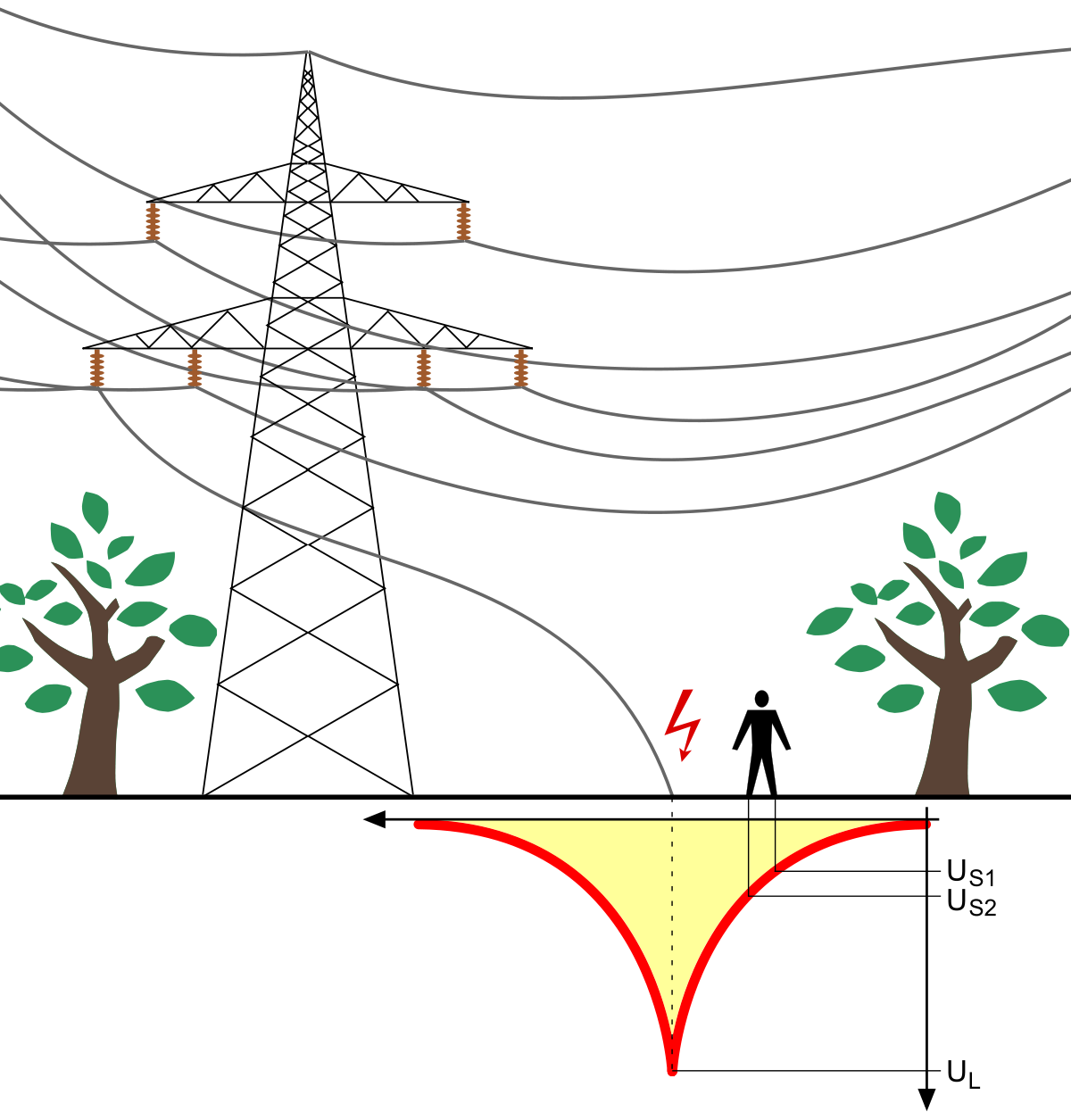
Abstract. Stray voltage is caused by voltage drop and ground faults and may have its origin on the primary electrical distribution system or on the customer’s secondary electrical system. The rms value of the neutral-to-earth voltage along a primary distribution line may be at a value of zero some distance from the substation depending on the condition of the conductor resistances, grounding resistances, and the amount of load. Neutral-to-earth resistance is not the cause of stray voltage; however, the value of this resistance to earth at a particular location will affect the level of stray voltage. A four-wire single-phase feeder system supplying farm buildings from a single metering point is effective in preventing on-farm secondary neutral voltage drop, provided the four-wire system is extended to all farm loads, and provided no high-magnitude ground faults are present. Isolation of the primary and secondary neutral systems at the distribution transformer is effective in preventing off-farm sources from entering the customer’s system. This separation may be accomplished using a number of commercially available devices.
“Fish and chips was in many ways the pioneer fast-food industry. It became an essential component of working-class diet and popular culture in parts of London, and over wide areas of industrial midland and northern England and southern Scotland, in the early decades of the twentieth century…I propose to argue that the fish and chip trade was not only important enough in itself to justify sustained historical analysis, but also that it provides a useful vantage point for examining important changes in British society more generally.”
— John Walken, 1998, Journal of Social History
In England I’m in a very international community. I’m meeting students attempting to learn English, they are from all over the world. Many have never heard of Jesus, some have heard the name and nothing more. It’s amazing, a kind smile and warm conversation is a perfect pretext… pic.twitter.com/jLiDAc8nlU
Also widely known as “Will Ye Go, Lassie, Go?” or “Purple Heather” is a beloved folk song with roots in both Scottish and Irish traditions. It’s a romantic invitation to wander the hills and pick wild mountain thyme (a fragrant herb also called wild thyme or “purple heather” in some versions), symbolizing love and the beauty of nature.
Historian Richard Miniter interprets America’s cultural and political foundations as stemming from four distinct English religious utopias—coercive visions of ideal societies—brought by settlers during the colonial era, rooted in the ideological divides of the English Civil War (Puritans vs. Royalists/Cavaliers).
Puritans (Roundheads) from East Anglia landed in New England (e.g., Massachusetts). They viewed liberty as the freedom to impose moral virtue and godly order on society, creating tightly regulated communities focused on communal piety and moral enforcement.
Cavaliers (Royalists/Anglicans) from southwest England settled in Virginia and the South. They emphasized hierarchical order, aristocratic values, and loyalty to established authority, building plantation-based societies with Anglican traditions.
Quakers and other dissenters (often from the West Midlands) arrived in the Middle States (e.g., Pennsylvania, New York, Delaware). They promoted religious tolerance, pacifism, and egalitarian ideals in diverse, pluralistic colonies.
Borderers/Scots-Irish Presbyterians from the English-Scottish borderlands first landed in the backcountry regions of the Appalachian frontier; thereafter migrating deeper into the new territories of the Ozark Mountains Missouri. They brought a rugged, clan-based, individualistic ethos with Calvinist influences, valuing personal honor and resistance to centralized control.
These four groups’ competing visions—of imposed virtue, hierarchy, tolerance, and frontier independence—created enduring regional tensions that still shape modern American society, politics, and debates over freedom and governance. This view enlightens understanding of why the United States remains in one piece; however tenuous.
The modern Democratic Party traces its cultural and ideological roots to the Roundheads from the English Civil War. These were the ideological, intolerant, legalistic faction that sought to impose moral virtue and godly order on society, often through coercive means like censorship and value-shaping institutions (e.g., schools, colleges and government programs fortified by battalions of lawyers ).
Miniter links this to contemporary Democrats’ emphasis on identity politics, political correctness (which he calls a form of class warfare), and paternalistic efforts to mold citizens’ views—through regulation and ownership of legacy and electronic media.
In contrast, he sees Republicans drawing more from Cavalier (hierarchical, traditional) and Borderer (individualistic, anti-authority) traditions which conflict with the Leftist Immersion of United States public higher education of which most international students are hardly aware.
Vermont is the largest producer of maple syrup in the United States, and the maple syrup industry is an important part of the state’s economy and culture. Vermont maple syrup is renowned for its high quality and distinctive flavor, and many people around the world seek out Vermont maple syrup specifically.
The maple syrup industry in Vermont is primarily made up of small-scale family farms, where maple sap is collected from sugar maple trees in early spring using a process called “sugaring.” The sap is then boiled down to produce pure maple syrup, which is graded according to its color and flavor. Vermont maple syrup is graded on a scale from Grade A (lighter in color and milder in flavor) to Grade B (darker in color and more robust in flavor).
The Vermont maple syrup industry is heavily regulated to ensure quality and safety, and the state has strict standards for labeling and grading maple syrup. In addition to pure maple syrup, many Vermont maple producers also make maple candy, maple cream, and other maple products.
Many accommodations such as dormitories, fraternities and sororities have working fireplaces — wood burning and natural gas. Community spaces such as student unions, libraries and recreation spaces also have fireplaces as a central feature.
The purpose of NFPA 211 is to reduce fire hazards by discovering and promulgating best practice for the safe removal of flue gases, the proper installation of solid fuel-burning appliances, and the correct construction and installation of chimneys, fireplaces, and venting systems. The current 2019 Edition is linked below:
The 2024 has been released. To guide our inquiry into safety and sustainability concepts for the 2027 Edition we like review the developmental transcripts of previous edition:
New update alert! The 2022 update to the Trademark Assignment Dataset is now available online. Find 1.29 million trademark assignments, involving 2.28 million unique trademark properties issued by the USPTO between March 1952 and January 2023: https://t.co/njrDAbSpwBpic.twitter.com/GkAXrHoQ9T