Since so much of what we do in standards setting is built upon a foundation of a shared understanding and agreement of the meaning of words (no less so than in technical standard setting) that time is well spent reflecting upon the origin of the nouns and verbs of that we use every day. Best practice cannot be discovered, much less promulgated, without its understanding secured with common language.
👑 Today, Dutch King Willem-Alexander celebrates his 57th birthday with Queen Máxima and his daughters Amalia, Alexia and Ariane in Emmen, a town in the northeastern Netherlands.
— [Wim Dehandschutter] (@WDehandschutter) April 27, 2024
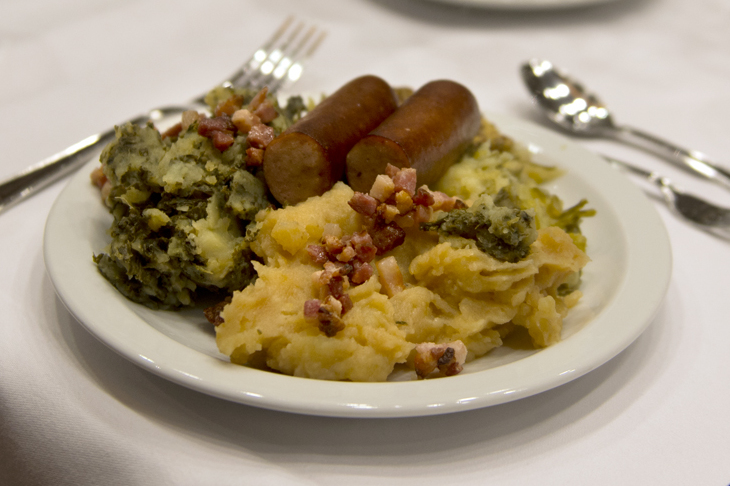
Stamppot is a Dutch comfort food known for its simplicity and versatility. It combines mashed potatoes with various vegetables, typically leafy greens like kale (boerenkool), endive (andijvie), or sauerkraut (zuurkool), and often includes bacon or sausage.
The name “stamppot” comes from the Dutch words “stampen” (to mash) and “pot” (pot). The dish is prepared by mashing the boiled potatoes and vegetables together in a single pot. The result is a slightly chunky mixture of mashed potatoes and vegetables.
There are many variations of stamppot, depending on the vegetables used. The most common types include boerenkool stamppot (kale stamppot), andijvie stamppot (endive stamppot), and zuurkool stamppot (sauerkraut stamppot). Each variation has its own distinct flavor and texture.
Stamppot runs deep in the Netherlands and is considered a staple of Dutch cuisine. It’s a dish that brings people together, especially during the traditional “Hutspot Day” (Hutspotfeest) celebrations in some regions.
Related: Dutch Student Stew
“Dutch Student Stew” also known as “Hutspot” in Dutch. It’s a traditional Dutch dish that consists of mashed potatoes, carrots, and onions, often flavored with salt, pepper, and sometimes bacon. It’s a hearty and simple comfort food that has been popular in the Netherlands for many years. The name “Dutch Student Stew” might be a colloquial or humorous reference to the fact that it’s an easy and inexpensive dish to prepare, making it suitable for students or anyone on a budget.
Dogs have been bred for a variety of purposes throughout history, including as working animals to support agriculture. Dogs have been bred for specific traits that make them well-suited to work on farms, such as intelligence, obedience, strength, and endurance*.
Supported by funding from the European Research Council and the Natural Environment Research Council, a large international team of scientists compared genetic data with existing archaeological evidence and show that man’s best friend may have emerged independently from two separate (possibly now extinct) wolf populations that lived on opposite sides of the Eurasian continent.
* Here are a few examples of how dogs were bred to support agriculture:
Herding dogs: Dogs such as the Border Collie, Australian Cattle Dog, and German Shepherd were bred to help farmers manage livestock by herding them from one place to another. These dogs have a natural instinct to gather and control herds of animals, and they can be trained to respond to a farmer’s commands.
Hunting dogs: Many breeds of dogs, such as the Labrador Retriever, were originally bred as hunting dogs to assist farmers with hunting game for food. These dogs have a keen sense of smell and are skilled at tracking and retrieving prey.
Guard dogs:Certain breeds of dogs, such as the Great Pyrenees, were bred to protect livestock from predators such as wolves and bears. These dogs are fiercely protective of their flock and will guard them from any perceived threat.
Draft dogs: Some large breeds of dogs, such as the Bernese Mountain Dog and the Saint Bernard, were bred to pull carts and wagons on farms. These dogs are strong and muscular and can move heavy loads across long distances.
Overall, dogs have been bred for centuries to support agriculture in a variety of ways. Their intelligence, loyalty, and hardworking nature have made them invaluable assets to farmers and have helped to shape the course of human history.
Also widely known as “Will Ye Go, Lassie, Go?” or “Purple Heather” is a beloved folk song with roots in both Scottish and Irish traditions. It’s a romantic invitation to wander the hills and pick wild mountain thyme (a fragrant herb also called wild thyme or “purple heather” in some versions), symbolizing love and the beauty of nature.
Historian Richard Miniter interprets America’s cultural and political foundations as stemming from four distinct English religious utopias—coercive visions of ideal societies—brought by settlers during the colonial era, rooted in the ideological divides of the English Civil War (Puritans vs. Royalists/Cavaliers).
Puritans (Roundheads) from East Anglia landed in New England (e.g., Massachusetts). They viewed liberty as the freedom to impose moral virtue and godly order on society, creating tightly regulated communities focused on communal piety and moral enforcement.
Cavaliers (Royalists/Anglicans) from southwest England settled in Virginia and the South. They emphasized hierarchical order, aristocratic values, and loyalty to established authority, building plantation-based societies with Anglican traditions.
Quakers and other dissenters (often from the West Midlands) arrived in the Middle States (e.g., Pennsylvania, New York, Delaware). They promoted religious tolerance, pacifism, and egalitarian ideals in diverse, pluralistic colonies.
Borderers/Scots-Irish Presbyterians from the English-Scottish borderlands first landed in the backcountry regions of the Appalachian frontier; thereafter migrating deeper into the new territories of the Ozark Mountains Missouri. They brought a rugged, clan-based, individualistic ethos with Calvinist influences, valuing personal honor and resistance to centralized control.
These four groups’ competing visions—of imposed virtue, hierarchy, tolerance, and frontier independence—created enduring regional tensions that still shape modern American society, politics, and debates over freedom and governance. This view enlightens understanding of why the United States remains in one piece; however tenuous.
The modern Democratic Party traces its cultural and ideological roots to the Roundheads from the English Civil War. These were the ideological, intolerant, legalistic faction that sought to impose moral virtue and godly order on society, often through coercive means like censorship and value-shaping institutions (e.g., schools, colleges and government programs fortified by battalions of lawyers ).
Miniter links this to contemporary Democrats’ emphasis on identity politics, political correctness (which he calls a form of class warfare), and paternalistic efforts to mold citizens’ views—through regulation and ownership of legacy and electronic media.
In contrast, he sees Republicans drawing more from Cavalier (hierarchical, traditional) and Borderer (individualistic, anti-authority) traditions which conflict with the Leftist Immersion of United States public higher education of which most international students are hardly aware.
Vermont is the largest producer of maple syrup in the United States, and the maple syrup industry is an important part of the state’s economy and culture. Vermont maple syrup is renowned for its high quality and distinctive flavor, and many people around the world seek out Vermont maple syrup specifically.
The maple syrup industry in Vermont is primarily made up of small-scale family farms, where maple sap is collected from sugar maple trees in early spring using a process called “sugaring.” The sap is then boiled down to produce pure maple syrup, which is graded according to its color and flavor. Vermont maple syrup is graded on a scale from Grade A (lighter in color and milder in flavor) to Grade B (darker in color and more robust in flavor).
The Vermont maple syrup industry is heavily regulated to ensure quality and safety, and the state has strict standards for labeling and grading maple syrup. In addition to pure maple syrup, many Vermont maple producers also make maple candy, maple cream, and other maple products.
One-hundred-twenty-five years ago, hardy and hard-working Finnish Lutheran immigrants founded a school in Michigan’s Upper Peninsula. Their lives were marked by a gritty quality captured in the Finnish term, sisu – grit and perseverance in the face of adversity. Citing financial difficulties related to demographic changes, the Board of Trustees announced that the Class of 2023 was Finlandia’s final graduating class.
“The Board of Trustees and University President Timothy Pinnow stated the extremely difficult decision is the result of an intensive analysis of Finlandia’s operations after exploring all potentially feasible strategic alternatives, including the rigorous search for new partnerships and reorganization of the institution’s finances. With financial challenges impacting liberal arts colleges throughout the country, Finlandia is no exception….
The combination of demographic changes, with fewer high school graduates available, a steep decrease in interest in going to college among those graduates, a dwindling endowment, and an unbearable debt load have made Finlandia no longer viable…
…Finlandia University has finalized eight Teach-Out Agreements with Adrian College, Bay College, Michigan Technological University, Northeast Wisconsin Technical College, Northern Michigan University, University of Dubuque, Waldorf University, and Wartburg College. Several non-partnering institutions have also made commitments to supporting FinnU students in incredible ways…”
Last year, Finlandia University awarded over 3 million dollars to dreamers, achievers and future entrepreneurs. See if you qualify for Finlandia’s Rise Together Free Tuition Scholarship by visiting https://t.co/7Mbd7e6iLSpic.twitter.com/09LBPPg8cG
Many accommodations such as dormitories, fraternities and sororities have working fireplaces — wood burning and natural gas. Community spaces such as student unions, libraries and recreation spaces also have fireplaces as a central feature.
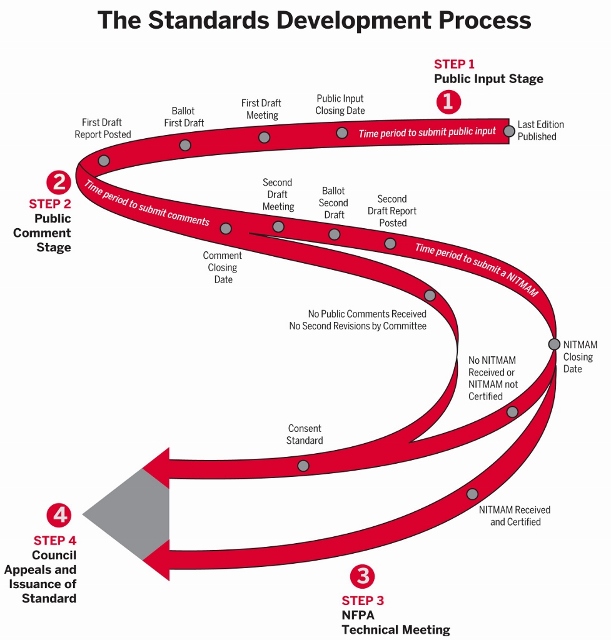
The purpose of NFPA 211 is to reduce fire hazards by discovering and promulgating best practice for the safe removal of flue gases, the proper installation of solid fuel-burning appliances, and the correct construction and installation of chimneys, fireplaces, and venting systems. The current 2019 Edition is linked below:
The 2024 has been released. To guide our inquiry into safety and sustainability concepts for the 2027 Edition we like review the developmental transcripts of previous edition:
New update alert! The 2022 update to the Trademark Assignment Dataset is now available online. Find 1.29 million trademark assignments, involving 2.28 million unique trademark properties issued by the USPTO between March 1952 and January 2023: https://t.co/njrDAbSpwBpic.twitter.com/GkAXrHoQ9T