



“…Approximately 3,400 meals are served by the University Dining Services every day. The dining hall is open daily for breakfast, lunch, and dinner, and even acts as a meeting place for students to have a late night “Brain Break” …Annenberg is also a wonderful place for freshmen to convene and form new friendships on campus. Many Harvard students reference Berg as the place where they found some of their closest friends throughout their college years – a good conversation and a good meal makes for an easy and enjoyable way for freshmen to meet…” — Hannah ’25 Alumni
Campus Reform: Harvard, Baylor cut dining options due to costs despite $80k+ tuition prices
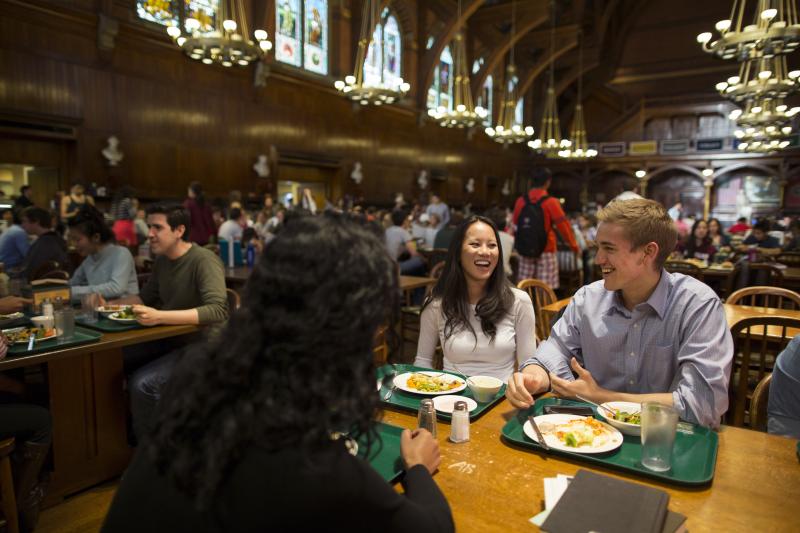
Harvard University Dining Services is a self-sustaining department, meaning its operations are funded primarily through revenue from meal plans, dining sales, catering, and related services (rather than direct university subsidies). It is an active member of the National Association of College & University Food Services (NACUFS) is located in Ingham County, Michigan.
The most recent and reliable figure available from official Harvard sources indicates that HUDS generates nearly $71 million in annual foodservice revenue. This positions it as one of the largest self-operated college dining programs in the U.S. (ranking third among similar departments). This revenue figure is cited directly on Harvard’s official dining-related page linked above.
Harvard’s annual food spend on 2.9 million meals (alone) is roughly similar to the entire budget of familiar colleges such as Kenyon, Rhodes, Dickinson, Gettysburg and Beloit.
Harvard’s broader university financial reports (e.g., for fiscal years 2024–2025) detail overall operating revenues/expenses in the billions but do not break out auxiliary services like dining in granular public detail. HUDS falls under Campus Services, which operates on a revenue-generating model.
Related:
“It’s Ours Now” | Harvard Black Students Association
Jordan B. Peterson: The Disgrace and Plagiarism of Dr. Claudine Gay
“Intellectuals are naturally attracted by the idea of a planned society, in the belief that they will be in charge of it.”
Roger Scruton pic.twitter.com/sjFmkvHWRv
— Joshua D Phillips (@JoshPhillipsPhD) January 17, 2026
“Taking charge: Black electoral success and the redefinition of American politics”





