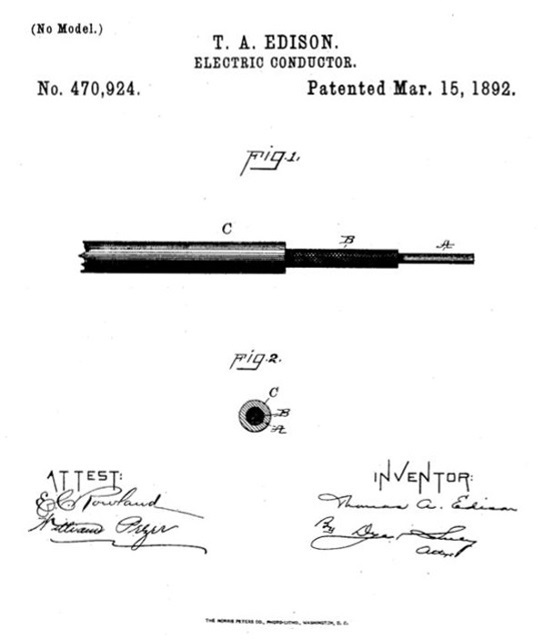
Ampere current flows through copper or aluminum conductor due to the movement of free electrons in response to an applied electric field of varying voltages. Each copper or aluminum contributes one free electron to the electron sea, creating a vast reservoir of mobile charge carriers. When a potential difference (voltage) is applied across the ends of the conductor, an electric field is established within the conductor. This field exerts a force on the free electrons, causing them to move in the direction of the electric field. The resulting current flow can be transformed into different forms depending on the nature of the device.
Heating: When current flows through a resistor, it encounters resistance, which causes the resistor to heat up. This is the principle behind electric heaters, toasters, and incandescent light bulbs.
Mechanical Work: Current flowing through an electric motor creates a magnetic field, which interacts with the magnetic field of the motor’s permanent magnets or electromagnets. This interaction generates a mechanical force, causing the motor to rotate. Thus, electrical energy is converted into mechanical energy; including sound.
Light: In an incandescent light bulb, a filament heats up ( a quantum phenomena) due to the current passing through it. This is an example of electrical energy being converted into light energy; including the chemical energy through light emitting diodes
Today we dwell on how conductors are specified and installed in building premise wiring systems primarily; with some attention to paths designed to carry current flowing through unwanted paths (ground faults, phase imbalance, etc). In the time we have we will review the present state of the best practice literature developed by the organizations listed below:
Other organizations such as the National Electrical Manufacturers Association, ASTM International, Underwriter Laboratories, also set product and installation standards. Data center wiring; fiber-optic and low-voltage control wiring is covered in other colloquia (e.g. Infotech and Security) and coordinated with the IEEE Education & Healthcare Facilities Committee.
Use the login credentials at the upper right of our home page.
Mike Anthony is ID Number 469 | Proposal period closes 11:59 PM US Pacific Time | May 15
Meeting Notes in red
Loss of electric power and internet service happens more frequently and poses at least an equal — if not greater threat — to public safety. So why does neither the National Electrical Code or the National Electrical Safety Code integrate reliability into their core requirements? Reliability requirements appear in a network of related documents, either referenced, or incorporated by reference; sometimes automatically, sometimes not.
NESC Main Committee Membership: Page xii
Apart from the IEEE as the accredited standards developer, there are no “pure non-government user-interests” on this committee; although ANSI’s Essential Requirements for balance of interests provides highly nuanced interpretation. The Classifications on Page xiii represents due diligence on meeting balance of interest requirements.
In our case, we are one of many large universities that usually own district energy plants that both generate and purchase generate electric power (as sometimes provide var support to utilities when necessary; as during the August 2003 North American outage). For University of Michigan, for example, has about 20 service points at 4.8 – 120 kV. Its Central Power Plant is the largest cogeneration plant on the DTE system.
Contents: Page xxviii | PDF Page 29
Absence of internet service is at least as much a hazard, and more frequent, than downed wires. Is there a standards solution? Consideration of interoperability of internet service power supported on utility poles should track in the next revision.
No mention of any reliability related IEEE reliability standards in the present edition. Why is this?
Section 2: Definitions of Special Terms| PDF Page 46
In the 2023 Handbook, the term “reliability” shows up 34 times.
availability (from Bob Arno’s IEEE 3006-series and IEEE 493 Gold Book revision)
reliability (Bob Arno)
utility (PDF Page 57)
communication | PDF Page 47
list of terms defined in the 2023 National Electrical Code that are new and relevant to this revision: (Article 100 NEC)
municipal broadband network, digital subscriber line, surveillance cameras
wireless communication system
010. Purpose | PDF Page 40
Looks like improvement since last edition. Suggest explicit Informational Note, as in the NEC, using “reliability” and referring to other agencies. “Abnormal events” could be tighter and refer to other standards for abnormal, steady-state events. The clarification of purpose is welcomed although a great deal remains uncovered by other best practice literature; though that can be repaired in this edition.
Legacy of shared circuit path standards. Should provisions be made for municipal surveillance, traffic and vehicle control infrastructure. What would that look like?
011. Scope | Covered PDF Page 40
3. Utility facilities and functions of utilities that either (a) generate energy by conversion from some other form of energy such as, but not limited to, fossil fuel, chemical, electrochemical, nuclear, solar, mechanical, wind or hydraulic or communication signals, or accept energy or communication signals from another entity, or (b) provide that energy or communication signals through a delivery point to another entity.
5. Utility facilities and functions on the line side of the service point supplied by underground or overhead conductors maintained and/or installed under exclusive control of utilities located on public or private property in accordance with legally established easements or rights-of-way, contracts, other agreements (written or by conditions of service), or as authorized by a regulating or controlling body. NOTE: Agreements to locate utility facilities on property may be required where easements are either (a) not obtainable (such as locating utility facilities on existing rights-of-way of railroads or other entities, military bases, federal lands, Native American reservations, lands controlled by a port authority, or other governmental agency), or (b) not necessary (such as locating facilities necessary for requested service to a site).
012. General Rules | Covered PDF Page 42
For all particulars not specified, but within the scope of these rules, as stated in Rule 011A, design, construction, operation, and maintenance should be done in accordance with accepted good practice for the given local conditions known at the time by those responsible for the communication or supply lines and equipment
General purpose clause could use some work since no definition of “accepted good practice”. Refer to IEEE bibliography.
Section 2: Definition of special terms | PDF Page 46
Recommendations elsewhere should track here.
The word “installation” appears 256 times and is generally understood in context by experts. Suggest borrow from NEC to clarify our concern for including co-linear/communication circuits.
conduit. exclusive control, lines, photovoltaic, NEC interactive. qualified
Section 3: Reference
NFPA 70®, National Electrical Code® (NEC®). [Rules 011B4 NOTE, 099C NOTE 1, and 127
IEEE Std 4™-1995, IEEE Standard Techniques for High-Voltage Testing. [Table 410-2 and Table 410-3]
IEEE Std 516™-2009, IEEE Guide for Maintenance Methods on Energized Power-Lines. [Rules 441A4
NOTE 2, 446B1, and 446D3 NOTE, and Table 441-5, Footnote 4]
IEEE Std 1427™-2006, IEEE Guide for Recommended Electrical Clearances and Insulation Levels in
Air-Insulated Electrical Power Substations. [Rule 124A1 NOTE, Table 124-1, 176 NOTE, and 177 NOTE]
IEEE Std 1584™-2002, IEEE Guide for Performing Arc Flash Hazard Calculations. [Table 410-1,
Footnotes 1, 3, 6, and 14]
IEEE Std C62.82.1™-2010, IEEE Standard for Insulation Coordination—Definitions, Principles, and Rules.
[Table 124-1 Footnote 5]
Add references to Gold Book, 1386, etc. IEC since multinationals conform.
Safety Rules for the Installation and Maintenance of Overhead Electric Supply and Communication Line | PDF Page 111
Has anyone confirmed that these tables match NEC Table 495.24 lately? If it helps: there were no meaningful changes in the 2023 NEC in Article 495, the high voltage article
Section 11. Protective arrangements in electric supply stations | PDF Page 77
A safety sign shall be displayed on or beside the door or gate at each entrance. For fenced or walled electric supply stations without roofs, a safety sign shall be displayed on each exterior side of the fenced or wall enclosure. Where the station is entirely enclosed by walls and roof, a safety sign is required only at ground level entrances. Where entrance is gained through sequential doors, the safety sign should be located at the inner door position. (A clarification but no change. See Standards Michigan 2017 proposals)
Recommend that all oil-filled cans be removed and services upgraded through energy regulations with new kVA ratings
Section 12: Installation and maintenance of equipment
093. Grounding conductor and means of connection
Fences The grounding conductor for fences required to be effectively grounded by other parts of this Code shall meet the requirements of Rule 093C5 or shall be steel wire not smaller than Stl WG No. 5.
D. Guarding and protection | PDF Page 67
124. Guarding live parts| PDF Page 85
Propose roofs required for exterior installations
Part 2. Safety Rules for the Installation and Maintenance of Overhead Electric Supply and Communication Line | Page 72
Section 22. Relations between various classes of lines and equipment | Page 80
222. Joint use of structures | Page 82
Where the practice of joint use is mutually agreed upon by the affected utilities, facilities shall be subject to the appropriate grade of construction specified in Section 24. Joint use of structures should be
considered for circuits along highways, roads, streets, and alleys. The choice between joint use of structures and separate lines shall be determined through cooperative consideration with other joint
users of all the factors involved, including the character of circuits, worker safety, the total number and weight of conductors, tree conditions, number and location of branches and service drops, structure
conflicts, availability of right-of-way, etc.
Reliability considerations for sustaining internet service when power supply is absent.
Par2 Section 20 Safety Rules for the Installation and Maintenance of Overhead Electric Supply and Communication Line | PDF Page 111
Has anyone confirmed that these tables match NEC Table 495.24 lately?
Part 3. Safety Rules for the Installation and Maintenance of Underground Electric Supply and Communication Lines | Page 220
Renewable energy for internet access
311. Installation and maintenance
A. Persons responsible for underground facilities shall be able to indicate the location of their facilities.
B. Reasonable advance notice should be given to owners or operators of other proximate facilities that
may be adversely affected by new construction or changes in existing facilities.
C. For emergency installations, supply and communication cables may be laid directly on grade if the
cables do not unreasonably obstruct pedestrian or vehicular traffic and either:
1. The cables are covered, enclosed, or otherwise protected, or
2. The locations of the cables are conspicuous.
Supply cables operating above 600 V shall meet either Rule 230C or 350B.
NOTE: See Rules 014B2 and 230A2d.
Part 4. Work Rules for the Operation of Electric Supply and Communications Lines and Equipment | PDF Page 289
When and why was the term “Work” added to the title of this section?
Core text for the definition of wireless communication system reliability
Appendix E Bibliography| PDF Page 355
Index | PDF Page 398
The word “reliability” appears only three times. Should it track in the NESC or should it track in individual state requirements. So neither the NEC nor the NESC couples closely with power and communication reliability; despite the enormity and speed of research.
We examine the proposals for the 2028 National Electrical Safety Code; including our own. The 2026 National Electrical Code where sit on CMP-15 overseeing health care facility electrical issues should be released any day now. We have one proposal on the agenda of the International Code Council’s Group B Committee Action Hearings in Cleveland in October. Balloting on the next IEEE Gold Book on reliability should begin.
FERC Open Meetings | (Note that these ~60 minute sessions meet Sunshine Act requirements. Our interest lies one or two levels deeper into the technicals underlying the administrivia)
Department of Electrical Engineering, National Taiwan University of Science and Technology, Taipei City, Taiwan
First Draft Proposals contain most of our proposals — and most new (original) content. We will keep the transcripts linked below but will migrate them to a new page starting 2025:
N.B. We are in the process of migrating electric power system research to the Institute of Electrical and Electronics Engineers bibliographic format.
Recap of the May meetings of the Industrial & Commercial Power Systems Conference in Las Vegas. The conference ended the day before the beginning of the 3-day Memorial Day weekend in the United States so we’re pressed for time; given all that happened.
We can use our last meeting’s agenda to refresh the status of the issues.
We typically break down our discussion into the topics listed below:
Codes & Standards:
While IAS/I&CPS has directed votes on the NEC; Mike is the only I&CPS member who is actually submitting proposals and responses to codes and standards developers to the more dominant SDO’s — International Code Council, ASHRAE International, UL, ASTM International, IEC & ISO. Mike maintains his offer to train the next generation of “code writers and vote getters”
Performance-based building premises feeder design has been proposed for the better part of ten NEC revision cycles. The objective of these proposals is to reduce material, labor and energy waste owed to the branch and feeder sizing rules that are prescriptive in Articles 210-235. Our work in service and lighting branch circuit design has been largely successful. A great deal of building interior power chain involves feeders — the network upstream from branch circuit panels but down stream from building service panel.
Our history of advocating for developing this approach, inspired by the NFPA 101 Guide to Alternative Approaches to Life Safety, and recounted in recent proposals for installing performance-based electrical feeder design into the International Building Code, appears in the link below:
Access to this draft paper for presentation at any conference that will receive it — NFPA, ICC or IEEE (or even ASHRAE) will be available for review at the link below:
NFPA 110 Definitions of Public Utility v. Merchant Utility
NFPA 72 “Definition of Dormitory Suite” and related proposals
Buildings:
Renovation economics, Smart contracts in electrical construction. UMich leadership in aluminum wiring statements in the NEC should be used to reduce wiring costs.
This paper details primary considerations in estimating the life cycle of a campus medium voltage distribution grid. Some colleges and universities are selling their entire power grid to private companies. Mike has been following these transactions but cannot do it alone.
Variable Architecture Multi-Island Microgrids
District energy:
Generator stator winding failures and implications upon insurance premiums. David Shipp and Sergio Panetta. Mike suggests more coverage of retro-fit and lapsed life cycle technicals for insurance companies setting premiums.
Reliability:
Bob Arno’s leadership in updating the Gold Book.
Mike will expand the sample set in Table 10-35, page 293 from the <75 data points in the 1975 survey to >1000 data points. Bob will set up meeting with Peyton at US Army Corps of Engineers.
Reliability of merchant utility distribution systems remains pretty much a local matter. The 2023 Edition of the NESC shows modest improvement in the vocabulary of reliability concepts. For the 2028 Edition Mike submitted several proposals to at least reference IEEE titles in the distribution reliability domain. It seems odd (at least to Mike) that the NESC committees do not even reference IEEE technical literature such as Bob’s Gold Book which has been active for decades. Mike will continue to propose changes in other standards catalogs — such as ASTM, ASHRAE and ICC — which may be more responsive to best practice assertions. Ultimately, improvements will require state public utility commission regulations — and we support increases in tariffs so that utilities can afford these improvements.
Mike needs help from IEEE Piscataway on standard WordPress theme limitations for the data collection platform.
Mike will update the campus power outage database.
Healthcare:
Giuseppe Parise’s recent work in Italian power grid to its hospitals, given its elevated earthquake risk. Mike’s review of Giuseppe’s paper:
Mike and David Shipp will prepare a position paper for the Harvard Healthcare Management Journal on reliability advantages of impedance grounding for the larger systems.
The Internet of Bodies
Forensics:
Giuseppe’s session was noteworthy for illuminating the similarity and differences between the Italian and US legal system in handling electrotechnology issues.
Mike will restock the committee’s library of lawsuits transactions.
Ports:
Giuseppe updates on the energy and security issues of international ports. Mike limits his time in this committee even though the State of Michigan has the most fresh water international ports in the world.
A PROPOSED GUIDE FOR THE ENERGY PLAN AND ELECTRICAL INFRASTRUCTURE OF A PORT
Other:
Proposals to the 2028 National Electrical Safety Code: Accepted Best Practice, exterior switchgear guarding, scope expansion into ICC and ASHRAE catalog,
Apparently both the Dot Standards and the Color Books will continue parallel development. Only the Gold Book is being updated; led by Bob Arno. Mike admitted confusion but reminded everyone that any references to IEEE best practice literature in the NFPA catalog, was installed Mike himself (who would like some backup help)
Mike assured Christel Hunter (General Cable) that his proposals for reducing the 180 VA per-outlet requirements, and the performance-base design allowance for building interior feeders do not violate the results of the Neher-McGrath calculation used for conductor sizing. All insulation and conducting material thermal limits are unaffected.
Other informal discussions centered on the rising cost of copper wiring and the implications for the global electrotechnical transformation involving the build out of quantum computing and autonomous vehicles. Few expressed optimism that government ambitions for the same could be met in any practical way.
Are students avoiding use of Chat GPT for energy conservation reasons? Mike will be breaking out this topic for a dedicated standards inquiry session:
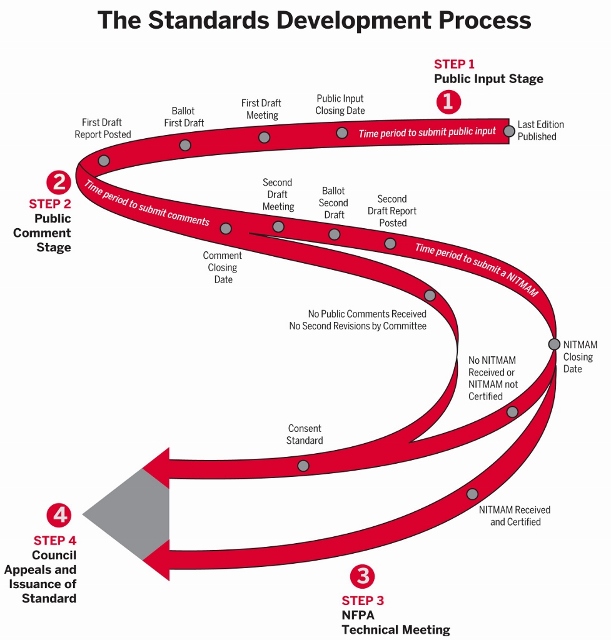
Public input on the 2029 Revision will be received until April 9th. Over the next weeks and months — typically meeting twice a day every Tuesday — we will pull forward our previous proposals and draft original proposals relevant to the education and healthcare electrotechnical infrastructure of educational settlements. Link to Proposed Reorganization.
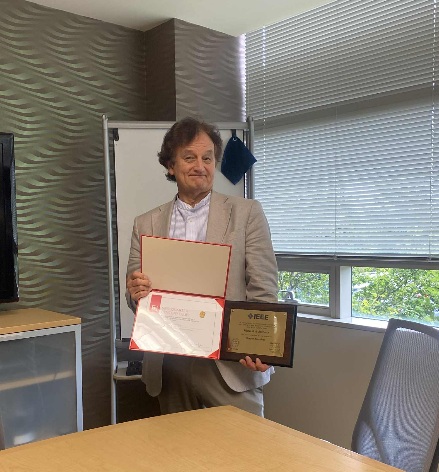
Mike was part of the National Electrical Code Quarter Century Club but was at another conference and not able to receive the award at the June conference. University of Michigan support began in 1993. IEEE support began in 2014.
*New Office (a short walk across the street) starting October 1: 455 East Eisenhower, Ann Arbor, MI 48108
Once every eighteen months we spend a week drilling into the National Electrical Code by submitting new proposals or comments on proposed revisions. Today we review the actions taken by the technical committees on the First Draft. Responses to committee actions will be received until August 26th.
It is impossible to overestimate the sensitivity of this topic but poke at it, we will. At the moment, the less written here; the better. Much of this domain is outside our wheelhouse; though it has settled on a few first principles regarding patents, trademarks and copyrights relevant to the user-interest we describe in our ABOUT.
Many large research universities have a watchdog guarding its intellectual property and trying to generate income from it, and; of course, for branding. We will dwell on salient characteristics of the intellectual property domain with which we reckon daily — highlighting the market actors and the standards they have agreed upon.
Additionally, technical standards developers are generally protected by copyright law, as the standards they create are typically considered original works of authorship that are subject to copyright protection. In the United States, the Copyright Act of 1976 provides copyright protection for original works of authorship, which includes technical standards. This means that the developers of technical standards have the exclusive right to reproduce, distribute, and create derivative works based on their standards, and others must obtain permission or a license to use or reproduce the standards.
Some technical standards may be subject to certain exemptions or limitations under copyright law. In the United States, there is a doctrine called “fair use” that allows for limited use of copyrighted works for purposes such as criticism, comment, news reporting, teaching, scholarship, or research, without the need for permission or a license from the copyright owner. Almost everything we do at Standards Michigan falls under the fair use doctrine. This is why we have no search feature and most pages are protected. If we err in this; let us know.
Patent Act: This is the primary federal law governing patents in the United States. It sets forth the requirements for obtaining a patent, the rights of patent owners, and the remedies available for infringement.
Title 37 of the Code of Federal Regulations: This contains the rules and procedures related to patents, including rules governing the filing and examination of patent applications.
America Invents Act: This is a major overhaul of the U.S. patent system that was enacted in 2011. It includes provisions such as the transition to a “first-inventor-to-file” system and the creation of new post-grant review procedures for challenging the validity of patents.
Manual of Patent Examining Procedure: This is a guidebook for patent examiners that provides detailed information on the rules and procedures for examining patent applications.
Vad är en standard? Syftet med standarder är att skapa enhetliga och transparenta rutiner som vi kan enas kring. Det ligger ju i allas intresse att höja kvaliteten, undvika missförstånd och slippa uppfinna hjulet på nytt varje gång. https://t.co/zKhgPXPdpWpic.twitter.com/oKejdKSm47
— Svenska institutet för standarder, SIS (@svenskstandard) July 15, 2019
The NPADC is a team competition for law students to develop skills in drafting patent applications, focusing on U.S. patent law. Teams receive a hypothetical invention statement, conduct prior art searches, draft specifications and claims, and present their work to judges, including patent examiners and practitioners. For 2025, the invention was an extra-uterine system for supporting premature fetuses, indicating the complexity of tasks involved
There is no publicly available timetable for the 2027 National Patent Application Drafting Competition (NPADC) from the United States Patent and Trademark Office (USPTO) as of the latest available information. The USPTO typically releases detailed schedules for the NPADC closer to the competition year, often in the fall of the preceding year (e.g., October or November 2025 for the 2026 competition).
After months of hard work, the top five teams met at USPTO headquarters today for the final round of the 2025 National Patent Application Drafting Competition. 🏆 And the winners are … ⬇️
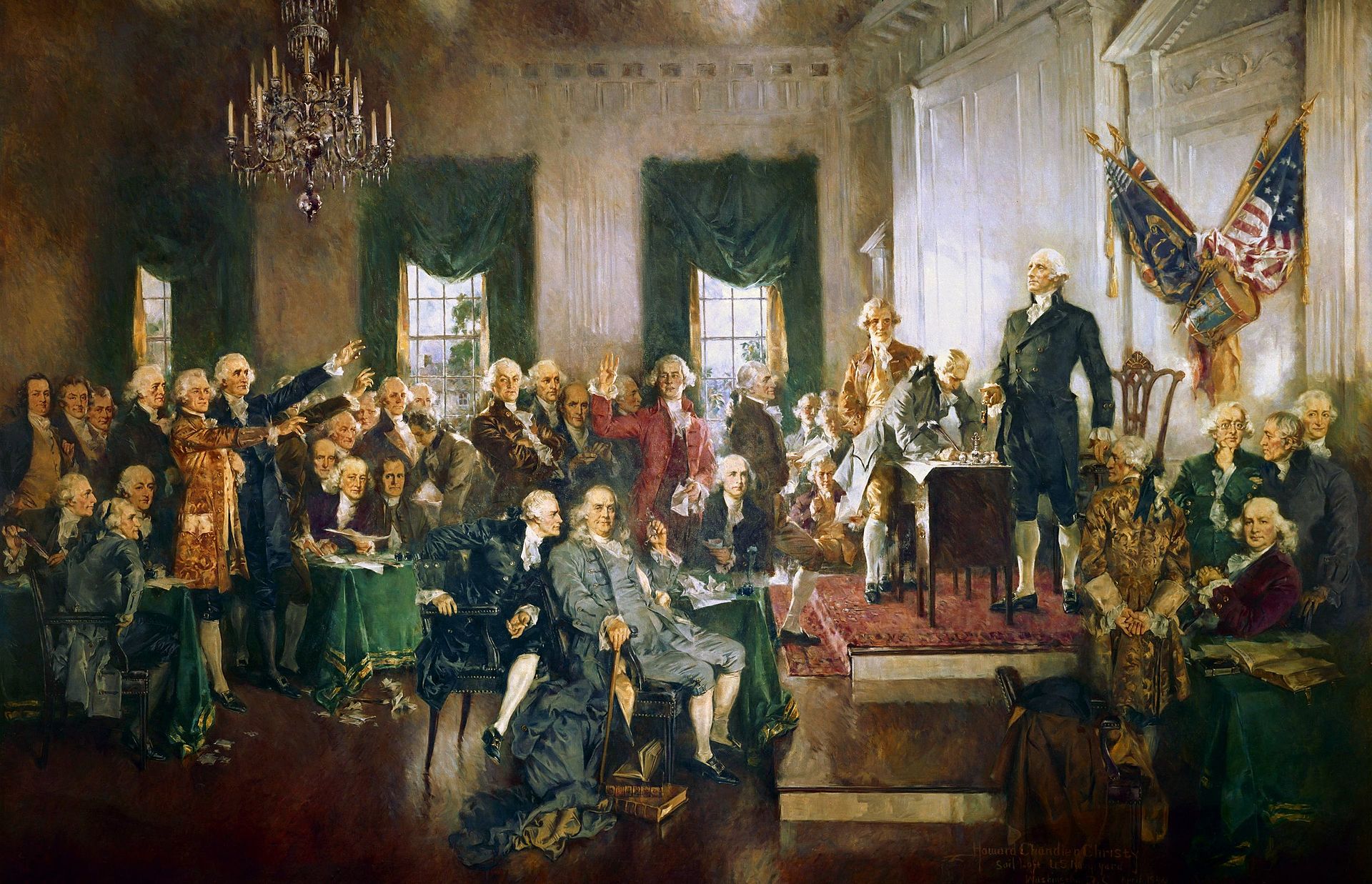
Thomas Jefferson was the leader in founding the United States Patent Office. Jefferson was a strong supporter of the patent system and believed that it was essential for promoting innovation and progress in the United States. As the first Secretary of State Jefferson was responsible for implementing the country’s patent system.
Article I, Section 8, Clause 8 of the United States Constitution reads as follows:
“The Congress shall have Power To promote the Progress of Science and useful Arts, by securing for limited Times to Authors and Inventors the exclusive Right to their respective Writings and Discoveries.”
In 1790, Jefferson drafted the first Patent Act, which established the procedures for applying for and granting patents. The act also created the United States Patent Office as a government agency to oversee the patent system. Jefferson appointed the first Patent Board, which was responsible for reviewing patent applications and making recommendations to the Secretary of State.
Jefferson was deeply involved in the early development of the Patent Office and was instrumental in shaping its policies and procedures. He believed that the patent system should be accessible to all inventors, regardless of their social or economic status, and he worked to streamline the patent application process to make it more efficient and user-friendly.
In recognition of his contributions to the development of the patent system, Jefferson is often referred to as the “Father of American Innovation.”
This clause grants Congress the authority to establish a system of patents and copyrights to protect the intellectual property of inventors and authors. The purpose of this system is to encourage innovation and creativity by providing inventors and authors with a temporary monopoly on their creations, allowing them to profit from their work and invest in future projects. The clause also emphasizes the importance of promoting the progress of science and the useful arts, reflecting the belief of the founders that the development of new technologies and inventions was essential for the growth and prosperity of the United States.
Over the years, the Patent Office has played a crucial role in the development of the United States as a technological leader, granting patents for inventions ranging from the telephone and the light bulb to the airplane and the computer. Today, the Patent Office is part of the United States Department of Commerce and is responsible for examining patent applications and issuing patents to inventors and companies.
Congratulations to the winners of this year’s National Patent Application Drafting Competition – Khailee, Bree, Rita, and Maria from @gwlaw, and thank you to all participants! Learn more about the competition: https://t.co/gB64fnXaM6pic.twitter.com/FWqak6Mr1m
From creating a race car safety device that protects drivers from injury to revolutionizing chemotherapy, Spartans have contributed to more than 3,300 inventions. #SpartansWillpic.twitter.com/dchCs0BFBx
The University of Dayton is a private, Catholic research university in Dayton, Ohio. Founded in 1850 by the Society of Mary, it is one of three Marianist universities in the nation and the second-largest private university in Ohio. The university’s campus is in the city’s southern portion and spans 388 acres on both sides of the Great Miami River. The campus is noted for the Immaculate Conception Chapel and the University of Dayton Arena.
“Happy families are all alike; every unhappy family is unhappy in its own way.”
— Leo Tolstoy, Anna Karenina, trans. Constance Garnett
“In 1964, in Albuquerque, New Mexico, a 17-year-old girl gave birth to a son. The school administrators had told her she couldn’t finish high school. She pushed back anyway.
Her name was Jacklyn Gise. And the baby she was determined to raise would one day become one of the most… pic.twitter.com/O1NYzRh1Gr
On Friday this group Facetimed me. This is their yearly get together. They tell me that they “are connected for life.” When you commit to something bigger than yourself you don’t just give yourself a better chance to win, the bonds you build are for life. pic.twitter.com/mSc4BECrb3
I can confirm that @GreenPlusAnE spent part of his wedding reception discussing entitlement reform. And the new Mrs. Greene is possibly the most elegant Tocqueville scholar in existence. https://t.co/XRfnxJ027G
In non soccer, non portal, non athletic news, our family just grew by one 😀 we gained a future son in law!!! So happy for Madison and Dylan. #weddingplanspic.twitter.com/3DNx0tNr5D
Congrats to my son for graduating with Honors from Eastern Michigan – don’t blink time flies – so so proud of what he’s accomplished & love him to pieces 💙🎉🥳 pic.twitter.com/qAj2ndRVwA
We need a reality dating show called “Average SEC Couples” that’s just 15 Average Joe’s from the South wooing 15 gorgeous women with generational wealth. pic.twitter.com/hhNGYUPw3S
Since I’m making happy announcements, Anne and I are expecting our first grandchild (a grandson we’re told) in February. We’re very proud of and happy for our oldest son Aedan and his wife Addy. Thanks be to God! pic.twitter.com/3xFXGYaes0
💙Last middle school dance💙
Time is flying, but I’ve loved every moment of this phase — shopping for his unique style, the cologne hunts, the late-night talks, and watching him chase what he loves. Keep being authentically you, GT!💥 pic.twitter.com/glH8AHyid4
One week postpartum with the sweetest baby ever. I am blessed beyond measure to have had my 5th successful home birth and a very smooth recovery. God is so good! pic.twitter.com/bWBqAtOUkj
A South African man who recently picked up an abandoned baby in Mpumalanga suburb of Emalahleni is now applying for court permission to adopt the boy and get him a birth certificate
Ten years after our wedding, our triplets have finally arrived… Thank you to everyone who sent us congratulations. These are our most precious treasures. #fblifestylepic.twitter.com/AXKOj7vL7Q
The body of 8-year-old Mystic camper Virginia Hollis was found along the Guadalupe River earlier this week, more than a week after the July 4 floods in Texas.
Yesterday, this angel’s favorite horse followed her casket through the streets to bid her farewell. 😭 pic.twitter.com/T8f8O6n4q3
After 15 years of marriage, the first child is actually twins! 🥳Maybe no one will say it, but we want to share this joy anyway. 🌹 pic.twitter.com/T60zPJZ0tT
He was with me almost every day for 12 years. The best living creature I’ve ever known including humans.
He protected children and loved his job out here.
I hope I can be half the man this dog was to our world. I buried him last evening in his beloved woods.
A heartfelt surprise for her best friend on graduation day.. She didn’t expect it because they hadn’t seen each other in so long, ever since her friend moved to another citypic.twitter.com/3pxswYFVNt
From couple matching to couple chief-ing!!!thrilled and honored to serve as chief residents together at the program that shaped us. Grateful for the journey and excited for what’s ahead! #HUHpic.twitter.com/lClrJpGABW
20th March 2010
A couple – just married – choose to cycle from the church to their reception.
From my book ‘Cambridge – Town & Gown’. pic.twitter.com/Y9zzcUsHh4
We got him moved into the new house! His bride-to-be is helping him decorate and put things away and will be joining him there on their wedding night! Today, only a few tears were shed (out of his sight). We are beyond happy for them! @BrandonLansdownpic.twitter.com/NSNmzg8hyG
Naistenpäivän kunniaksi haluan jakaa, että minulla on onni ja siunaus odottaa omaa tytärtä. Toivon näyttäväni hänelle samanlaista naisen mallia kuin oma äitini on näyttänyt minulle. Nainen voi olla vahva ja lempeä, sitkeä ja kaunis, herkkä ja periksiantamaton. Nainen voi olla… pic.twitter.com/MivsLRh1wJ
Syracuse University. Kissing Bench: This bench on the Quad is steeped in tradition. Legend has it that if a couple kisses on the bench, they will eventually marry. Conversely, if a single person sits there alone, they risk staying single forever.
University of Idaho. Hello Walk and Kissing Rock: While not a bench, this area on campus features a large rock where students have historically kissed. It’s a romantic tradition for couples at the university.
It is so rare for people to see a normal, white family that lefties think it gives ”Third Reich vibes”. This really tells us that we need to make it less rare.
— Learfield College Rodeo (@LearfieldRodeo) July 29, 2026
Check out Fever guard Sophie Cunningham having some fun at her kids camp, recreating the “pointing” meme that went viral last week. pic.twitter.com/eCPkzx0IEt
On Friday this group Facetimed me. This is their yearly get together. They tell me that they “are connected for life.” When you commit to something bigger than yourself you don’t just give yourself a better chance to win, the bonds you build are for life. pic.twitter.com/mSc4BECrb3
Sydnee Sinn, Sarah Forsyth, Olivia Millen and Kate Stewart-Barnett run 8:33.40 in the 4x800m relay to break the school record at Penn Relays!🟢⚪ pic.twitter.com/y6VQFJVrMT
— MSU Track & Field/Cross Country (@MSU_TFXC) April 25, 2026
Riley Gaines is a beautiful example of the joy of motherhood.
From championing women’s sports to working out women with her daughter, Margot, she shows how motherhood deepens purpose and fills life with unmatched love.
📣 NSAI is seeking new members for our standards committees
We are establishing new technical committees on Light Gauge Steel, Mass Engineered Timber, and the National Annex for Eurocode 5 (structural fire design).
Once was fun, twice is very nice! UVM Olympian Ben Ogden has done it again, capturing silver in the men’s cross-country team sprint w/teammate Gus Schumacher! This is the first medal for Team USA in this event and makes Ogden the team’s most decorated men’s cross-country skier. https://t.co/0SxTfMnKQI
✅ SCHOOL RECORD
✅ NCAA RECORD (by 8 seconds btw)
✅ 10TH FASTEST 5000M BY AN AMERICAN
✅ 11TH INDOOR 5000M TIME IN THE WORLD
✅ FIRST COLLEGIATE WOMAN TO RUN SUB 14:50 (indoor AND outdoor)
CHASE DOWN❗️ Şilan Ayyildiz finishes 9th individually at the cross country national championship to lead the Ducks to a 3rd place finish. Ayyildiz went from 18th to 9th place over the final K 😮💨 #GoDuckspic.twitter.com/spP7A0UEmo
Yale topped previously undefeated Harvard in the 141st playing of The Game, earning a share of the Ivy League title and the league’s first-ever automatic bid to the NCAA FCS playoffs.
BYU’s Jane Hedengren just beat the defending 5K and 10K national champion by 42 seconds head-to-head at regionals. FORTY-TWO SECONDS! We are witnessing greatness. 🏃♀️ pic.twitter.com/6ELw3anmhL
Led by senior Chad Perrine and junior Luke Skuratowicz, three Hope College men’s cross country runners finished in the Top 30 of the 167-runner field at the Muskegon Community College Jayhawk Invitational on Saturday. Read the meet recap on the Hope Athletics website. #d3xcpic.twitter.com/Dynob8mVrX
Northwest High School junior Cooper Lutkenhaus has run the fastest 800-meter race in the world for any athlete younger than 18! Cooper set the new U18 world best at the USA Track & Field Outdoor Championships by running a time of 1:42.27 to earn silver. pic.twitter.com/5imZ9yZHLN
The U.S. men’s four won gold for the first time at the U23 World Championships. Ryan Martin, Wilson Morton, Sam Sullivan, and Lyle Donovan are victorious in the A Final, winning by 2.25 seconds. pic.twitter.com/2fAtSEwewA
Over the weekend, Anhelina Khmil earned a second place finish at the CEV Nations Cup Final in Portugal as part of the Ukrainian team! pic.twitter.com/2zuEa9wk9c
The bottom of the ground was nothing for Emily Beisel! She moves into the Top 4 of her set by almost two tenths of a second to lock in her place at the Cheyenne Frontier Days Semifinals. pic.twitter.com/1uDeztOlZM
— The Cowboy Channel (@Cowboy_Channel) July 20, 2025
Savannah Sutherland d capped an incredible career at Michigan with her second NCAA title and has been named the 2024-25 Female Michigan Athlete of the Year! 〽️ #LeadersAndBest
— Michigan Track & Field / Cross Country (@UMichTrack) June 23, 2025
𝐀𝐔𝐁𝐔𝐑𝐍 𝐁𝐄𝐈𝐍𝐆 𝐀𝐔𝐁𝐔𝐑𝐍
Our list of Fences Riders of the Year is getting long…
✔️ 2025: Avery Glynn (SEC & NCEA ROTY); Kate Hagerty (SEC Freshman ROTY)
✔️ 7-straight SEC ROTY awards
✔️ 4 of the last 7 NCEA ROTY honors
✔️ 7 SEC Freshman ROTY awards#WarEaglepic.twitter.com/1bRaWk4ytY
Savannah Sutherland sets the Hodges Stadium facility record and for the second straight year she sets the NCAA East First Round record in the 400H! pic.twitter.com/u48jsKv3Zm
— Michigan Track & Field / Cross Country (@UMichTrack) June 1, 2025
Your Duke family is proud of you guys! Dom and Gavin both fared well in the state tournament!! Dom went 2-2, and Gavin went 7-1! Gavin finished 3rd overall in his weight class!! Congratulations to both boys!! @WEVSD_sports@whsladydukes@AndyPeltzpic.twitter.com/5yEMNYkU7Q
Another @MSU_Hockey BIG10 Championship! What an exciting night at Munn Arena for our Spartan players, coaches, students and fans. Go Green!! pic.twitter.com/u9ZWUTeBVc
Every Thursday, coach Brandon runs men’s IM threshold practice and Coach Sarah & I run the women’s IM group. It’s one of those “all hands on deck” type of day. Last night, in the 400 IM the men went 1-2-3-5-10-11 and the women went 2-3-4-5-6-10-17-22. pic.twitter.com/pCfhLWSvoA
What a shot at the buzzer! Michigan State pulls off the win at Maryland, 58-55. #Spartans have won four games in a row, including three straight against ranked opponents.pic.twitter.com/1NMM6xdH46
Great day in the weight room at Weatherford High School! We have football, basketball, girls and boys track programs working hard. We are blessed with the best facilities in the state! pic.twitter.com/gvH85GZmoM
The Revere Varsity Competition Squad traveled to Big Walnut High School today to compete in the OASSA State of Ohio Cheerleading Championships! They finished in fourth place, D3 Non Build Division!!! We are so proud of you ladies! @RevereLocalpic.twitter.com/evF06thfAD
Wow! What an amazing couple of weeks for ‘OE’ Justin Davies. He broke the Welsh indoor 800m record at the Keely Klassic and then went on to become the British champion at the UK Indoor Championships! #uptherose 🌟🏅 pic.twitter.com/fgFq5AOX09
— Sport & PE | King Edward’s School (@KESBathSport) February 24, 2025
My girl shot her first ever perfect 5 bullseyes at her county tournament today
Great job girl! pic.twitter.com/Xhyl1bEK0R
“We’re putting every school receiving taxpayer dollars on notice that if you let men take over women’s sports teams or invade your locker rooms, you will be investigated for violations of Title IX and risk your federal funding.” –President Donald J. Trump 🇺🇸 pic.twitter.com/MUd6FAetWr
Remember when it was so cold the rivers and lakes iced over? Our college wild swimmers certainly do – they took the plunge (without wetsuit insulation) and lived to report back! 🥶 pic.twitter.com/CKyLK0ySMu
“We’re feeling confident in our performance so far. We’re being challenged, but so far have managed to stay sharp.” – Catherine Clifford, third
This quote sums up the Canadian women’s performance thus far at the World University Games, as they remain undefeated after two wins on… pic.twitter.com/jetQK1TtbH
“Rowing is more poetry than sport.” — George Pocock (‘Boys in the Boat’ 2024), a British-born boat builder, rowing coach, and influential figure in American rowing, best known for his craftsmanship of racing shells and his philosophical approach to the sport.
New update alert! The 2022 update to the Trademark Assignment Dataset is now available online. Find 1.29 million trademark assignments, involving 2.28 million unique trademark properties issued by the USPTO between March 1952 and January 2023: https://t.co/njrDAbSpwBpic.twitter.com/GkAXrHoQ9T