

Author Archives: mike@standardsmichigan.com

Loading
loading...

Food Safety

Overdoor, France, ca. 1825; | Smithsonian Design Museum

Education communities have significant food safety responsibilities.  Risk gets pushed around global food service counterparties; a drama in itself and one that requires coverage in a separate blog post.*

Since 2013 we have been following the development of food safety standards; among them ANSI/NSF 2: Food Equipment one of a constellation of NSF food safety titles whose provisions cover bakery, cafeteria, kitchen, and pantry units and other food handling and processing equipment such as tables and components, counters, hoods, shelves, and sinks.  The purpose of this Standard is to establish minimum food protection and sanitation requirements for the materials, design, fabrication, construction, and performance of food handling and processing equipment.

It is a relatively stable standard; developed to support conformance revenue for products.  A new landing page seems to have emerged in recent months:

Food and Beverage

https://www.nsf.org/testing/food


You may be enlightened by the concepts running through this standard as can be seen on a past, pre-pandemic agenda:

NSF 2 Food Safety 2019 Meeting Packet – Final Draft

NSF 2 Food Safety 2019 Meeting Summary – August 21-22 Ann Arbor NSF Headquarters

NSF 2 Food Equipment Fabrication Agenda – FEF – TG – 2021-01-12

Not trivial agendas with concepts that cut across several disciplines involving product manufacture, installation, operation and maintenance.  We find a very strong influence of organizations such as Aramark and Sodexo.   More on that in a separate post.

Ranchview High School Cafeteria / Irving, Texas

This committee – along with several other joint committees –meets frequently online.  If you wish to participate, and receive access to documents that explain the scope and scale of NSF food safety standards, please contact Allan Rose, (734) 827-3817, arose@nsf.org.   NSF International welcomes guests/observers to nearly all of its standards-setting technical committees.   We expect another online meeting hosted by this committee any day now.

Keep in mind that all NSF International titles are on the standing agenda of our Nourriture (Food) colloquia; open to everyone.  See our CALENDAR for the next meeting.
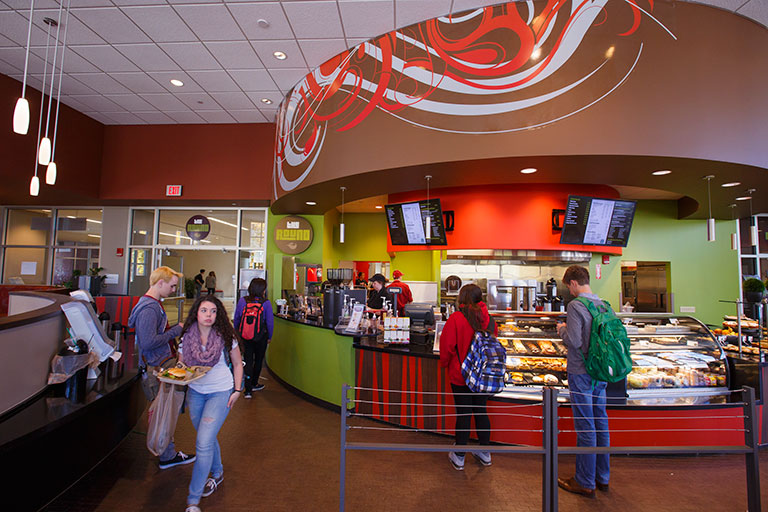
University of Indiana

Issue: [13-113] [15-126]

Category: Facility Asset Management, Healthcare, Residence Hall, Athletics

Colleagues: Mike Anthony, Tracey Artley, Keith Koster, Richard Robben

*See “Food Safety Risk Management: Evidence-Informed Policies and Decisions, Considering Multiple Factors, Food and Agriculture Organization of the United Nations”


LEARN MORE:

ANSI Blog | Changes to NSF 2 Food Safety Equipment Standard

NSF International Food Safety 2018 Meeting Summary – 2018-08-22 – Final Draft

2017 Food Code | US Food & Drug Administration

Hygiene Requirements For The Design Of Meat And Poultry Processing Equipment

ARCHIVE: NSF 2 Food Safety

Catfish

Standards Mississippi


Extension Service Report on Catfish


Mississippi State University Facilities Management


Engineering Discovery Building

Design and Construction Standards | CSI Division 08 Openings & Door Hardware

Towering Tribute: New Engineering Building Named for Oil Pioneer Autry C. Stephens

North façade: a curtain-wall system uses a custom frit pattern. Architecturally, the frit makes the glass read as more solid and relates its pattern and limestone-like coloration to the adjacent building. Functionally, CO says explicitly that the frit reduces solar heat gain.

East façade: instead of relying entirely on the glazing, the designers introduced angled vertical aluminum fins to respond to the harsh morning sun. The fins also echo the curved geometry of the terra-cotta elsewhere on the building. That’s a particularly nice example of an external architectural element simultaneously becoming a passive solar-control device.

South façade: interestingly, CO uses masonry itself to establish some of the visual rhythm normally supplied by curtain wall. The brick gradually racks outward and eastward, creating changing shadows through the day; its proportions and shadow lines intentionally mimic those of the north curtain wall.

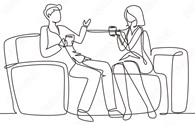
“The Big Chill” Morning Coffee

“Amazing tradition.

They throw a great party for you

on the one day they know you can’t come.”

— Sam (Tom Berenger)

Michael Shellenberger (University of Texas Austin): Return of the Strong Gods

R.R. Reno: Nationalism, Populism, and the Future of the West

‘The Big Chill’ cast reunites after 30 years | NBC News

Central Michigan


Roger Scruton: Why Are Intellectuals Mostly Left?

Amy Wax: The Perilous Quest for Equal Results in Academia

University of Oxford: Tackling Corruption in the University

Heather MacDonald: Feminist Takeover of Academia

Jordan Peterson: Intellectual Corruption of Colleges and Universities


Best Coffee Spots Near Campus


George H.W. Bush 1991 University of Michigan Commencement Speech on “Political Correctness”

“Ironically, on the 200th anniversary of our Bill of Rights, we find free speech under assault throughout the United States, including on some college campuses. The notion of political correctness has ignited controversy across the land. And although the movement arises from the laudable desire to sweep away the debris of racism and sexism and hatred, it replaces old prejudice with new ones. It declares certain topics off-limits, certain expression off-limits, even certain gestures off-limits.”

Purpose-Built Student Accommodation

How to Clean Your Room

Saturday Chores


Duke University — Students
are responsible for keeping individual rooms clean and orderly,
removing their own trash and recycling and cleaning up after
themselves in shared spaces.

What to Expect in Residence Halls

West Texas A&M University —
Students must keep their rooms reasonably neat and clean. Custodial
service is not provided inside the room after the student moves in.

Cleaning

Columbia College — Custodians
maintain lounges, corridors, stairs, bathrooms and other public areas;
students clean their own rooms.

Residence Hall Maintenance & Housekeeping

Cottey College — Students
clean their rooms and provide their own cleaning products. Vacuum
cleaners can even be borrowed from residence-hall reception desks,
while suitemates share responsibility for kitchens and bathrooms.

Cleaning Responsibilities

University of Illinois Chicago —
Building-service workers maintain public areas including lounges,
kitchens and laundry rooms, while residents clean their own bedrooms.

Resident Student Handbook

DePauw University — Residents
clean their bedrooms, remove food and trash, wash dishes and clean
communal-kitchen surfaces. The rules connect these ordinary chores
directly with sanitation and pest prevention.

Campus Living Residential Policies

University of Nevada, Reno —
Students can borrow vacuum cleaners from the front desk. Rooms must
remain free of health and fire hazards and may be inspected.

Residence Hall Student Handbook


“Cleanliness becomes more important when godliness is unlikely.”

— P. J. O’Rourke

Recognizing signs and doors for Indoor Wayfinding for Blind and Visually Impaired Persons

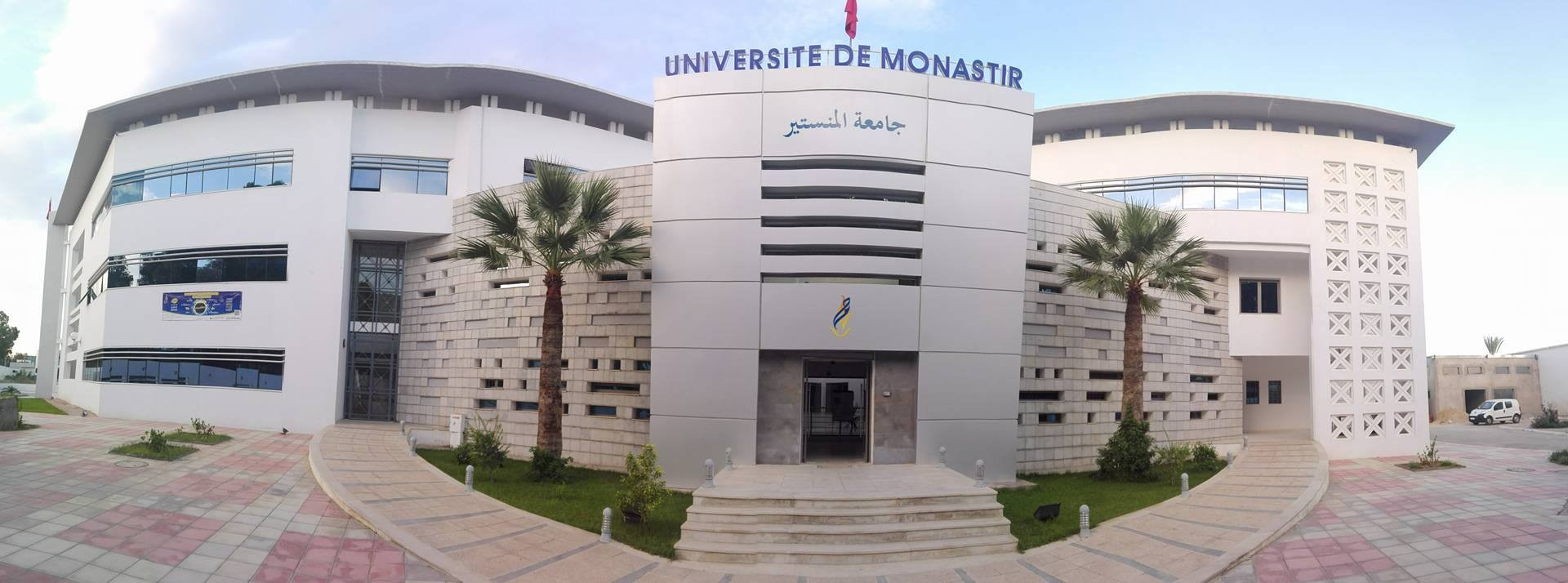
Mouna Afif, et al


Abstract:  Indoor signage plays an essential component to find destination for blind and visually impaired people. In this paper, we propose an indoor signage and doors detection system in order to help blind and partially sighted persons accessing unfamiliar indoor environments. Our indoor signage and doors recognizer is builded based on deep learning algorithms. We developed an indoor signage detection system especially used for detecting four types of signage: exit, wc, disabled exit and confidence zone. Experiment results demonstrates the effectiveness and the high precision of the proposed recognition system. We obtained 99.8% as a recognition rate.

Wayfinding

Fire Doors and Fire Windows

Clery Act

The Clery Act has been amended by the Stop Campus Hazing Act. Institutions must now include hazing incidents among their reported campus-safety statistics and include policies concerning hazing, reporting, investigation and prevention in their Annual Security Reports.

Institutions must also develop a Campus Hazing Transparency Report identifying student organizations found responsible for hazing violations. The report includes the organization, a general description of the violation, sanctions and relevant dates. Where violations have occurred, the report must be published on the institution’s website and updated at least twice annually.

2026/2027 Guidance


Update: February 26, 2025

The federal requirement for a school safety plan is outlined in the Jeanne Clery Disclosure of Campus Security Policy and Campus Crime Statistics Act, commonly known as the Clery Act.  The Clery Act requires all colleges and universities that participate in federal student financial aid programs to develop and publish an annual security report that includes certain safety-related policies, procedures, and crime statistics.

The Clery Act requires that schools include specific information in their security reports, including:

  1. The school’s crime statistics for the previous three years.
  2. Information about the school’s policies and procedures related to campus safety and security.
  3. Information about crime prevention programs and services offered by the school.
  4. Information about the school’s emergency response and evacuation procedures.
  5. Information about the school’s policies and procedures for addressing and reporting incidents of sexual assault, domestic violence, dating violence, and stalking.
  6. Information about the school’s drug and alcohol policies and prevention programs.

While the Clery Act only applies to colleges and universities that receive federal student financial aid, many states and school districts have adopted similar requirements for K-12 schools to develop and implement comprehensive safety plans. These plans may include many of the same elements as Clery Act-compliant security reports, such as emergency response protocols, crime prevention programs, and policies for addressing incidents of violence and harassment.

Example Reports:

Clery Act Reports by School

University of Michigan Ann Arbor Annual Security and Fire Safety Report 2024

Michigan State University: 2022 Annual Security & Fire Safety Report

Davenport University: 2022 Annual Security and Fire Safety Report

Central Michigan University: 2022 Annual Security & Fire Safety Report

Related:

Record-Breaking $14 Million Fine Imposed for Noncompliance with the Clery Act


March 2020 Update

The most recent changes to the Clery Act were made in March 2020, when the Department of Education published the final rule amending the Clery Act regulations. The changes include:

  1. Expanding the definition of sexual harassment to include quid pro quo and hostile environment harassment, which aligns with Title IX regulations.
  2. Requiring institutions to report stalking and domestic violence in addition to existing crime categories.
  3. Adding hazing as a reportable crime category.
  4. Requiring institutions to compile and publish hate crime statistics for all categories of prejudice, including gender identity and national origin.
  5. Requiring institutions to include specific policies and procedures in their annual security reports, such as those related to prevention and response to sexual assault, domestic violence, dating violence, and stalking.
  6. Requiring institutions to provide survivor-centered and trauma-informed services to individuals who report or experience sexual assault, domestic violence, dating violence, or stalking.
  7. Requiring institutions to include information about prevention and response to cyberbullying and electronic harassment in their annual security reports.
  8. Allowing institutions to provide annual security reports electronically and requiring institutions to make their crime statistics publicly available on their website.

These changes aim to strengthen the Clery Act’s requirements for campus safety and to better address sexual harassment and other forms of violence on college and university campuses.

Clery Act Appendix for FSA Handbook

Every new federal law involving paperwork creates an uncountable number of trade associations and compliance enterprises.  A simple web search on “Cleary Act” will reveal half the internet full of pages for more information.  Our focus is on the user-side — i.e. making inquiries and pushing back on the gaudy proliferation of regulatory requirements, the integrity of purpose of the law notwithstanding.  We maintain this title on the standing agenda on all of our Security colloquia.  See our CALENDAR for the next online meeting; open to everyone.

K-12 School Security

Lock the Door

This content is accessible to paid subscribers. To view it please enter your password below or send mike@standardsmichigan.com a request for subscription details.

Layout mode
Predefined Skins
Custom Colors
Choose your skin color
Patterns Background
Images Background
Standards Michigan
error: Content is protected !!
Skip to content