

High-Performance Green Buildings

Loading
loading...

High-Performance Green Buildings

March 27, 2023
mike@standardsmichigan.com

No Comments

“Hudson River Waterfront” | Colin Campbell Cooper (1913)

With about one hundred technical committees administered by accredited standards developers globally, the stream of standards action in the building energy conservation space is one of the fastest-moving; and a space that demonstrates remarkable adaption.  As the largest non-residential building construction market in the United States the education facility industry is on the receiving end of prescriptive and performance requirements produced by these technical committees that are enforced by state agencies and/or sustainability consortia.  There is market-making by incumbents  whose revenue stream runs close coupled to the US education industry’s green agenda.  We do our best to keep pace.

We find several redlines from  ASHRAE/ICC/USGBC/IES Standard 189.1 Standard for the Design of High-Performance Green Buildings Except Low-Rise Residential Buildings now open for public review at the link below:

Public Review Draft Standards / Online Comment Database

Public consultation periods run April 3 through April 23.

We maintain ASHRAE 189.1 on the standing agenda of our Mechanical Engineering, Energy 200, Health and Nota Bene teleconferences.  If you would like to pick through these mark ups see our CALENDAR for the next online meeting; open to everyone.
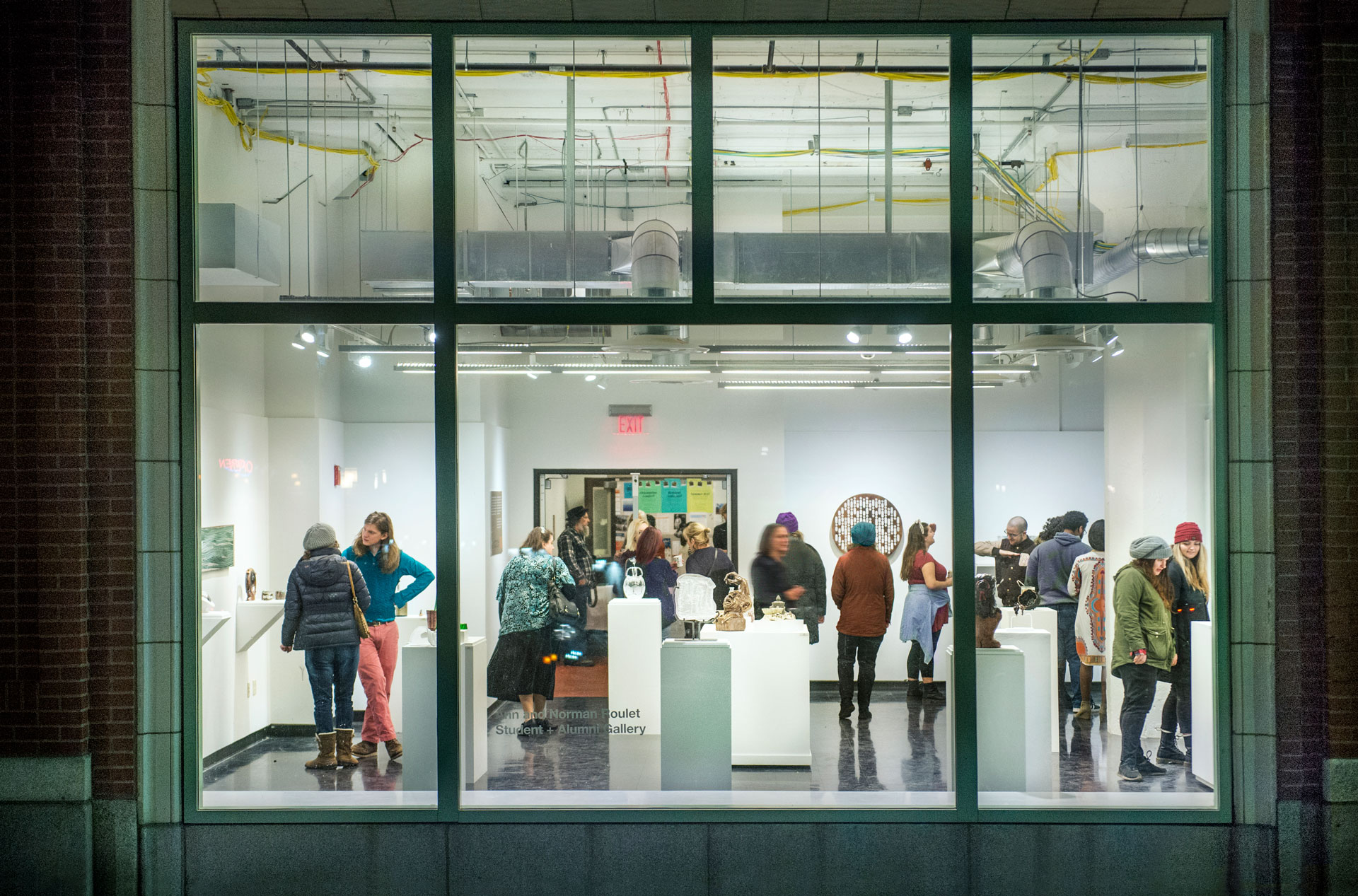
The Cleveland Institute of Art


Issue: [13-162, 18-3, et. al]

Category: Mechanical, Electrical, Energy

Colleagues:  Mike Anthony, Richard Robben, Larry Spielvogel

Workspace / ASHRAE


“What’s Going On”

March 26, 2023
mike@standardsmichigan.com
, ,
No Comments


“Others, again, shall hammer out bronze more delicately, and bring living faces from marble;

plead causes better; measure the movement of the heavens with a wand, and name the rising stars:

Remember, Roman, these will be your arts, to impose the ways of peace, to spare the defeated,

and to crush the proud”  — Virgil (Aeneid, VI.847-853).


Marvin Gaye wrote “What’s Going On” while he was at Motown, although the song initially faced resistance from Berry Gordy and other label executives. Motown had been known for producing mostly love songs and upbeat pop hits, and Gaye’s introspective and socially conscious lyrics were considered risky for the label’s commercial success.  The song became an instant hit, and it went on to become one of Gaye’s most famous and enduring works.

What’s Going On | Marvin Gaye

Mother, mother
There’s too many of you crying
Brother, brother, brother
There’s far too many of you dying
You know we’ve got to find a way
To bring some lovin’ here today, yea
Father, father
We don’t need to escalate
You see, war is not the answer
For only love can conquer hate
You know we’ve got to find a way
To bring some lovin’ here today
Picket lines and picket signs
Don’t punish me with brutality
Talk to me, so you can see
Oh, what’s going on
What’s going on
Ya, what’s going on
Ah, what’s going on
In the mean time
Right on, baby
Right on
Right on
Father, father, everybody thinks we’re wrong
Oh, but who are they to judge us
Simply because our hair is long
Oh, you know we’ve got to find a way
To bring some understanding here today
Oh
Picket lines and picket signs
Don’t punish me with brutality
Talk to me
So you can see
What’s going on
Ya, what’s going on
Tell me what’s going on
I’ll tell you what’s going on – Uh
Right on baby
Right on baby

Camellia sinensis var.

March 22, 2023
mike@standardsmichigan.com
,
No Comments

This content is accessible to paid subscribers. To view it please enter your password below or send mike@standardsmichigan.com a request for subscription details.

The Oxford Comma

March 19, 2023
mike@standardsmichigan.com
,
No Comments

This content is accessible to paid subscribers. To view it please enter your password below or send mike@standardsmichigan.com a request for subscription details.

Illumination 500

March 18, 2023
mike@standardsmichigan.com
No Comments

This content is accessible to paid subscribers. To view it please enter your password below or send mike@standardsmichigan.com a request for subscription details.

Evensong “Deux Arabesques” Debussy

March 16, 2023
mike@standardsmichigan.com
,
No Comments

This content is accessible to paid subscribers. To view it please enter your password below or send mike@standardsmichigan.com a request for subscription details.

Behind-the-Meter Distributed Energy Resources

March 16, 2023
mike@standardsmichigan.com
No Comments

 Behind-the-Meter Distributed Energy Resources (DERs) are energy generation, storage, or management systems that are located on the consumer side of the electric meter, typically at or near the point of energy consumption. They are also known as customer-sited or on-site generation resources. These resources can generate, store, and manage electricity, heat, or other forms of energy, and are typically installed on residential, commercial, or industrial properties.

Examples of Behind-the-Meter Distributed Energy Resources include:

  1. Solar Photovoltaic (PV) Systems: These systems use solar panels to convert sunlight into electricity, which can be used on-site to power the property or stored in batteries for later use.
  2. Energy Storage Systems: These systems store excess electricity generated by other sources, such as solar PV systems or during off-peak times, and release it during peak demand periods to reduce electricity costs or provide backup power during grid outages.
  3. Combined Heat and Power (CHP) Systems: Also known as cogeneration systems, CHP systems generate both electricity and useful heat for on-site use, such as in industrial processes or for heating and cooling buildings.
  4. Microturbines and Fuel Cells: These are compact power generation systems that can provide electricity and heat on-site, using natural gas, biogas, or hydrogen as fuel.
  5. Energy Management Systems: These systems use advanced technologies, such as demand response, load control, and energy monitoring and management, to optimize energy use and reduce consumption during peak demand periods, thereby lowering energy costs and improving energy efficiency.

Behind-the-Meter DERs can provide a range of benefits, including increased energy efficiency, reduced energy costs, improved resiliency and reliability of energy supply, reduced greenhouse gas emissions, and increased local energy generation and self-consumption. They are often used by consumers, businesses, and industries to manage their energy needs, reduce their reliance on the grid, and contribute to sustainability and environmental goals. However, the installation, operation, and integration of Behind-the-Meter DERs may be subject to local regulations, utility policies, and technical considerations, and it’s important to consult with qualified professionals and adhere to applicable guidelines and standards.

Regenerate response

Dentisterie

March 16, 2023
mike@standardsmichigan.com
No Comments

Dental health enterprises present technical challenges for teaching, research  and clinical delivery.  Today we examine the literature that informs the safety and sustainability of the facilities that support this domain; necessarily cross cutting with related healthcare facility literature.

American Dental Association

American Waterworks Association

Centers for Medicare & Medicaid Services

International Code Council

2021 International Building Code Chapter 3 Occupancy Classification and Use

Related:

Specific Requirements for Dental Facilities

Dental Clinic Manual

Dental Office Design and Construction


Layout mode
Predefined Skins
Custom Colors
Choose your skin color
Patterns Background
Images Background
Standards Michigan
error: Content is protected !!
Skip to content