Category Archives: @NFPA

Loading
loading...

Pool, Fountain, Agriculture & Water Infrastructure Electrical Safety

2026 National Electrical Code Workspace

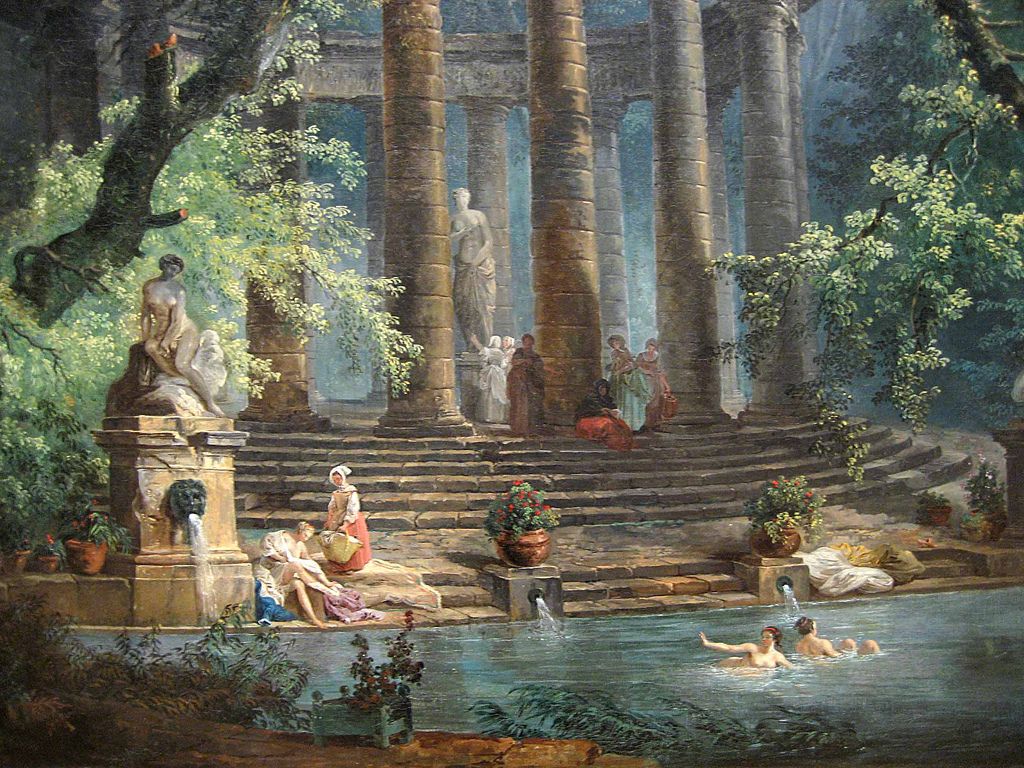
“The Bathing Pool” / Hubert Robert (French, 1733–1808) / Gift of J.P. Morgan

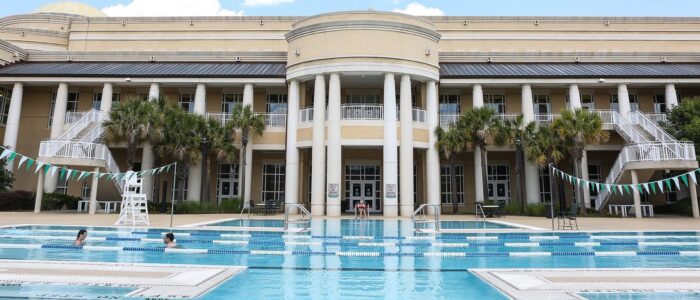
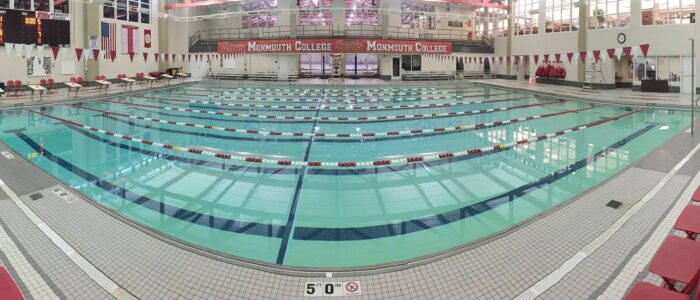
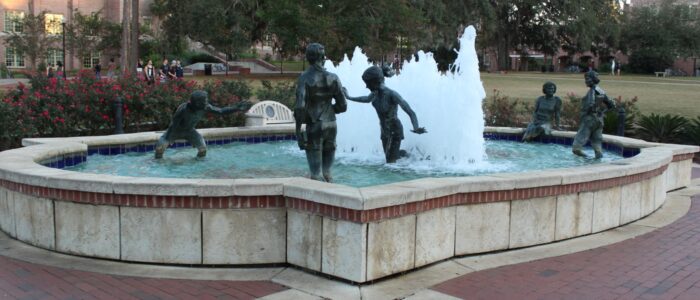
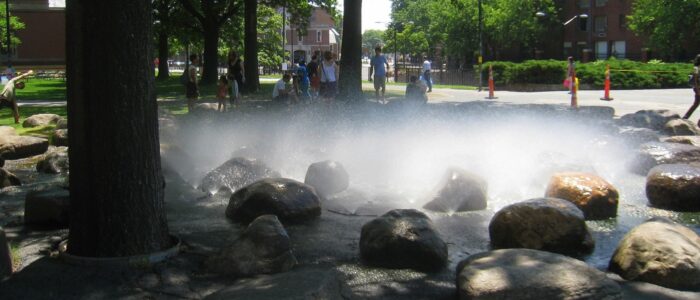
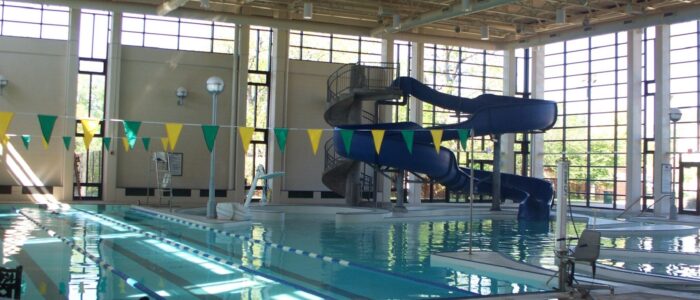
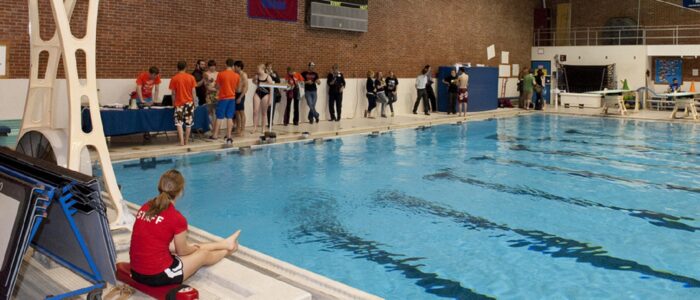
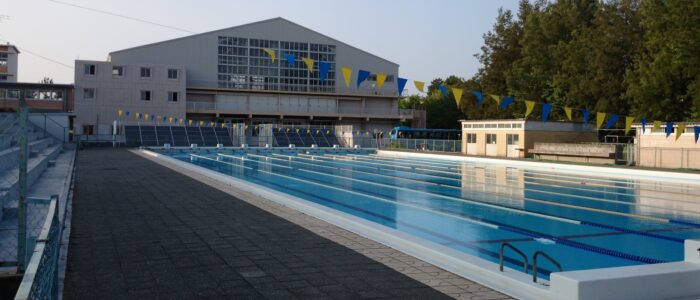
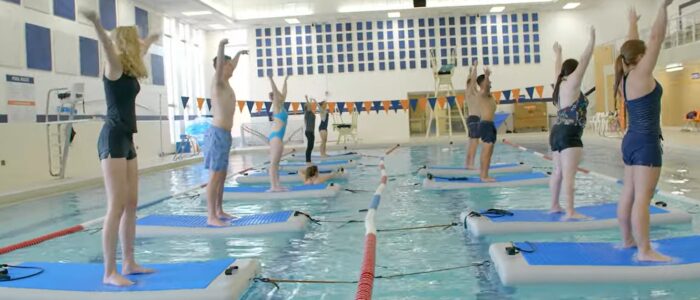
Education communities have significant assets tied up in swimming pools, immersion pools, fountains, hydro-therapy installations (in hospitals and athletic training facilities) and flood control facilities (in congested, non-permeable parts of urban campuses) we have been keeping an eye on leading practice discovery for these installations in the 2020 National Electrical Code.

With electrical safety — i.e. shock protection — as the focus of this post*, the relevant parts of the 2020 NEC reside in Articles 680 and 682 are described below:

Article 680 applies to the construction and installation of electrical wiring for, and equipment in or adjacent all swimming, wading, therapeutic and decorative pools, fountains, hot tubs, spas and hydromassage bathtubs, whether permanently installed or storable, and to metallic auxiliary equipment, such as pumps, filters, and similar equipment.  The term body of water used throughout Part I applies to all bodies of water covered in this scope unless otherwise amended.

Article 682 applies to the installation of electrical wiring for, and the equipment in and adjacent to, natural or artificially made bodies of water not covered by other articles in the NEC, such as, but not limited to aeration ponds, fish farm ponds, storm retention basins, treatment ponds and irrigation (channel facilities.   Water depths may vary seasonally or be controlled.

When the 2020 NEC is released there will be hundreds (more like thousands) of experts who make their living on each NEC revision fanning out across the globe able and ready to interpret, advise and train.  We are not primarily a code training enterprise but we do get down into the weeds of electrical safety technical discussion where leading practice discovery discussion is recorded:

2020 NEC Article 680-682 Public Input | Pages 240 – 501

2020 NEC Articles 680-682 First Draft Report | Page 59 – 152

2020 NEC Articles 680-682 Public Comment Report

2020 NEC Articles 680-682 Second Draft Final Ballot

Transcripts superseded.  We refer to the 2026 Workspace linked at the top of this page.

We find interest in corrosion control, water bottle fill stations, water heating technologies, LED illumination as well as the usual editorial, correlation and concepts movement between articles.  From these transcripts it should also be plain that grounding and bonding practice, GFCI protection, luminaire location and wiring, corrosion management continue to be of primary interest in electrical safety assurance.   Related safety concepts appear in NFPA 70B and NFPA 70E.   Anything having to do with water; or the areas around water, are regions of elevated risk.

We are happy to discuss electrical safety standards any day at 11 AM Eastern time and host a monthly breakout teleconference dedicated to Electrical Power Safety in education facilities.  See our CALENDAR for the next online meeting.  We also collaborate closely with the IEEE Education & Healthcare Facilities Committee which meets online four times monthly in European and American time zones.

Issue: [16-102]

Category: Electrical, Risk Management, Water,

Colleagues: Mike Anthony, Jim Harvey, Kane Howard

*We leave the technical specifics of footcandle distribution to another, future post.


LEARN MORE:

2017 NEC changes for electrical safety in swimming pools

2020 NEC Changes (All Articles)


Reconditioned Electrical Equipment

We have been following an international conversation on the safe and effective application of reconditioned electrical equipment (RCEE) for the better part of ten years now.   Threads of the conversation originating in consensus documents developed by the International Electrotechnical Commission, the CSA Group, the National Association of Electrical Equipment and Medical Imaging Manufacturers (NEMA) and others.   The safe and practical application of reconditioned electrical equipment — though not necessarily economical — is debated in detail in the  National Electrical Code (NEC);  a document in which we have advocated for the education facilities industry since 1993.

Not all electrical equipment is suitable for reconditioning but enough of it can such that specification of RCEE significantly lowers #TotalCostofOwnership for the $300 billion education facilities industry in the United States; the primary goal of Standards Michigan and its 50-state affiliates.  According to the National Electrical Manufacturers Association, the following RCEE is suitable:

  • Industrial and commercial panel boards
  • Low and medium voltage power circuit breakers
  • Low and medium voltage replaceable link fuses
  • Low voltage switchgear
  • Manual and magnetic controllers
  • Medium voltage switchgear
  • Metallic conduit, tubing, raceways and fittings
  • Motor control centers
  • Motors
  • Switchboards
  • Uninterruptible Power Supply Equipment

The length of this list is a topic upon which good minds disagree; especially internationally.   Whether or not the largest non-residential building construction market in the United States (with new construction running at a clip of $80 billion annually) takes advantage of developments in technology that help manufacturers effectively “re-cycle” the largest components of a building power chain is a discussion for another day.    The IEEE Education & Healthcare Facilities Committee drills down into details of this nature and is now soliciting comment on the proposed actions of IEEE SCC-18; the IEEE committee which, by charter, is aligned with user-interests in the US standards system.  As we explain in our ABOUT,  the general public — and even many industry insiders —  are not aware of the economic consequences to all industries when regulatory products are written only by incumbent interests.

Suffice to say that even if the US education facilities industry does not apply RCEE to reduce the cost of a new building (by about 1 percent) its competitors internationally will and are.

The 2020 NEC is nearing the completion of its revision cycle.   A milestone was completed in early November when all of the 20-0dd technical committees in San Diego.   Dozens of breakout task groups are forming to sort through public response to proposed changes to the 2017 NEC which will become the 2020 NEC this time next year.   Proposals regarding RCEE landed on the agenda of nearly all 20-odd NEC technical committees.   Standards Michigan has tenure in Code Making Panel 1, the committee with oversight about how all other technical committees determine the safe and practical application of RCEE.

Cutting to the chase then, linked below is the first of several transcripts that track CMP-1 debate:

NFPA 70 National Electrical Code Workspace

Admittedly, very technical stuff.   Few will pay attention to these specifics until something bad happens (perhaps six years from now) so, to avoid something bad happening, we pay attention to it now.   We always collaborate with IEEE JTC/PES/IAS and IEEE E&H Committee which meets online twice every month. 

Issue: [16-102]

Category: Electrical, #SmartCampus

Colleagues: Mike Anthony,  Robert G. Arno, Neal Dowling, James R. Harvey, Richard Robben

Readings / Evaluating Water-Damaged Electrical Equipment


Appliances

salutariness clean hygiene

Most sanitation technologies are driven by electrical power — motors, pumps. heating and cooling elements, etc.  The trajectory of product innovation, installation and maintenance practices are guided by electrical power capacity and availability.

Article 422 of the National Electrical Code covers safe wiring practices and is on the front end of new revision cycle.  Comments on Public Input for the 2026 Revision will be received until 28 August 2024

2026 National Electrical Code Workspace

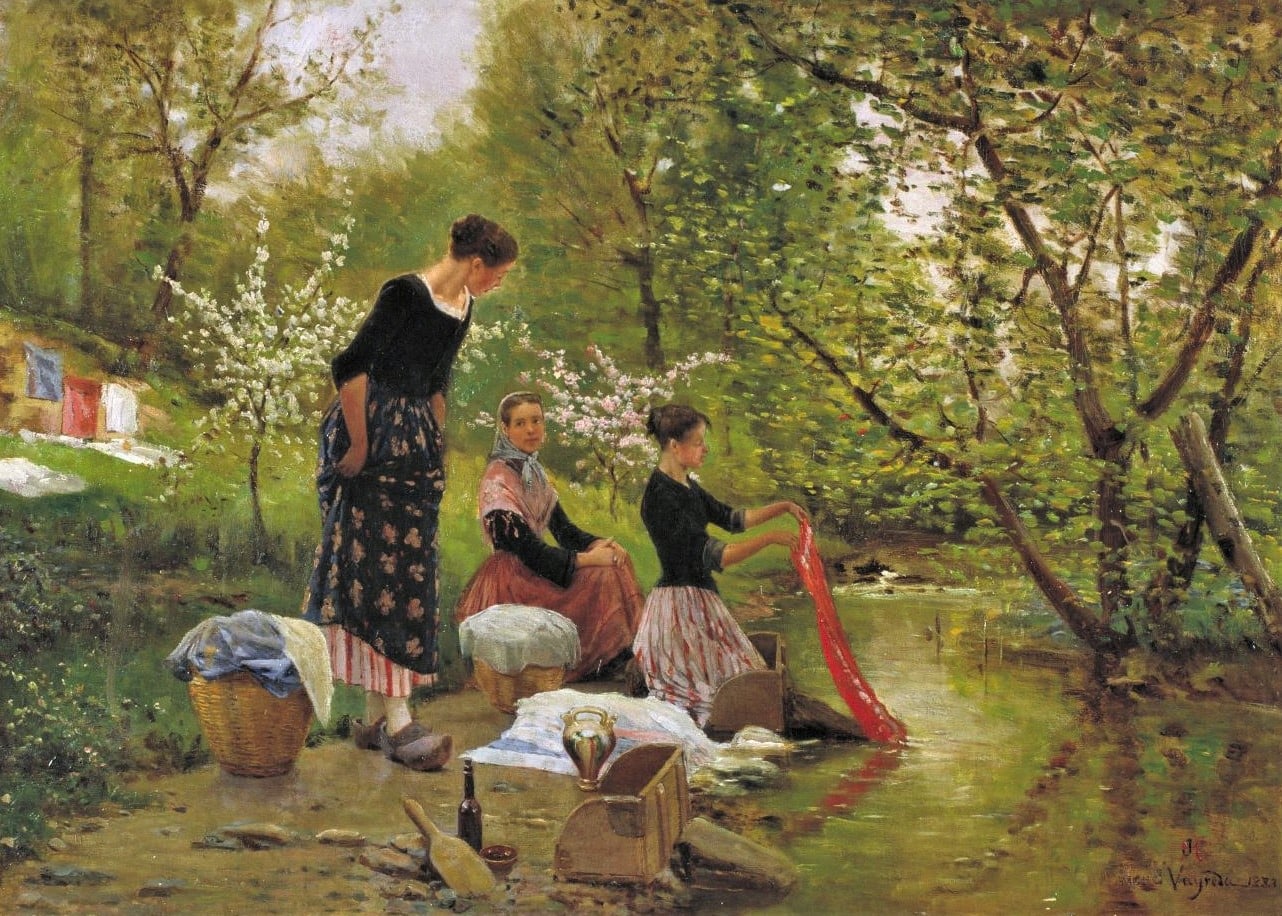
Las lavanderas (1883) (Museo Nacional de Cataluña) de Joaquín Vayreda (español, 1853-1903)

Landscape Lighting


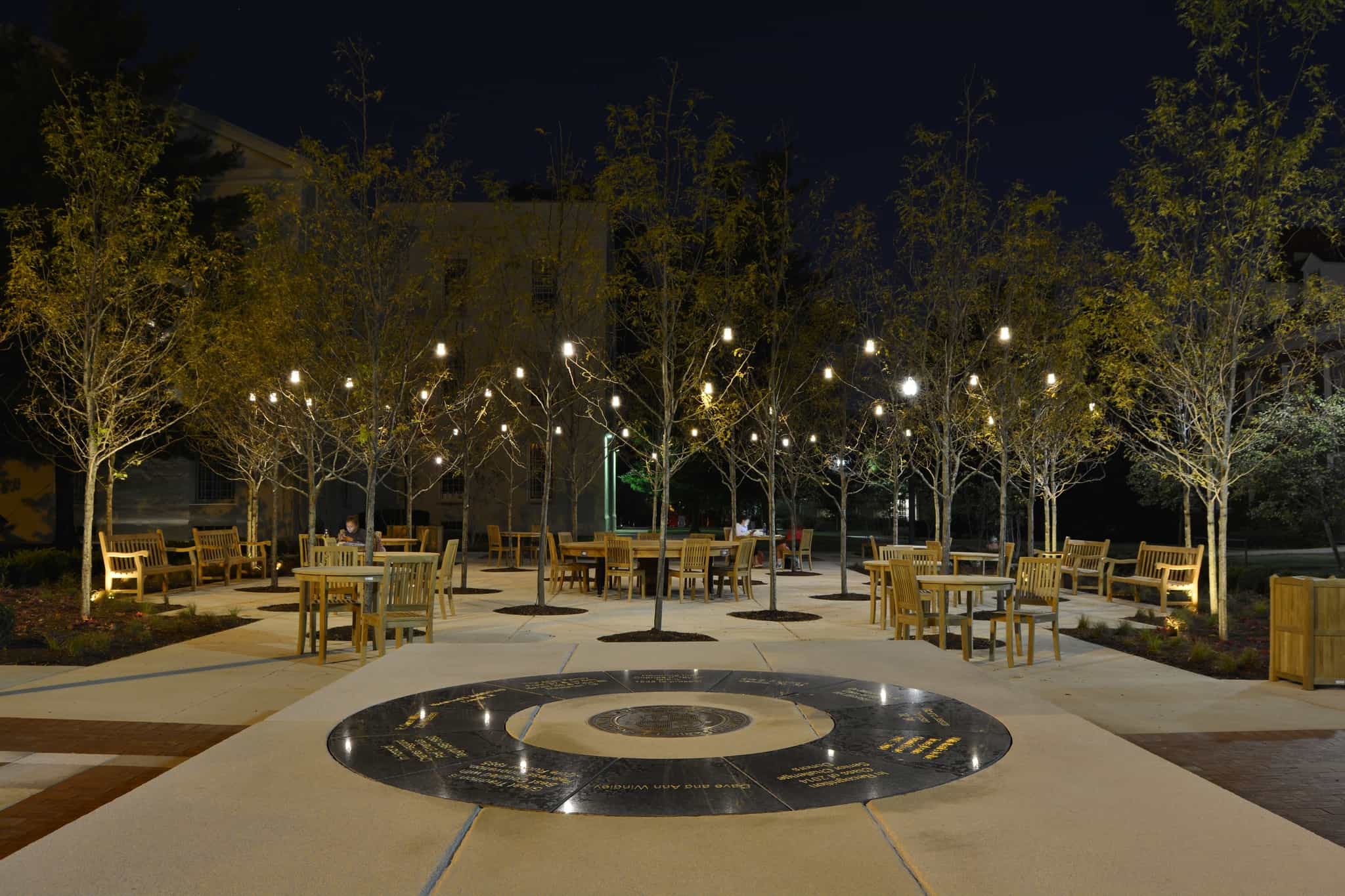
Luminaires receive operating energy at voltage ranges from 120V to 600V AC.  For safety and aesthetic reasons — in gardens or inside stairway balustrades or bollards, for example — low voltage lighting is preferred.   The illumination of the pathway, for example, reduces risk to the community far more than the risk voltage presents.  These installations typically operate at 12 to 50 volts direct current.  Manufacturers bear much of the electrical safety burden; assuming the Owner installs and maintains the system correctly.

Faster than anyone will expect, interior building lighting will morph into low voltage systems because 1) the lower energy supply required by LED luminaires will make it possible to pipe that energy through low voltage cabling systems, 2) the pace of innovation we see in information and communication technologies will use those cabling systems for greater control of illumination systems.

We see these trends tracking in two sections of the 2020 National Electrical Code:

Article 300 Wiring Methods (Table 300.5)

Article 411 Low-Voltage Lighting

CLICK HERE for Free Access to the current 2023 Edition.

Comments on Public Input for the 2026 Revision will be received until 28 August 2024. Use workspace linked below:

2026 National Electrical Code Workspace

CMP-9 Article 300

CMP-9 Public Input with Committee Response

CMP-18 Article 411

CMP-18 Public Input with Committee Response

Apart from integrating a new definition of “extra low voltage” into the NEC, Article 411 is a relatively quiet part of the NEC.  Not so with Article 300 which is of great consequence to wiring manufacturers, among others.

Transylvania University Kentucky

We coordinate our advocacy in all education community electrotechnologies with the IEEE Education & Healthcare Facilities Committee which meets online 4 times monthly in both European and American time zones.  We maintain low voltage lighting on the standing agenda of our Power and Bucolia colloquia.  See our CALENDAR for the next online meeting; open to everyone.

Issue: [NFPA Workspace]

Category: Power, Illumination, Bucolia

Colleages: Mike Anthony, Jim Harvey (University of Michigan), Kane Howard, Glenn Keates (Michigan State University), George Zsissis (University of Toulouse)

Dynamic Exit Signs

Dynamic exit signs are a type of emergency exit signage that uses active illumination and changes in light to draw attention to the nearest exit in case of an emergency. Unlike traditional exit signs that use static or passive lighting to indicate exit locations, dynamic exit signs incorporate lighting systems that respond to specific environmental conditions or power outages, which can help to guide people to safety more efficiently.

There are several types of dynamic exit signs, including:

  • Photoluminescent exit signs: These signs absorb and store light energy from ambient sources, such as room lighting or sunlight, and then glow brightly in the dark when the power goes out.
  • LED exit signs: These signs use light-emitting diodes (LEDs) to create animated or flashing signs that can better catch people’s attention.
  • Electroluminescent exit signs: These signs use electrically charged phosphors to produce a bright, uniform light source that can be more visible in low-light or smoke-filled environments.

Overall, dynamic exit signs are designed to enhance visibility and guide people to safety during an emergency, and they can be an important part of an overall emergency preparedness plan.

More

International Building Code: Chapter 10 Means of Egress

Life Safety Code: Chapter 7 Means of Egress

National Electrical Code: Article 700 Emergency Systems 

Life Safety Code

Emergency and Standby Power Systems

Code for Fire Protection of Historic Structures

This content is accessible to paid subscribers. To view it please enter your password below or send mike@standardsmichigan.com a request for subscription details.

Facilities Life Safety Director Professional Qualifications

“Incendie à Rome 18 July 64 AD” 1785 Hubert Robert

Issue: [16-142]

Category: Public Safety, Human Resources

Colleagues: Mike Anthony, Joe DeRosier, Josh Evolve, Marcelo Hirschler

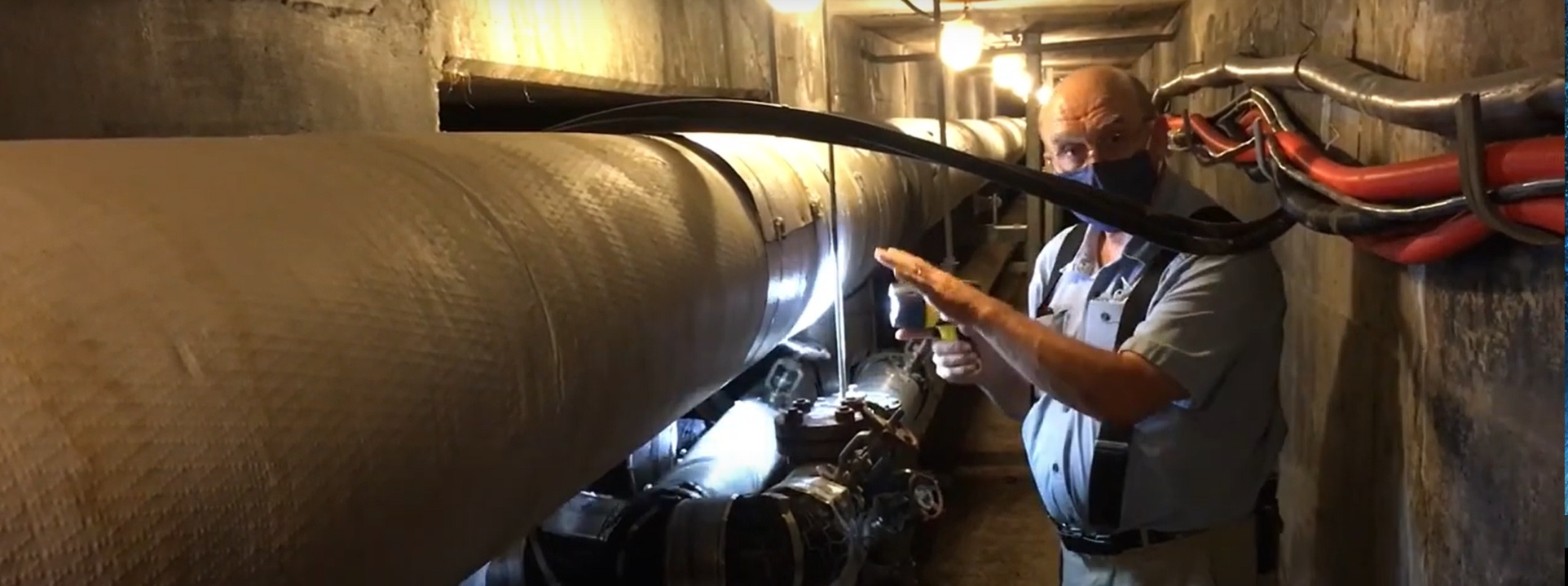
Guide for Safe Confined Space Entry and Work

Plymouth State University | Grafton County New Hampshire

Guide for Safe Confined Space Entry and Work

This guide supplements existing confined space regulations, standards, and work practices by providing additional guidance for safe confined space entry and work. References are provided throughout the guide and annexes to direct the reader to other regulations and standards or other content that might be applicable.

This guide provides the following:

Information to identify, evaluate, assess, and then eliminate, mitigate, or control hazards that are present or that may occur during entry into or work in and around confined spaces.

Information on how to understand confined space safety and safeguard personnel from fire, explosion, and other health hazards that are uniquely associated with confined spaces.

Information regarding training, qualifications, and competencies required for personnel responsible for confined space hazard identification, hazard evaluation, and hazard control for personnel who work in and around confined spaces.

Information on confined space rescue best practices.

Information concerning confined space hazards and safety practices that are applicable to all types of confined spaces.

Information regarding hazards adjacent to confined spaces that might affect the safe conditions necessary for entry and work in a confined space.

This guide provides criteria for eliminating, mitigating, or controlling hazards in the confined space design phase.


Agricultural Building Power

This content is accessible to paid subscribers. To view it please enter your password below or send mike@standardsmichigan.com a request for subscription details.

Drone Safety

“Icarus” | Joos de Momper


“All limits are self imposed.”

Daedalus and Icarus (Metamorphoses, Ovid)


The National Fire Protection Association has added another standard to its suite of public safety documents: NFPA 2400 Standard for Small Unmanned Aircraft Systems (sUAS) used for Public Safety Operations.   This standard covers the minimum requirements relating to the operation, deployment, and implementation of small unmanned aircraft systems for public safety operations.   The standard is developed by two main committees — one committee for drone systems (UAS-AAA) and another committee for the professional qualifications to operate and maintain drone systems (PQU-AAC)

From the project prospectus:

This standard shall cover the minimum requirements relating to the operation, deployment, and implementation of small unmanned aircraft systems (sUAS) for public safety operations. This standard shall establish operational protocols for public safety entities who use and support sUAS. This standard shall include minimum job performance requirements (JPRs) for public safety personnel who operate and support sUAS. This standard shall include minimum requirements for the maintenance of sUAS when used by public safety entities. This standard shall provide additional minimum requirements specific to public safety entities.

The 2019 Edition of NFPA 2400 has already been released for public use.  Because this is a relatively new addition to the NFPA suite we provide two links that offer insight into the ideas running through it: The First Draft Report for the AAA committee is linked below:

2400_Cust2020_UAS_AAA_FRReport

The First Draft Report for the AAC committee is linked below:

2400_Cust2020_PQU_AAC_FDagenda_04_18

We choose these reports to provide an overview of the technical and management concepts in play in the first draft.  It is not uncommon, in the developmental trajectory of any accredited standard, that the bulk of it is largely administrative.  You may view it with a (free) NFPA public review account.  Get one by CLICKING HERE

First Draft 2024 Revision

Application of this technology for public safety on college and university campuses will likely accelerate and, hopefully, a catalog of case studies that will be shared.   We find that several educational organizations are supporting faculty and staff involvement:  University of Illinois Fire Service Institute, Piedmont Virginia Community College, Embry-Riddle Aeronautical University, Oklahoma State University and the University Of Cincinnati are supporting the participation of Special Experts.  The Los Angeles Unified School District is supporting a User Interest.

We expect that agricultural colleges and universities will begin developing curricula around the use of drones for crop inspection.

We encourage operations and maintenance staff — the various roofing and landscaping and grounds shops; for example — to participate in the development of the next revision.  You may do so here: NFPA PUBLIC INPUT PAGE.  We recommend you communicate directly with NFPA staff — either Michael Wixler or Elena Carroll.  CLICK HERE for contact help.

We maintain this title on the standing agenda of periodic Mobility, Risk and Aerospace colloquia.  See our CALENDAR for the next online meeting; open to everyone.

Schriever School Age Care | Schriever Air Force Base Indoor Running Track


Issue: [18-269], [16-199]

Category: Public Safety, Risk Management, #SmartCampus

Colleagues: Mike Anthony, Richard Robben

Standards Massachusetts


LEARN MORE:

ISO/TC 20/SC 16 Unmanned aircraft systems

Drones are also being used for rooftop cooling tower inspection: ASTM Committee F38 on Unmanned Aircraft Systems

SAE International: Requirements for a Terrestrial Based Position, Navigation, and Timing (PNT) System to Improve Unmanned Vehicle Navigation Solutions and Ensure Critical Infrastructure Security


nn

Layout mode
Predefined Skins
Custom Colors
Choose your skin color
Patterns Background
Images Background
Standards Michigan
error: Content is protected !!
Skip to content