
Category Archives: Security/Doors
- Home
- Archive by category "Security/Doors" (Page 10)



School Security Standards
This content is accessible to paid subscribers. To view it please enter your password below or send mike@standardsmichigan.com a request for subscription details.

ASSE Active Shooter Technical Report
This content is accessible to paid subscribers. To view it please enter your password below or send mike@standardsmichigan.com a request for subscription details.

Exterior Lighting Fixture Interchangeability
This content is accessible to paid subscribers. To view it please enter your password below or send mike@standardsmichigan.com a request for subscription details.

Community Resilience Strategies
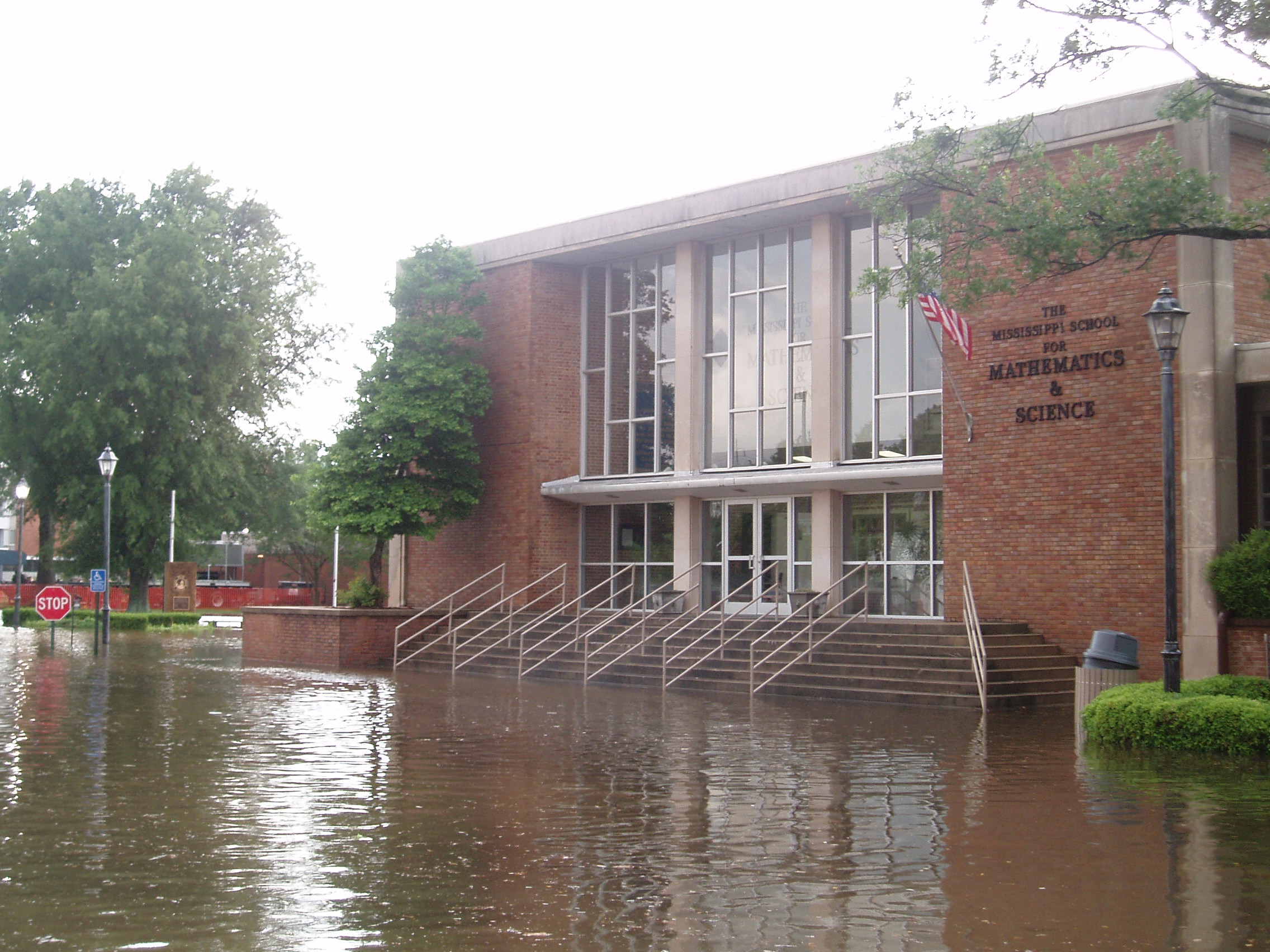
Many ASTM International consensus documents are found in education facility construction contracts and in documents that assert accepted good practice for operations and maintenance. Now comes a new consensus document ASTM E3130 Standard Guide for Developing Cost-Effective Community Resilience Strategies to support cost-effective ways for communities to respond, withstand, and recover from a wide range of potential catastrophes, such as natural hazards, utility outages, and human-caused disruptions. It was developed by ASTM International’s Committee on the Performance of Buildings (E06) and is linked below:
New Standard Supports Community Resilience
ASTM Committee E06 — formed in 1946 — is charged with the promotion of knowledge, stimulation of research, development and maintenance of standards and related documents for performance of buildings, their elements, components, including means and methods of fabrication and assembly; and the description, measurement, prediction, improvement, and management of the overall performance of buildings and building-related facilities.
ASTM Committee E06 meets twice a year, usually in April and October, with approximately 240 members attending three to four days of technical meetings and symposia. The next meeting of ASTM E06 is October 21 through October 24 at the Washington Hilton in Washington, DC. A Symposium on Building Science and the Physics of Building Enclosure Performance will take place at the same time. Stakeholders may communicate directly with the ASTM staff Stephen Mawn (smawn@astm.org) at 610-832-9726 to sort through participation specifics.
We will walk through this standard specifically – and the expanding constellation of resilience standards generally — during a breakout teleconference on September 24th, 11 AM Eastern time. Click in with the login credentials at the upper right of our home page.

Issue: [18-37]
Category: Architectural, Space Planning, Facility Asset Management
Colleagues: Jack Janveja, Richard Robben

Sustainability Criteria for Professional Services
This content is accessible to paid subscribers. To view it please enter your password below or send mike@standardsmichigan.com a request for subscription details.

Door Locking Systems
This content is accessible to paid subscribers. To view it please enter your password below or send mike@standardsmichigan.com a request for subscription details.

IEEE I&CPS Color Book Update
This content is accessible to paid subscribers. To view it please enter your password below or send mike@standardsmichigan.com a request for subscription details.

IBC §116 | Unsafe Structures & Equipment

There is a group of proposals now under consideration by the ICC Building Code Action Committee (BCAC) that is being prepared for the International Code Council’s meetings April 15 to 25, 2018 in Columbus, Ohio. The intent of these proposals is a start to improving consistency in Chapter 1 of the 2021 International Building Code. The definitions in the document linked below are scoped to administrative content across most of the ICC standard suite. The “Reason” (substantiation) statements — always a required in the ICC process — indicate which codes have the same information and with no proposed changes. Where there is coordination with the International Residential Codes or the ICC Energy codes, the proposals in the link below show Part 1, Part 2 and Part 3 since Chapter 1 of those codes is heard in breakout hearings by those code committees:
BCAC Proposals for Administrative Coordination of Unsafe Structures and Equipment ADM 1-4
Queries about the BCAC committee may be directed to Ed Wirtschorek (ewirtschoreck@iccsafe.org). To participate more broadly in International Code Council consensus documents you need only register as a stakeholder in ICC cdpACCESS. We will also add this item to the standing agenda of our weekly Open Door teleconferences (every Wednesday 11 AM Eastern Time) to which everyone is welcomed:
https://standardsmichigan.com/event/
Issue: [18-73]
Category: Facility Asset Management, Architectural, Public Safety, Risk Management, Space Planning
Contact: Mike Anthony (mike@standards michigan.com), Richard Robben (rrobben1951@gmail.com)
APCO 1.111.2 | Public Safety Communications
This content is accessible to paid subscribers. To view it please enter your password below or send mike@standardsmichigan.com a request for subscription details.
New update alert! The 2022 update to the Trademark Assignment Dataset is now available online. Find 1.29 million trademark assignments, involving 2.28 million unique trademark properties issued by the USPTO between March 1952 and January 2023: https://t.co/njrDAbSpwB pic.twitter.com/GkAXrHoQ9T
— USPTO (@uspto) July 13, 2023
Standards Michigan Group, LLC
2723 South State Street | Suite 150
Ann Arbor, MI 48104 USA
888-746-3670
DIRECTIONS
 |
 |
|
 |
 |
|
 |
 |