
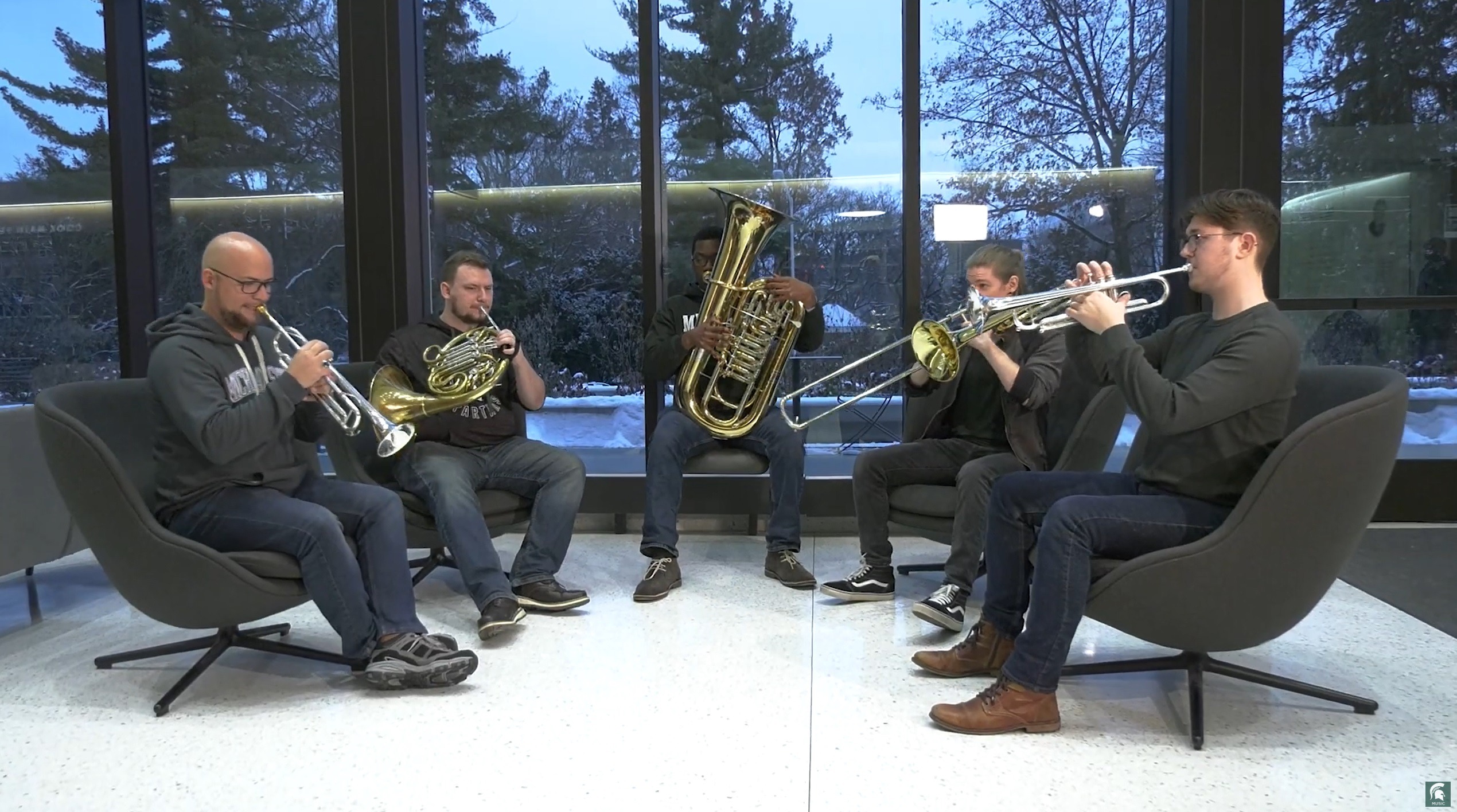

Let’s do it again @MSU_Basketball 🟢⚪️🏀 #GoGreen pic.twitter.com/S3l4cKQNcx
— Spartan Brass (@MSUSpartanBrass) March 19, 2022


Let’s do it again @MSU_Basketball 🟢⚪️🏀 #GoGreen pic.twitter.com/S3l4cKQNcx
— Spartan Brass (@MSUSpartanBrass) March 19, 2022
“The ideal architect should be a man of letters, a skillful draftsman, a mathematician,
familiar with historical studies, a diligent student of philosophy, acquainted with music,
not ignorant of medicine, learned in the responses of jurisconsults,
familiar with astronomy and astronomical calculations.”
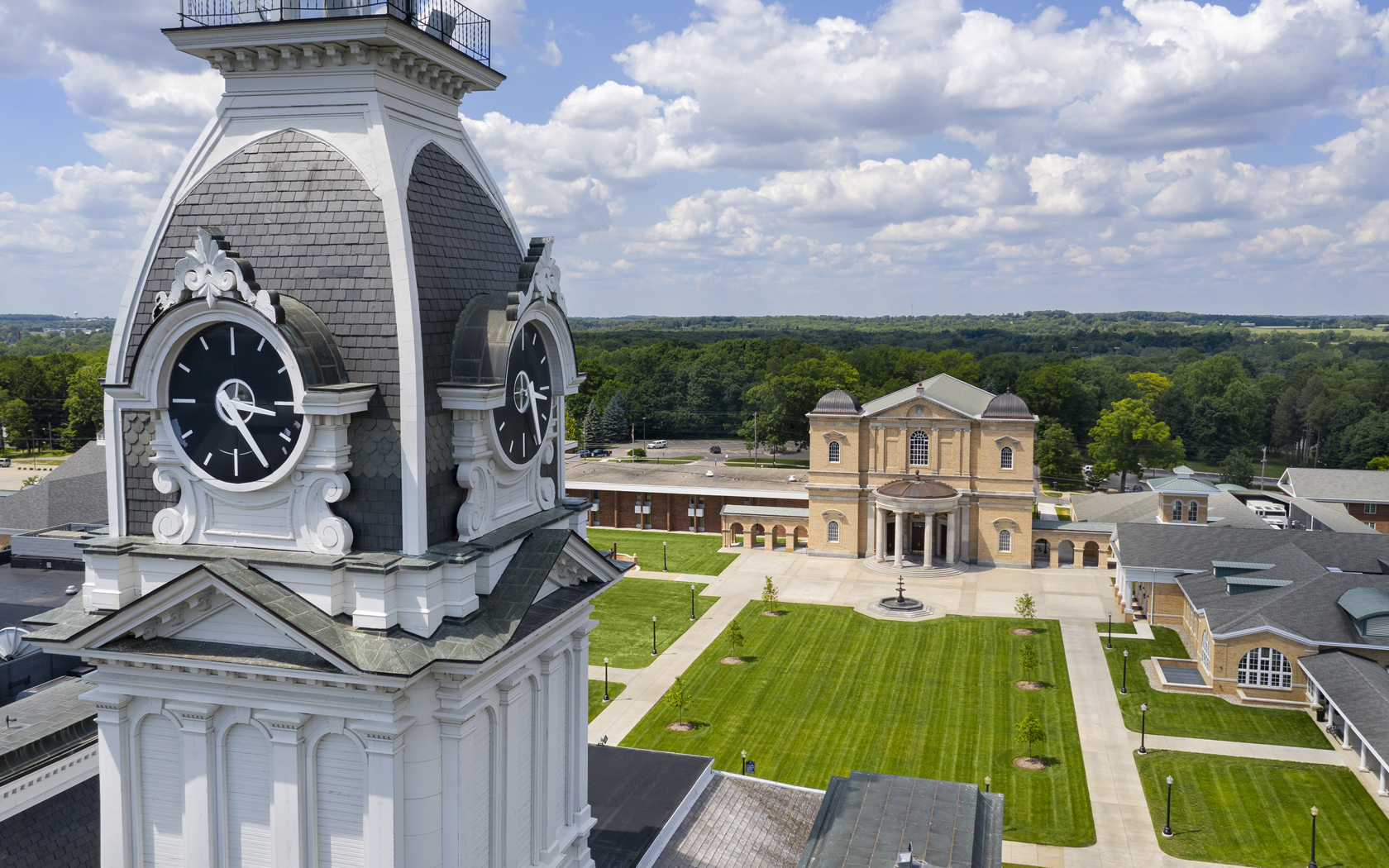
Duncan G. Stroik is a practicing architect, author, and Professor of Architecture at the University of Notre Dame specializing in religious and classical architecture. Gathered here are images from Christ Chapel, Hillsdale College Michigan. His award-winning work includes the Our Lady of the Most Holy Trinity Chapel in Santa Paula, California, the Shrine of Our Lady of Guadalupe in LaCrosse, Wisconsin, and the Cathedral of Saint Joseph in Sioux Falls, South Dakota.

A frequent lecturer on sacred architecture and the classical tradition, Stroik authored The Church Building as a Sacred Place: Beauty, Transcendence and the Eternal and is the founding editor of Sacred Architecture Journal. He is a graduate of the University of Virginia and the Yale University School of Architecture. Professor Stroik is the 2016 winner of the Arthur Ross Award for Architecture. In 2019, he was appointed to the U.S. Commission of Fine Arts.



“Ten Books on Architecture” 30-20 B.C | Vitruvius
This content is accessible to paid subscribers. To view it please enter your password below or send mike@standardsmichigan.com a request for subscription details.

Can Voters Detect Malicious Manipulation of Ballot Marking Devices?
Matthew Bernhard, et. al
University of Michigan
Abstract: Ballot marking devices (BMDs) allow voters to select candidates on a computer kiosk, which prints a paper ballot that the voter can review before inserting it into a scanner to be tabulated. Unlike paperless voting machines, BMDs provide voters an opportunity to verify an auditable physical record of their choices, and a growing number of U.S. jurisdictions are adopting them for all voters. However, the security of BMDs depends on how reliably voters notice and correct any adversarially induced errors on their printed ballots. In order to measure voters’ error detection abilities, we conducted a large study (N = 241) in a realistic polling place setting using real voting machines that we modified to introduce an error into each printout. Without intervention, only 40% of participants reviewed their printed ballots at all, and only 6.6% told a poll worker something was wrong. We also find that carefully designed interventions can improve verification performance. Verbally instructing voters to review the printouts and providing a written slate of candidates for whom to vote both significantly increased review and reporting rates-although the improvements may not be large enough to provide strong security in close elections, especially when BMDs are used by all voters. Based on these findings, we make several evidence-based recommendations to help better defend BMD-based elections.
IEEE provides this article for public use without charge.
“If You Can Measure It, You Can Improve It” (Lord Kelvin)
Critical Operations Power Systems
Operational Resilience of Hospital Journal Article Published Inaugural Issue
Consuting-Specifying Engineer | Risk Assessments for Critical Operations Power Systems
Electrical Construction & Maintenance | Critical Operations Power Systems
Facilities Manager | Critical Operations Power Systems: The Generator in Your Backyard
National Electrical Code: Article 110 Requirements for Electrical Installations (Section 110.5 was revised to include aluminum wiring which can cut the cost of running large chunks of campus power by 2/3rds and increase campus power reliability by cutting the cost of backup feeders)
IEEE-TV Education & Healthcare Facilities Committee

50,351 students
5,743 full-time instructional faculty
6,578 full-time non-instructional staff
48,677 residents City of East Lansing in 8.125 square miles
Infrastructure Planning and Facilities
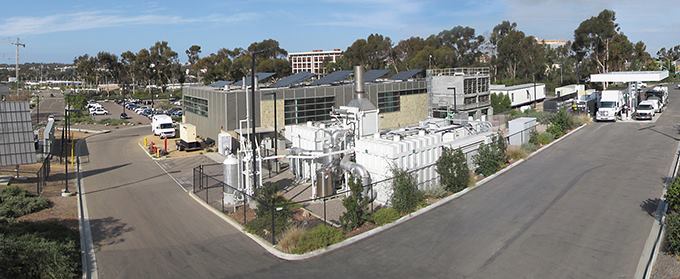
University of California San Diego Microgrid Installation
The InterNational Electrical Testing Association (NETA) is an association of leading electrical testing companies comprised of visionaries who are committed to advancing the industry’s standards for power system installation and maintenance to ensure the highest level of reliability and safety. It has launched a new revision cycle to update the existing Edition of ANSI/NETA ECS Standard for Electrical Commissioning Specifications for Electrical Power Equipment and Systems. From the standard prospectus:
Scope: It is the purpose of these specifications to assure that tested electrical equipment and systems are operational, are within applicable standards and manufacturer’s tolerances, and are installed in accordance with design specifications.
Project Need: The purpose of these specifications is to assure that tested electrical systems are safe, reliable, and operational; are in conformance with applicable standards and manufacturers’ tolerances; and are installed in accordance with design specifications. These specifications are specifically intended for application on electrical power equipment and systems.
Stakeholders: Commissioning agents, governmental agencies, A&E firms, inspection authorities, owners of facilities that utilize large blocks of electrical energy, electrical testing firms.
This standard is not intended to be submitted for consideration as an ISO, IEC, or ISO/IEC JTC-1 standard.
Revision cycles to other titles in the NETA catalogue:
NETA standards are typically referenced in electrical system construction documents for setting safety criteria before local authorities permit initial system energization and building occupancy. The NETA suite is also among the constellation of consensus documents that set the standard of care for the safety of building electrical systems across the full span of an electrical system life cycle.
We review the NETA catalog jointly with the IEEE Education & Healthcare Facilities Committee which is the locus of the most informed technical and business opinions on customer-owned electrical power generating facilities for the education facilities industry. That committee meets online twice today:
All standards dealing with the #TotalCostofOwnership of distributed electrical energy resources are on the standing agenda of our weekly Open Door teleconferences which are hosted weekly on Wednesday at 11 AM Eastern time. Click here to log in.
Issue:[13-44]
Category: Electrical, Facility Asset Management, #SmartCampus
Colleagues: Mike Anthony, Jim Harvey, Gary Walls, Glenn Keates

Leinweber Computer and Information Science
Business & Finance: We Make Blue Go
Geothermal cooling plants have far fewer moving parts and thus pay for themselves by combining immediate energy savings, revenue from excess energy or services, government incentives, and long-term operational efficiency. “Classical” payback period depends on factors like the plant’s scale and available incentives through DTE Energy.
1. Energy Cost Savings
2. Revenue Generation
3. Government Incentives and Subsidies
4. Environmental and Social Benefits
5. Long-Term Investment
6. Financing Models
7. Scalability and Integration
Playing field turf (natural or artificial) for a regulation U.S. football field, including the end zones, measures 360 feet long and 160 feet wide is 6,400 square feet (5,350 square meters)

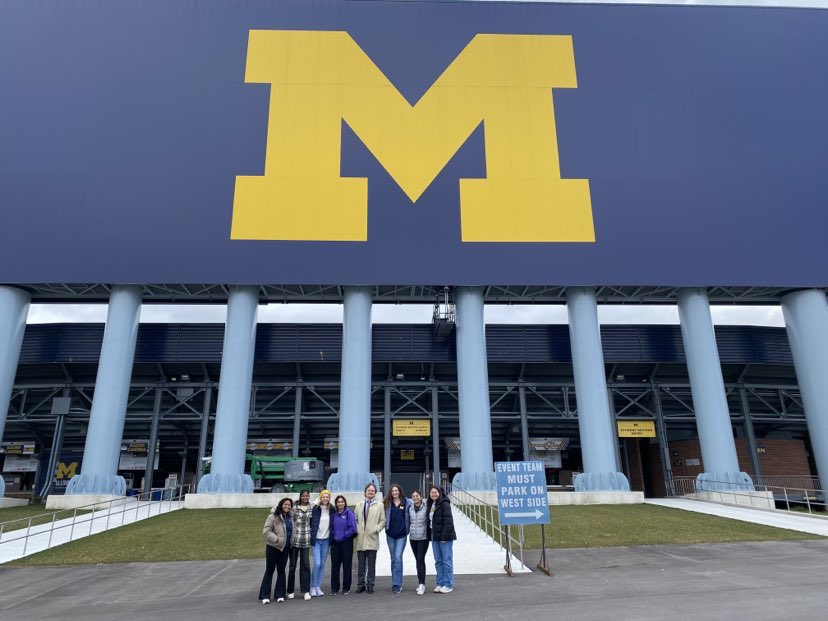
Mike Anthony with Engineering Students | April 2024
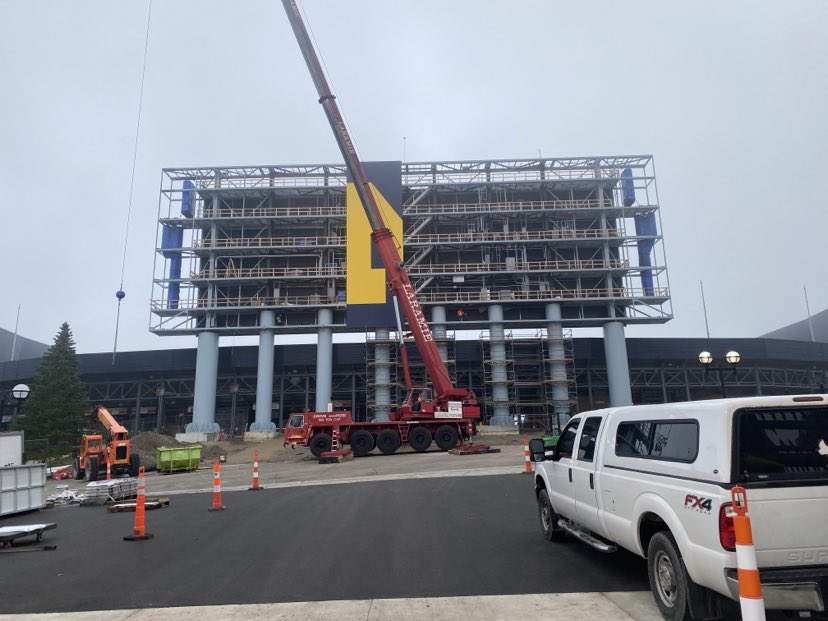
Progress on the North End scoreboard as of July 1.
New update alert! The 2022 update to the Trademark Assignment Dataset is now available online. Find 1.29 million trademark assignments, involving 2.28 million unique trademark properties issued by the USPTO between March 1952 and January 2023: https://t.co/njrDAbSpwB pic.twitter.com/GkAXrHoQ9T
— USPTO (@uspto) July 13, 2023
Standards Michigan Group, LLC
455 East Eisenhower Parkway, Suite 300
Ann Arbor, MI 48108 USA
888-748-3670
 |
 |
|
 |
 |
|
 |
 |