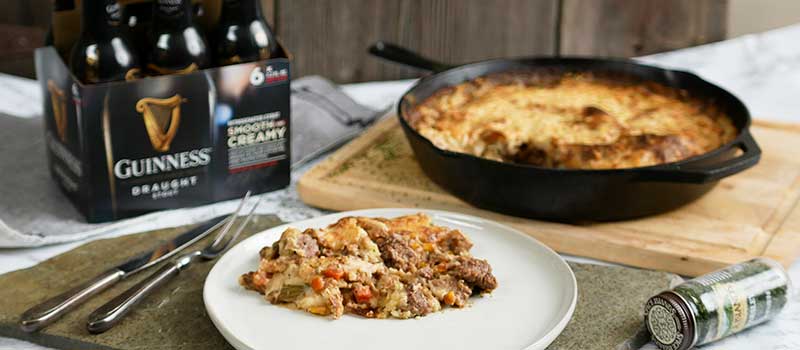
Shepherd’s Pie is an traditional meal in the United Kingdom featuring a savory meat filling topped with creamy mashed potatoes. Traditionally made with ground lamb or beef, the filling is cooked with onions, carrots, peas, and a rich gravy, often flavored with herbs like thyme or rosemary. The mixture is then layered into a casserole dish and crowned with a generous spread of mashed potatoes, sometimes sprinkled with cheese. Baked until golden and bubbling, it’s a hearty, comforting meal, perfect for cold days. Its origins trace back to resourceful shepherds using leftover meat, making it a staple of home cooking.
“Fish and chips was in many ways the pioneer fast-food industry. It became an essential component of working-class diet and popular culture in parts of London, and over wide areas of industrial midland and northern England and southern Scotland, in the early decades of the twentieth century…I propose to argue that the fish and chip trade was not only important enough in itself to justify sustained historical analysis, but also that it provides a useful vantage point for examining important changes in British society more generally.”
— John Walken, 1998, Journal of Social History
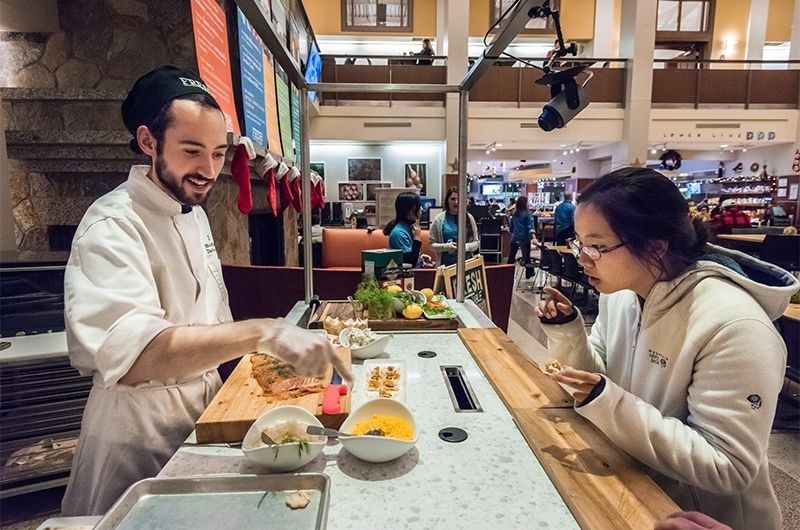
In England I’m in a very international community. I’m meeting students attempting to learn English, they are from all over the world. Many have never heard of Jesus, some have heard the name and nothing more. It’s amazing, a kind smile and warm conversation is a perfect pretext… pic.twitter.com/jLiDAc8nlU
This traditional Irish dish originated as a thrifty way to repurpose leftover meat. In the late 18th century, the concept evolved from using lamb or mutton, commonly tended by shepherds, hence the name. The dish typically comprises minced meat — lamb, beef or chicken — cooked with vegetables and gravy, topped with mashed potatoes.
Ingredients:
• 1 can chicken, drained
• ½ can canned sliced potatoes
• 2 tsp onion powder
• ½ cup canned peas, drained
• 2 tbsp Worcestershire sauce
• 1 tbsp butter
• Splash of milk
• 2 tsp salt
• 2 tsp black pepper
• 1 tsp nutmeg
Directions:
1. Heat potatoes in microwave safe bowl, ~2 mins. Mash the potatoes with the milk and butter, a Teaspoon each of salt, pepper, and garlic powder, stir well. Adjust seasoning. Set aside.
2. Add remaining ingredients, stir well.
3. Spoon the mashed potatoes evenly on top of the meat.
4. Cook covered in the microwave oven for 3-5 minutes on medium power.
5. Cut into 2 portions. Scoop out from the bottom to keep the layers intact.
This video has been made available for informational and educational purposes only. UCCS hereby disclaims any and all liability to any party for any direct, indirect, implied, punitive, special, incidental or other consequential damages arising directly or indirectly from any use of this video, which is provided as is, and without warranties.
Corned beef and cabbage traditionally comprise a St. Patrick’s Day meal. While St Patrick’s Day is celebrated around the world, corned beef is strictly an Irish-American tradition. It isn’t the national dish of Ireland nor the food you would eat on St. Patrick’s Day in Dublin.
The Shamrock Shake tradition centers on festive St. Patrick’s Day celebrations hosted by the Collegiate Recovery Program. Each March (e.g., events on March 7, 2024, and March 12, 2026), students gather for free Shamrock Shakes—minty green treats—alongside crafts, games, and sober fun at locations like Serenity Place. This annual event promotes community, recovery support, and holiday spirit in a welcoming, alcohol-free environment for all WVU students.
Story County Iowa Scones
There is a foodway path from the English Civil War (1642–1651) to the culinary traditions from Puritan diaspora to the American Midwest. Along with it home traditions of moral discipline and frugality that persist and is reflected in the relative… pic.twitter.com/eqBQhecHHL
.@BC_CSON has launched a master’s degree in nurse-midwifery, which aims to address the crisis of maternal mortality and the shortage of maternal health care workers.https://t.co/QGb3FRpR3B
The history of scones is believed to have originated in Scotland. The name “scone” is said to come from the Dutch word “schoonbrot,” which means “beautiful bread.” Scones have a long and interesting history that dates back several centuries.
Originally, scones were not the sweet, buttery treats we know today. Instead, they were simple unleavened oatcakes or griddle cakes made from barley, oats, or wheat. These early scones were baked on griddles or stovetops rather than being oven-baked.
As time went on, the recipe for scones evolved, and they became more commonly associated with Scotland and England. The Scottish version of scones was typically round and made with oats. They were cooked on a griddle or in a pan and then cut into triangular sections, which were known as “bannocks.” These bannocks were the ancestors of the modern scone.
In the 19th century, with the advent of baking powder and modern ovens, scones began to be baked instead of griddle-cooked. The addition of baking powder allowed scones to rise and become lighter and fluffier. The ingredients were refined to include flour, butter, milk or cream, and a leavening agent like baking powder. This marked the shift from the traditional oat-based scone to the more recognizable wheat-based scone we know today.
Scones’ popularity spread beyond Scotland and England, and they became a common teatime treat across the United Kingdom and other English-speaking countries. The addition of raisins, currants, or other dried fruits, as well as sugar, transformed scones into the sweet delicacies that are commonly enjoyed today, often served with clotted cream and jam in the classic English afternoon tea.
In the United States, scones have also become popular, with various regional and cultural variations. American scones may be larger, sweeter, and have a wider variety of flavor options, such as blueberry, cranberry-orange, or chocolate chip. Today, scones continue to be beloved treats enjoyed for breakfast, brunch, afternoon tea, or as a delightful snack with a cup of tea or coffee. Their history reflects centuries of evolution and cultural influence, making them a delightful and enduring part of baking traditions worldwide.
The standard scone is a simple and versatile preparation that can be customized with various additions, such as dried fruits, nuts, or chocolate chips, to suit different tastes.
Here is a basic recipe for making standard scones:
Ingredients:
2 cups all-purpose flour
1/4 cup granulated sugar
1 tablespoon baking powder
1/2 teaspoon salt
1/2 cup cold unsalted butter, cut into small cubes
1/2 cup milk (plus more for brushing on top)
1 large egg
Optional: 1 teaspoon vanilla extract or other flavorings (e.g., almond extract, lemon zest)
Optional: Additions such as dried fruits, chocolate chips, or nuts (about 1/2 cup)
Instructions:
Preheat your oven to 400°F (200°C) and line a baking sheet with parchment paper.
In a large mixing bowl, whisk together the flour, sugar, baking powder, and salt until well combined.
Add the cold butter cubes to the flour mixture and use a pastry cutter or your fingers to work the butter into the flour until the mixture resembles coarse crumbs. The butter should be well distributed but still in small pieces.
If you’re adding any optional flavorings or additions, mix them into the dry ingredients at this stage.
In a separate small bowl, whisk together the milk, egg, and optional vanilla extract (or other flavorings) until well combined.
Create a well in the center of the dry ingredients and pour the wet mixture into it. Gently stir the ingredients together until just combined. Be careful not to overmix; the dough should be slightly crumbly but hold together.
Transfer the dough onto a lightly floured surface and shape it into a round disk, about 1 inch (2.5 cm) thick.
Use a sharp knife or a biscuit cutter to cut the dough into wedges or rounds, depending on your preference. Traditionally, scones are cut into triangular shapes.
Place the scones on the prepared baking sheet, leaving some space between them.
Brush the tops of the scones with a little milk to give them a nice golden color when baked.
Bake the scones in the preheated oven for about 15-20 minutes or until they are lightly golden on top.
Remove from the oven and let them cool slightly before serving. Scones are best enjoyed fresh and can be served with butter, clotted cream, jam, or any other toppings of your choice.
This standard scone recipe provides a classic and delicious base that you can experiment with by adding various flavors and mix-ins to create your own unique variations.
“Finian’s Rainbow” is a musical (written by E.Y. Harburg – University of Michigan 1918) that tells the story of an Irishman named Finian McLonergan who comes to the United States with his daughter Sharon to bury a pot of gold stolen from a leprechaun. Finian believes that if he buries the gold in the soil of Fort Knox, it will grow and multiply, allowing him to live a life of luxury.
However, the town they settle in, Rainbow Valley, is owned by a racist senator named Billboard Rawkins, who wants to evict the sharecroppers living on the land. With the help of a local activist named Woody, Sharon and the sharecroppers team up to stop Rawkins’ eviction plans.
Meanwhile, Og, the leprechaun whose gold Finian stole, comes to America to get his gold back. Og meets and falls in love with Susan, the mute daughter of the sharecropper Woody, and realizes that he wants to stay in America with her.
The story deals with themes of racism, prejudice, and the American dream, and features memorable like “Old Devil Moon,” “How Are Things in Glocca Morra?” and “If This Isn’t Love.”
New update alert! The 2022 update to the Trademark Assignment Dataset is now available online. Find 1.29 million trademark assignments, involving 2.28 million unique trademark properties issued by the USPTO between March 1952 and January 2023: https://t.co/njrDAbSpwBpic.twitter.com/GkAXrHoQ9T