




The Pilgrims and Modern England: A Repeating Cycle
The Pilgrims—English Separatists who sailed on the Mayflower in 1620—left not solely for religious freedom, though persecution under James I was real. Fined, imprisoned, or driven from homes for rejecting the Church of England’s enforced conformity, they first fled to tolerant Holland. Yet by 1620 economic realities dominated: low-wage factory toil in Leiden aged their children prematurely, Dutch culture eroded their English identity and faith, and they craved land, self-sufficiency, and a stable society free of Old World constraints. England’s 17th-century pressures—population growth, land scarcity, rigid class structures, and state religious control—made daily life untenable. They sought a “new” England across the Atlantic.
Those same pressures have re-emerged in 21st-century England, imported through decades of high-volume immigration, much of it from Third World countries (non-EU Asia, Africa, Middle East). Net migration peaked at 944,000 in 2023 before falling to 204,000 by mid-2025, still historically elevated and overwhelmingly non-European. Unlike earlier skilled or culturally proximate inflows, recent waves include large asylum, family, and low-skilled cohorts whose origins feature high fertility, clan-based social norms, weak institutions, and often Islamist or tribal worldviews incompatible with Britain’s secular, liberal order.
Socially, the parallel is stark. Just as state religion once policed belief, today multiculturalism policies have fostered parallel societies. Enclaves exhibit grooming scandals, honor-based violence, FGM, Sharia patrols, and Islamist extremism—phenomena alien to historic English norms yet tolerated under “diversity” doctrines. Native Britons in cities like London, Birmingham, or Oldham report feeling culturally displaced, their children minorities in schools, Christmas sidelined, and free speech chilled by blasphemy sensitivities. Social trust has eroded; riots in 2024 exposed fractures. The Pilgrims feared Dutch assimilation erasing their identity; modern natives fear imported identities erasing theirs. Integration failures are empirical: certain groups show persistently lower employment, higher welfare dependency, and segregated outcomes decades later.
Economically, rapid population growth—driven almost entirely by immigration—mirrors 17th-century land and resource strains. Housing shortages have worsened; a 1% population rise from migration correlates with 1% higher house prices, pricing out young natives. NHS waiting lists balloon, schools overflow, and welfare costs mount for low-skilled arrivals and their larger families. Fiscal analyses show negative lifetime net contributions from asylum/refugee routes due to low employment and high inactivity. Low-wage competition depresses pay in care, retail, and construction. The welfare state, absent in Pilgrim times, now subsidizes dependency that 17th-century England’s poor laws could not sustain at scale. Britain’s per-capita GDP growth lags while aggregate GDP is artificially inflated—echoing the Pilgrims’ frustration with toil yielding no security.
Uncontrolled Third World inflows re-assert these conditions because the source societies export their unsolved problems—poverty traps, religious authoritarianism, demographic momentum—into a high-trust, high-welfare host society lacking assimilation enforcement. Post-war policy abandoned selective, small-scale migration for volume and “compassion,” ignoring cultural distance and labor-market fit. The result: natives face the very intolerance, economic precarity, and cultural erosion the Pilgrims fled. England has, in effect, recreated the Old World it once escaped—only this time the pressures arrive by jet and dinghy rather than royal decree. Without course correction toward skills, numbers, and integration, the cycle repeats.
IEEE English for Technical Professionals is a 14-hour online learning program designed to provide non-native English speakers with a working knowledge of English techniques and vocabulary that are essential for working in today’s technical workplace.
IEEE English for Technical Professionals
“It is a trite but true observation, that examples work more forcibly on the mind than precepts: and if this be just in what is odious and blameable, it is more strongly so in what is amiable and praiseworthy. Here emulation most effectually operates upon us, and inspires our imitation in an irresistible manner. A good man therefore is a standing lesson to all his acquaintance, and of far greater use in that narrow circle than a good book.
But as it often happens that the best men are but little known, and consequently cannot extend the usefulness of their examples a great way; the writer may be called in aid to spread their history farther, and to present the amiable pictures to those who have not the happiness of knowing the originals; and so, by communicating such valuable patterns to the world, he may perhaps do a more extensive service to mankind than the person whose life originally afforded the pattern…”
— Henry Fielding “The History of the Adventures of Joseph Andrews and of his Friend Mr. Abraham” (1742)
Electropedia: The World’s Online Electrotechnical Vocabulary
| Since so much of what we do in standards setting is built upon a foundation of a shared understanding and agreement of the meaning of words (no less so than in technical standard setting) that time is well spent reflecting upon the origin of the nouns and verbs of that we use every day. Best practice cannot be discovered, much less promulgated, without its understanding secured with common language. |
Hanging with grandad just like the old days 😂 pic.twitter.com/fQVarEQ5Iw
— Alexandra Churchill ✌🏼⭐️⭐️ (@churchill_alex) December 2, 2023
Virginia Woolf: pic.twitter.com/8IPw1Fmevk
— Dr. Maya C. Popa (@MayaCPopa) May 25, 2023
Cambridge: English language education in the era of generative AI
We must spread our accent further pic.twitter.com/qEc3Cqd2cH
— Midwest vs. Everybody (@midwestern_ope) April 3, 2025

“Standard Root Beer” is typically made using a combination of ingredients that include water, sugar, sassafras root or extract, and various other flavoring agents. Here’s a general overview of the process:
It’s worth noting that the commercial production of root beer may involve different processes, as well as the use of artificial flavors, stabilizers, and preservatives to ensure consistency and shelf life. The specific recipe and production methods may vary among manufacturers.

Relata:
Uniform Prudent Management of Institutional Funds Act
Financial Accounting Standards Board (FASB) Guidelines: Topic 958

The World Soil Museum hosts a range of educational programs and workshops for students, researchers, and other visitors who are interested in learning more about soil science. These programs cover topics such as soil classification, soil management, and soil conservation, and they are designed to help people understand the vital role that soils play in supporting agriculture, ecosystems, and human societies around the world.

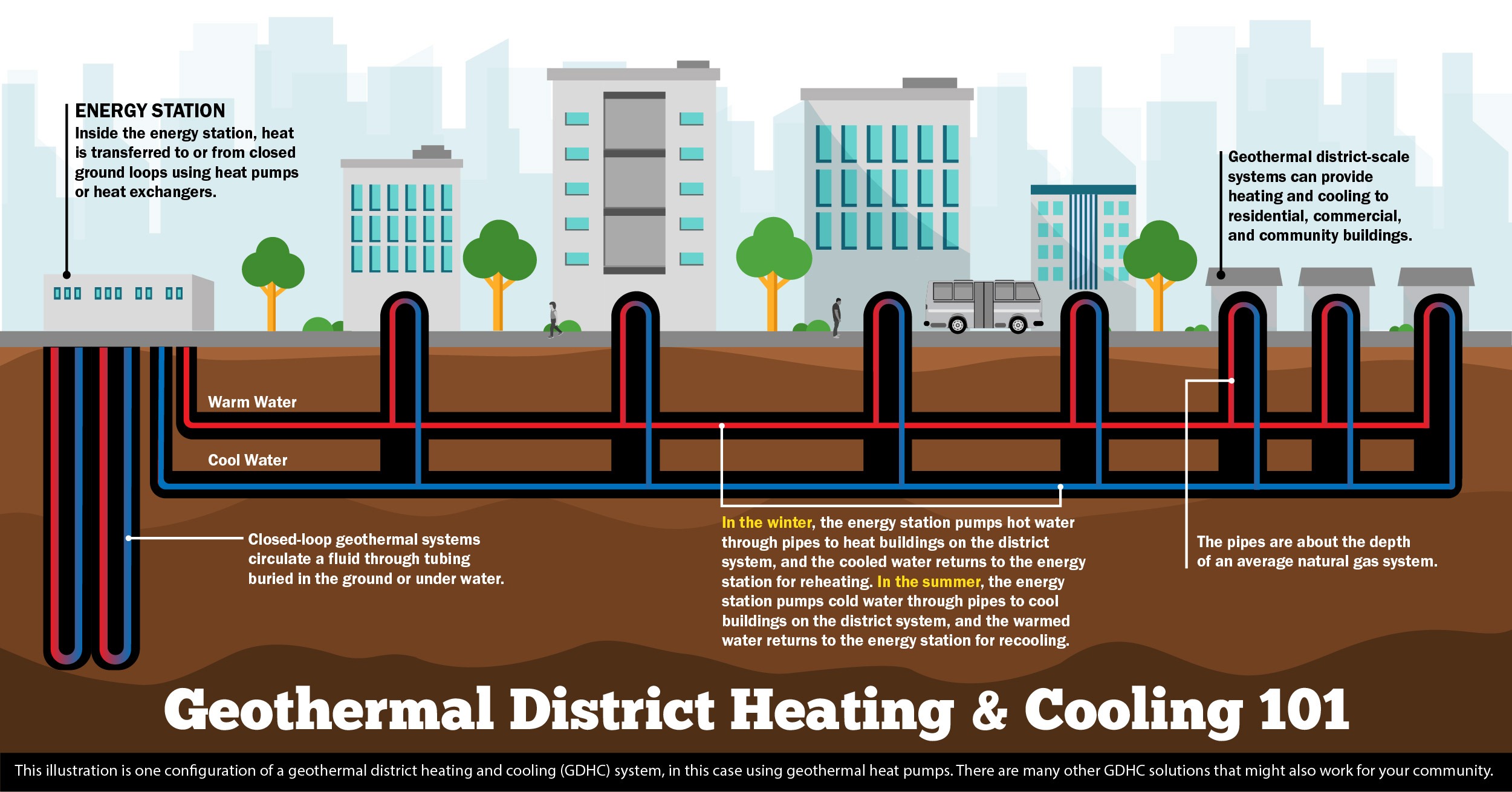
Geothermal systems cool buildings by leveraging the stable temperatures found beneath the Earth’s surface. A geothermal heat pump system consists of a ground loop, heat exchanger, and distribution system.
In cooling mode, the system extracts heat from the building and transfers it to the ground. The ground loop, typically composed of pipes buried horizontally or vertically, circulates a fluid that absorbs heat from the building’s interior. The fluid, warmed by this process, is then pumped through the ground loop where the Earth’s cooler temperatures absorb the heat, effectively dissipating it into the ground.
The cooled fluid returns to the heat pump, which distributes the now-cooler air throughout the building via the distribution system, such as ductwork. This process is highly efficient because the ground maintains a relatively constant temperature year-round, allowing the geothermal system to operate with less energy compared to traditional air-source cooling methods.
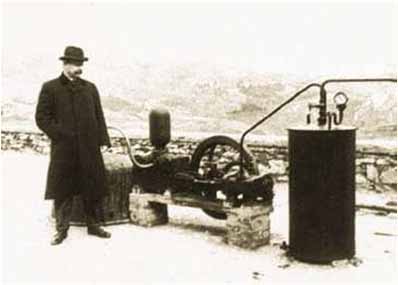
At the moment, though the technology has been made practical since Prince Piero Ginori Conti’s discovery in 1904, and has since tracked well in local building codes and environmental regulations, the bibliography for earth energy systems is nascent and relatively thin. One trade association is emerging from the gathering pace of applications and case studies: Closed-Loop/Geothermal Heat Pump Systems Design and Installation Standards
We maintain the IGSHPA catalog on the standing agenda of our Energy, Mechanical and Air Conditioning colloquia. See our CALENDAR for the next online meeting; open to everyone.

Partial Bibliography:
Handbook of Best Practices for Geothermal Drilling
Best Practices for Designing Geothermal Systems
Geothermal Direct Use Engineering and Design Guidebook
International Standards
ISO 13612-1:2014 – Heating and cooling systems in buildings — Method for calculation of the system performance and system design for heat pump systems — Part 1: Design and dimensioning.
ISO 14823:2017 – Intelligent transport systems — Graphic data dictionary.
ISO 52000-1:2017 – Energy performance of buildings — Overarching EPB assessment — Part 1: General framework and procedures.
IEC 61753-111-7:2014 – Fibre optic interconnecting devices and passive components – Performance standard – Part 111-7: Sealed closures for category S – Subterranean environments.
North American Standards
CSA C448: Design and installation of earth energy systems.
ANSI/CSA C448 Series-16 – Design and Installation of Earth Energy Systems.
ASHRAE Standard 90.1 – Energy Standard for Buildings Except Low-Rise Residential Buildings.
IGSHPA Standards – International Ground Source Heat Pump Association (IGSHPA) Standards.
NFPA 54 – National Fuel Gas Code.
EPA Standards for Geothermal Energy (40 CFR Part 144) – Underground Injection Control (UIC) Program.
UL 1995 – Heating and Cooling Equipment.

“Neptune’s Horses” 1919 | Walter Crane
Bernoulli’s Principle pic.twitter.com/EwXrssQBtw
— NERD (نَرْد) (@NERD2040) October 2, 2024
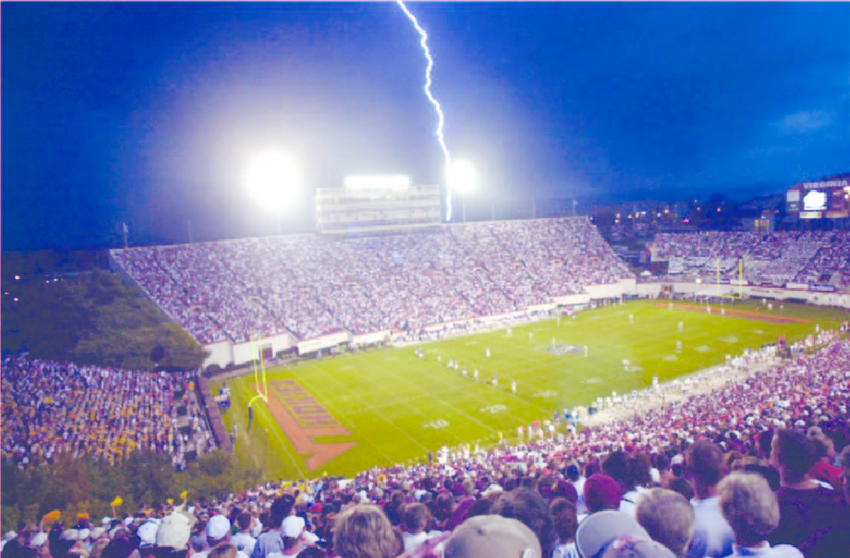
Thunderstorm | Shelter (Building: 30/30 Rule)
The standards for delaying outdoor sports due to lightning are typically set by governing bodies such as sports leagues, associations, or organizations, as well as local weather authorities. These standards may vary depending on the specific sport, location, and level of play. However, some common guidelines for delaying outdoor sports due to lightning include:
It’s important to note that safety should always be the top priority when it comes to lightning and outdoor sports. Following established guidelines and seeking shelter when lightning is detected or severe weather warnings are issued can help protect participants from the dangers of lightning strikes.
There are various lightning detection and monitoring devices available on the market that can help you stay safe during thunderstorms. Some of these devices can track the distance of lightning strikes and alert you when lightning is detected within a certain radius of your location. Some devices can also provide real-time updates on lightning strikes in your area, allowing you to make informed decisions about when to seek shelter.
Examples of such devices include personal lightning detectors, lightning alert systems, and weather stations that have lightning detection capabilities. It is important to note that these devices should not be solely relied upon for lightning safety and should be used in conjunction with other safety measures, such as seeking shelter indoors and avoiding open areas during thunderstorms.
New update alert! The 2022 update to the Trademark Assignment Dataset is now available online. Find 1.29 million trademark assignments, involving 2.28 million unique trademark properties issued by the USPTO between March 1952 and January 2023: https://t.co/njrDAbSpwB pic.twitter.com/GkAXrHoQ9T
— USPTO (@uspto) July 13, 2023
Standards Michigan Group, LLC
2723 South State Street | Suite 150
Ann Arbor, MI 48104 USA
888-746-3670
 |
 |
|
 |
 |
|
 |
 |