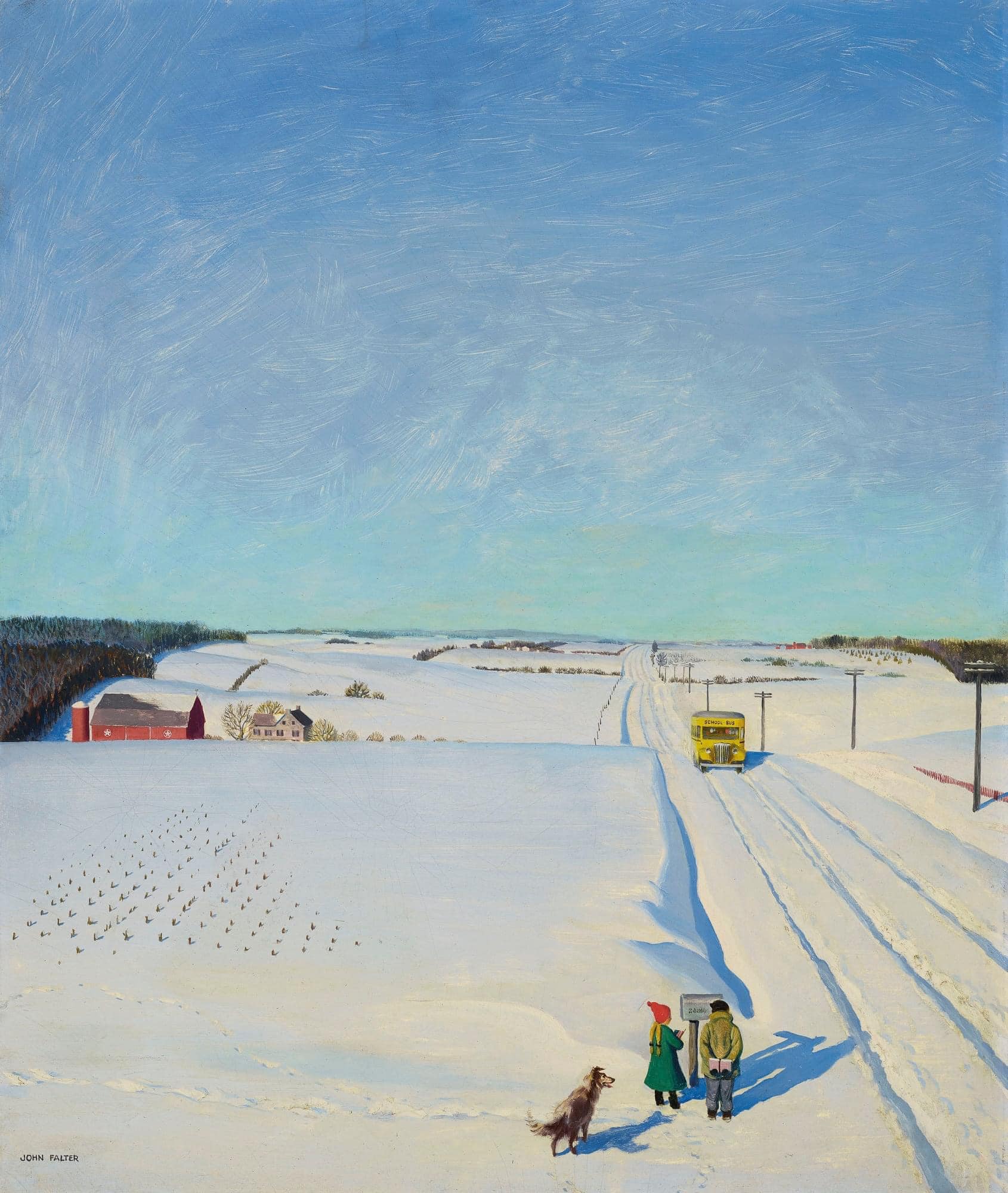
I’ve never made a fortune and it’s probably too late now. But I don’t worry about that much, I’m happy anyhow. And as I go along life’s way, I’m reaping better than I sowed. I’m drinking from my saucer, ‘Cause my cup has overflowed.
I don’t have a lot of riches, and sometimes the going’s tough. But I’ve got loved ones around me, and that makes me rich enough. I thank God for his blessings, and the mercies He’s bestowed. I’m drinking from my saucer, ’Cause my cup has overflowed.
I remember times when things went wrong, my faith wore somewhat thin. But all at once the dark clouds broke, and the sun peeped through again. So God, help me not to gripe about the tough rows that I’ve hoed. I’m drinking from my saucer, ‘Cause my cup has overflowed.
If God gives me strength and courage, when the way grows steep and rough. I’ll not ask for other blessings, I’m already blessed enough. And may I never be too busy, to help others bear their loads. Then I’ll keep drinking from my saucer, ‘Cause my cup has overflowed.
This content is accessible to paid subscribers. To view it please enter your password below or send mike@standardsmichigan.com a request for subscription details.
SAE Scholarships are dedicated to developing the future engineering workforce. Apply today for one (or more!) of the many scholarships we offer. Applications will be accepted all of February. Don’t delay! https://t.co/lv8eD79Ib8pic.twitter.com/M9Ge7ZLC1w
First invented by television producer Tony Verna in 1963, instant replay technology helps ensure fans see the biggest moments of the big game. Although he did not receive one for instant replay, Verna sought patents for similar inventions later in life. pic.twitter.com/hR7LwRXSI4
Last week, CEN and CENELEC took part in Open Source Week, engaging with the vibrant and diverse open source ecosystem. Our colleagues Amirifar Nooshin and Yannis Chourmouziadis participated in the Open Source Policy Summit where they had constructive discussions.#TrustStandardspic.twitter.com/MxwGDFzvZ1
ASHRAE is honored to welcome and host so many esteemed VIP guests at the Leadership Luncheon. This group truly represents ASHRAE’s continued commitment to collaboration with organizations throughout the built environment.#MyASHRAEpic.twitter.com/DCl8QIiS28
Winter storms are on the way; #Corrosion is a major concern. From bridges, and utility equipment, winter’s salty conditions can hasten #Rust & degradation. ASTM B117-26 helps evaluate materials meant to withstand harsh, corrosive environments. @ASTMIntlhttps://t.co/qAzr3TTMXR
ASHRAE announces nominees for the 2026-27 Slate of Officers and Directors. Members will vote on the nominees via electronic ballot in May, including who will serve as ASHRAE President for the 2026-27 Society year. To see the full list of nominees, visit https://t.co/lJdqfCz264.… pic.twitter.com/UJnF0nC2bY
Preservation of old standards may be useful. In converting material into an ASTM standard, form, style, terminology are areas that require particular attention. Here, we address the rationale for offering these versions of standards, steps taken to make them conform to ASTM… pic.twitter.com/ZT1LWgxqLX
I scream. You scream. We all scream for ICE CREAM CONES.🍦On this day in 1924, Carl R. Taylor patented an ice cream cone rolling machine (No. 1,481,813), automating the process of shaping flat wafers into perfectly formed cones. pic.twitter.com/adaBY2f3xV
🗣️ “AI chatbots with hallucinate around 27% of the time, so we need to ensure employees have the AI literacy required to critically consider the output AI delivers” Laura Bishop PhD, BSI AI and Cybersecurity Sector Lead#BSI#TrustInAI#AIGovernance#AIStrategpic.twitter.com/0MyIpozyiR
Great turnout at the X12 standing Meeting. Especially, given the difficult weather across the country. A wonderful spread of food, as well. Great to see everyone and certainly appreciate the participation. pic.twitter.com/XlbODYcY40
Congrats to Scott Osborn, PE, retired professor, biological and agricultural engineering, University of Arkansas, for being named an ASABE Fellow! Osborn was selected for in teaching the next generation of engineers, invention and innovation in systems. https://t.co/UFTWhIrS2ipic.twitter.com/Q95ufpymMI
The 2026 ASHRAE HVAC&R Student Paper Competition concluded on January 22nd with presentations from four finalists. The four-person judging panel selected Felix Ekuful as the winner of the 2026 competition. His research focus is on developing advanced control strategies to improve… pic.twitter.com/RDbLiLopIK
NSAI has launched the public consultation for S.R. 66:2015 +A1:202X Standard Recommendation providing guidance to wastewater treatment products in conformance with the EN 12566 series of standards.
Just about every airspeed sensor in the United States can trace its calibration back, either directly or indirectly via calibration laboratories, to a wind tunnel on NIST’s Gaithersburg, Maryland, campus.
🤝Full house for the biannual Technical Body Officers Seminar focusing on key aspects of the standardization system, this day was again a valuable opportunity to exchange experiences and best practices with peers, strengthening our collective technical leadership. #TrustStandardspic.twitter.com/K2wujDboS7
If you design or operate health care facilities, Standard 170 sets the minimum.
ANSI/ASHRAE/ASHE Standard 170 defines the minimum ventilation requirements for health care facilities and is developed in partnership with FGI and ASHE for adoption by code-enforcing agencies.
This content is accessible to paid subscribers. To view it please enter your password below or send mike@standardsmichigan.com a request for subscription details.
100 years ago, the Supreme Court made it clear in Pierce v. Society of Sisters: raising children is the responsibility of parents, not the government.
100 years later, the Trump Administration remains committed to protecting parental rights. pic.twitter.com/yduXdLShty
— Secretary Linda McMahon (@EDSecMcMahon) June 1, 2025
“…O chestnut tree;, great rooted blossomer, Are you the leaf, the blossom or the bold? O body swayed to music, O brightening glance, How can we know the dancer from the dance?”
We sweep through the world’s three major time zones; updating our understanding of the literature at the technical foundation of education community safety and sustainability in those time zones 24 times per day. We generally eschew “over-coding” web pages to sustain speed, revision cadence and richness of content as peak priority. We do not provide a search facility because of copyrights of publishers and time sensitivity of almost everything we do.
Our daily colloquia are typically doing sessions; with non-USA titles receiving priority until 16:00 UTC and all other titles thereafter. We assume policy objectives are established (Safer-Simpler-Lower-Cost, Longer-Lasting). Because we necessarily get into the weeds, and because much of the content is time-sensitive and copyright protected, we usually schedule a separate time slot to hammer on technical specifics so that our response to consultations are meaningful and contribute to the goals of the standards developing organization and to the goals of stewards of education community real assets — typically the largest real asset owned by any US state and about 50 percent of its annual budget.
1. Leviathan. We track noteworthy legislative proposals in the United States 118th Congress. Not many deal specifically with education community real assets since the relevant legislation is already under administrative control of various Executive Branch Departments such as the Department of Education.
We do not advocate in legislative activity at any level. We respond to public consultations but there it ends.
We track federal legislative action because it provides a stroboscopic view of the moment — the “national conversation”– in communities that are simultaneously a business and a culture. Even though more than 90 percent of such proposals are at the mercy of the party leadership the process does enlighten the strengths and weakness of a governance system run entirely through the counties on the periphery of Washington D.C. It is impossible to solve technical problems in facilities without sensitivity to the zietgeist that has accelerated in education communities everywhere.
Michigan Great Lake Quilt
Michigan can 100% water and feed itself. Agriculture is its second-largest industry.
Brigham Young University Idaho is a private university located in Rexburg, Idaho, United States. It is owned and operated by The Church of Jesus Christ of Latter-day Saints and is a part of the Church Educational System which recognizes moral absolutes at the foundation of a federal democratic republic that makes their university possible. It offers a variety of undergraduate degrees in fields such as business, education, health, and the humanities. The university also offers online courses and programs for distance learners.
One unique aspect of BYU-Idaho is its emphasis on the integration of faith and learning. All students, regardless of their religious background, are required to take religion courses as part of their degree program. The university also has a code of conduct that includes standards for dress, grooming, behavior, and academic honesty.
16yrs married to this RockStar today! Something like 25+ years together… 3 awesome wild kids and whole whack of crazy experiences together! I’ve Bullshitted my way to a lot of successes but Sarah’s been the best yet!… pic.twitter.com/BLBHTtwjSC
Educated at Yale College, Somerville College, the University of Pennsylvania, Harvard Medical School and Columbia Law School, Amy Wax speaks to the Buckley Institute, founded by William F. Buckley (Yale 1950). Links to National Centers at Bowling Green State University, the University of Virginia and the University of Nebraska.
People grow up in a web of relationships that is already in place, supporting them as they grow. From the inside out, it includes parents, extended family and clan, neighborhood groups and civic associations, church, local and provincial governments and finally national government.
The most important decision and life’s biggest hack is picking the right partner. pic.twitter.com/MeLu5it3rn
We examine the proposals for the 2028 National Electrical Safety Code; including our own. The 2026 National Electrical Code where sit on CMP-15 overseeing health care facility electrical issues should be released any day now. We have one proposal on the agenda of the International Code Council’s Group B Committee Action Hearings in Cleveland in October. Balloting on the next IEEE Gold Book on reliability should begin.
FERC Open Meetings | (Note that these ~60 minute sessions meet Sunshine Act requirements. Our interest lies one or two levels deeper into the technicals underlying the administrivia)
Department of Electrical Engineering, National Taiwan University of Science and Technology, Taipei City, Taiwan
First Draft Proposals contain most of our proposals — and most new (original) content. We will keep the transcripts linked below but will migrate them to a new page starting 2025:
N.B. We are in the process of migrating electric power system research to the Institute of Electrical and Electronics Engineers bibliographic format.
Recap of the May meetings of the Industrial & Commercial Power Systems Conference in Las Vegas. The conference ended the day before the beginning of the 3-day Memorial Day weekend in the United States so we’re pressed for time; given all that happened.
We can use our last meeting’s agenda to refresh the status of the issues.
We typically break down our discussion into the topics listed below:
Codes & Standards:
While IAS/I&CPS has directed votes on the NEC; Mike is the only I&CPS member who is actually submitting proposals and responses to codes and standards developers to the more dominant SDO’s — International Code Council, ASHRAE International, UL, ASTM International, IEC & ISO. Mike maintains his offer to train the next generation of “code writers and vote getters”
Performance-based building premises feeder design has been proposed for the better part of ten NEC revision cycles. The objective of these proposals is to reduce material, labor and energy waste owed to the branch and feeder sizing rules that are prescriptive in Articles 210-235. Our work in service and lighting branch circuit design has been largely successful. A great deal of building interior power chain involves feeders — the network upstream from branch circuit panels but down stream from building service panel.
Our history of advocating for developing this approach, inspired by the NFPA 101 Guide to Alternative Approaches to Life Safety, and recounted in recent proposals for installing performance-based electrical feeder design into the International Building Code, appears in the link below:
Access to this draft paper for presentation at any conference that will receive it — NFPA, ICC or IEEE (or even ASHRAE) will be available for review at the link below:
NFPA 110 Definitions of Public Utility v. Merchant Utility
NFPA 72 “Definition of Dormitory Suite” and related proposals
Buildings:
Renovation economics, Smart contracts in electrical construction. UMich leadership in aluminum wiring statements in the NEC should be used to reduce wiring costs.
This paper details primary considerations in estimating the life cycle of a campus medium voltage distribution grid. Some colleges and universities are selling their entire power grid to private companies. Mike has been following these transactions but cannot do it alone.
Variable Architecture Multi-Island Microgrids
District energy:
Generator stator winding failures and implications upon insurance premiums. David Shipp and Sergio Panetta. Mike suggests more coverage of retro-fit and lapsed life cycle technicals for insurance companies setting premiums.
Reliability:
Bob Arno’s leadership in updating the Gold Book.
Mike will expand the sample set in Table 10-35, page 293 from the <75 data points in the 1975 survey to >1000 data points. Bob will set up meeting with Peyton at US Army Corps of Engineers.
Reliability of merchant utility distribution systems remains pretty much a local matter. The 2023 Edition of the NESC shows modest improvement in the vocabulary of reliability concepts. For the 2028 Edition Mike submitted several proposals to at least reference IEEE titles in the distribution reliability domain. It seems odd (at least to Mike) that the NESC committees do not even reference IEEE technical literature such as Bob’s Gold Book which has been active for decades. Mike will continue to propose changes in other standards catalogs — such as ASTM, ASHRAE and ICC — which may be more responsive to best practice assertions. Ultimately, improvements will require state public utility commission regulations — and we support increases in tariffs so that utilities can afford these improvements.
Mike needs help from IEEE Piscataway on standard WordPress theme limitations for the data collection platform.
Mike will update the campus power outage database.
Healthcare:
Giuseppe Parise’s recent work in Italian power grid to its hospitals, given its elevated earthquake risk. Mike’s review of Giuseppe’s paper:
Mike and David Shipp will prepare a position paper for the Harvard Healthcare Management Journal on reliability advantages of impedance grounding for the larger systems.
The Internet of Bodies
Forensics:
Giuseppe’s session was noteworthy for illuminating the similarity and differences between the Italian and US legal system in handling electrotechnology issues.
Mike will restock the committee’s library of lawsuits transactions.
Ports:
Giuseppe updates on the energy and security issues of international ports. Mike limits his time in this committee even though the State of Michigan has the most fresh water international ports in the world.
A PROPOSED GUIDE FOR THE ENERGY PLAN AND ELECTRICAL INFRASTRUCTURE OF A PORT
Other:
Proposals to the 2028 National Electrical Safety Code: Accepted Best Practice, exterior switchgear guarding, scope expansion into ICC and ASHRAE catalog,
Apparently both the Dot Standards and the Color Books will continue parallel development. Only the Gold Book is being updated; led by Bob Arno. Mike admitted confusion but reminded everyone that any references to IEEE best practice literature in the NFPA catalog, was installed Mike himself (who would like some backup help)
Mike assured Christel Hunter (General Cable) that his proposals for reducing the 180 VA per-outlet requirements, and the performance-base design allowance for building interior feeders do not violate the results of the Neher-McGrath calculation used for conductor sizing. All insulation and conducting material thermal limits are unaffected.
Other informal discussions centered on the rising cost of copper wiring and the implications for the global electrotechnical transformation involving the build out of quantum computing and autonomous vehicles. Few expressed optimism that government ambitions for the same could be met in any practical way.
Are students avoiding use of Chat GPT for energy conservation reasons? Mike will be breaking out this topic for a dedicated standards inquiry session:
We continue the re-scale and re-organize our approach to the mobility topic generally — responsive to most best practice discovery results — as recorded in technical literature and landing in regulations at all levels of government. The size of the domain has expanded beyond our means. We need to approach the topic from more angles — distinguishing among land, air and space mobility — following market acceptance and integration.
Throughout 2024 our inquiries will track relevant titles in the following standards catalogs:
Institute of Electrical and Electronic Engineers
International Code Council
National Fire Protection Association
ASHRAE International
We will maintain priority wherever we find user-interest issues in product-oriented standards setting catalogs (ASTM International, SAE International and Underwriters Laboratories, for example). Agricultural equipment standards (were Michigan-based ASABE is the first name) will be place on the periodic Food (Nourriture) and Water standards agenda. Each organization contributes mightily to the “regulatory state” where we are, frankly, outnumbered. When their titles appear in interoperability standards that affect the physical infrastructure of campuses we will explore their meaning to our safer, simpler, lower-cost and longer-lasting priority. (See our ABOUT)
Join us today at the usual time. Use the login credentials at the upper right of our home page.
New update alert! The 2022 update to the Trademark Assignment Dataset is now available online. Find 1.29 million trademark assignments, involving 2.28 million unique trademark properties issued by the USPTO between March 1952 and January 2023: https://t.co/njrDAbSpwBpic.twitter.com/GkAXrHoQ9T